this is for you TPI haters
Thread Starter
Drifting


Joined: Oct 2006
Posts: 1,328
Likes: 14
From: Stafford Connecticut
 this is for you TPI haters
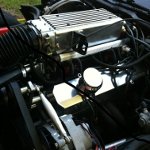
Looks like sometimes you have to go backwards to go forwards. Looks like Chevy copied this intake for all there LS series Motors.They just are ashamed to admit it. With the copy of this intake, they are able to get 550 horse, so those that say TPI don't flow, just don't know.


Drifting
Joined: Dec 2007
Posts: 1,647
Likes: 4
From: Argillite KY
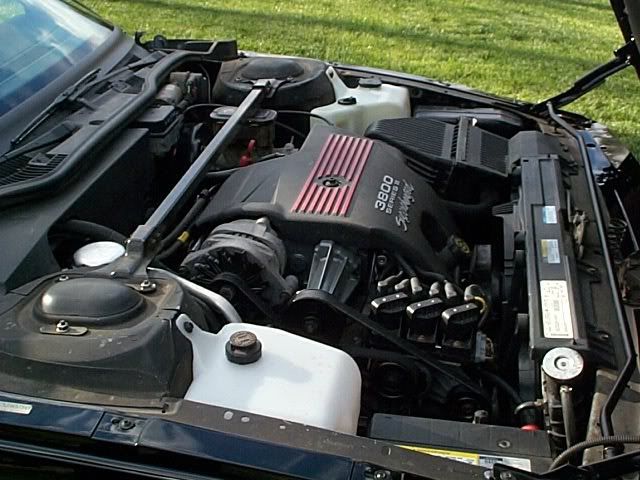
Uh, I think I see the problems. First, the engine needs to be rotated 90 degrees counterclockwise. It's installed sideways. There's no way to couple it to your tranny without the driveshaft sticking out the drivers front fender well. . Second the intake air is either on the back of the engine or the serpentine belt is on the back. If it's the belt....well then, someone put the crank in backwards. Everyone knows that the air has got to come in the front of the engine to get a ram effect. Think of the power they could make if they did it right. I may be old school but I'm just sayin'...........!

Safety Car


Joined: Sep 2010
Posts: 3,752
Likes: 190
From: Indiana PA
I wanna know who the heck keeps a Gen 1 3.8L and keeps the engine compartment detailed, it is nice you take care of it, but don't expect it to be worth squat. Yes, those 3.8L V6's run forever, just change the oil, forever and ever. One of the best engines GM ever made, probably only second to the Small Block in longevity.
Pro

Joined: Feb 2010
Posts: 677
Likes: 3
From: Metairie LA
They are all "tuned" to take advantage of certain "characteristics". The early TPI was designed to take advantage of Lower RPM torque. LT1 short runners were used to take advantage of Higher RPM. The LS series from what I understand is kind of an "in-between".
All ports are "tuned" to a specific purpose - if not matched up to the intended purpose and engine internals there is sub-par performance.
My BMW X5 actually has a butterfly valve in the intake that essentially lenghtens the runners at low RPM and closes to shorten the runners at high RPM - to get the best of both worlds. It also uses Variable Valve Timing to help this process.
All ports are "tuned" to a specific purpose - if not matched up to the intended purpose and engine internals there is sub-par performance.
My BMW X5 actually has a butterfly valve in the intake that essentially lenghtens the runners at low RPM and closes to shorten the runners at high RPM - to get the best of both worlds. It also uses Variable Valve Timing to help this process.
Corvette Stories
The Best of Corvette for Corvette Enthusiasts

5 Best & 5 Worst Corvette Daily Drivers
Joe Kucinski
The Headlights of Every Corvette Generation Explained
Joe Kucinski
5 Best & 5 Most Overrated Corvette Track Packages of All Time!
Joe Kucinski
Every 2027 Corvette Engine Explained
Joe Kucinski
Designer Imagines A Corvette That Looks More Like a Corvette Than the Corvette
Verdad Gallardo
10 Ugly Corvettes That We Still Kinda Love
Joe Kucinski
Top 10 Most Expensive Corvettes Ever Sold on Bring A Trailer
Brett Foote
10 Things Every Corvette Owner Needs (2026 Edition)
Michael S. Palmer
8 Most "Only Corvette Owners Understand" Quirks and Problems
Pouria Savadkouei
Race Director


Joined: Aug 2000
Posts: 11,470
Likes: 765
 those 3.8L are pretty much bullet proof. had one in my 88 le sabre. as a matter of fact, the whole drive train was pretty bullet proof. for the first 100K miles, about the only thing that was replaced was the alternator. another V6 i've had good luck with is the 4.3L.


Team Owner

Joined: Oct 2004
Posts: 81,241
Likes: 3,063
From: altered state
St. Jude Donor '05
My BMW X5 actually has a butterfly valve in the intake that essentially lenghtens the runners at low RPM and closes to shorten the runners at high RPM


Pro


Joined: Aug 2001
Posts: 617
Likes: 14
From: Loudon, TN
A couple years back I bought a 2002 Silverado with the 4.3 for a trash and yard stuff hauler. It has 253,700 miles on it. Fires up right away every time, uses no oil and runs as smooth as silk, leaks no fluids. Hope my L98 does as well.


Melting Slicks

Joined: Nov 2008
Posts: 2,765
Likes: 5

Melting Slicks
Joined: Nov 2008
Posts: 2,765
Likes: 5
1990 ZR-1 Induction system was the ultimate setup to me Ron for a C4.
I dream of somebody engineering & producing a similar system for a standard pushrod SBC with 23 degree or 18 degree cylinder heads.
16 runners & 16 injectors to feed a hungry sbc with plenty of air & fuel.
BR
I dream of somebody engineering & producing a similar system for a standard pushrod SBC with 23 degree or 18 degree cylinder heads.
16 runners & 16 injectors to feed a hungry sbc with plenty of air & fuel.
BR
Race Director
Joined: Nov 2003
Posts: 12,221
Likes: 446
From: Overland Park Kansas
2020 Corvette of the Year Finalist (appearance mods)
C4 of Year Winner (appearance mods) 2019
Looks like sometimes you have to go backwards to go forwards. Looks like Chevy copied this intake for all there LS series Motors.They just are ashamed to admit it. With the copy of this intake, they are able to get 550 horse, so those that say TPI don't flow, just don't know.
So, did you change your mind or what?
Thread Starter
Drifting
Joined: Oct 2006
Posts: 1,328
Likes: 14
From: Stafford Connecticut
Yes I did.I bought a ported set of SLP runners and PLenum.The runners are opened up quit a bit.I followed the design that they are using on the third gen forum.They are getting 400 horse to the wheels on a 350 motor.They have to keep TPI because of California smog rules.As was stated by another forum member all intakes are tuned.In the LS series GM found that the perfect runner length is 12 inches.I just wish some company would make the LS TPI intake for our vettes.As for my First TPI build the reason I didn't get the horse power out was because I never got the proper tune.
Last edited by steven mack; Jul 18, 2011 at 08:09 AM. Reason: add info

Le Mans Master

Joined: Feb 1999
Posts: 6,470
Likes: 2
From: levittown pa. usa Even a bad day with my `Vette, is better than a good day at work
St. Jude Donor '10
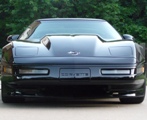
That 3.8 is a great motor, & if you turbocharge it you get one of these--->

along with a few other variants There is a vid floating around of a C4 with a 3.8 that is scary fast.
along with a few other variants
There is a vid floating around of a C4 with a 3.8 that is scary fast.