






"Clattering" Noise
Thread Starter
7th Gear

Joined: Oct 2011
Posts: 7
Likes: 0
From: Albuquerque New Mexico
 "Clattering" Noise
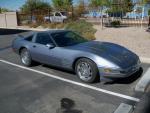
I bought my 1991 vette about 3 months ago (from my brother who now has a C5) and it has had an intermittent "clattering" noise that seems to come and go at any temp but does sound a little louder when it is running warm. That's another question. Why does it run hot sometimes (the needle more than 3/4 to hot side) regardless of outside temp? My owners manual says a little pinging is normal and I've heard vette owners say that they just naturally run hot. Is that true?
Burning Brakes


Joined: Nov 2008
Posts: 995
Likes: 1
From: Naples Campania
These cars do naturally run hot. It's just the nature of the best.
About this clattering noise though. I know you said it doesn't matter for the temp, but any patters as far as RPM, how hard you are pushing the gas or maybe something about acceleration or deceleration? Where does the sound come from?
We also need year, engine type and what transmission you have.
About this clattering noise though. I know you said it doesn't matter for the temp, but any patters as far as RPM, how hard you are pushing the gas or maybe something about acceleration or deceleration? Where does the sound come from?
We also need year, engine type and what transmission you have.
Thread Starter
7th Gear
Joined: Oct 2011
Posts: 7
Likes: 0
From: Albuquerque New Mexico
The sound seems to come on at idle and light acceleration and goes away at higher RPMs. I notice it most when I give it very light throttle.
It's a 1991 with A/T and L98 engine
It's a 1991 with A/T and L98 engine
Last edited by Steel Blue C4; Oct 19, 2011 at 03:32 PM.

Race Director


Joined: Apr 2002
Posts: 10,036
Likes: 346
From: Anaheim CA
"Normal" temperatures on a Corvette are in the 200 - 230 degree range. It does have a 195 degree thermostat, so that's what you can expect. If it's higher than 230 on a regular basis, the prime suspect is trash between the condenser and radiator. It slips under the condenser and gets trapped in there. Sealing that gap is a good preventive measure.
I had a clattering noise that turned out to be loose exhaust manifolds, especially on cylinder #7. One bolt was sticking out about 3/8". I find I need to tighten them up once in a while.
I had a clattering noise that turned out to be loose exhaust manifolds, especially on cylinder #7. One bolt was sticking out about 3/8". I find I need to tighten them up once in a while.
Burning Brakes
Joined: Nov 2008
Posts: 995
Likes: 1
From: Naples Campania
I would start with the easy stuff mentioned above. To through the bolts when the engine is both cold and hot. Use a mechanix glove or welder's glove to keep from being burnt when it's hot.
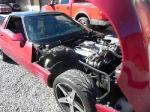
Pop the hood, start it up and either have someone go through the RPM ranges while you are listening, or manually twist the TB. Try to find out where it is coming from as closely as possible. You might find something as simple as a bracket is loose or an exhaust bolt like mentioned above. It's all about narrowing down the location at this point.
Pop the hood, start it up and either have someone go through the RPM ranges while you are listening, or manually twist the TB. Try to find out where it is coming from as closely as possible. You might find something as simple as a bracket is loose or an exhaust bolt like mentioned above. It's all about narrowing down the location at this point.
Corvette Stories
The Best of Corvette for Corvette Enthusiasts

Top 10 Most Explosive Corvettes Ever Made: Power-to-Weight Ratio Ranked!
Joe Kucinski
150 hp to 1,250 hp: Every Corvette Generation Compared by the Specs That Matter
Joe Kucinski
8 Coolest Corvette Pace Cars (and Replicas) of All Time
Verdad Gallardo
Top 10 Corvette Engines RANKED by Peak Torque (70+ Years of Muscle!)
Joe Kucinski
Corvette ZR1X Will Be Pacing the Indy 500, And Could Probably Race, Too!
Verdad Gallardo
Top 10 Corvettes Coming to Mecum Indy 2026!
Brett Foote
Top 10 C9 Corvette MUST-HAVES to Fix These C8 Generation Flaws!
Michael S. Palmer
10 Revolutionary 'Corvette Firsts' Most People Don't Know
Joe Kucinski

