


700R4 yoke, ring


Thread Starter
Safety Car


Joined: May 2006
Posts: 4,290
Likes: 140
From: Salem NH
 700R4 yoke, ring
Can someone please remind me what the purpose of this ring is on a 700R4 yoke?
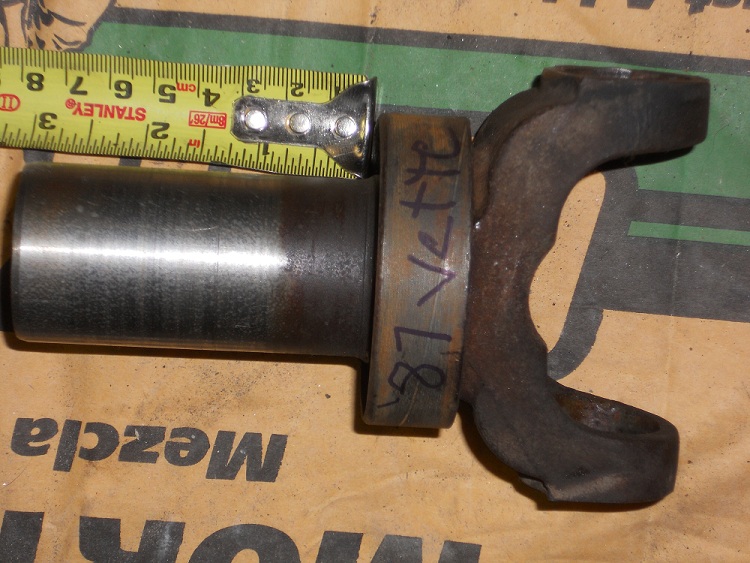
Thinking of using the yoke for a different application and want to press that ring off. It can't be a balance ring because it's not offset in any way, i'm thinking it's just a vibration damper?
-- Joe
Thinking of using the yoke for a different application and want to press that ring off. It can't be a balance ring because it's not offset in any way, i'm thinking it's just a vibration damper?
-- Joe

Team Owner


Joined: Sep 2003
Posts: 25,393
Likes: 2,741
Can someone please remind me what the purpose of this ring is on a 700R4 yoke?
Thinking of using the yoke for a different application and want to press that ring off. It can't be a balance ring because it's not offset in any way, i'm thinking it's just a vibration damper?
-- Joe
Thinking of using the yoke for a different application and want to press that ring off. It can't be a balance ring because it's not offset in any way, i'm thinking it's just a vibration damper?
-- Joe
Thread Starter
Safety Car
Joined: May 2006
Posts: 4,290
Likes: 140
From: Salem NH
A 700R4 27 spline yoke is rather inexpensive. Why wouldn't you just buy new? You'll need a balance anyway and you'll have a much better sealing surface!! I don't understand the significance of the tape, if you need a longer barrel, removing the ring won't accomplish what you want.
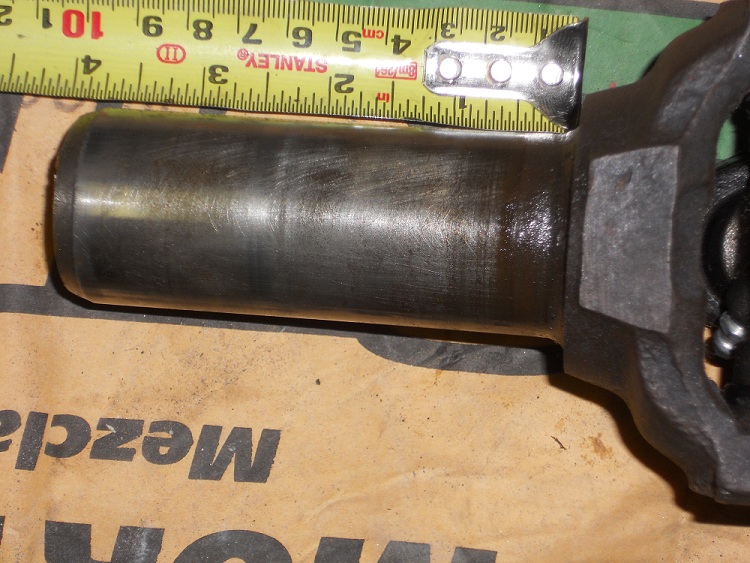
The C4 yoke, if I remove the ring (I actually did remove it), and put it in my lathe to true the surface will give me more clearance. (vs shortening the driveshaft). It would give me 3/4" more room before the knuckle of the yoke crashes into the seal.
I was told the same thing by a forum buddy, so driveshafts are really balanced to the yoke huh? You would think both would be neutral balance!
-- Joe
Team Owner
Joined: Sep 2003
Posts: 25,393
Likes: 2,741
The drive shaft assembly needs "the balance"! That's why it's recommended that when you do u-joints you make sure it's assembled just like it was previously to avoid an issue. I've worked with techs that have a drive-shaft rebalanced every time they do u-joints. Overkill? I never thought so!
The dampener is put on the yoke to help relieve vibrations that are inherent to all rotating shafts, balanced or not. A smaller diameter aluminum tube that is short will generally have either a dampener or a cardboard tube inside of the drive-shaft tube that absorbs vibrations and and reduces an audible clunk/thud from a hollow tube when stressed.
A D44 - ZF drive-shaft is done with the cardboard liner. You can "rattle" them!
I've been told you don't just swap a slip-yoke to alter the length of a drive-shaft for an application. You use the required slip-yoke and weld the tube and end-yokes to length. This I believe should be "your" approach! Think!!
In a strictly performance application many feel there's no need for the dampner. If it's professionally balanced on a quality machine it likely isn't!
The dampener is put on the yoke to help relieve vibrations that are inherent to all rotating shafts, balanced or not. A smaller diameter aluminum tube that is short will generally have either a dampener or a cardboard tube inside of the drive-shaft tube that absorbs vibrations and and reduces an audible clunk/thud from a hollow tube when stressed.
A D44 - ZF drive-shaft is done with the cardboard liner. You can "rattle" them!
I've been told you don't just swap a slip-yoke to alter the length of a drive-shaft for an application. You use the required slip-yoke and weld the tube and end-yokes to length. This I believe should be "your" approach! Think!!
In a strictly performance application many feel there's no need for the dampner. If it's professionally balanced on a quality machine it likely isn't!
Last edited by WVZR-1; Nov 29, 2011 at 10:23 PM.





Le Mans Master

Joined: Jul 2007
Posts: 5,043
Likes: 8
From: Tampa Florida
The dampener is put on the yoke to help relieve vibrations that are inherent to all rotating shafts, balanced or not. A smaller diameter aluminum tube that is short will generally have either a dampener or a cardboard tube inside of the drive-shaft tube that absorbs vibrations and and reduces an audible clunk/thud from a hollow tube when stressed.
 The dampener is the GM version of a band-aid. From what I understand its purpose was/is to reduce the "clunk" noise which is generated from "backlash" (within the transmission) under low speed conditions. I've removed them without issue other than the low speed "clunk".









