


Differential Rotation (under car video)
Thread Starter
Le Mans Master


Joined: Dec 2003
Posts: 5,768
Likes: 33
From: Van Steel Corvettes
St. Jude Donor '12-'13

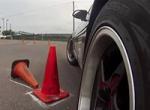
With a 2:59! Run what ya got! When I got the car some 9+ years ago, I never thought I'd be autocrossing. I figured I'd have a C5Z by now for track days...but a wife and two kids later, I'm autocrossing the ole 96 LT1, A4. It's still quite a blast.
Last edited by shakedown067; Apr 9, 2013 at 03:21 PM.

Burning Brakes


Joined: Jan 2012
Posts: 1,191
Likes: 153
From: Gilbert AZ
2018 C1 of Year Finalis4
Hello shakedown067,
Since the rear end is basically attached to the car by the bushings in the end of the batwing and the C-beam it would seem that your flex would be caused by either a possible loose bolt(s) on the c-beam or worn bushings on the batwing. There is the possibility that the c-beam is flexing or could have a crack in it. By design, I do not think you can eliminate all the flex without making some kind of mod to the setup. Maybe even solid bushings in the batwing.
I am wondering if the addition of a lower support from the bottom of the diff to the frame would help to keep it in place and alleviate the flex you are seeing.
See the attached pic for a simple fix. I know it is not a C4 frame but you get the idea. I have also seen where the c-beam gets additional gussets added to help stiffen it up to reduce flex.
Anyway, just some thoughts for you.

Since the rear end is basically attached to the car by the bushings in the end of the batwing and the C-beam it would seem that your flex would be caused by either a possible loose bolt(s) on the c-beam or worn bushings on the batwing. There is the possibility that the c-beam is flexing or could have a crack in it. By design, I do not think you can eliminate all the flex without making some kind of mod to the setup. Maybe even solid bushings in the batwing.
I am wondering if the addition of a lower support from the bottom of the diff to the frame would help to keep it in place and alleviate the flex you are seeing.
See the attached pic for a simple fix. I know it is not a C4 frame but you get the idea. I have also seen where the c-beam gets additional gussets added to help stiffen it up to reduce flex.
Anyway, just some thoughts for you.
Thread Starter
Le Mans Master
Joined: Dec 2003
Posts: 5,768
Likes: 33
From: Van Steel Corvettes
St. Jude Donor '12-'13
I'm not worried about eliminating it, unless it's not supposed to be there. Will have poly bushings installed in the batwing after this weekend's autocross. Just wasn't enough time to get it done before this weekend's event. May try to mount the camera where I can view the c-beam, but not sure if there is a good place for it.
Thanks for that pic! I need to save that for when I put my D36 under my truck...after I get a D44 for mine!
Thanks for that pic! I need to save that for when I put my D36 under my truck...after I get a D44 for mine!

Team Owner


Joined: Dec 2000
Posts: 21,094
Likes: 282
From: Phila., PA burbs
Those batwing bushings would have to be gone IMO to allow that much twisting for/aft since they are controlling lateral motion, not the roll. The bushing mount is perpendicular to the rolling of the diff carrier.
I would be awe-struck to learn the batwing itself was able to twist this much without breaking or having the lattice cracked somewhere..
I did not see it anywhere...
To Shakedown...
whats the effect of this? is there something in the handling that made you dig into the issue and discover the rolling batwing assy?
or just one of those sensations of "sumthins not quite right" ?
If the knuckles are stable...then the suspension is uneffected, so how'd ya know?
I would be awe-struck to learn the batwing itself was able to twist this much without breaking or having the lattice cracked somewhere..
I did not see it anywhere...
To Shakedown...
whats the effect of this? is there something in the handling that made you dig into the issue and discover the rolling batwing assy?
or just one of those sensations of "sumthins not quite right" ?
If the knuckles are stable...then the suspension is uneffected, so how'd ya know?

Thread Starter
Le Mans Master
Joined: Dec 2003
Posts: 5,768
Likes: 33
From: Van Steel Corvettes
St. Jude Donor '12-'13

Team Owner


Joined: Aug 2004
Posts: 21,543
Likes: 3,216
From: Park City Utah
Well man....this thread got to me and I couldn't help myself. I had to "geek out" and go vid mine to see what happens.
My vid shows about what I'd expect to see for flex/movement...not much. I've felt for a while that the C4 design is way better than the Caddy's design that I posted a vid of earlier, and I was right. The C-beam holds the Diff sound...when the C-beam is sound. See vid. I didn't edit it so the "high torque situations" occur at:
3:38 - 4:00 -I am in 1st gear going from no throttle to full throttle.
7:25 - 7:36 -I do a minor clutch dump in first gear, then do some mild drag type shifts to 3rd gear.
8:50 - 8:56 -I do a couple little clutch dumps and tire squeaks. Didn't want to go too crazy in my neighborhood and also didn't want to shake the camera loose.
9:55 > -I'm backing up a pretty steep driveway. Nothing major there, but the same thing in our Caddy and the diff would be flopping all over the place!
One additional note: IDK how much tq the OP is making, but my car is stock and I'm at 7000' elevation. So...330tq x .21 = 69. 330-69=261 ft lbs is about the max my car will make here.
X 2.68 (ZF first gear), x 3.45 (rear gear) = 2413 ft-lbs at the diff.
My vid shows about what I'd expect to see for flex/movement...not much. I've felt for a while that the C4 design is way better than the Caddy's design that I posted a vid of earlier, and I was right. The C-beam holds the Diff sound...when the C-beam is sound. See vid. I didn't edit it so the "high torque situations" occur at:
3:38 - 4:00 -I am in 1st gear going from no throttle to full throttle.
7:25 - 7:36 -I do a minor clutch dump in first gear, then do some mild drag type shifts to 3rd gear.
8:50 - 8:56 -I do a couple little clutch dumps and tire squeaks. Didn't want to go too crazy in my neighborhood and also didn't want to shake the camera loose.
9:55 > -I'm backing up a pretty steep driveway. Nothing major there, but the same thing in our Caddy and the diff would be flopping all over the place!
One additional note: IDK how much tq the OP is making, but my car is stock and I'm at 7000' elevation. So...330tq x .21 = 69. 330-69=261 ft lbs is about the max my car will make here.
X 2.68 (ZF first gear), x 3.45 (rear gear) = 2413 ft-lbs at the diff.
Last edited by Tom400CFI; Sep 30, 2015 at 05:54 PM.
Heel & Toe

Joined: Nov 2012
Posts: 23
Likes: 0
From: Bay Area Ca
I'm new to corvettes but it sure seems like the stock rear spring would provide torsional support as well as damping. It's pretty cool to see the suspension work under load, great for diagnosing and tuning.

Intermediate
Joined: Jan 2013
Posts: 45
Likes: 0
From: Drayden Maryland

Corvette Stories
The Best of Corvette for Corvette Enthusiasts

Every 2027 Corvette Engine Explained
Joe Kucinski
Designer Imagines A Corvette That Looks More Like a Corvette Than the Corvette
Verdad Gallardo
10 Ugly Corvettes That We Still Kinda Love
Joe Kucinski
Top 10 Most Expensive Corvettes Ever Sold on Bring A Trailer
Brett Foote
10 Things Every Corvette Owner Needs (2026 Edition)
Michael S. Palmer
8 Most "Only Corvette Owners Understand" Quirks and Problems
Pouria Savadkouei
10 Reasons the C6 Z06 is Still A Performance Benchmark After 20 Years
Joe Kucinski
How Much Horsepower Every Corvette Engine "LOST" in 1972
Joe Kucinski
Top 10 DOs and DON'Ts for Protecting Your Convertible Top!
Michael S. Palmer



Thread Starter
Le Mans Master
Joined: Dec 2003
Posts: 5,768
Likes: 33
From: Van Steel Corvettes
St. Jude Donor '12-'13
Awesome stuff guys. I've got a stock LT1, only mods are hi-flow cats and 3" exhaust. Will see just how much torque she's running on saturday as I'm attending the Powertech Performance St Judes Dyno Event on saturday! After watching the vid, it certainly looks like the diff still moves, not as much as mine, but with the spring off, that might be the difference. Thanks for taking that video Tom!
I think that beam could actually be bolted to. I've got a couple of guys I can talk to about that. Will have to crawl under there and take a look. I like the concept of extra diff support with the spring removed.
I'm thinking about getting the c-beam plates first to see how the diff reacts...
I've got some dough set aside for a D44, so if she breaks, I'll just have to do it sooner than later.
I think that beam could actually be bolted to. I've got a couple of guys I can talk to about that. Will have to crawl under there and take a look. I like the concept of extra diff support with the spring removed.
I'm thinking about getting the c-beam plates first to see how the diff reacts...
I've got some dough set aside for a D44, so if she breaks, I'll just have to do it sooner than later.
Last edited by shakedown067; Apr 11, 2013 at 08:24 AM.
Safety Car

Joined: Apr 2011
Posts: 3,660
Likes: 22
I REALLY like the idea of the longitudal link that Colabear provided...
Thats ENDS the problem and could potentially extend the life of all the rear bushings by limiting the "roll" of the batwing.
Thats the goal, to stabilize the batwing because the entire suspension is bolted to that which is bolted to the frame. A stable batwing means the suspension would be truely free-floating and the spring and shocks would be absorbing the motion and loading instead of the unpredictable and unknown loading of hard parts tweaking around in unforseen ways...
A simple cross brace left to right in front of the diff, then mfg the link to attach WITH the C-beam in place...its done. IMO of course...
Thats the lightest and simplest solution to this problem IF there is not something thats currently broken back there thats causing the diff roll.
Thats ENDS the problem and could potentially extend the life of all the rear bushings by limiting the "roll" of the batwing.
Thats the goal, to stabilize the batwing because the entire suspension is bolted to that which is bolted to the frame. A stable batwing means the suspension would be truely free-floating and the spring and shocks would be absorbing the motion and loading instead of the unpredictable and unknown loading of hard parts tweaking around in unforseen ways...
A simple cross brace left to right in front of the diff, then mfg the link to attach WITH the C-beam in place...its done. IMO of course...
Thats the lightest and simplest solution to this problem IF there is not something thats currently broken back there thats causing the diff roll.
Team Owner
Joined: Aug 2004
Posts: 21,543
Likes: 3,216
From: Park City Utah
I think that you should vid your C-beam. I really think that is where your movement is coming from -either from bending of the beam (meaning the beam is "bent" and not strong in that direction anymore) or poor attachment to the diff for what ever reason.
Well, if your car is a stock LT1, then we are putting similar tq to the rear. You are "at sea level", 340 tq (yours is 10 more than my '92) x your 3.07 1st gear, x your 2.59 rear = 2703 lb ft at the axle shafts. So with your gearing and elevation, you've got 300 more lbs of tq at the diff than I do, which is something...but not enough to cause the differences that we're seeing in these vids.
I don't like the idea of trying to support the diff housing from the spring perches. Why? Two reasons:
1. It doesn't solve any of the problems that the Batwing and the C-beam haven't already solved -if functioning as designed.
2. B/c the spring perches are only about 3-4" away from the batwing, as they relate to the centerline of the axle (the axis of our toque), and only about 6" apart on the longitudinal axis. That provides terrible "leverage" against the torque that the diff housing imparts on the car, and I feel would likely break the rear diff cover. The batwing already provides a ~3' lever arm on the longitudinal axis, and the C-beam is a good design as it provides a nice LONG ~8'? lever-arm to deal with the torque that the diff housing wants to exert on the car. It's a great design...I just thing the OP's got something wrong with his torque arm system (the C-beam). Interested to see what comes next!
Well, if your car is a stock LT1, then we are putting similar tq to the rear. You are "at sea level", 340 tq (yours is 10 more than my '92) x your 3.07 1st gear, x your 2.59 rear = 2703 lb ft at the axle shafts. So with your gearing and elevation, you've got 300 more lbs of tq at the diff than I do, which is something...but not enough to cause the differences that we're seeing in these vids.
I don't like the idea of trying to support the diff housing from the spring perches. Why? Two reasons:
1. It doesn't solve any of the problems that the Batwing and the C-beam haven't already solved -if functioning as designed.
2. B/c the spring perches are only about 3-4" away from the batwing, as they relate to the centerline of the axle (the axis of our toque), and only about 6" apart on the longitudinal axis. That provides terrible "leverage" against the torque that the diff housing imparts on the car, and I feel would likely break the rear diff cover. The batwing already provides a ~3' lever arm on the longitudinal axis, and the C-beam is a good design as it provides a nice LONG ~8'? lever-arm to deal with the torque that the diff housing wants to exert on the car. It's a great design...I just thing the OP's got something wrong with his torque arm system (the C-beam). Interested to see what comes next!
Last edited by Tom400CFI; Apr 11, 2013 at 10:39 AM.
Le Mans Master
Joined: May 2004
Posts: 5,866
Likes: 60
From: Hellinois
Finalist 2020 C4 of the Year - Modified
I don't see how the batwing bushings could deflect in that direction, that much. Look at the angle of deflection...not just the amount in inches...
How could heim joints for the suspension possibly have an effect on this issue??
The issue is the rearward rotation of the diff, under acceleration. The suspension (no matter how it's secured) has no impact on those forces. It's ALL about the C-beam. That is 1 of the 2, C-beam's jobs, is to prevent the rearward or forward rotation of the diff, under acceleration and deceleration, respectively. LONG before slapping stock, mushy bushings back into the suspension, as a test, I'd inspect the item who's job is to prevent that motion. I'd inspect the C-beam.
How could heim joints for the suspension possibly have an effect on this issue??
The issue is the rearward rotation of the diff, under acceleration. The suspension (no matter how it's secured) has no impact on those forces. It's ALL about the C-beam. That is 1 of the 2, C-beam's jobs, is to prevent the rearward or forward rotation of the diff, under acceleration and deceleration, respectively. LONG before slapping stock, mushy bushings back into the suspension, as a test, I'd inspect the item who's job is to prevent that motion. I'd inspect the C-beam.
This sounds feasible to me but I doubt that a stock LT-1 could deflect the c-beam that much.

Team Owner


Joined: Sep 2003
Posts: 25,406
Likes: 2,744
I mentioned several posts ago about "all of the heims" and I was told I was foolish! If the C-beam is secure and we've seen the response of the suspension with stock camber rods (LCA) and the transverse spring there's only 2 explanations and I mentioned replacing the after-market "heims" with stock components and do the drive again.
The LCA's (camber rods) should be easily swapped to check and note improvement if any! If there's none and the C-beam is secure then there's the obvious!
The LCA's (camber rods) should be easily swapped to check and note improvement if any! If there's none and the C-beam is secure then there's the obvious!
Team Owner
Joined: Dec 2000
Posts: 21,094
Likes: 282
From: Phila., PA burbs
Team Owner
Joined: Aug 2004
Posts: 21,543
Likes: 3,216
From: Park City Utah
"I'd inspect the item who's job is to prevent that motion. I'd inspect the C-beam."
It is not the job of the control arms secure to stabilize the diff. It just is not. That is done by the C-beam and the bat wing. Sorry if you felt insulted,
 but I hope that the OP spend his time inspecting the parts that are the most influential on the problem at hand. That would be the C-beam...not the suspension.
Safety Car
Joined: Apr 2011
Posts: 3,660
Likes: 22
bottom line, Seeing that diff roll as much as this one does, means that :
A. C-beam is loosely attached and allows that much travel at one end or the other
B. the C-beam is able to twist and flex that much (which aluminum is quite capable of doing since its an "active metal" that has high rebounding ability, aircraft wings for example)
C. the entire system, engine, trans, C-beam, diff moves as torque is redirected from good tire bite on road surface. If that C-bean rolls 1/4" at the diff end, 6ft away that would be 2" at the trans (haven't done the calc, just a guess).Not likely but possible.
D. there is minimal travel associated in ALL joints and connections involved in the suspension support system that individually would never allow this much diff roll BUT collectively DO provide this amount. 1mm is 1mm until you multiply it by 10...then its 10mm. Several mimimally "loose" spots added together.
It would be interesting to see how much of this travel vanishes with even the slightest wheel spin/slippage in corners and on hard acceleration. My bet is a BUNCH if not ALL. BUT because the OP has created a more solid rear suspension and now gets superior traction and power transmission from crankshaft to the road...the torque is no longer absorbed by the tires/road contact. Its now seen in the suspension where the STRESS will appear at some point in hard parts where before the wear was 99% in the tires...Just a theory from an engineering perspective.
A common problem is engineering is that when strengthening one part you essentially weaken another...or force stress to another location.
In any case, beam twist, loose joints, whatever it is, stress is being applied to hard parts and THAT WILL result in a failure someday...that is why I like the idea of the link from diff to frame with bushings that would stop the for/aft roll just as the batwing end bushings limit the left/right movement of the diff. The batwing was/is designed to tolerate high verticle loading by the lattice design, not so much twisting. Its not going to take these new stresses for long...Like the boom on a crane...up/down is fine. Almost limitless loading capabilities. L/R its fragile. Sideloading is a major contributor of boom failure.
In any case, its great to see good discussion and debate. Thats where ideas come from, not bickering and criticisms.
I congratulate the OP on the best and most exciting topic for discussion that I've seen in a very long time !
A. C-beam is loosely attached and allows that much travel at one end or the other
B. the C-beam is able to twist and flex that much (which aluminum is quite capable of doing since its an "active metal" that has high rebounding ability, aircraft wings for example)
C. the entire system, engine, trans, C-beam, diff moves as torque is redirected from good tire bite on road surface. If that C-bean rolls 1/4" at the diff end, 6ft away that would be 2" at the trans (haven't done the calc, just a guess).Not likely but possible.
D. there is minimal travel associated in ALL joints and connections involved in the suspension support system that individually would never allow this much diff roll BUT collectively DO provide this amount. 1mm is 1mm until you multiply it by 10...then its 10mm. Several mimimally "loose" spots added together.
It would be interesting to see how much of this travel vanishes with even the slightest wheel spin/slippage in corners and on hard acceleration. My bet is a BUNCH if not ALL. BUT because the OP has created a more solid rear suspension and now gets superior traction and power transmission from crankshaft to the road...the torque is no longer absorbed by the tires/road contact. Its now seen in the suspension where the STRESS will appear at some point in hard parts where before the wear was 99% in the tires...Just a theory from an engineering perspective.
A common problem is engineering is that when strengthening one part you essentially weaken another...or force stress to another location.
In any case, beam twist, loose joints, whatever it is, stress is being applied to hard parts and THAT WILL result in a failure someday...that is why I like the idea of the link from diff to frame with bushings that would stop the for/aft roll just as the batwing end bushings limit the left/right movement of the diff. The batwing was/is designed to tolerate high verticle loading by the lattice design, not so much twisting. Its not going to take these new stresses for long...Like the boom on a crane...up/down is fine. Almost limitless loading capabilities. L/R its fragile. Sideloading is a major contributor of boom failure.
In any case, its great to see good discussion and debate. Thats where ideas come from, not bickering and criticisms.
I congratulate the OP on the best and most exciting topic for discussion that I've seen in a very long time !
Last edited by leesvet; Apr 11, 2013 at 12:18 PM.