







autocross pics
Thread Starter
Team Owner


Joined: Mar 2001
Posts: 30,856
Likes: 293
From: Boston, Dallas, Detroit, SoCal, back to Boston MA
 autocross pics
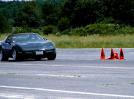
Some pics of me auto crossing
http://www.nickcrovo.com/2013/0420_autox/index.php?sfpg=MzgzX2NvcnZldHRlLyoqYjJhM TRjODQ3ZjE4ZTlmMDE3N2U1YzVjZWRkNGNiY2M
seem to have more body roll despite stiffer springs
I'm wondering if I lowered it just enough to mess up the roll center
either that or the 1st of the dual rate springs isn't quite stiff enough
http://www.nickcrovo.com/2013/0420_autox/index.php?sfpg=MzgzX2NvcnZldHRlLyoqYjJhM TRjODQ3ZjE4ZTlmMDE3N2U1YzVjZWRkNGNiY2M
seem to have more body roll despite stiffer springs
I'm wondering if I lowered it just enough to mess up the roll center
either that or the 1st of the dual rate springs isn't quite stiff enough

Team Owner


Joined: Aug 2004
Posts: 21,543
Likes: 3,216
From: Park City Utah
That does appear to be a lot. I agree...and I'd wonder the same thing, if I were you. Can you use some string (or something to find points and see where your roll center is now?

I that^ at Devens? How long have you autox'ing that car? I think I remember seeing that car back when I used to auto-x in the NERSCCA, but that was back in the early to mid '90's.
I that^ at Devens? How long have you autox'ing that car? I think I remember seeing that car back when I used to auto-x in the NERSCCA, but that was back in the early to mid '90's.
Racer

Joined: May 2012
Posts: 363
Likes: 0
From: Peabody MA
It could be those tires, Brian's car sticks like glue! What do you have for sway bars?
I find it surprising how much roll is in that picture, it sure didn't feel like it was that bad when I went for a ride. Those tires are REALLY sticky though.
I find it surprising how much roll is in that picture, it sure didn't feel like it was that bad when I went for a ride. Those tires are REALLY sticky though.
Thread Starter
Team Owner
Joined: Mar 2001
Posts: 30,856
Likes: 293
From: Boston, Dallas, Detroit, SoCal, back to Boston MA
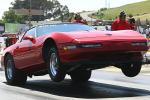
This one explains my oversteer issues.
I thought it was the stiff springs, but looks like I driving on three wheels!

It sure is Devens.
I didn't come back to Boston till 2002 through.
I thought it was the stiff springs, but looks like I driving on three wheels!
I didn't come back to Boston till 2002 through.
Le Mans Master


Joined: Oct 2007
Posts: 9,700
Likes: 3,469
From: Akron Ohio
2025 Corvette of the Year Finalist - Modified
2024 C5 of the Year Winner - Modified
2023 C5 of the Year Finalist - Modified
2022 C5 of the Year Finalist - Modified
St. Jude Donor '09-'10-'11
Brian,
By lowering the car you raise the RC reletive to the CG, but since the whole car is lower (including the CG) you still lower the RC as well. I dont think you messed anything up there.
What size anti-roll bars are you using? What are your wheel rates with the coilovers?
By lowering the car you raise the RC reletive to the CG, but since the whole car is lower (including the CG) you still lower the RC as well. I dont think you messed anything up there.
What size anti-roll bars are you using? What are your wheel rates with the coilovers?

Max G’s

Joined: Nov 2008
Posts: 2,751
Likes: 79
From: Monroe OH
NCM Sinkhole Donor
The rear wheel lifting is one of the disadvantages to going coil overs verse the transverse spring, ARTICULATION. The coil over will unload the wheel sooner than the transverse spring.
Corvette Stories
The Best of Corvette for Corvette Enthusiasts

Top 10 Most Expensive Corvettes Ever Sold on Bring A Trailer
Brett Foote
10 Things Every Corvette Owner Needs (2026 Edition)
Michael S. Palmer
8 Most "Only Corvette Owners Understand" Quirks and Problems
Pouria Savadkouei
10 Reasons the C6 Z06 is Still A Performance Benchmark After 20 Years
Joe Kucinski
How Much Horsepower Every Corvette Engine "LOST" in 1972
Joe Kucinski
Top 10 DOs and DON'Ts for Protecting Your Convertible Top!
Michael S. Palmer
Top 10 Most Explosive Corvettes Ever Made: Power-to-Weight Ratio Ranked!
Joe Kucinski
150 hp to 1,250 hp: Every Corvette Generation Compared by the Specs That Matter
Joe Kucinski
8 Coolest Corvette Pace Cars (and Replicas) of All Time
Verdad Gallardo
Instructor

Joined: Feb 2013
Posts: 150
Likes: 102
At a glance I wondered if the front end is diving due to too low a front spring rate? But the body doesn't look like it's diving THAT much, does it?
Brian, its a lot of work but you can download a 10 day trial of suspension analyzer and input your pickup and suspension and see what you did R/C wise when you lowered it. As some one above said, I kinda doubt it's a R/C issue
Look at earlier photos to verify the body roll has indeed increased, If it has and the springs are all that were changed. I would make a BIG spring rate change and try again.

Safety Car


Joined: Nov 2009
Posts: 3,973
Likes: 341
From: Adelaide South Australia
Kimmer and Kubs are pointing you in the right direction - sway bars , wheel rates and motion ratios, there is a direct corelation between spring rates and sway bar rates, if you put heavy springs in but dont change the sway bar it wont work properly,
there is a reason they are called an "anti-sway bar", its not necessarily the spring that stops body roll, its more the anti sway bar, but they need to be within a certain percentage of each other to work effectively,
google the subject - its a bit of a black art but just read up on it.
there is a reason they are called an "anti-sway bar", its not necessarily the spring that stops body roll, its more the anti sway bar, but they need to be within a certain percentage of each other to work effectively,
google the subject - its a bit of a black art but just read up on it.

Le Mans Master
Joined: Oct 2007
Posts: 9,700
Likes: 3,469
From: Akron Ohio
2025 Corvette of the Year Finalist - Modified
2024 C5 of the Year Winner - Modified
2023 C5 of the Year Finalist - Modified
2022 C5 of the Year Finalist - Modified
St. Jude Donor '09-'10-'11
The transverse spring actually acts as an anti-roll bar also. When the body rolls, the spring forms an S shape and pushes on the loaded side to keep the car from rolling. Going to a coil setup without changing bars could potentially increase roll.


Safety Car
Joined: Sep 2010
Posts: 3,752
Likes: 190
From: Indiana PA
That is TOO much body roll. My FE1 didn't roll that much. My Z07 setup definitely does not. Then again you have massive tires and massive grip.
How big are the bars? How stiff are those springs?
Is it possible they are TOO stiff and your getting a jacking effect? You mentioned oversteer. Jacking can certainly cause that.
How big are the bars? How stiff are those springs?
Is it possible they are TOO stiff and your getting a jacking effect? You mentioned oversteer. Jacking can certainly cause that.
Instructor
Joined: Feb 2013
Posts: 150
Likes: 102
Its always pushing on the loaded side, that's what holds the car up.
I suspect the overall rate of the spring may not be linear and as a result has a higher average rate than first indicated.
If springs are all that were changed I would try hard to quantify the original spring rate and duplicate that with the coils.
Going from a transverse leaf to a coil over(if that's what Brian did??) could also change the motion ratio. If that is the case wheel rate should be calculated and compared.
Last edited by waynger; May 4, 2013 at 01:48 AM.
Le Mans Master
Joined: Oct 2007
Posts: 9,700
Likes: 3,469
From: Akron Ohio
2025 Corvette of the Year Finalist - Modified
2024 C5 of the Year Winner - Modified
2023 C5 of the Year Finalist - Modified
2022 C5 of the Year Finalist - Modified
St. Jude Donor '09-'10-'11
Not the way I see it. That spring is held in place, very rigidly, in two points, any "s" shape movement, if there really is any, would not in any way act like a anti roll bar, the spring between those two mounts is virtually unbendable. Although the rate may be slightly affected.
Its always pushing on the loaded side, that's what holds the car up.
I suspect the overall rate of the spring may not be linear and as a result has a higher average rate than first indicated.
If springs are all that were changed I would try hard to quantify the original spring rate and duplicate that with the coils.
Going from a transverse leaf to a coil over(if that's what Brian did??) could also change the motion ratio. If that is the case wheel rate should be calculated and compared.
Its always pushing on the loaded side, that's what holds the car up.
I suspect the overall rate of the spring may not be linear and as a result has a higher average rate than first indicated.
If springs are all that were changed I would try hard to quantify the original spring rate and duplicate that with the coils.
Going from a transverse leaf to a coil over(if that's what Brian did??) could also change the motion ratio. If that is the case wheel rate should be calculated and compared.
Instructor
Joined: Feb 2013
Posts: 150
Likes: 102
Well if they don't, I don't know what does?
As I said, "That's the way I see it" .