When you click on links to various merchants on this site and make a purchase, this can result in this site earning a commission. Affiliate programs and affiliations include, but are not limited to, the eBay Partner Network.
Are there and advantages or disadvantages to removing and plugging the coolant line going into the throttle body. I have read where some recommend removing it but other than freeing up space what advantage?
The coolant is routed there based on Canadian winter testing of the engine in very cold weather. If its cold enough then the plates on the TB can freeze. However that will only occur for certain limited conditions of very low speeds in very cold weather soon after engine startup. At any other time, its just heating up the TB and preheating the air a little bit.
I have never heard of anyone coming back here and saying they experienced this problem in the decade I've been on here.
Advantage is mainly cosmetic, but the conductive heating of the coolant to the intake manifold (and hence, the air it breathes in) isn't really what you want. Once the engine is hot the heat soak from below will heat the intake manifold anyway though.
So its a take it or leave it thing in my opinion, do it if you want to, or not.
The coolant is routed there based on Canadian winter testing of the engine in very cold weather. If its cold enough then the plates on the TB can freeze. However that will only occur for certain limited conditions of very low speeds in very cold weather soon after engine startup. At any other time, its just heating up the TB and preheating the air a little bit.
I have never heard of anyone coming back here and saying they experienced this problem in the decade I've been on here.
Advantage is mainly cosmetic, but the conductive heating of the coolant to the intake manifold (and hence, the air it breathes in) isn't really what you want. Once the engine is hot the heat soak from below will heat the intake manifold anyway though.
So its a take it or leave it thing in my opinion, do it if you want to, or not.
Thank you Vader. That is exactly what I wanted to know. Off it comes.
It has to do with what year are you talking about. NOT all throttle bodies are the same...Because the Tuned-Port cars use the hose from the throttle body (front right side) to go to the heater core.
It has to do with what year are you talking about. NOT all throttle bodies are the same...Because the Tuned-Port cars use the hose from the throttle body (front right side) to go to the heater core.
Removing these two hoses will delete your heater....and you would have to join them somehow to get it back if you wanted to take them off.
Even though I understand why some people do what they do and change what GM designed. Especially if it is for an off-road application. But when it comes to a street driver...I often times wonder why they do it...because SERIOUSLY....in most cases...they are not using the power increase when driving it around town...which is minor in the scope of things. And this comment is because my shop is in a city where 'driving it like you stole it' is NOT recommended...unless you just have more money than COMMON SENSE and are willing to pay HIGH insurance premiums.
Removing these two hoses will delete your heater....and you would have to join them somehow to get it back if you wanted to take them off.
Even though I understand why some people do what they do and change what GM designed. Especially if it is for an off-road application. But when it comes to a street driver...I often times wonder why they do it...because SERIOUSLY....in most cases...they are not using the power increase when driving it around town...which is minor in the scope of things. And this comment is because my shop is in a city where 'driving it like you stole it' is NOT recommended...unless you just have more money than COMMON SENSE and are willing to pay HIGH insurance premiums.
DUB
Joining them together shouldn't be too much of an issue. Not doing for the HP I just read on here where some people have done it and wondered what the pros and cons would could be. To be honest when I took the hoses off they looked completely dry which kind of surprised me since antifreeze doesn't dry immediately and it had only been a day since I had drained it. Car is new to me so now I need to see if something else has gotten bypassed.
Its been so long since I did my coolant bypass I had to think a bit about the coolant hose routing. DUB is right, the coolant for the heater goes thru the TB first from the water pump. I just replaced my heater control valve with a different one from an early '80s full size Chevy and it doesnt have the long metal tubes the Vette one had. This change out allowed me to route the line from the WP to the heater core much better. It now lays in front of the AC compressor with the AC hoses and routes along the lower fender to connect to the HCV.
I did the coolant bypass to remove the extra crap that GM puts under the hood for the extremes the car may run into. While we are going to have a hard freeze here in FL in the next few day, I dont think my DD '85 will experience any TB butterfly icing up. Most folks who live in an area that may experience problems generally arent out driving in their Vette in the ice and snow. Its tucked away until spring time.
Joining them together shouldn't be too much of an issue. Not doing for the HP I just read on here where some people have done it and wondered what the pros and cons would could be. To be honest when I took the hoses off they looked completely dry which kind of surprised me since antifreeze doesn't dry immediately and it had only been a day since I had drained it. Car is new to me so now I need to see if something else has gotten bypassed.
If you are not trying to get that 'little bit more' power out of it. I would not mess with it. And knowing you are out in Arizona...I seriously doubt that taking this hot water area out of the equation in your throttle body would change anything that much..and if it does ...I doubt your could tell.....seeing how NO FUEL is at this location...and the heated air coming in 'is what it is'. AND YES...I am aware that trying to remove some of the heat could help...but I would LOVE to actually see chassis dyno results on the same car showing anything substantial.
My heater works fine, with a simple junction of the two original hoses, over a 1/2" copper tube.
I did it for the simplicity... only.
Here in FL, heating the TB is kinda' ridiculous. I bypassed the TB by splicing the two hoses together with a 3" section of 3/8" stainless brake line. I then put a 3/8" cap on the TB inlet. Mine's a '96 LT1.
You can get fancy and get rid of all this too. Take the coolant passage part off of the TB and trim off all the coolant passages Be careful and only trim the coolant parts as IIRC some of this bottom also is part of the IAC passages and cutting into that will ruin your TB. Or at least the bottom part. It really isnt that hard, I used a jigsaw, grinder and a dremel tool for the fine work. It took about an hour or so. If you want to do this, start spraying the mounting screws with penetrant as they easily break off. I think you can break 2 or 3 and still have enough to remount the plate. If they do break, once you remove the bottom plate there is enough of the screw sticking out of the TB to grab with a vice grip.
Its certainly not necessary, even the cap isnt but it makes the coolant bypass look like it came that way from the factory. Kinda the final touch so to speak.
I've had mine bypassed and I've never encountered any problems even though I use my car all year round. (Probably something like 40 000 miles during wintertime since 2007... in all the possible conditions you can think of)
About that heating on throttle body, my throttle body gets pretty warm even during winter without warmed coolant flowing through it... The engine block generates some amount of heat and that heat gets easily transferred through aluminum intake manifold into throttle body. Also the warm oil flowing around heads and splashing in the lifter valley does it's part of the 'heating process'.
I did the bypass on mine simply for the facts that it is a cleaner engine bay when I am reaching into things and also it is much easier for my annual stint of cleaning the TB.
I believe we need to ask ourselves a couple of question before we proceed.
1. Are we looking for performance?
2. Are we looking for cosmetics?
If you’re looking for a performance gain I would definitely remove the coolant from the TB, as it will affect the stock located MAT sensor and possibly affect the MAP sensor reading.
If you’re looking to clean-up the cosmetics of the engine bay, I would leave it alone. The TPI engine has a fairly cool and uncommon look to it.
The biggest positive to eliminating coolant running through the TB is that you're then able to remove the TB without messing with coolant. That was enough of a reason for me to do it. Mine's been bypassed for about 15 years now with no negative effects. This is in PA where it gets fairly cold in the winter. I've driven it in single digit temps many times without issue.
As far as the actual hose routing. I removed the heater hose from the intake to the TB and also the hose from the TB to the heater core. I replaced them with one longer hose from the intake straight to the heater core. Simple and no spiced joints in the middle.
I can't believe "cosmetics" is even mentioned. Does it really look any different afterward?
If you’re looking for a performance gain I would definitely remove the coolant from the TB, as it will affect the stock located MAT sensor and possibly affect the MAP sensor reading.
I doubt it will affect it that much. My TB isn't that hot with it as without when I had it. Besides, the MAT and MAP have values to go off. At this temp and this pressure and with the TPS at so much, I have this much air coming in. You certainly can get more aggressive and reprogram the unit if you want performance but that isn't what GM wanted as much when it built it since they had to conform to EPA.
That was enough of a reason for me to do it. Mine's been bypassed for about 15 years now with no negative effects. This is in PA where it gets fairly cold in the winter. I've driven it in single digit temps many times without issue.
Well, if you drove it in the arctic circle and certain conditions were just right......








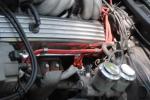
 Throttle body coolant intake