When you click on links to various merchants on this site and make a purchase, this can result in this site earning a commission. Affiliate programs and affiliations include, but are not limited to, the eBay Partner Network.
Without ruining my socket? 3 sockets now I've gone through on my cylinder head bolts, each one rounded out and slipping off long before I can reach 70 ft/lb.
I can tighten all the upper and middle bolts, just not the bottom ones. Those are ever so slightly harder to get a perfect perpendicular angle on with the wrench without hitting the cylinder head or something else in the engine bay. I'm doing this replacement the hard way, without pulling the engine. Without being able to get the bottom bolts yet on the 70 ft/lb pass, that means I can't get far at all with the way the sequence of tightening them goes.
So with different combinations of wobble / not wobble extensions of various lengths I've tried to get as straight and angle as possible on those bolt heads and the sockets just slip right off at around 40 ft/lbs. Recommendations?
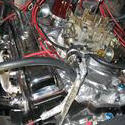
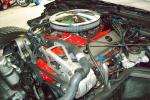
Edit: Pictures are below
Last edited by LouisvilleLT4; Dec 1, 2015 at 12:02 PM.
you never specified what year corvette, and i'm assuming from your user ID, its a 96 LT4. I can't shed much light on your issues, but I recently installed ARP's to my 85 L98 and used, 1/2" drive, 1/2"-6 point sockets - used a combination of shallow and/or deep, and short extensions, depending on the clearance. I used a 1/2 drive torque wrench, 3-step torque sequence to 70 lb.ft. (FSM pattern, 25-50-70, rechecked at 70 a half hour later). the (very old craftsman) sockets fit snug, and I never had a worry about rounding sockets or hardware. can't add much more. can't say for sure, but the 13mm socket may be a bit larger than the 1/2" socket. my ARP's were definitely U.S. standard, and I would only use 1/2" sockets. good luck - hope you resolve this issue.
What ARP part number is on the package? 12-point bolts & using wrong socket? What brand sockets?
You shouldn't be able to "round out" a correctly sized 6 point socket on a hex head bolt, break it (yes) but "round out" seems very unlikely (very). I would expect the 1/2" hex Joe mentioned if they're 6 point hex. 13mm socket is for sure a poor choice I'd think.
What ARP part number is on the package? 12-point bolts & using wrong socket? What brand sockets?
You shouldn't be able to "round out" a correctly sized 6 point socket on a hex head bolt, break it (yes) but "round out" seems very unlikely (very). I would expect the 1/2" hex Joe mentioned if they're 6 point hex. 13mm socket is for sure a poor choice I'd think.
correct me if i'm wrong - i'm fairly confident, but not 100% sure of this, but I don't think you can use a 6-point wrench or socket on a 12-point bolt (it just won't fit), although you can use a 12-point wrench or socket on a 6-point bolt. seems odd, but....
i'd be willing to bet the OP is using 12 point sockets on 6-point bolts. this combo works OK in most cases, but when you throw in the slightly larger, 13mm thing, not getting a straight shot on the bolt, and IMO, 70 ft.lbs is asking for trouble.
correct me if i'm wrong - i'm fairly confident, but not 100% sure of this, but I don't think you can use a 6-point wrench or socket on a 12-point bolt (it just won't fit), although you can use a 12-point wrench or socket on a 6-point bolt. seems odd, but....
I wouldn't even think of trying but NOT knowing what the OP's actually got or tried there's no telling. He mentions 1/2 - 13mm and also mentions 6 point specifically.
I asked part # of bolts and brand of sockets, very inexpensive sockets have a substantial recess to the actual tooling. A less than centered socket to hex of bolt will slip every time. He mentions difficulty accessing in his original post also.
From: Las Vegas - Just stop perpetuating myths please.
First question is are those torque to yield (TTY) head bolts? Because TTY bolts have to have a torque/angle meter to measure the last 80 degrees of torque - not foot-pounds. But the short bolts (lower bolts) had a smaller angle spec = only 67 degrees which should translate to lesser ft-lbs. U say 70 ft-lbs so i assume a standard type head bolt - but u need to verify if the short bolts use less torque. Now my Chevy Power Manual (1988) says standard bolt torque for alum heads is only 65ft-lbs and i read post from L98 owners say the short bolts are only 60ft-lbs.
Well is the torque wrench calibrated? I had a Hobo Fake Tq Wch lose cal and shear off 1/4-20 bolt heads. Really best TW for holding a cal is the beam wrench.
Finally it reads like u need a very strong but thin wall socket. U will have to shop around for that or maybe ARP has a specialty tool for this (they want to sell u of course). I recall 65ft-lbs is a lot of torque and takes plenty of grunt to get it there w/o a cheater bar.
From: Las Vegas - Just stop perpetuating myths please.
Originally Posted by ex-x-fire
If you think its the socket then get a new 1/2 6 pt impact socket.
Im thinkn now the smaller bolt head (1/2" verses 5/8") should allow more clearance for a thicker socket. A new impact socket should be tight - but maybe not now that the bolt head has rounded. Maybe only fix is to buy new "short" bolts and use a fresh impact socket.
Well I have no idea what I'm doing wrong. I went to Sears and bought brand new 1/2 inch craftsman sockets, and they're still slipping right off these increasingly rounded-off ARP head bolts.
Now they're damaged in the same way as my other sockets - little chunks taken out to the right side of each interior corner.
Why won't my 1/2" sockets seat well enough on these bolts to stay on them while I turn? Why do they slip off when I hit about 40 ft/lb?
I checked my torque wrench against another one, and I seriously doubt I'm strong enough to exceed the required 70 ft/lb by that much. So it seems to just be a combination of a bad initial angle on the bolts (as I try to pry down diagonally from my seated position on the wheel) plus a little damage to the bolt that's also encouraging slipping. Why such minor damage encourages the 6-point sockets to slip to such a major degree is a mystery.
Is there any trick to holding the torque wrench better? Maybe I'm just not good at turning it in a plane exactly perpendicular to the bolt. I'm grabbing the wrench at the far end and twisting in approximately that plane, but I can tell the amount of force makes the wrench and socket want to **** a different direction. I'm using my other hand on the head of the torque wrench to try to stabilize it from cocking more, but yeah right, there's just too much force at play for that assistance to really work. It just ***** until it slips off.
question - is this happening on all bolts, or just a few? honestly dude, I have never seen anything like that, and right now, i'm a bit puzzled. when I did my L98 (with ARP's) they went in perfect - ZREO issues. having this happen to three, new craftsman sockets, tells me the problem is not with the sockets. the only thing left is the bolts, the mechanics of the torqueing process, that is, not getting the socket perfectly square on the head of the bolt, or the torque wrench itself. my suggestion right now is to get another torque wrench. I can't see any over torqueing would cause that kind of damage without you sensing a problem. I would still get another torque wrench though. someone also mentioned a impact socket - that might be worth consideration. personally, I would not use those damaged bolts. hopefully, you can remove them with out issues. it's a tough nut to swallow, because they are not cheap, but i'd get a new set of bolts. something is wrong here, i'm sure it's simple, but we're just not seeing it. IF this is happening on all bolts, I might suspect the bolts, but that would be a LONG shot.
the torqueing process itself - sounds like you're doing it right - using the palm of your left hand and apply slight pressure on the head of the torque wrench, and directly down on the fastener. the little extra insurance the socket is firmly seated squarely on the fastener, and using only the handle of the t-wrench, and applying a smooth, rotating action.
finally - shop vac the hell out of that thing to get all those little metal pieces that I'm seeing in the pic!
one more thing - you are using a properly sized torque wrench for the job, and no kind of torque amplifier or anything? it might sound like an odd question, but I just have to ask. just puzzled and thinking outside the box.
What kind of lube are you using? I have never used ARP assembly lube but I have herd of people having problems with it. There are lower torque values for lubed vs dry, but your not even close to the final torque value. I'd call ARP they might at least sell you just the damaged bolts for less than the whole kit. They may even want you to send them the damaged bolts to test. ARP makes good stuff but when you produce tons of something some bad parts do get thru. If they do want the bolts, they can test sections of it and find out if it's defective or user error.
FWIW, I used the ARP assembly lube without issues - to be honest, I think it's the same as another assembly lube. for thread sealant, also ARP. one thing I did do, is clean the bolts prior to using the lube and sealant. ARP's come with some sort of corrosion resisting coating, and ARP tech support said the coating is compatible with assembly lube, but told me to clean the threads prior to using sealant. I went ahead and solvent cleaned all the bolts before use. my L98 was my first experience with ARP head bolts, and I did not experience any problems. in the past, I pretty much used new OE hardware.
i'm not sure how thread sealant on the threads would affect torque values, but i'm thinking assembly lube under the washer shouldn't. any kind of lubricant on the thread could cause, up to a 20% error in torque values. any error, whether caused by lube or sealant, I wouldn't think would contribute to the kind of bolt damage we're seeing here.
one more question to the OP - the ID of the washers are beveled on one side - are the washers oriented correctly to the bolt head? the beveled side of the washer to the underside of the bolt flange - IMPORTANT! just trying to think outside the box.
Designer Imagines A Corvette That Looks More Like a Corvette Than the Corvette
Slideshow: A Jaguar designer's personal project imagines what a modern front-engined Corvette might look like if Chevrolet revisited the golden age of the Stingray.






 Okay how do I tighten a bolt












 Im thinkn now the smaller bolt head (1/2" verses 5/8") should allow more clearance for a thicker socket. A new impact socket should be tight - but maybe not now that the bolt head has rounded. Maybe only fix is to buy new "short" bolts and use a fresh impact socket.