






Cam timing

Instructor

Joined: Jul 2016
Posts: 222
Likes: 11
From: Plymouth MI

Do you even know what drives the oil pump? By the way, the oil pump does not have to be set in sync with the cam or crank.
What you have basically done here is prove my point. The cam and ignition timing MUST be in PROPER sync!
Thanks!
Drifting


Joined: Oct 2006
Posts: 1,328
Likes: 14
From: Stafford Connecticut
I just read the Bad *** timing article it has some very good info in there.It was very easy to understand and gave me a lot to think about.And I can't believe I read this whole thread.But I see that GREGGPENN and I have a lot of the same issues with our motors.Mine is a built 400 small block.

Le Mans Master


Joined: Jun 2009
Posts: 6,528
Likes: 752
From: South Dakota
First, I'm sorry that your simple questions resulted in such a long thread without answering your questions.
I have seen advancing or retarding the cam as a common practice to tune a cam to a desired state. For effects of cam timing see: http://www.compcams.com/Pages/413/ca...ion-angle.aspx
I am not certain how much is too much advance on the cam. I suspect that 8 degrees may be enough that you might have been better with a different cam (but may still work fine), but at 4 degrees advanced it may be "tuning" the cam and should shift the power band a little lower as you stated in your post as a torque monster and any loss of high rpm power doesn't seem to be an issue if you are only running to 4 or 5k rpm.
I have not heard one way or another that the advanced cam will create an overheating condition.
If you are having a heat problem when the AC is on during the summer, I would look at whether the AC is turning on the fan like it is supposed to or if it is not functioning. It should turn on when the AC is turned on.
Since it is common to "tune" the cam to fine tune the performance rpm, I would ask whether you are happy with the performance? If you are happy with the performance there may not be a need to set the timing on the cam again.
If you like the performance, then simply address the heat. Check the fan function, and make sure no blockages to air flow through the radiator. Sometimes a "wetter" additive in the coolant helps too. Higher power engines make more heat and overbored engines put more heat into the coolant. So it may be that a larger radiator could be a good option.
As with any engine changes, you will need to set the ignition timing to get the best performance without pinging.
Good luck.
I have seen advancing or retarding the cam as a common practice to tune a cam to a desired state. For effects of cam timing see: http://www.compcams.com/Pages/413/ca...ion-angle.aspx
I am not certain how much is too much advance on the cam. I suspect that 8 degrees may be enough that you might have been better with a different cam (but may still work fine), but at 4 degrees advanced it may be "tuning" the cam and should shift the power band a little lower as you stated in your post as a torque monster and any loss of high rpm power doesn't seem to be an issue if you are only running to 4 or 5k rpm.
I have not heard one way or another that the advanced cam will create an overheating condition.
If you are having a heat problem when the AC is on during the summer, I would look at whether the AC is turning on the fan like it is supposed to or if it is not functioning. It should turn on when the AC is turned on.
Since it is common to "tune" the cam to fine tune the performance rpm, I would ask whether you are happy with the performance? If you are happy with the performance there may not be a need to set the timing on the cam again.
If you like the performance, then simply address the heat. Check the fan function, and make sure no blockages to air flow through the radiator. Sometimes a "wetter" additive in the coolant helps too. Higher power engines make more heat and overbored engines put more heat into the coolant. So it may be that a larger radiator could be a good option.
As with any engine changes, you will need to set the ignition timing to get the best performance without pinging.
Good luck.
I was talking to a local builder this afternoon. He WANTED me to post (repost?) a question to the forum....
I probably brought this up when I built my 383 five years ago, but I think it's possible/probable that my cam is installed resulting in 8-deg mechanical advance.
Because it was several months after purchase before installation, I had forgotten there was 4-deg advance "ground in" to the cam. And, though I can't remember for certain, I think it was installed in the 4-deg notch on the timing kit. So...it MAY have 8-deg total advance.
After this thought occurred to me, I called Bullet -- who made the cam. I asked them if I had screwed up. The guy I talked to was convinced I was fine...and that in many cases, 8-deg is desirable for a street car.
I never saw any problem to prove it was a bad move so I let it go. In fact, the car is so d@mn snappy, I decided that my little "torque monster" had benefited from this "mistake". Mostly, it's driven on the street and doesn't exceed 4-5k rpms. PROBABLY that's a combination of it running out of torque by then AND that it gets up to speed so fast underneath that level. It doesn't take but 2-3 seconds in any gear to "accomplish a goal".
I would also describe the torque as big block territory. And, numbers on the dyno bore that out.
The reason I bring this up is the long-term issue I've had with temps rising with the A/C on in the summertime. The guy I spoke with today was CONVINCED I shouldn't need an aftermarket fan with a large radiator on a 383. In his "career", he's never seen the need for a fan upgrade...on ANYTHING.
Hey...it's hard to argue with a guy "in the profession".
At the end of the conversation, I remembered the 8-deg advanced config when he said "bingo"! I think that's the "problem". At his insistence, I decided to post and see if/who feels that's detrimental (in any other way than power curve)?
Personally, I think a swap to an HSR and better exhaust would wake things up -- if that was my ultimate goal. Having super-advanced mechanical (and electrical) timing just makes it more fun on the way to the grocery store!
I probably brought this up when I built my 383 five years ago, but I think it's possible/probable that my cam is installed resulting in 8-deg mechanical advance.
Because it was several months after purchase before installation, I had forgotten there was 4-deg advance "ground in" to the cam. And, though I can't remember for certain, I think it was installed in the 4-deg notch on the timing kit. So...it MAY have 8-deg total advance.
After this thought occurred to me, I called Bullet -- who made the cam. I asked them if I had screwed up. The guy I talked to was convinced I was fine...and that in many cases, 8-deg is desirable for a street car.
I never saw any problem to prove it was a bad move so I let it go. In fact, the car is so d@mn snappy, I decided that my little "torque monster" had benefited from this "mistake". Mostly, it's driven on the street and doesn't exceed 4-5k rpms. PROBABLY that's a combination of it running out of torque by then AND that it gets up to speed so fast underneath that level. It doesn't take but 2-3 seconds in any gear to "accomplish a goal".
I would also describe the torque as big block territory. And, numbers on the dyno bore that out.
The reason I bring this up is the long-term issue I've had with temps rising with the A/C on in the summertime. The guy I spoke with today was CONVINCED I shouldn't need an aftermarket fan with a large radiator on a 383. In his "career", he's never seen the need for a fan upgrade...on ANYTHING.
Hey...it's hard to argue with a guy "in the profession".
At the end of the conversation, I remembered the 8-deg advanced config when he said "bingo"! I think that's the "problem". At his insistence, I decided to post and see if/who feels that's detrimental (in any other way than power curve)?
Personally, I think a swap to an HSR and better exhaust would wake things up -- if that was my ultimate goal. Having super-advanced mechanical (and electrical) timing just makes it more fun on the way to the grocery store!
Thread Starter
Race Director


Joined: Nov 2003
Posts: 12,223
Likes: 446
From: Overland Park Kansas
2020 Corvette of the Year Finalist (appearance mods)
C4 of Year Winner (appearance mods) 2019
To anyone reading and wonder IF I'm a total idiot (since I haven't posted as much in the past 2-3 years), I'm definitely not the smartest but I understand quite a bit after building a stroker, learning ODB1 programming, etc...
I did some polishing, custom fab, and, essentially was building an exclusive "street motor"....


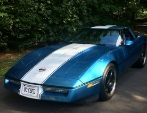
And, in addition to these more finished pics, I found a few of the build. I will post those after uploading. (Maybe someone will notice something related to this recent (set of) topics.
I did some polishing, custom fab, and, essentially was building an exclusive "street motor"....


And, in addition to these more finished pics, I found a few of the build. I will post those after uploading. (Maybe someone will notice something related to this recent (set of) topics.
Thread Starter
Race Director
Joined: Nov 2003
Posts: 12,223
Likes: 446
From: Overland Park Kansas
2020 Corvette of the Year Finalist (appearance mods)
C4 of Year Winner (appearance mods) 2019
I have seen advancing or retarding the cam as a common practice to tune a cam to a desired state. For effects of cam timing see: http://www.compcams.com/Pages/413/ca...ion-angle.aspx
I am not certain how much is too much advance on the cam. I suspect that 8 degrees may be enough that you might have been better with a different cam (but may still work fine), but at 4 degrees advanced it may be "tuning" the cam and should shift the power band a little lower as you stated in your post as a torque monster and any loss of high rpm power doesn't seem to be an issue if you are only running to 4 or 5k rpm.
I am not certain how much is too much advance on the cam. I suspect that 8 degrees may be enough that you might have been better with a different cam (but may still work fine), but at 4 degrees advanced it may be "tuning" the cam and should shift the power band a little lower as you stated in your post as a torque monster and any loss of high rpm power doesn't seem to be an issue if you are only running to 4 or 5k rpm.
I already have a Champion dual-row all-alum radiator. Fans are working correctly. I just want to PREVENT temps from creeping above 205-210 -- if possible. In essences, that's BETTER control that the 89 L98 was delivered from the factory. It's where I think I should be considering my dynamic compression SHOULD be a good bit higher than stock -- after converting to a stroker, modest street cam, 5.7" rods, and advanced cam orientation.
So people know, I shaved the Eliminator heads (to the low 50's) before deciding to go with a whole new block. Because of that, I felt it safer to select dish pistons to keep compression out of the clouds. Had I decided on a stroker from the start, I would have gone with flat-tops and the standard 65cc setup. That said, dish pistons ARE supposed to create the best, small "fireball" and therefore, efficient combustion chamber. (That's according to SOME theory...LOL).
The good news was I save a ton of money on the dish setup -- which paid me back for the head decking costs. At the worst, it was a wash.
More pics from the build. To the builders, do you have any comment about removal of weight from the crank counter-weights?
Wish I could tell from the degree-wheel pic how the cam was oriented! :-)


Last edited by GREGGPENN; Sep 4, 2016 at 08:35 PM.
Corvette Stories
The Best of Corvette for Corvette Enthusiasts

Corvette & Porsche 911: How Two Icons Conquered the Last 25 Years
Joe Kucinski
2027 Chevrolet Silverado 1500 First Look: Everything You NEED to Know!
Michael S. Palmer
5 Best & 5 Worst Corvette Daily Drivers
Joe Kucinski
The Headlights of Every Corvette Generation Explained
Joe Kucinski
5 Best & 5 Most Overrated Corvette Track Packages of All Time!
Joe Kucinski
Every 2027 Corvette Engine Explained
Joe Kucinski
Designer Imagines A Corvette That Looks More Like a Corvette Than the Corvette
Verdad Gallardo
10 Ugly Corvettes That We Still Kinda Love
Joe Kucinski
Top 10 Most Expensive Corvettes Ever Sold on Bring A Trailer
Brett Foote
Drifting
Joined: Oct 2006
Posts: 1,328
Likes: 14
From: Stafford Connecticut
What damper are you using and what is the diameter of it?You mentioned in your thread you had a slight vibration in your engine.Very nice looking engine.
Last edited by steven mack; Sep 4, 2016 at 08:19 PM. Reason: add info
Thread Starter
Race Director
Joined: Nov 2003
Posts: 12,223
Likes: 446
From: Overland Park Kansas
2020 Corvette of the Year Finalist (appearance mods)
C4 of Year Winner (appearance mods) 2019
The pistons were one of the best parts of the build. As I mentioned (above), I ended up needing to buy dished pistons after decking my heads. Because 99% of builders go with flat-tops, I won an ebay auction for these sweet Wisecos.... Picked them up for about half price ($300 savings).

Pro-Race Pro Street Model 34266 (with removable weight)
http://www.pro-race.com/applications/sb-chevrolet/
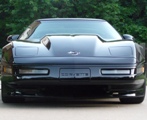
I added another picture of the front (above).

http://www.pro-race.com/applications/sb-chevrolet/
I added another picture of the front (above).
Last edited by GREGGPENN; Sep 4, 2016 at 09:18 PM.
Thread Starter
Race Director
Joined: Nov 2003
Posts: 12,223
Likes: 446
From: Overland Park Kansas
2020 Corvette of the Year Finalist (appearance mods)
C4 of Year Winner (appearance mods) 2019
I might start another thread (or do a search) to see what criteria people use for setting "maximum" timing on the lower idle rows. (I asked this back on page 5...but WTF.)
I don't have any pinging or knock-counts...and it's about the same as the stock values in those lower rows. Because the Eliminators "need" less timing up top, maybe I SHOULD back off the lower values -- even if they can tolerate it? FWIW, Back in 2010, I left them higher (after trying less) because it made for a smoother transition of idle).
I'll also bring this post forward in case anyone has some thoughts on this method of RA balancing. (You can see the drilling in the pics of my crank below).

I don't have any pinging or knock-counts...and it's about the same as the stock values in those lower rows. Because the Eliminators "need" less timing up top, maybe I SHOULD back off the lower values -- even if they can tolerate it? FWIW, Back in 2010, I left them higher (after trying less) because it made for a smoother transition of idle).
I'll also bring this post forward in case anyone has some thoughts on this method of RA balancing. (You can see the drilling in the pics of my crank below).
The OTHER thing I have to wonder about (with my builder) is how the RA balance was done. Back in 2011, I took the issue to Speedtalk.
I have a slight vibration that's been there since assembly. The builder removed weight from crank counterweights versus adding heavy metal. I wanted to make sure that's an acceptable means for building. There were at least two builders who said "Watch out...the bearings are GONNA fail". In short, they dissed the approach and said the bearings WOULD fail.
Of course, the builder laughed at the internet trolls who live on the forum....and said his circle track engines run high-rpms without bearing failure all the time.
On the OFF chance his technique wasn't the best, I opted to leave the motor as a "torque monster". During my process of learning/building, one thing pointed out was RPMs were the killer of cranks. I put 2 and 2 together and decided making power "down low" was the safest way to insure several thousand bucks didn't go down the drain.
So, I left it "as is" -- figuring it was the safe choice.
Despite that, I've held onto an HSR intake that I've had since the build. Part of me wants to tear it down, check/change/retard the timing, and rev it higher. But, that's not the part that "knows" how much trouble I might likely get in which a motor that spins higher and is more fun -- up top.
I guess I should also say that the 4-deg advance was selected for the specific purpose of using an HSR. Since an HSR would have LOTS more top-end, EA "designed in" a 4-deg bump in low-rpm performance to help maximize THAT intake for the street.
So...either way, 4-deg bump on the cam seemed like the way to stay.
EDIT: After mentioning Speedtalk's threat of bearing failure, I SHOULD point out it's made it 25k miles w/o problem.
I have a slight vibration that's been there since assembly. The builder removed weight from crank counterweights versus adding heavy metal. I wanted to make sure that's an acceptable means for building. There were at least two builders who said "Watch out...the bearings are GONNA fail". In short, they dissed the approach and said the bearings WOULD fail.
Of course, the builder laughed at the internet trolls who live on the forum....and said his circle track engines run high-rpms without bearing failure all the time.
On the OFF chance his technique wasn't the best, I opted to leave the motor as a "torque monster". During my process of learning/building, one thing pointed out was RPMs were the killer of cranks. I put 2 and 2 together and decided making power "down low" was the safest way to insure several thousand bucks didn't go down the drain.
So, I left it "as is" -- figuring it was the safe choice.
Despite that, I've held onto an HSR intake that I've had since the build. Part of me wants to tear it down, check/change/retard the timing, and rev it higher. But, that's not the part that "knows" how much trouble I might likely get in which a motor that spins higher and is more fun -- up top.
I guess I should also say that the 4-deg advance was selected for the specific purpose of using an HSR. Since an HSR would have LOTS more top-end, EA "designed in" a 4-deg bump in low-rpm performance to help maximize THAT intake for the street.
So...either way, 4-deg bump on the cam seemed like the way to stay.
EDIT: After mentioning Speedtalk's threat of bearing failure, I SHOULD point out it's made it 25k miles w/o problem.
Last edited by GREGGPENN; Sep 4, 2016 at 09:34 PM.
Drifting
Joined: Oct 2006
Posts: 1,328
Likes: 14
From: Stafford Connecticut
My friend who owns a auto machine shop has a modern crank balancing set up top of the line .Removing material from the crank counter weights is standard procedure.Some times if a little weight needs to be added he will add weight by welding.I have seen him add heavy metal when needed.Heavy metal is added to the sides of the counter weights by drilling them and pressing the weight in.Adding heavy metal is a science .If done wrong at high RPM it can stress the counter weight and fracture it.
Last edited by steven mack; Sep 5, 2016 at 08:08 AM. Reason: add info

Melting Slicks

Joined: Dec 2008
Posts: 2,772
Likes: 64
From: Mystic CT
GREGGPENN there is no such thing as a balanced at all speeds 90 degree V8. I have balanced hundreds and taught by the guys at Stewart Warner years ago when they were the best maybe they still are who knows now.
The amount of counter weight is linked to the total mass of the crank. The factory and most quality aftermarket companies have a 3d model that goes through a FEA simulation to see if sound. If you take mass out of the counter weights you have to take mass out of the throws. I have done what he did many times but also hollow drilled the throws at the same time. It is not a job for the faint of heart as a miss on location turns the crank into junk. With that said all the ones I did were for short track ovals with no expectancy of a long life or smooth low speed operation. I mention short track as only on the throttle for a very short time at WOT. Daytona would be pretty shaky with one as lots of WOT.
If you want a lightened crank buy one from someone like Sonny Bryant Callis Moldex Crower not someone using Chinese forgings. Give the correct bob weight to balance you should have been given a card with this info from the last shop and it will come ready to use. Let them know as well the rpm range of greatest interest so the know what balance percentage to use. A passenger car V8 uses 50% and race engines can vary all over the place from under balanced to over balanced unless you have very deep pockets 50% is just fine. Just remember it is never balanced perfectly at every RPM it is just not possible due to the geometry of the engine.
The shop should have neutral balanced the flywheel and damper as well so they can be easily replaced. An interesting question might be what tolerance he used to balance the assembly and if +- 0 you have been lied to. If you buy a custom crank ask them what they would like to see for a damper as well.
The amount of counter weight is linked to the total mass of the crank. The factory and most quality aftermarket companies have a 3d model that goes through a FEA simulation to see if sound. If you take mass out of the counter weights you have to take mass out of the throws. I have done what he did many times but also hollow drilled the throws at the same time. It is not a job for the faint of heart as a miss on location turns the crank into junk. With that said all the ones I did were for short track ovals with no expectancy of a long life or smooth low speed operation. I mention short track as only on the throttle for a very short time at WOT. Daytona would be pretty shaky with one as lots of WOT.
If you want a lightened crank buy one from someone like Sonny Bryant Callis Moldex Crower not someone using Chinese forgings. Give the correct bob weight to balance you should have been given a card with this info from the last shop and it will come ready to use. Let them know as well the rpm range of greatest interest so the know what balance percentage to use. A passenger car V8 uses 50% and race engines can vary all over the place from under balanced to over balanced unless you have very deep pockets 50% is just fine. Just remember it is never balanced perfectly at every RPM it is just not possible due to the geometry of the engine.
The shop should have neutral balanced the flywheel and damper as well so they can be easily replaced. An interesting question might be what tolerance he used to balance the assembly and if +- 0 you have been lied to. If you buy a custom crank ask them what they would like to see for a damper as well.
Drifting
Joined: Oct 2006
Posts: 1,328
Likes: 14
From: Stafford Connecticut
That's some good info to know.Especially the part of changing the damper.I had my rotating assembly balanced using an 8 inch damper.It would not clear the cross member.So I had to use a 6 3/4 inch damper.I have a 400 externally balanced motor.My machinist said it would be fine.From your post above because you actually have a lot of experience balancing cranks I feel a lot better now.Thanks,Steve
Melting Slicks
Joined: Dec 2008
Posts: 2,772
Likes: 64
From: Mystic CT
That's some good info to know.Especially the part of changing the damper.I had my rotating assembly balanced using an 8 inch damper.It would not clear the cross member.So I had to use a 6 3/4 inch damper.I have a 400 externally balanced motor.My machinist said it would be fine.From your post above because you actually have a lot of experience balancing cranks I feel a lot better now.Thanks,Steve
In all honesty the 8 inch damper is really needed and would figure out what needed to be done to fit it in there. If the engine is not installed I would look real hard to see what to do. Any good welder can notch and brace the front cross member in under an hour if they actually want to have at it. Your call there. Damper size is linked to the mass of the rotating assembly and a big difference between a 302 and a 406 but saying that even the high winding 302 engines carried an 8 inch damper and a message there if listening.
You welcome on the help. I may not be a wiz with a C4 but race engines, efi/data acq/wiring harness work and proper shop practices not a big deal.
Last edited by ddahlgren; Sep 5, 2016 at 01:32 PM.
Drifting
Joined: Oct 2006
Posts: 1,328
Likes: 14
From: Stafford Connecticut
Thanks Ddahlgren you confirmed what I have been wrestling with,That I should find a way to get the 8 inch damper the motor was balanced with on the engine.I know a internal balanced engine is best.Thanks again for your reply,Steve
Melting Slicks
Joined: Dec 2008
Posts: 2,772
Likes: 64
From: Mystic CT
OK saying all that don't make fun of me when my C4 makes me scratch my head LOL
Thread Starter
Race Director
Joined: Nov 2003
Posts: 12,223
Likes: 446
From: Overland Park Kansas
2020 Corvette of the Year Finalist (appearance mods)
C4 of Year Winner (appearance mods) 2019
When I hired this guy/shop, I was given the impression a custom engine would/could be balanced "better-than-factory" and...that it would be closer to zero grams as well. He didn't explain anything like you have -- though (as you might have noticed by my history of posting), I normally ask enough questions to let my "audience" know what I'm looking for.
I'm not saying I didn't like my builder...rather the opposite. He was patient, helpful, and we talked several times during the build. For sure, he took too long because he had the parts at least 6 months. At the time the "other" name shop in town had higher lead time.
I chose this guy (and his partner) because they'd been in business for quite awhile. In fairness, the ran a "speed shop" that didn't focus on engine building all the time. It was a full-service machine shop where they worked on anything from u-joints to heads to blocks....basically anything requiring "machining".
Incidentally, both shops [I had to chose from] claimed the ability to deliver cadillac-smooth, better-than-factory balancing in a 383 stroker. Both also said it would last longer than the factory 350.
The amount of counter weight is linked to the total mass of the crank. The factory and most quality aftermarket companies have a 3d model that goes through a FEA simulation to see if sound. If you take mass out of the counter weights you have to take mass out of the throws. I have done what he did many times but also hollow drilled the throws at the same time. It is not a job for the faint of heart as a miss on location turns the crank into junk. With that said all the ones I did were for short track ovals with no expectancy of a long life or smooth low speed operation. I mention short track as only on the throttle for a very short time at WOT. Daytona would be pretty shaky with one as lots of WOT.
That's when heavy-metal was explained to me. At that time, the shop had already had my block/parts for 6 months. The builder I selected let me know he refrained from heavy metal use and only balanced via drilling. The builder said that he'd had heavy weight fail during his (dirt-track?) racing and he stopped using it in his builds. By doing it this way, I felt he eliminated one possible failure point. It sounded reasonable. Plus, to swap all the (otherwise prepped) parts to the OTHER shop in town [that DID use heavy metal] would have required another 6+ month wait.
I've had several GREAT advisors from this forum over the years. They have brought me from a guy who could fix a water pump, brakes, etc...to someone who understands how a motor works. At the time, I conversed heavily with another speed-shop owner who became by designer. He was good with and used Engine Analyzer (EA). His "bottom-line" in making that final choice of balancing was to trust the person I'd stuck with throughout the process. It made sense considering he knew everything that went into the "mechanicals" of the build. So, I stuck with the option to drill for balancing the RA.
It wasn't until the engine was installed, and run, that I questioned some vibration appearing at a couple of places in it's rpm range. My OTHER vehicle is a 3.5L (stroked) Isuzu Vehicross. Isuzu "stroked" their 3.2L motor (from the Rodeos) to create that powerplant for the Troopers and Vehicross. And, I will say the vibration in my 383 is no worse that the 3.5L -- which also leverage an extra balancer shaft to insure "smoothness".
It's just not what I anticipated -- which I why I posted at Speedtalk when it was built). It ended up in a 6-pg thread where a few said it would be fine while others disagreed. Walter Malik posted this:
Drilling a bunch of large holes in the front and rear counterweight to remove the excess weight will get it ROTATIONALLY in balance however, RADIALLY along the AXIAL centerline of the crankshaft will more than likely not be near correct as one of the secondary waves of balance will become even less correct.
The unkind waves will lead to more flex and eventually the crank will show cracks somewhere because of this. This usually is evidenced by excessive #2 and #4 main bearing fatigue in a V8 engine.
Lower RPM and lower power generation will of course lengthen the time it takes for all this to happen
The effects of incorrect RADIAL balance can be seen in a crank which needs center counterweights, (or not), even though they won't change ROTATIONAL balance at all or very little at the most.
The unkind waves will lead to more flex and eventually the crank will show cracks somewhere because of this. This usually is evidenced by excessive #2 and #4 main bearing fatigue in a V8 engine.
Lower RPM and lower power generation will of course lengthen the time it takes for all this to happen
The effects of incorrect RADIAL balance can be seen in a crank which needs center counterweights, (or not), even though they won't change ROTATIONAL balance at all or very little at the most.
While many said the motor would be fine AND because it doesn't seem worse than my "factory stroker", I decided not to sweat it [kinda].
I also have considered that my hand-ported intake probably has uneven tubes and may lead to somewhat uneven power pulses....especially due to the tubes with mounting bosses. However, my designer didn't think that wouldn't contribute to any harmonic imbalance.
Though SOME participants of that SpeedTalk thread felt the crank was probably fine, you can see Walter's comment above.
When I built the motor, I kept two intake designs in mind (actually 3). I struggled between the mega-TPI, the FIRST, and an HSR. And, here's the point of this entire post....
I kept the HSR, thinking I might swap to it. It fit the 195 eliminator ports perfectly. (I dry fit and looked down the tubes before installing my custom-ported TPI). In fact, the HSR looked port-matched to the AFRs, it was so good! The OTHER reason I chose a 4-deg advance orientation of the cam was to "help" with the HSR's lower-tq-than-TPI torque curve. It would help keep the higher-breathing HSR closer to the "fun" level of a TPI on city streets. But, because of Walter's comments, I retained enough "concern" that it seems "safer" to operate the motor in lower rpms -- where secondary wave harmonics aren't likely to shorten motor life.
As you point out, running an engine in NASCAR -- at WOT for a long time -- is different that dirt track. The question would be: Where does street-driving fall in the mix of this? And...Do you think an RA balanced this way can last as long as a stock engine? I've had the car since 1999, fully-restored it (at 50k miles) and have every intention of keeping it "forever". That's why I built a motor to make it more fun...and built one I hoped would last even longer than stock.
Since rpms are the killer (and need) for forged internals, I chose the Scat9000 crank. Universally, everyone said it would be overkill to do otherwise. But, the opportunity presented itself to chose nicer rods and pistons. I specifically like that the rings are thinner -- like their modern counter-parts.
FYI: The bobweight (@1789g) was slightly less than Scat's target of "1830 to 1850 grams with externally weighted flywheel, neutral balancer & one piece of heavy metal in #1 counterweight". Again, the builder had my ZF6 dual-mass flywheel and the Pro-Race (Pro Street) 400 balancer with bolt-in weight -- to provide a POSSIBLE 2nd balancing option. It should be balanced where any 400 HB could be used...though I would replace with the same -- if needed.
If you want a lightened crank buy one from someone like Sonny Bryant Callis Moldex Crower not someone using Chinese forgings. Give the correct bob weight to balance you should have been given a card with this info from the last shop and it will come ready to use. Let them know as well the rpm range of greatest interest so the know what balance percentage to use. A passenger car V8 uses 50% and race engines can vary all over the place from under balanced to over balanced unless you have very deep pockets 50% is just fine. Just remember it is never balanced perfectly at every RPM it is just not possible due to the geometry of the engine.
The shop should have neutral balanced the flywheel and damper as well so they can be easily replaced. An interesting question might be what tolerance he used to balance the assembly and if +- 0 you have been lied to. If you buy a custom crank ask them what they would like to see for a damper as well.
The shop should have neutral balanced the flywheel and damper as well so they can be easily replaced. An interesting question might be what tolerance he used to balance the assembly and if +- 0 you have been lied to. If you buy a custom crank ask them what they would like to see for a damper as well.
I wasn't necessarily shooting for a lightweight crank, though the idea of offsetting some of the factory DMF -- by removing RA weight seemed a good idea. That was probably another reason I liked the concept of lighter rods, pistons, and removing weight from the crank.
Thread Starter
Race Director
Joined: Nov 2003
Posts: 12,223
Likes: 446
From: Overland Park Kansas
2020 Corvette of the Year Finalist (appearance mods)
C4 of Year Winner (appearance mods) 2019
I tend to agree that increasing age might make the elimination of "unnecessary" computer monitoring desirable. Fortunately, the 89 is a little lest complicated AND I've been wiling to rehab dash components that have varnished contacts....and a weakening solder joint (or two).
The ECM is replaceable and I could pop my Moates chip onto any new computer. Getting "bad" feedback from the sensors seems like the only other path to electronic failure -- which could be isolated and traced to the length of that circuit.
That said, I think you have the right idea in removing VATS and possibly one/two of the other modules if possible....like the CCM as you suggest.
The biggest thing I noticed from SELLC jamming up this thread was how generalities followed all specific questions. It was clear his understanding was "muddled". And, I'm still floored that any good mechanic could be that misled on timing basics.
Finally, I will apology for when I (myself) get wordy. Threads like these demonstrate how the lack of brevity destroys any ability to learn, discover, and solve. What people like SELLC don't understand -- when I try to provide all background behind a question -- is it's often necessary to understand what led to the circumstance. Plus, as simple as motors are, there ARE a lot of pieces necessary to judge how/why something was built.