



mini ram question

Thread Starter
Instructor

Joined: Jun 2013
Posts: 225
Likes: 1
From: hanceville al
 mini ram question
Thinking about a 383 stroker with a mini ram, is these cam specs work with the mini ram system or better with an modified TPI system. I have had my TPI system bench flowed and it flowed 243cfm. Wondering if the mini ram is work the money.
Cam Type: Roller, Lift with 1.6 rockers .528 Intake .536 Exhaust, 221 Intake / 226 Exhaust duration @ .050 - 110 degree lobe separation
Cam Type: Roller, Lift with 1.6 rockers .528 Intake .536 Exhaust, 221 Intake / 226 Exhaust duration @ .050 - 110 degree lobe separation

Team Owner


Joined: Aug 2004
Posts: 21,543
Likes: 3,216
From: Park City Utah
"Worth the money" is a personal decision, but the change to a mini ram isn't just about the CFM; it's more about the runner length. Regardless of CFM the length of pipe that is the TPI runner is going to ensure that you have lower pressure in that pipe above ~4000 RPM than you would in a different length pipe. An LT1 intake probably flows 240 CFM but would make more HP than your TPI intake (likely less tq, bot more peak hp).

Safety Car


Joined: Sep 2001
Posts: 4,157
Likes: 554
From: Glenbeulah Wi
Thinking about a 383 stroker with a mini ram, is these cam specs work with the mini ram system or better with an modified TPI system. I have had my TPI system bench flowed and it flowed 243cfm. Wondering if the mini ram is work the money.
Cam Type: Roller, Lift with 1.6 rockers .528 Intake .536 Exhaust, 221 Intake / 226 Exhaust duration @ .050 - 110 degree lobe separation
Cam Type: Roller, Lift with 1.6 rockers .528 Intake .536 Exhaust, 221 Intake / 226 Exhaust duration @ .050 - 110 degree lobe separation

Drifting


Joined: Feb 2006
Posts: 1,423
Likes: 96
From: Magnolia Tx
That combo is a Blueprint crate (among others) and it will run very well with a miniram and tune. We put one in Shank's car and had a local guy burn a chip for it. He got sidelined at our track for to fast without a helmet.
Thread Starter
Instructor
Joined: Jun 2013
Posts: 225
Likes: 1
From: hanceville al
Yep that is exactly what it is a blueprint 383 stroker. I have my AFR 195 heads that I had milled to 58cc. I have a FAST stand alone engine management system on the car so tuning should not be an issue. Thanks for the reply yall.

Race Director


Joined: Sep 2003
Posts: 16,838
Likes: 341
From: Database Error Indiana
Its the cheapest power I ever got. Easy .28 in the 1/4 over an Edelbrock base/ASM runner combo. I paid $1100 for mine new, back in '06. Not only cheap but the install is easy.
Race Director
Joined: Nov 2003
Posts: 12,221
Likes: 446
From: Overland Park Kansas
2020 Corvette of the Year Finalist (appearance mods)
C4 of Year Winner (appearance mods) 2019
I would let the transmission/gearing dictate your choice....especially when I have to assume you're not building a track car.
With that in mind, a modified 383 TPI isn't bad for a ZF6 street car. It's what I have on my ZF6 383 (3.33 gears) and I bet our intakes are similar in flow. I have a hard pulling car for "normal" street conditions. That's because I let off or shift by 4500 rpms most of the time anyway (assuming a WOT burst). If the intake would allow it, I'd be tempted to wind it above 4.5k BUT it would definitely risk more tickets/trouble!!! It only takes 2-3 seconds at WOT in 2nd or 3rd to really get flying (around the city). By then it's time to shift or let-off to avoid bad judgement. LOL Of course, a higher-revving intake would be more impressive on the hwy -- where WOT pulls can last longer. In the city, more rpms merely tempt bad judgement, expensive tickets, and maybe downright introspection of why you need such a FAST car.
3rd gear is the sweet-spot for my setup. With 100 more rwtq (vs stock), 3rd becomes as fun as 2nd USED TO BE. 2nd is just a tire thrasher while 3rd grips and pulls you well beyond normal speed limits. (2nd does too, but requires less than full-throttle). I also like that a single downshift provides a ton of torque -- meaning I never need to drop two gears to pass anyone/anywhere. That said, things are different if you have an automatic....
With performance gearing and an automatic, I'd think you'd really want/need the high rpm intake for kick-down shifting. That's because downshifts can land ABOVE the breathing point of a TPI. In the interest of full disclosure, I might be inclined to swap to an HSR one of these days (though the time, cost, and issues involved may prevent it in my case). But, I have a hi-rise hood. If I didn't, I doubt I'd ever consider a MR. A SR/FIRST would more likely intrigue me.
With that in mind, a modified 383 TPI isn't bad for a ZF6 street car. It's what I have on my ZF6 383 (3.33 gears) and I bet our intakes are similar in flow. I have a hard pulling car for "normal" street conditions. That's because I let off or shift by 4500 rpms most of the time anyway (assuming a WOT burst). If the intake would allow it, I'd be tempted to wind it above 4.5k BUT it would definitely risk more tickets/trouble!!! It only takes 2-3 seconds at WOT in 2nd or 3rd to really get flying (around the city). By then it's time to shift or let-off to avoid bad judgement. LOL Of course, a higher-revving intake would be more impressive on the hwy -- where WOT pulls can last longer. In the city, more rpms merely tempt bad judgement, expensive tickets, and maybe downright introspection of why you need such a FAST car.
3rd gear is the sweet-spot for my setup. With 100 more rwtq (vs stock), 3rd becomes as fun as 2nd USED TO BE. 2nd is just a tire thrasher while 3rd grips and pulls you well beyond normal speed limits. (2nd does too, but requires less than full-throttle). I also like that a single downshift provides a ton of torque -- meaning I never need to drop two gears to pass anyone/anywhere. That said, things are different if you have an automatic....
With performance gearing and an automatic, I'd think you'd really want/need the high rpm intake for kick-down shifting. That's because downshifts can land ABOVE the breathing point of a TPI. In the interest of full disclosure, I might be inclined to swap to an HSR one of these days (though the time, cost, and issues involved may prevent it in my case). But, I have a hi-rise hood. If I didn't, I doubt I'd ever consider a MR. A SR/FIRST would more likely intrigue me.
Last edited by GREGGPENN; Dec 25, 2016 at 05:34 PM.
Corvette Stories
The Best of Corvette for Corvette Enthusiasts

Top 10 Most Expensive Corvettes Ever Sold on Bring A Trailer
Brett Foote
10 Things Every Corvette Owner Needs (2026 Edition)
Michael S. Palmer
8 Most "Only Corvette Owners Understand" Quirks and Problems
Pouria Savadkouei
10 Reasons the C6 Z06 is Still A Performance Benchmark After 20 Years
Joe Kucinski
How Much Horsepower Every Corvette Engine "LOST" in 1972
Joe Kucinski
Top 10 DOs and DON'Ts for Protecting Your Convertible Top!
Michael S. Palmer
Top 10 Most Explosive Corvettes Ever Made: Power-to-Weight Ratio Ranked!
Joe Kucinski
150 hp to 1,250 hp: Every Corvette Generation Compared by the Specs That Matter
Joe Kucinski
8 Coolest Corvette Pace Cars (and Replicas) of All Time
Verdad Gallardo
Le Mans Master


Joined: May 2006
Posts: 7,708
Likes: 266
From: indy indiana
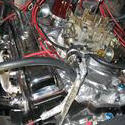
Eldebrock now makes a miniram look alike,,kinda and no longer has the larger runner hi flo manifold set up on its web site or catalog. cost is around 460 bucks but doesn't comwe with a fuel line, injectors, ect.

Race Director

Joined: May 2003
Posts: 10,749
Likes: 41
Thinking about a 383 stroker with a mini ram, is these cam specs work with the mini ram system or better with an modified TPI system. I have had my TPI system bench flowed and it flowed 243cfm. Wondering if the mini ram is work the money.
Cam Type: Roller, Lift with 1.6 rockers .528 Intake .536 Exhaust, 221 Intake / 226 Exhaust duration @ .050 - 110 degree lobe separation
Cam Type: Roller, Lift with 1.6 rockers .528 Intake .536 Exhaust, 221 Intake / 226 Exhaust duration @ .050 - 110 degree lobe separation

My old ported miniram flowed around 310 cfm.
Last edited by 88BlackZ-51; Dec 26, 2016 at 08:58 PM.
Le Mans Master
Joined: Oct 2002
Posts: 7,098
Likes: 378
From: Las Vegas - Just stop perpetuating myths please.
But I like the looks of that intake also and suspect it makes more torque with those longer runners - i think they're longer but just guessing. Edelbrock design is closer to the Holley Stealth Ram i think where the mini-ram is closer to the LT1/LT4 intake. What i'm saying is with the edelbrock or the HSR you should get a tuned runner "peak. Where as the mini-ram and LT1/LT4 runners are to short to produce a tuned peak but have great flow and low restriction - more so for the mini-ram.
IMHO a TPI on a 383 belongs in a truck - not even a street car. But just my 2 cents take it or leave it as i ain't gonna try to prove it.

sbc, the choices are endless. But if you dont need the best of everything you can make good power for a lot less money than most other makes.

Team Owner
Joined: Aug 2004
Posts: 21,543
Likes: 3,216
From: Park City Utah
 Why did GM saddle their sports cars w/a LTR intake?? Why did GM simultaneously saddle it's trucks with carb'd ('till '87), then 170 or 190hp/200's tq TBI engine?? ....when they HAD TPI sitting right there, sucking at being a sports car intake! Opportunity missed, I tell you what. Also, when GM finally went to MPFI in the truck ('96 Vortec), the used a mid length runner intake! Too short to build tq in the towing range, so you end up with a 330 tq engine, with no top end (due to a teeny/tiny cam). Heck...if they were unwilling to spend the money on "TPI" in a truck in the '80's, then they should have moved the TPI right onto the truck in '92 when it was done in the cars! You could easily apply the CPFI tech GM used in the '96 and up Vortec engine, along with the TPI and maintain OBDII compliance, while having a ~360tq+ at 3200 engine? That would be a good towing engine.
 Sorry for the rant...Cardo0 hit a 'trigger' apparently.
.
Last edited by Tom400CFI; Dec 27, 2016 at 10:23 AM.

Le Mans Master
Joined: Aug 2015
Posts: 6,113
Likes: 1,994
From: St. Charles MO
I'm just guessing, but I wonder if they could never make the TPI resist detonation well enough when heavily loaded in a truck/towing situation? OTOH, in the mid 80s when TPI was designed, they were still struggling with emissions and couldn't have too high a CR or too big a cam. TPI gave them a chance to make an engine feel stronger than it really was, and in a lighter car like a C4 or F-body, there was less worry about detonation. I have no evidence of this - it's just a WAG.
Le Mans Master
Joined: Oct 2002
Posts: 7,098
Likes: 378
From: Las Vegas - Just stop perpetuating myths please.
Well IMHO TPI is limited more by its small cross sectional runners than the length. The larger runner TPI intakes by FIRST should be good for quite a wide RPM band. Just like exh headers it's runner/tube diameter that limits max amount of power/torque and the length of the runner/tube determines the RPM at which it occurs. It's the length that controls the timing of the valve induced pulses - not diameter. But it's pretty impressive how much runner length tuning can add to cylinder filling. For instance look at how well tunnel rams work but you see very few on a street motor. TR runners are usually to big to keep velocity at low rpm but mid range RPM and higher they make their power.
So ok let me throw this at you all. How 'bout an EFI converted dual plane intake using an airhorn/elbow to the throttle body. I expect that would work awesome with a dry flow EFI system. And I know Nitrous Outlet sells the elbow for our throttle bodies. Just my imagination running loose again but it could easily happen. Also GEN I folks can keep their EGR to.
Build it your way and have fun.
BTW Tom you have a hair trigger.
So ok let me throw this at you all. How 'bout an EFI converted dual plane intake using an airhorn/elbow to the throttle body. I expect that would work awesome with a dry flow EFI system. And I know Nitrous Outlet sells the elbow for our throttle bodies. Just my imagination running loose again but it could easily happen. Also GEN I folks can keep their EGR to.
Build it your way and have fun.
BTW Tom you have a hair trigger.
Last edited by cardo0; Dec 30, 2016 at 02:05 PM. Reason: FAST to FIRST.
Team Owner
Joined: Aug 2004
Posts: 21,543
Likes: 3,216
From: Park City Utah
...but feel that it should have been used for a short period, then moved to trucks.I'd think that you could control detonation in a heavy load with timing. Certainly by '92 that viable.
Team Owner
Joined: Aug 2004
Posts: 21,543
Likes: 3,216
From: Park City Utah
So ok let me throw this at you all. How 'bout an EFI converted dual plane intake using an airhorn/elbow to the throttle body. I expect that would work awesome with a dry flow EFI system. And I know Nitrous Outlet sells the elbow for our throttle bodies. Just my imagination running loose again but it could easily happen. Also GEN I folks can keep their EGR to.
BTW Tom you have a hair trigger.
BTW Tom you have a hair trigger.
I'm not sure where you're going w/the dual plane; lots of turns in the runner, and not really a tuned length runner either. There isn't much (or any) advantage to a dual plane intake with EFI.
Le Mans Master
Joined: Aug 2015
Posts: 6,113
Likes: 1,994
From: St. Charles MO
You can see this same principal in operation if you look at the woofer frequency response for a ported speaker. At some frequency you'll see the woofer's output drop to near zero as the cone is literally held completely still by the resonant frequency of the port. So no, the FAST TPI intake is still going to have a narrow rpm range if the runners are similar in length to the stock intakes.
ETA: The idea with dual-plane intakes was to divide the barrels of the carb into two halves, so each runner only saw half the barrels of the carb. It made it act like a smaller carb, for better response and fuel atomization at low speeds and low throttle openings. But it also limited high-speed flow for the same reasons. With a throttle body on top of a carb intake, you really don't have the same challenges for keeping fuel in suspension.
Originally Posted by Tom400CFI
I'd think that you could control detonation in a heavy load with timing. Certainly by '92 that viable.
Last edited by MatthewMiller; Dec 27, 2016 at 02:10 PM.
Team Owner
Joined: Aug 2004
Posts: 21,543
Likes: 3,216
From: Park City Utah
The stock TPI intake is of course limited both by is cross section and its length. But the point is that you can hog out the runners (or cast bigger ones, like the aftermarket intakes) and you will still have an engine that lays down hard after 4000rpm or so. The resonant "minimum motion point" for the air column is dictated solely by the length of the runners. That is inescapable. So a wider cross section of runner will support more displacement or more cam below that resonant point, but at rpms around it the intake charge will be nearly completely stopped.
You can see this same principal in operation if you look at the woofer frequency response for a ported speaker. At some frequency you'll see the woofer's output drop to near zero as the cone is literally held completely still by the resonant frequency of the port. So no, the FAST TPI intake is still going to have a narrow rpm range if the runners are similar in length to the stock intakes.
ETA: The idea with dual-plane intakes was to divide the barrels of the carb into two halves, so each runner only saw half the barrels of the carb. It made it act like a smaller carb, for better response and fuel atomization at low speeds and low throttle openings. But it also limited high-speed flow for the same reasons. With a throttle body on top of a carb intake, you really don't have the same challenges for keeping fuel in suspension.
You can see this same principal in operation if you look at the woofer frequency response for a ported speaker. At some frequency you'll see the woofer's output drop to near zero as the cone is literally held completely still by the resonant frequency of the port. So no, the FAST TPI intake is still going to have a narrow rpm range if the runners are similar in length to the stock intakes.
ETA: The idea with dual-plane intakes was to divide the barrels of the carb into two halves, so each runner only saw half the barrels of the carb. It made it act like a smaller carb, for better response and fuel atomization at low speeds and low throttle openings. But it also limited high-speed flow for the same reasons. With a throttle body on top of a carb intake, you really don't have the same challenges for keeping fuel in suspension.
Totally. Yes, detonation can definitely be avoided like that. But then you run into issues of poor engine efficiency and emissions problems, both caused by lots of timing retard. I would think that the health of the cats and exhaust valves might even be an issue if the engine were driven there long enough at high loads (like it would for towing).
Le Mans Master
Joined: Aug 2015
Posts: 6,113
Likes: 1,994
From: St. Charles MO
Assuming they used a brake dyno for that, then it's loading agnostic (i.e., the load is whatever is required to hold it at peak torque, regardless of any expected weight of the vehicle). So yeah, we can assume they had a spark curve built in and/or knock sensors good enough to keep it all alive then. If that testing also included the cats (one would think it did), then they could survive as well. So then the issues remaining would be economy and emissions, both of which are probably pretty bad at peak torque for a TPI motor.
Drifting

Joined: Oct 2006
Posts: 1,328
Likes: 14
From: Stafford Connecticut
If tuned port is so crappy why did GM go back to it for the LS engines ?And yes that Plastic intake is tuned port with shorter runners.The folks at GM perfected the perfect length runner for the LS series motor.
