








Regular or premium????

Melting Slicks


Joined: Jan 2001
Posts: 2,996
Likes: 304
From: MOORESVILLE NC

Depends on the engine. My 88 L98 runs great on reg. Best reg. gas you could buy was from AMACO. I think it was clear in color(white gas). I bet the LT engines would prefer High Test. I'm giving my age away.

Race Director


Joined: Aug 2000
Posts: 11,470
Likes: 765
(85 L98) street driven DD - I switch from plus to premium, back and forth, without any rhyme or reason. can't say I notice any difference. if I do, it's minimal. 
Last edited by Joe C; Oct 28, 2017 at 06:56 AM.
Corvette Stories
The Best of Corvette for Corvette Enthusiasts

5 Best & 5 Worst Corvette Daily Drivers
Joe Kucinski
The Headlights of Every Corvette Generation Explained
Joe Kucinski
5 Best & 5 Most Overrated Corvette Track Packages of All Time!
Joe Kucinski
Every 2027 Corvette Engine Explained
Joe Kucinski
Designer Imagines A Corvette That Looks More Like a Corvette Than the Corvette
Verdad Gallardo
10 Ugly Corvettes That We Still Kinda Love
Joe Kucinski
Top 10 Most Expensive Corvettes Ever Sold on Bring A Trailer
Brett Foote
10 Things Every Corvette Owner Needs (2026 Edition)
Michael S. Palmer
8 Most "Only Corvette Owners Understand" Quirks and Problems
Pouria Savadkouei

Melting Slicks


Joined: Jul 2005
Posts: 2,651
Likes: 864
If the manufacturer calls for a certain octane level - run that level as a minimum.
In very simplified terms - octane can be considered "resistance to detonation". In truth there is ever so slightly more energy in a gallon of 87 octane than there is in a gallon of 93, but the difference is noise for most of us... However - in many cases the additive package in the higher octane gas is substantially better than what's in regular. The additive package is supposedly most of what the "Top Tier Gas" stuff is all about.
Sure most cars with a decent EFI system will operate on lower octane gas - but the knock sensors will constantly be signaling knocking, and in response, the computer will pull timing - primarily when you are "on" the gas. If you purchased a Vette - the odds are that you like a car that corners, and has decent power. IMHO - It doesn't make a lot of sense to do something (use lower octane gas) that will limit the power the engine will make when you paid extra specifically for that.
I will also say that there are a few engines out there (none are found in C4's) that simply can not live on less than the specified octane - their mechanical compression ratios are just too high (along with the specifics of the combustion chamber design), and the lower octane gas will create pre-ignition even without a spark - no EFI system I know of can correct for that.
In very simplified terms - octane can be considered "resistance to detonation". In truth there is ever so slightly more energy in a gallon of 87 octane than there is in a gallon of 93, but the difference is noise for most of us... However - in many cases the additive package in the higher octane gas is substantially better than what's in regular. The additive package is supposedly most of what the "Top Tier Gas" stuff is all about.
Sure most cars with a decent EFI system will operate on lower octane gas - but the knock sensors will constantly be signaling knocking, and in response, the computer will pull timing - primarily when you are "on" the gas. If you purchased a Vette - the odds are that you like a car that corners, and has decent power. IMHO - It doesn't make a lot of sense to do something (use lower octane gas) that will limit the power the engine will make when you paid extra specifically for that.
I will also say that there are a few engines out there (none are found in C4's) that simply can not live on less than the specified octane - their mechanical compression ratios are just too high (along with the specifics of the combustion chamber design), and the lower octane gas will create pre-ignition even without a spark - no EFI system I know of can correct for that.

Melting Slicks

Joined: Jan 2008
Posts: 2,054
Likes: 120
From: AZ
 Now, there's a concept. I follow what my cars' documents call for, usually with little or no discernable effect if running a lower grade.
The ECM will detune as needed for lower octane, affecting MPG and performance. I was surprised to see my 11:1 engine run okay, even up a challenging, loooong mountain climb, with no real complaints. This, when the sole station was out of everything but regular. then, it wasn't REAL hot outside and it wasn't anymore than a highway cruise.
I agree with an article I read. stating "running premium in a recommended-regular engine just wastes money".

Drifting


Joined: Feb 2016
Posts: 1,386
Likes: 339
From: Simi Valley CA
What people don't realize is what octane actually stands for. Gasoline is basically a mix of heptane and octane (yes there's other additves). Heptane is an incredibly volatile explosive compound. Octane is the opposite. So in simple terms 87 octane gas is 13% heptane and 87% octane. 91 octane gas is 9% heptane and 91% octane. I've demonstrated this by pooring octane boost on the ground and tried lighting it with a lighter. Nothing happens. It doesn't burn.
So for a high compression engine or any forced induction engine 91+ octane is needed to keep the combustion down as the high compression makes up for it. A low compression engine needs 87 octane as the 91 or higher doesn't have enough bang.
So for a high compression engine or any forced induction engine 91+ octane is needed to keep the combustion down as the high compression makes up for it. A low compression engine needs 87 octane as the 91 or higher doesn't have enough bang.

Team Owner


Joined: Aug 2004
Posts: 21,543
Likes: 3,216
From: Park City Utah
Sure most cars with a decent EFI system will operate on lower octane gas - but the knock sensors will constantly be signaling knocking, and in response, the computer will pull timing - primarily when you are "on" the gas.
I will also say that there are a few engines out there (none are found in C4's) that simply can not live on less than the specified octane
I will also say that there are a few engines out there (none are found in C4's) that simply can not live on less than the specified octane

2. Timing will only be retarded IF the engine actually requires/needs higher octane. L98's, L83's, L33 (vortecs) for examples, don't. I read an article once that claimed that GM found that the LT1 produced exactly the same HP on 87 as 91 (during development)...which indicates to me that I'm wasting my own money with 91 in the 'Vette.
3. What engines out there are you talking about? I have never seen or heard of an (EFI) engine that won't that won't live on pump gas.

Le Mans Master


Joined: Jun 2009
Posts: 6,528
Likes: 752
From: South Dakota
I think it depends. How's that for not going one way or the other.
If the engine needs it to prevent preignition then use the premium. If it does not, then use the regular and don't waste the money.
For L98's. I had an '88 Corvette that would ping badly with regular gas. It needed premium. While my '85 and '87 I couldn't tell any difference.
For LT1's. I had two '94 Corvettes that I couldn't tell any difference with regular or premium, but my '95 Corvette does not run as well with the regular. It retards timing and I get poorer performance and mileage.
My '96 LT4 states Premium Fuel Only instead of Premium Recommended. I have only used premium with it.
I suspect that like Tom400CFI said, an EFI engine should live on pump gas. But it may be at reduced performance. Under light loads I suspect most will run normally.
In practice I use premium in my current Corvettes unless it is not available.
If the engine needs it to prevent preignition then use the premium. If it does not, then use the regular and don't waste the money.
For L98's. I had an '88 Corvette that would ping badly with regular gas. It needed premium. While my '85 and '87 I couldn't tell any difference.
For LT1's. I had two '94 Corvettes that I couldn't tell any difference with regular or premium, but my '95 Corvette does not run as well with the regular. It retards timing and I get poorer performance and mileage.
My '96 LT4 states Premium Fuel Only instead of Premium Recommended. I have only used premium with it.
I suspect that like Tom400CFI said, an EFI engine should live on pump gas. But it may be at reduced performance. Under light loads I suspect most will run normally.
In practice I use premium in my current Corvettes unless it is not available.

Safety Car


Joined: May 2001
Posts: 4,761
Likes: 1,648
From: Fairfax Virginia
Pinging on the L-98 engine
I have a 1988 Coupe that runs great on the 87 octane gas available here in Virginia. I have never heard the car ping or heard any unusual noises from the engine running regular.
Nowhere on my car does it tell you to use Premium fuel.
If your L-98 engine is pinging it is probably because your engine has carbon in it. Even an air cooled VW engine will ping when carbon is present in the cylinder heads. The solution on a VW was to slowly pour cold water into the carburetor while running at about 1500-2000 rpm. The thermal shock would break loose the carbon chunks and the exhaust would spit out the carbon. I have done it many times on VW's and always had good results.
On your 1988 L-98 I would buy a can of BG 44-K and run it through your fuel system. It might take two to get it all but the BG product works very effectively at removing deposits in the cylinder head. While running the additive in your gas be sure to "drive it like you stole it".
I routinely run Sunoco 87 octane gasoline in my 1988 Coupe and that seems to be sufficient for that engine or at least my engine.
Good luck and happy motoring! (Without the pinging)
Nowhere on my car does it tell you to use Premium fuel.
If your L-98 engine is pinging it is probably because your engine has carbon in it. Even an air cooled VW engine will ping when carbon is present in the cylinder heads. The solution on a VW was to slowly pour cold water into the carburetor while running at about 1500-2000 rpm. The thermal shock would break loose the carbon chunks and the exhaust would spit out the carbon. I have done it many times on VW's and always had good results.
On your 1988 L-98 I would buy a can of BG 44-K and run it through your fuel system. It might take two to get it all but the BG product works very effectively at removing deposits in the cylinder head. While running the additive in your gas be sure to "drive it like you stole it".
I routinely run Sunoco 87 octane gasoline in my 1988 Coupe and that seems to be sufficient for that engine or at least my engine.
Good luck and happy motoring! (Without the pinging)

Drifting
Joined: Mar 2011
Posts: 1,693
Likes: 144
From: on Barnegat Bay Joisey
Does anyone have info on how a fuel octane rating changes with age? I've read somewhere that after 6 months of storage there is a degradation in octane. Before I store the Vette for the winter I fill with premium so come spring I get good performance with the old fuel.
Besides that, when I open the fuel lid it says "premium recommended" next to the cap in english and french.
Besides that, when I open the fuel lid it says "premium recommended" next to the cap in english and french.

Thread Starter
Pro

Joined: Jul 2014
Posts: 642
Likes: 11
Am surprised to see all the interesting comments here I have a 95 and run mid grade but also dump in a bottle of techron just for kix no complaints at this point.
We can read and listen to a million storys but the proof is in how the car performs
I have a 95 and run mid grade but also dump in a bottle of techron just for kix no complaints at this point.We can read and listen to a million storys but the proof is in how the car performs
Last edited by lectroglide; Oct 28, 2017 at 09:14 PM.
Team Owner
Joined: Aug 2004
Posts: 21,543
Likes: 3,216
From: Park City Utah
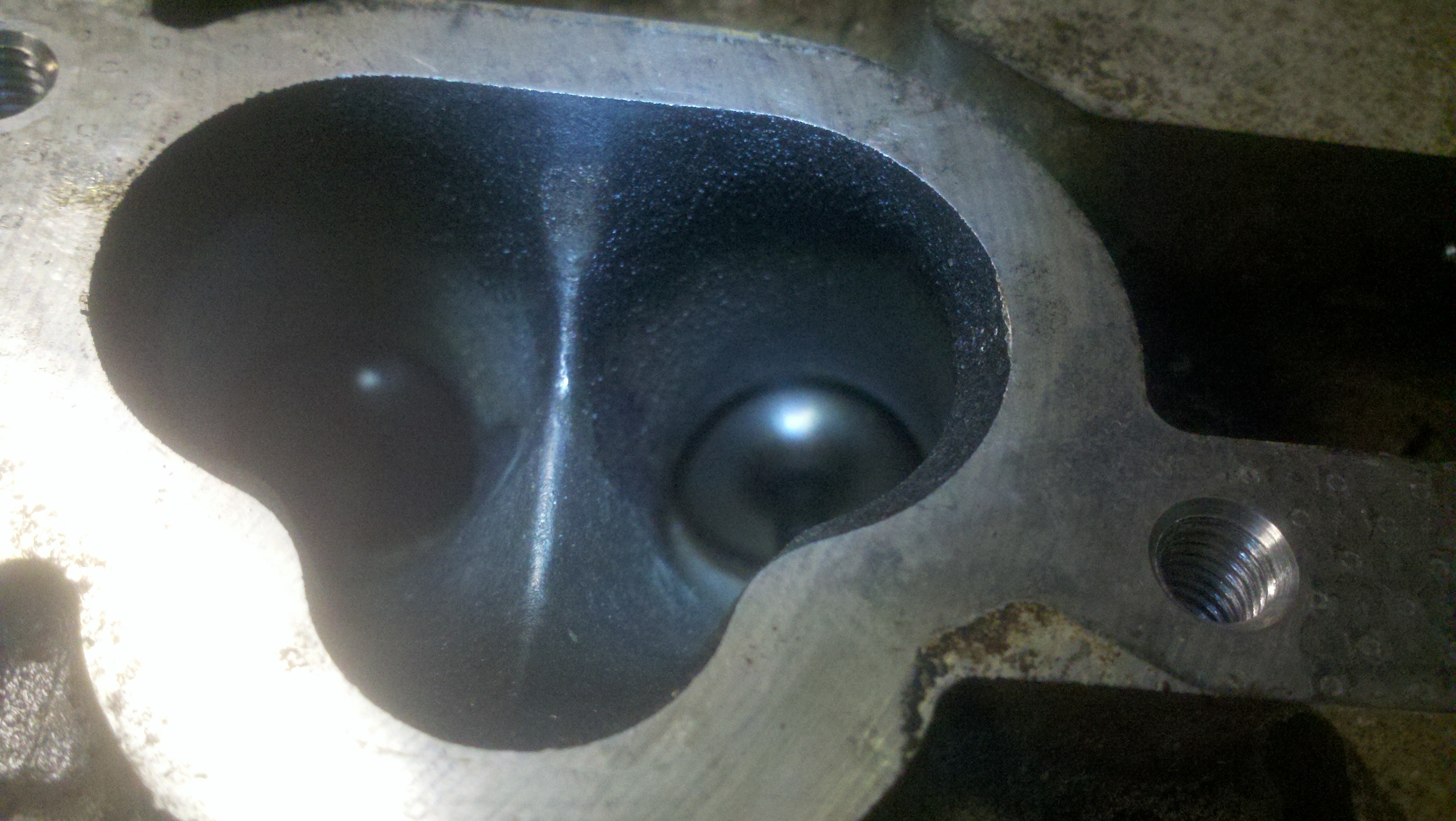
1. I've SHOWN that the additive package in cheap, grocery store gasoline is better than good enough.
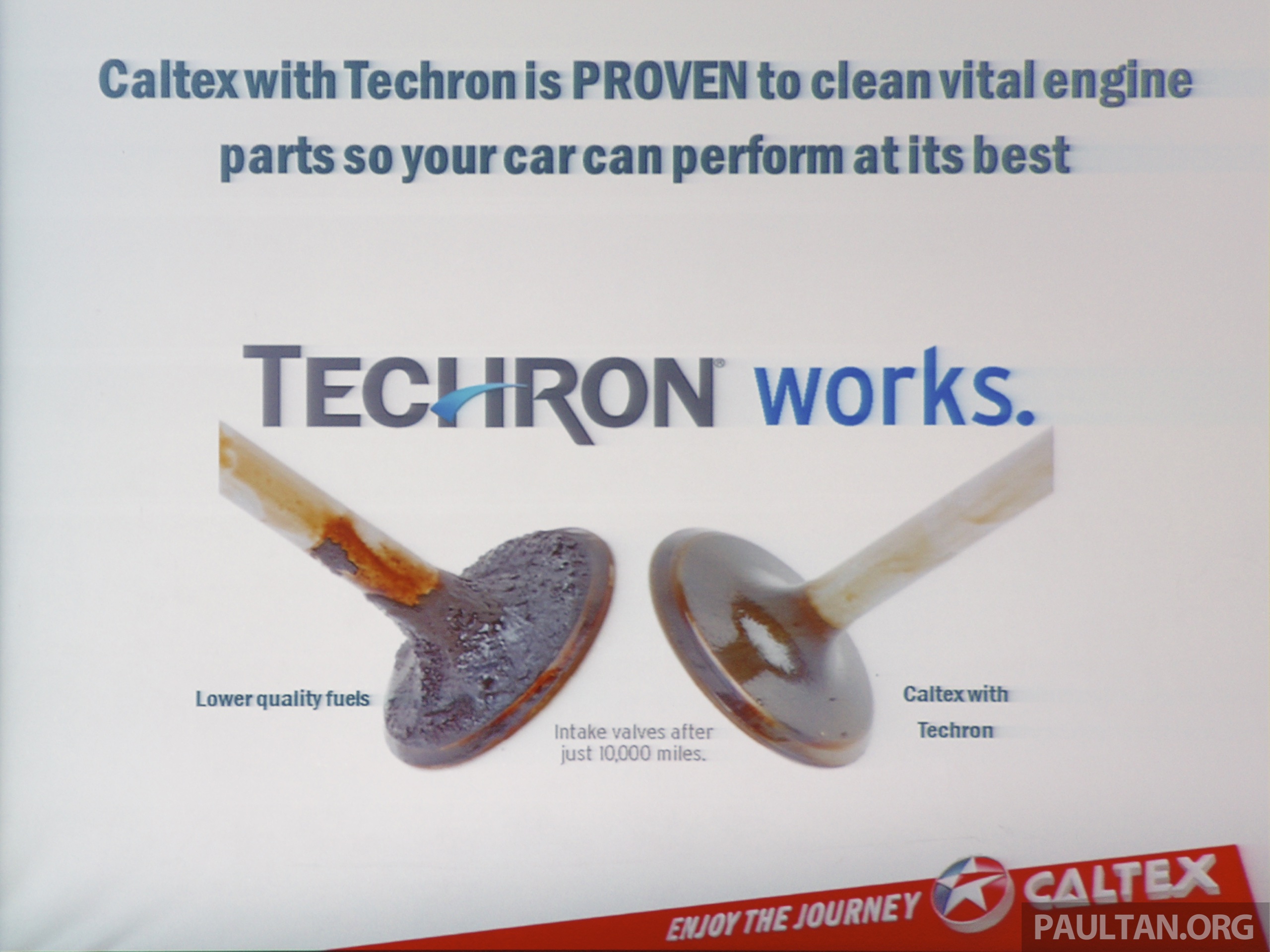

My SIL's Subies' valves look better than the "clean valves" from those commercials; 90k miles, 87 octane gas.
IDK where they got their "lower quality fuels". (?)
.
Last edited by Tom400CFI; Oct 29, 2017 at 01:13 AM.


Intermediate

Joined: Sep 2017
Posts: 27
Likes: 9
From: Dataw Island SC
What people don't realize is what octane actually stands for. Gasoline is basically a mix of heptane and octane (yes there's other additves). Heptane is an incredibly volatile explosive compound. Octane is the opposite. So in simple terms 87 octane gas is 13% heptane and 87% octane. 91 octane gas is 9% heptane and 91% octane. I've demonstrated this by pooring octane boost on the ground and tried lighting it with a lighter. Nothing happens. It doesn't burn.
So for a high compression engine or any forced induction engine 91+ octane is needed to keep the combustion down as the high compression makes up for it. A low compression engine needs 87 octane as the 91 or higher doesn't have enough bang.
So for a high compression engine or any forced induction engine 91+ octane is needed to keep the combustion down as the high compression makes up for it. A low compression engine needs 87 octane as the 91 or higher doesn't have enough bang.
I read this and thought - too simplistic, must be bs
 . I have learned (sometimes the hard way) over the years that maybe I'm not always right and should listen and learn, so I looked up your information, and you, sir, are correct!!
  Kudos for teaching me something new today!