When you click on links to various merchants on this site and make a purchase, this can result in this site earning a commission. Affiliate programs and affiliations include, but are not limited to, the eBay Partner Network.
My car is a 94 but this should cover a wide range of years.
Posting this thread if you did not catch the post in my last radio thread.
I found this out when I was at Factory Car Stereo and talking to them. I just did not post cause I did not have pictures yet.
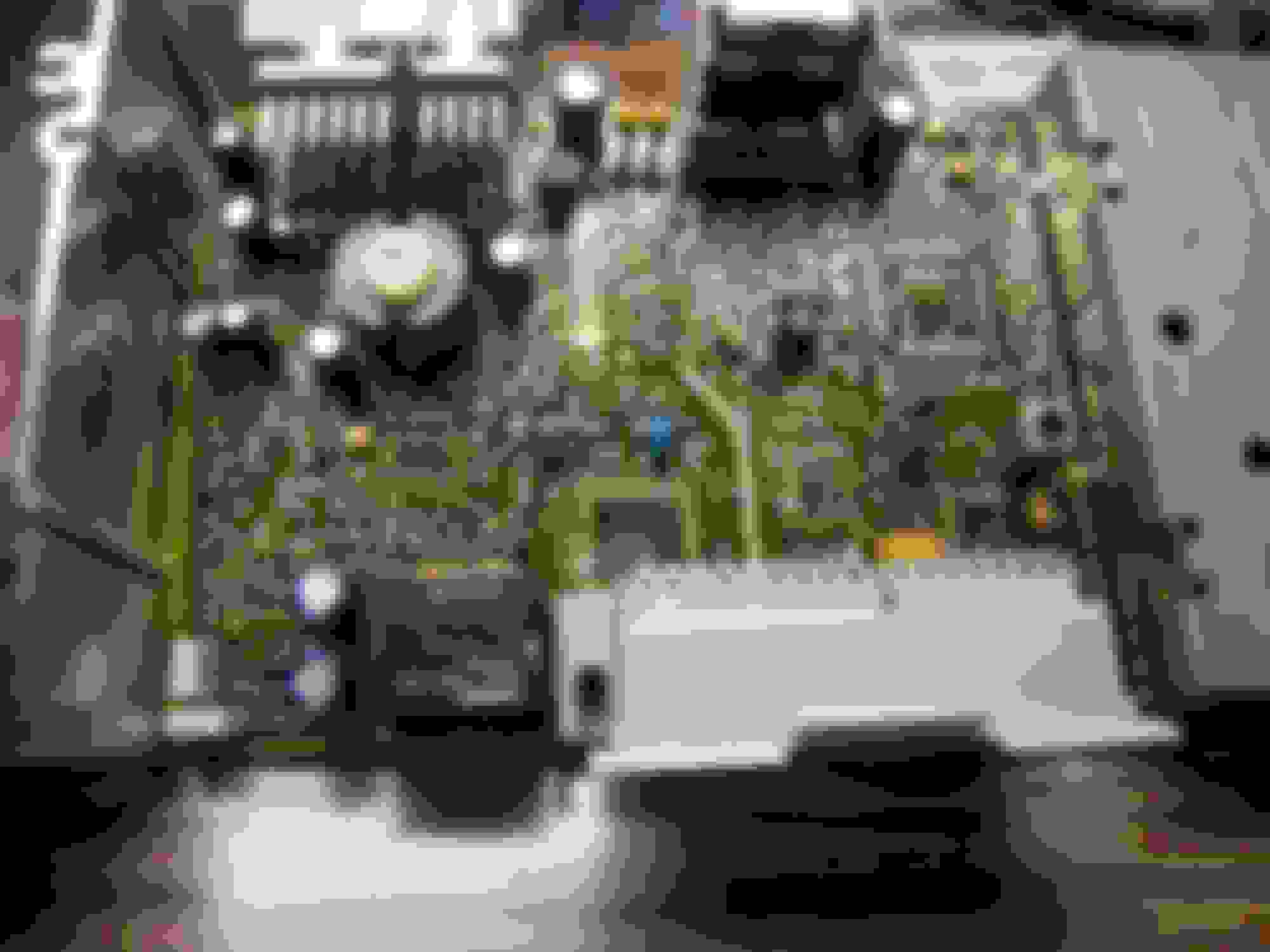
There are 4 large capacitors each 470 mfd @ 16 volts. In time they will leak and etch and destroy the small lands around them that go to the ICs. If the board is damaged beyond repair you need a new unit. So they replace these caps for preventive maintenance before they leak. I don’t know what problems the caps might create if the capacitance should drop radically, however I think they might leak before that and cause major damage or problems.
You can see all 4 caps in the first picture, and a close up of each set of caps in the following 2 pictures.
I plan to do this job as soon as I get 4 of the capacitors. I'd rather do this than buy a new unit down the road. CDM comes right out and accessibility is good to get to replace the caps.
If you can replace them with capacitors rated at 25 volts.
Definitely can do and won't hurt. It might be a larger capacitor and there's plenty of room for height. As long as they are not fatter as you might run into a problem with the footprint fitting it in.
Definitely can do and won't hurt. It might be a larger capacitor and there's plenty of room for height. As long as they are not fatter as you might run into a problem with the footprint fitting it in.
I have a bad CDM sitting on a shelf, I am curious to see what is going on if I open it up.
Number 1 problem with old stereos is that electrolytic capacitors have a lifespan that is generally shorter then other components. Usually if a stereo doesn't have the same kind of performance as when new, its because of caps. Probably time on my 96 to replace them in the CDM and each speaker amp.
Number 1 problem with old stereos is that electrolytic capacitors have a lifespan that is generally shorter then other components. Usually if a stereo doesn't have the same kind of performance as when new, its because of caps. Probably time on my 96 to replace them in the CDM and each speaker amp.
You will find on all the Bose amp boards for the speakers all the capacitors are de-coupling caps for the DC and when they go bad they will cause a pop, squeal or whistle effect. Except one cap which is a coupling capacitor between 2 stages C172 @ 10mfd. When it gets very weak with low capacitance (probably under 1), the sound gets muddy and lower than normal. Replacing this cap makes a huge difference if it is bad.
I finally got around to replacing the 4 capacitors in the CDM. There is plenty of room to work, nothing is tight spaced. It did take me longer than I thought. Since the board is coated on both side, there is an adhesion to the capacitors and coating on the solder as well. The holes are plated thru holes so it took longer to get the holes clean to drop in the caps. None of this is a big deal however it just took additional time to be careful not to damage the board or holes.
All capacitors I removed did check OK and were just fine but were replaced due to possible future leakage. All worked OK as before and sounds as good as it ever did.
Good info. I pulled the Bose out of my '93 but am keeping it so I can go back to 100% stock at some point. May have a summer project one weekend now so I can keep it in good shape.
Reminds me - I used to play with pinball machines & had 4-5 in my man-cave at any given time. I believe it was my Tale From the Crypt machine that blew a cap while I had them all on - I had to about change my underwear it was so loud... Luckily those boards are easy to work on.
Designer Imagines A Corvette That Looks More Like a Corvette Than the Corvette
Slideshow: A Jaguar designer's personal project imagines what a modern front-engined Corvette might look like if Chevrolet revisited the golden age of the Stingray.





 Bose CDM preventive maintenance