When you click on links to various merchants on this site and make a purchase, this can result in this site earning a commission. Affiliate programs and affiliations include, but are not limited to, the eBay Partner Network.
I misunderstood then, I thought I read somewhere there is always power to the injectors when the key is on.
Anyway i I didn’t have time just now to test all 8, so I put the noid light on the #1 injector and it was pulsing as the engine was cranking.
.
Yes, There is power from the feed wire when the key is on...the control fire grounds itself through the PCM when the key is also on..,but to check it you have to connect the test light to battery positive and touch the control wire...light will light if the ground is good !!
I haven’t had time to check all 8 yet, just cylinders 1 and 2. I will get out there soon and do the rest.
Assuming all 8 are being pulsed, what else could possibly prevent the engine from firing?
you said you ohm’ed out the injectors...is 16 ohms good ??...I don’t know your resistance limits !!..,if all 8 are being pulsed we know the wiring is ok... probably injectors are clogged...the only way to know is doing an injector balance test...you need fuel pressure gauge and a “pulser” to do that...if not new injectors or have yours cleaned !!...and it looks like your pump is good based on the pressure you stated !!...did you watch that video I posted for you ??
you said you ohm’ed out the injectors...is 16 ohms good ??...I don’t know your resistance limits !!..,if all 8 are being pulsed we know the wiring is ok... probably injectors are clogged...the only way to know is doing an injector balance test...you need fuel pressure gauge and a “pulse” to do that...if not new injectors or have yours cleaned !!...and it looks like your pump is good based on the pressure you stated !!...did you watch that video I posted for you ??
If they are multecs dump them and get reman ones that allow you to run any fuel with ethanol That way you don't have to be confined to a few stations The best way to test your injectors is to flow bench
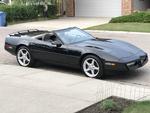
If you are still having trouble with your 1990 Corvette then try this before going to far "into" the car. Then take your meter and check the voltage at the Battery positive using the engine as the ground. The battery voltage should be the very same as what you measured on the battery itself. The grounds are critical to make this car work properly, To give you an example on your 1990 Corvette the injectors all have 12 volts Positive to them when the key is in the run position. The computer "pulls down" and grounds the injector to ground to complete the circuit and make them inject the gasoline.
Next behind the battery on the drivers side under the panel you will find a stud with a few wires on it. Measure the voltage between the stud and the battery ground, it should be full battery voltage. If there is any corrosion on the stud this is the time to remove the wires, clean them and re-install. The connections leaving this stud are the fusible links needed for powering up a good part of the interior of the car. The power comes to this stud comes from a battery cable from the battery positive. Next take your meter and verify that you have voltage at all of the fuses behind the passenger door end of the dash. Be sure to check BOTH sides of each fuse to be sure that everything is okay here. On my 1988 I had low voltage going to this fuse panel from the battery stud that supplies the Fusible links. After cleaning the stud I had full voltage but no current was going through the fuses on my panel. I pulled the fuses and was surprised that none of them carried any current. There was a fine layer of corrosion on the fuses which isolated them, I replaced the fuses and I had full voltage all over the inside of the car.
Also check the two wires going into the side of the distributor, one is power to the ignition and the other I think is Tach out put or something else. When I bought my 1988 the wire had a broken lock clip and was making intermittent contact. On my car there was a bad connector on the oil pressure sending unit. My car would not start until this circuit was fixed which was all of re-crimping a new connector on the wire. If you still have no ignition you might have to try the ignition module and follow that circuit.
Another thing happened to my car when I let it sit for a spell, my fuel line rusted shut.... I heard the pump make pressure but nothing came out of the shrader valve on the passengers side of the fuel rail. It was not until I ran a new rubber line to test this theory. With the new line to the fuel lines the pump made 42 pounds pressure at the fuel rail and the car started right up.
As mentioned earlier the cars with low miles on them are not always the best ones to buy, even a car that is garaged can dry out vital components like fuel regulator diaphragms and other important lines like the brake flex hoses at all four corners. I am sure it is a beautiful Corvette you have but it will take some time to get it back in shape. Check and double check your ENTIRE brake system, I tested mine before putting it back on the road and the pedal went to the floor as one of the lines going to the ABS unit behind the drivers seat. I pushed hard but no harder than an emergency stop and that was all it took to pop a line open. I ordered a complete set of brake lines from Classic tubing as I found a couple more weak spots. If your car has sat very long be sure to replace the brake fluid, power steering fluid, antifreeze and distilled water, fuel filter, air filter, belts, brake calipers and all four hoses connecting the calipers.
I really hope that there might be a "tidbit" here that is worthwhile and helps you get that beautiful Corvette of yours back on the road where it belongs!
If 1 and 2 are being pulsed ,isn't the circuit already good since it is bank fired?
I haven’t looked at a wiring diagram for the injector system but just want to make sure that there are no opens in any of the control wires !!...mine are sequential fired !!
you said you ohm’ed out the injectors...is 16 ohms good ??...I don’t know your resistance limits !!..,if all 8 are being pulsed we know the wiring is ok... probably injectors are clogged...the only way to know is doing an injector balance test...you need fuel pressure gauge and a “pulser” to do that...if not new injectors or have yours cleaned !!...and it looks like your pump is good based on the pressure you stated !!...did you watch that video I posted for you ??
I did just finish watching that video, and it was interesting. Just confirms my suspicion with the health of the fuel system.
Based on everything else I've done, and recommendations throughout this thread, I'm thinking my problem is with the injectors. I don't have the tools to comprehensively test this, like the tech did in the video, but at this point it makes the most sense. The injectors are original to the car, so they're probably the Multec's, From 1998 to 2012 the car was drive a total of 600 miles, and since 2012, 0. I'm betting they're mechanically seized, and not functioning. You would think one or two are at least spraying some fuel, and maybe the car would fire as a result, but that doesn't seem to be the case.
ctmccloskey - Thank you for the detailed post, I will most definitely look at some of these ares as well as it may help me narrow things down.
I'm open to other suggestions, and/or confirmation that changing out the injectors would be the fix.
I did just finish watching that video, and it was interesting. Just confirms my suspicion with the health of the fuel system.
Based on everything else I've done, and recommendations throughout this thread, I'm thinking my problem is with the injectors. I don't have the tools to comprehensively test this, like the tech did in the video, but at this point it makes the most sense. The injectors are original to the car, so they're probably the Multec's, From 1998 to 2012 the car was drive a total of 600 miles, and since 2012, 0. I'm betting they're mechanically seized, and not functioning. You would think one or two are at least spraying some fuel, and maybe the car would fire as a result, but that doesn't seem to be the case.
ctmccloskey - Thank you for the detailed post, I will most definitely look at some of these ares as well as it may help me narrow things down.
I'm open to other suggestions, and/or confirmation that changing out the injectors would be the fix.
If you have Multecs you might as well dump them. FIC has reman ones for under $200 and you should get the gaskets for the intake and IAC Might also remove the IAC and the IAC housing and clean it all before assembly. I can get gas anywhere without having to restrict myself to a gas station 20 minutes away from the house and in a direction I don't go.
If you have Multecs you might as well dump them. FIC has reman ones for under $200 and you should get the gaskets for the intake and IAC Might also remove the IAC and the IAC housing and clean it all before assembly. I can get gas anywhere without having to restrict myself to a gas station 20 minutes away from the house and in a direction I don't go.
I've never gotten this deep into tearing down part of an engine. I was watching some video's, and it looks a little daunting... it's probably not that bad, once you've done it once or twice. I may attempt it, but out of curiosity, any idea how many hours a shop would take to do this?
Well good news is the car cranks and runs on its own now. Sounds really good, and runs smooth, so I assume all 8 cylinders are firing (wish I could easily post a video). How did this happen? Well as a last ditch effort after checking numerous things that were suggested in this thread, I tapped each injector with a screw driver maybe 8-10 times (not hard mind you). After that I had my wife crank the engine while I continued to tap a couple injectors on the drivers side... well it fired up almost immediately and ran fine. After quickly checking the oil pressure, I only let the engine run for maybe 20 seconds that first time, as I wanted to check for any fuel leaks. After maybe 5 - 10 minutes, I cranked it again, and again it started and ran fine. This after not running in over 6 years felt like a major victory.
Are my problems solved? No not likely by any stretch, but I do have a good idea what i'm working with at this point.
Next issue is bleeding my clutch so I can actually attempt to move the vehicle under its own power.
PS - Does this oil pressure look ok for a relatively cold engine at first start?
Well good news is the car cranks and runs on its own now. Sounds really good, and runs smooth, so I assume all 8 cylinders are firing (wish I could easily post a video). How did this happen? Well as a last ditch effort after checking numerous things that were suggested in this thread, I tapped each injector with a screw driver maybe 8-10 times (not hard mind you). After that I had my wife crank the engine while I continued to tap a couple injectors on the drivers side... well it fired up almost immediately and ran fine. After quickly checking the oil pressure, I only let the engine run for maybe 20 seconds that first time, as I wanted to check for any fuel leaks. After maybe 5 - 10 minutes, I cranked it again, and again it started and ran fine. This after not running in over 6 years felt like a major victory.
Are my problems solved? No not likely by any stretch, but I do have a good idea what i'm working with at this point.
Next issue is bleeding my clutch so I can actually attempt to move the vehicle under its own power.
PS - Does this oil pressure look ok for a relatively cold engine at first start?
Looks like about where mine sits, that is awesome you got it running, yahoooooooooooooooooo.
Designer Imagines A Corvette That Looks More Like a Corvette Than the Corvette
Slideshow: A Jaguar designer's personal project imagines what a modern front-engined Corvette might look like if Chevrolet revisited the golden age of the Stingray.