


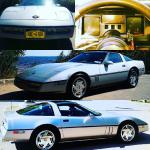

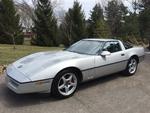

Please help-1986 C4 dies after running 20 minutes

Thread Starter
Cruising

Joined: Apr 2019
Posts: 10
Likes: 0
 Please help-1986 C4 dies after running 20 minutes
Hi All,
1986 Base Corvette, start it, let it idle or drive it, around 20 minutes it shuts down. Attempted restart and at time idles another 5-10 minutes then shuts itself down or won't restart. When attempt restart will only start if slightly open throttle, won't idle but can force a high idle around 1200 RPM. Won't rev higher, just bogs and dies unless let up of throttle slightly. Let it sit a few hours, will repeat same action. Acted this way since I got the car 1.5 years ago. So far I've only driven it 20 minutes at a time. When I test drove the car before purchase I did not drive it 20 minutes so was not aware of the issue when I did buy it.
Replaced fuel pump, checked supply and return fuel lines are clear, replaced fuel pressure regulator with adjustable cover and set pressure, removed and cleaned fuel rail, replaced all injectors, tested all injectors are flashing with test light before and after car dies after 20 minutes.
Replaced Mas Airflow sensor twice, replaced MAS Power and Burn off relays, replaced fan relay, replaced, Idle Air Control Valve, all engine temp sensors, throttle position sensor (set. to .52 volts at idle), replaced entire distributor assembly, replaced ECM. Replaced with quality spark plug wires and AC Delco spark plugs.
Tested voltage drop for all ground wires from ECM - all in spec. Removed, cleaned and re-secured all body ground straps with dielectric grease.
Engine timing set to 6 degrees BTDC when disconnected to computer, when computer is reconnected, timing averages 24 degrees BTDC and goes to about 32 degrees BTDC when revving engine. Tested and dielectric greased all fuses in panel.
Tried powering distributor and fuel pump directly from battery bypassing wire harness and engine still dies at 20 minutes.
At this point I've had 7 mechanics evaluate the car with the only remaining suggestion to remove fuel injection system and distributor and replace with carb and standard HEI vacuum advance distributor. In the absence of any new diagnostic info, that's what I'll be doing next week.
So far I've not found any solutions from searching on-line.
Any last ditch recommendations would be greatly appreciated,
Thank you all,
Doc
1986 Base Corvette, start it, let it idle or drive it, around 20 minutes it shuts down. Attempted restart and at time idles another 5-10 minutes then shuts itself down or won't restart. When attempt restart will only start if slightly open throttle, won't idle but can force a high idle around 1200 RPM. Won't rev higher, just bogs and dies unless let up of throttle slightly. Let it sit a few hours, will repeat same action. Acted this way since I got the car 1.5 years ago. So far I've only driven it 20 minutes at a time. When I test drove the car before purchase I did not drive it 20 minutes so was not aware of the issue when I did buy it.
Replaced fuel pump, checked supply and return fuel lines are clear, replaced fuel pressure regulator with adjustable cover and set pressure, removed and cleaned fuel rail, replaced all injectors, tested all injectors are flashing with test light before and after car dies after 20 minutes.
Replaced Mas Airflow sensor twice, replaced MAS Power and Burn off relays, replaced fan relay, replaced, Idle Air Control Valve, all engine temp sensors, throttle position sensor (set. to .52 volts at idle), replaced entire distributor assembly, replaced ECM. Replaced with quality spark plug wires and AC Delco spark plugs.
Tested voltage drop for all ground wires from ECM - all in spec. Removed, cleaned and re-secured all body ground straps with dielectric grease.
Engine timing set to 6 degrees BTDC when disconnected to computer, when computer is reconnected, timing averages 24 degrees BTDC and goes to about 32 degrees BTDC when revving engine. Tested and dielectric greased all fuses in panel.
Tried powering distributor and fuel pump directly from battery bypassing wire harness and engine still dies at 20 minutes.
At this point I've had 7 mechanics evaluate the car with the only remaining suggestion to remove fuel injection system and distributor and replace with carb and standard HEI vacuum advance distributor. In the absence of any new diagnostic info, that's what I'll be doing next week.
So far I've not found any solutions from searching on-line.
Any last ditch recommendations would be greatly appreciated,
Thank you all,
Doc

Safety Car


Joined: Sep 2001
Posts: 4,160
Likes: 554
From: Glenbeulah Wi
Ohm the injectors both cold and hot, you may have poor injectors that overload the driver and cause it to shut off. The injectors should be around 14 ohms. Also watch your fuel pressure and see if it stays around 43 psi when it tried to die.

Melting Slicks


Joined: Feb 2003
Posts: 2,685
Likes: 814
From: Saskatoon Sask.
Hi All,
1986 Base Corvette, start it, let it idle or drive it, around 20 minutes it shuts down. Attempted restart and at time idles another 5-10 minutes then shuts itself down or won't restart. When attempt restart will only start if slightly open throttle, won't idle but can force a high idle around 1200 RPM. Won't rev higher, just bogs and dies unless let up of throttle slightly. Let it sit a few hours, will repeat same action. Acted this way since I got the car 1.5 years ago. So far I've only driven it 20 minutes at a time. When I test drove the car before purchase I did not drive it 20 minutes so was not aware of the issue when I did buy it.
Replaced fuel pump, checked supply and return fuel lines are clear, replaced fuel pressure regulator with adjustable cover and set pressure, removed and cleaned fuel rail, replaced all injectors, tested all injectors are flashing with test light before and after car dies after 20 minutes.
Replaced Mas Airflow sensor twice, replaced MAS Power and Burn off relays, replaced fan relay, replaced, Idle Air Control Valve, all engine temp sensors, throttle position sensor (set. to .52 volts at idle), replaced entire distributor assembly, replaced ECM. Replaced with quality spark plug wires and AC Delco spark plugs.
Tested voltage drop for all ground wires from ECM - all in spec. Removed, cleaned and re-secured all body ground straps with dielectric grease.
Engine timing set to 6 degrees BTDC when disconnected to computer, when computer is reconnected, timing averages 24 degrees BTDC and goes to about 32 degrees BTDC when revving engine. Tested and dielectric greased all fuses in panel.
Tried powering distributor and fuel pump directly from battery bypassing wire harness and engine still dies at 20 minutes.
At this point I've had 7 mechanics evaluate the car with the only remaining suggestion to remove fuel injection system and distributor and replace with carb and standard HEI vacuum advance distributor. In the absence of any new diagnostic info, that's what I'll be doing next week.
So far I've not found any solutions from searching on-line.
Any last ditch recommendations would be greatly appreciated,
Thank you all,
Doc
1986 Base Corvette, start it, let it idle or drive it, around 20 minutes it shuts down. Attempted restart and at time idles another 5-10 minutes then shuts itself down or won't restart. When attempt restart will only start if slightly open throttle, won't idle but can force a high idle around 1200 RPM. Won't rev higher, just bogs and dies unless let up of throttle slightly. Let it sit a few hours, will repeat same action. Acted this way since I got the car 1.5 years ago. So far I've only driven it 20 minutes at a time. When I test drove the car before purchase I did not drive it 20 minutes so was not aware of the issue when I did buy it.
Replaced fuel pump, checked supply and return fuel lines are clear, replaced fuel pressure regulator with adjustable cover and set pressure, removed and cleaned fuel rail, replaced all injectors, tested all injectors are flashing with test light before and after car dies after 20 minutes.
Replaced Mas Airflow sensor twice, replaced MAS Power and Burn off relays, replaced fan relay, replaced, Idle Air Control Valve, all engine temp sensors, throttle position sensor (set. to .52 volts at idle), replaced entire distributor assembly, replaced ECM. Replaced with quality spark plug wires and AC Delco spark plugs.
Tested voltage drop for all ground wires from ECM - all in spec. Removed, cleaned and re-secured all body ground straps with dielectric grease.
Engine timing set to 6 degrees BTDC when disconnected to computer, when computer is reconnected, timing averages 24 degrees BTDC and goes to about 32 degrees BTDC when revving engine. Tested and dielectric greased all fuses in panel.
Tried powering distributor and fuel pump directly from battery bypassing wire harness and engine still dies at 20 minutes.
At this point I've had 7 mechanics evaluate the car with the only remaining suggestion to remove fuel injection system and distributor and replace with carb and standard HEI vacuum advance distributor. In the absence of any new diagnostic info, that's what I'll be doing next week.
So far I've not found any solutions from searching on-line.
Any last ditch recommendations would be greatly appreciated,
Thank you all,
Doc
All I see in your post is "replaced, replaced, replaced...". Don't see anywhere where you say you have the FSM and have followed the diagnostic charts within. Get one and give that a try.

Oil Producer


Joined: Apr 2014
Posts: 9,380
Likes: 2,744
sounds like your mechanics did really well of you. shame on them for all the replace replace replace.
your situation is obviously related to heat.
you have a 1986 so you can get a cheap aldl scanner —your mechanics should have had one!!!!!!!! before even agreeing to LOOK at the car—and simply scan the vehicle while getting it hot. watch for the failure point.
ohm checking the injectors -when hot- is a great place to start!! compare values before and after getting hot. all u need is a volt meter for that.
man i hope u didnt have to pay for all that unnecessary replacement and labour.
your situation is obviously related to heat.
you have a 1986 so you can get a cheap aldl scanner —your mechanics should have had one!!!!!!!! before even agreeing to LOOK at the car—and simply scan the vehicle while getting it hot. watch for the failure point.
ohm checking the injectors -when hot- is a great place to start!! compare values before and after getting hot. all u need is a volt meter for that.
man i hope u didnt have to pay for all that unnecessary replacement and labour.
Thread Starter
Cruising
Joined: Apr 2019
Posts: 10
Likes: 0
Thanks for responding.
Have installed a new pick-up coil, new injectors, new ECM.
I thought I'd try with 8 bad mechanics because starting with a good one would take the excitement out of it ;-)
I can only suspect a problem somewhere in the car's wiring harness since I've replaced all 4 temperature sensors, TPS, Mass Airflow Sensor and O2 sensor as well as new ECM and I borrowed another ECM with PROM from another 1986 Corvette and tried running it. (As well as all the other stuff I've mentioned.)
Yet, once it warms up at idle between 20-35 minutes it shuts down. I can can get it to start if I hold open the throttle to 12-1300 RPMs but won't idle down. It seems to be running lean.
Since the ECM takes in sensory data, makes the decision on how much fuel to use and when to spark, and I've replaced every sensor and connecting pigtail, I can't imaging where the confusion is coming from except from the wiring harness somewhere in the car.
Any other thoughts?
Thank you all,
Doc
Have installed a new pick-up coil, new injectors, new ECM.
I thought I'd try with 8 bad mechanics because starting with a good one would take the excitement out of it ;-)
I can only suspect a problem somewhere in the car's wiring harness since I've replaced all 4 temperature sensors, TPS, Mass Airflow Sensor and O2 sensor as well as new ECM and I borrowed another ECM with PROM from another 1986 Corvette and tried running it. (As well as all the other stuff I've mentioned.)
Yet, once it warms up at idle between 20-35 minutes it shuts down. I can can get it to start if I hold open the throttle to 12-1300 RPMs but won't idle down. It seems to be running lean.
Since the ECM takes in sensory data, makes the decision on how much fuel to use and when to spark, and I've replaced every sensor and connecting pigtail, I can't imaging where the confusion is coming from except from the wiring harness somewhere in the car.
Any other thoughts?
Thank you all,
Doc
Corvette Stories
The Best of Corvette for Corvette Enthusiasts

Every 2027 Corvette Engine Explained
Joe Kucinski
Designer Imagines A Corvette That Looks More Like a Corvette Than the Corvette
Verdad Gallardo
10 Ugly Corvettes That We Still Kinda Love
Joe Kucinski
Top 10 Most Expensive Corvettes Ever Sold on Bring A Trailer
Brett Foote
10 Things Every Corvette Owner Needs (2026 Edition)
Michael S. Palmer
8 Most "Only Corvette Owners Understand" Quirks and Problems
Pouria Savadkouei
10 Reasons the C6 Z06 is Still A Performance Benchmark After 20 Years
Joe Kucinski
How Much Horsepower Every Corvette Engine "LOST" in 1972
Joe Kucinski
Top 10 DOs and DON'Ts for Protecting Your Convertible Top!
Michael S. Palmer
Racer
Joined: May 2017
Posts: 452
Likes: 136
Thanks for responding.
Have installed a new pick-up coil, new injectors, new ECM.
I thought I'd try with 8 bad mechanics because starting with a good one would take the excitement out of it ;-)
I can only suspect a problem somewhere in the car's wiring harness since I've replaced all 4 temperature sensors, TPS, Mass Airflow Sensor and O2 sensor as well as new ECM and I borrowed another ECM with PROM from another 1986 Corvette and tried running it. (As well as all the other stuff I've mentioned.)
Yet, once it warms up at idle between 20-35 minutes it shuts down. I can can get it to start if I hold open the throttle to 12-1300 RPMs but won't idle down. It seems to be running lean.
Since the ECM takes in sensory data, makes the decision on how much fuel to use and when to spark, and I've replaced every sensor and connecting pigtail, I can't imaging where the confusion is coming from except from the wiring harness somewhere in the car.
Any other thoughts?
Thank you all,
Doc
Have installed a new pick-up coil, new injectors, new ECM.
I thought I'd try with 8 bad mechanics because starting with a good one would take the excitement out of it ;-)
I can only suspect a problem somewhere in the car's wiring harness since I've replaced all 4 temperature sensors, TPS, Mass Airflow Sensor and O2 sensor as well as new ECM and I borrowed another ECM with PROM from another 1986 Corvette and tried running it. (As well as all the other stuff I've mentioned.)
Yet, once it warms up at idle between 20-35 minutes it shuts down. I can can get it to start if I hold open the throttle to 12-1300 RPMs but won't idle down. It seems to be running lean.
Since the ECM takes in sensory data, makes the decision on how much fuel to use and when to spark, and I've replaced every sensor and connecting pigtail, I can't imaging where the confusion is coming from except from the wiring harness somewhere in the car.
Any other thoughts?
Thank you all,
Doc

Safety Car


Joined: May 2001
Posts: 4,759
Likes: 1,647
From: Fairfax Virginia
It sounds like you have a coolant temperature Sensor that might be out of wack. You need to test that and also check out the 9th injector if you have one, I have a 1988 C4 coupe with the ninth injector. IF you have the ninth injector that is frequently the problem as it will push the idle up.
I would start by testing the coolant temperature sensors with a volt/ohm meter. In the factory Service Manual there is a chart that shows you the corresponding resistance values to the temperature. It is easy to do and only takes minutes.
Then IF you have a 9th injector try disabling it or unplugging it. The 9th injector has a "Cold Start Fuel Injection Switch Closed below 35* (C) 8 second time limit" The thermal switch is mounted under the throttle body on my 1988 coupe. Doesn't sound like it helps you.
If you CTS is bad then the engine is getting bad information relative to the real temperatures. This can cause "the choke to stay on" (9th Injector) working at wrong time makes for a EXTREMELY rich mixture. If the sensor fails the other direction it might have the engine thinking it is too hot to operate. Whichever way it fails the car will have major problems and that sounds a lot like what you have.
One last thing is a massive Vacuum leak that is letting the car run in "open loop" (barely) and shutting down before transitioning to "Closed Loop". This also makes you wonder about the O2 sensor as if it is not there when the closed loop transitions the car will die or continue in open loop.
P.S. Does the car go from open loop to closed loop? I thought the transition would happen faster than 20 minutes so you probably are. What output is your O2 sensor making? You can test them with a multi meter.
I will keep pondering this problem and see what else comes to mind. I wish you the very best in getting this solved as I am sure you do. Lets get that Corvette on the road for hours and hours and miles of smiles!
I would start by testing the coolant temperature sensors with a volt/ohm meter. In the factory Service Manual there is a chart that shows you the corresponding resistance values to the temperature. It is easy to do and only takes minutes.
Then IF you have a 9th injector try disabling it or unplugging it. The 9th injector has a "Cold Start Fuel Injection Switch Closed below 35* (C) 8 second time limit" The thermal switch is mounted under the throttle body on my 1988 coupe. Doesn't sound like it helps you.
If you CTS is bad then the engine is getting bad information relative to the real temperatures. This can cause "the choke to stay on" (9th Injector) working at wrong time makes for a EXTREMELY rich mixture. If the sensor fails the other direction it might have the engine thinking it is too hot to operate. Whichever way it fails the car will have major problems and that sounds a lot like what you have.
One last thing is a massive Vacuum leak that is letting the car run in "open loop" (barely) and shutting down before transitioning to "Closed Loop". This also makes you wonder about the O2 sensor as if it is not there when the closed loop transitions the car will die or continue in open loop.
P.S. Does the car go from open loop to closed loop? I thought the transition would happen faster than 20 minutes so you probably are. What output is your O2 sensor making? You can test them with a multi meter.
I will keep pondering this problem and see what else comes to mind. I wish you the very best in getting this solved as I am sure you do. Lets get that Corvette on the road for hours and hours and miles of smiles!

Le Mans Master

Joined: Aug 2015
Posts: 6,125
Likes: 2,000
From: St. Charles MO
IThis also makes you wonder about the O2 sensor as if it is not there when the closed loop transitions the car will die or continue in open loop.
P.S. Does the car go from open loop to closed loop? I thought the transition would happen faster than 20 minutes so you probably are. What output is your O2 sensor making? You can test them with a multi meter.
P.S. Does the car go from open loop to closed loop? I thought the transition would happen faster than 20 minutes so you probably are. What output is your O2 sensor making? You can test them with a multi meter.
Do not remove the entire management and fuel injection system and install a carb! That's asinine. As others have said, the factory service manual will have proper diagnostic procedures for all of this, and those should be followed. Whatever is going wrong is fixable, but not by a mechanic who can't/won't do a proper diagnostic process.
Drifting

Joined: Nov 2018
Posts: 1,805
Likes: 580
From: Mays Landing, NJ
As ctmccloskey says, check the CTS. Mine had a bad CTS that caused the exact problem you describe. Pull codes to see if it points there. If I recall it was showing a 15 code on mine. $30 for a new one and all was well.
But without pulling any codes all you are doing is guessing.
But without pulling any codes all you are doing is guessing.
Safety Car
Joined: May 2001
Posts: 4,759
Likes: 1,647
From: Fairfax Virginia
I totally agree with MatthewMiller on this one. It is (could be) a working EFI system designed for that car and that particular engine. It is a great system when you get it all working properly.
Your car is running until (Something) happened when it shuts down after roughly 20 minutes of operating the vehicle. It cools down and then after a while it will start again and run for another 20 minutes at which (Something) happens again. That has to be something not letting it transition from open to closed Loop so it shuts off. Then repeats over and over.
If your CTS and O2 Sensor are both working properly your engine should behave a lot differently. How is the fuel pressure during all of this?
Another thought, Check your battery voltage and check the ground between your engine block and the battery Positive. It should be the same number as the battery open circuit voltage. You need a solid Ground cable grounding the engine from the frame or whatever else has a good solid ground. Before finishing you need to check that your fuse panel is getting battery voltage. The fuse panel I am referring to is the one in the end of the passengers side of the dashboard. The other fuse is in the center of the dashboard and I am not going that far.. If any corrosion has occurred on the vehicle's electrical system. Examples like bad grounds, at one ore more points or even low battery Voltage caused by some corrosion at the point where several of the main fusible links get their power. It is very common to see less than battery voltage all over the dashboard and some of the grounds not quite so good them selves.
The best part is they are easily fixed by cleaning!
Your car is running until (Something) happened when it shuts down after roughly 20 minutes of operating the vehicle. It cools down and then after a while it will start again and run for another 20 minutes at which (Something) happens again. That has to be something not letting it transition from open to closed Loop so it shuts off. Then repeats over and over.
If your CTS and O2 Sensor are both working properly your engine should behave a lot differently. How is the fuel pressure during all of this?
Another thought, Check your battery voltage and check the ground between your engine block and the battery Positive. It should be the same number as the battery open circuit voltage. You need a solid Ground cable grounding the engine from the frame or whatever else has a good solid ground. Before finishing you need to check that your fuse panel is getting battery voltage. The fuse panel I am referring to is the one in the end of the passengers side of the dashboard. The other fuse is in the center of the dashboard and I am not going that far.. If any corrosion has occurred on the vehicle's electrical system. Examples like bad grounds, at one ore more points or even low battery Voltage caused by some corrosion at the point where several of the main fusible links get their power. It is very common to see less than battery voltage all over the dashboard and some of the grounds not quite so good them selves.
The best part is they are easily fixed by cleaning!

Intermediate
Joined: Mar 2019
Posts: 44
Likes: 15
From: Seattle suburbia... for now
Do you have a Field Service Manual? Do you have an ODB1 scanner? Or, do you know how to extract the scan codes using a paper clip and the dash? Guessing (replacing parts randomly) is a very expensive way to fix a car. You know the car starts and that it runs for a bit... and then the problem starts. It's obviously related to the engine heating up, either directly (going to closed-loop causes a problem) or indirectly (a sensor or connector getting warm and then not working correctly or breaking the electrical circuit).
Here's a link to an online service manual... note that I have no connection with these people, I just Googled '1986 Corvette Field Service Manual' and found this link. It's worth $20 because that's cheaper than the parts you keep replacing.
Here's a link to an online service manual... note that I have no connection with these people, I just Googled '1986 Corvette Field Service Manual' and found this link. It's worth $20 because that's cheaper than the parts you keep replacing.

Heel & Toe
Joined: Apr 2019
Posts: 22
Likes: 3
3 Odd things to try
Thanks for responding.
Have installed a new pick-up coil, new injectors, new ECM.
I thought I'd try with 8 bad mechanics because starting with a good one would take the excitement out of it ;-)
I can only suspect a problem somewhere in the car's wiring harness since I've replaced all 4 temperature sensors, TPS, Mass Airflow Sensor and O2 sensor as well as new ECM and I borrowed another ECM with PROM from another 1986 Corvette and tried running it. (As well as all the other stuff I've mentioned.)
Yet, once it warms up at idle between 20-35 minutes it shuts down. I can can get it to start if I hold open the throttle to 12-1300 RPMs but won't idle down. It seems to be running lean.
Since the ECM takes in sensory data, makes the decision on how much fuel to use and when to spark, and I've replaced every sensor and connecting pigtail, I can't imaging where the confusion is coming from except from the wiring harness somewhere in the car.
Any other thoughts?
Thank you all,
Doc
Have installed a new pick-up coil, new injectors, new ECM.
I thought I'd try with 8 bad mechanics because starting with a good one would take the excitement out of it ;-)
I can only suspect a problem somewhere in the car's wiring harness since I've replaced all 4 temperature sensors, TPS, Mass Airflow Sensor and O2 sensor as well as new ECM and I borrowed another ECM with PROM from another 1986 Corvette and tried running it. (As well as all the other stuff I've mentioned.)
Yet, once it warms up at idle between 20-35 minutes it shuts down. I can can get it to start if I hold open the throttle to 12-1300 RPMs but won't idle down. It seems to be running lean.
Since the ECM takes in sensory data, makes the decision on how much fuel to use and when to spark, and I've replaced every sensor and connecting pigtail, I can't imaging where the confusion is coming from except from the wiring harness somewhere in the car.
Any other thoughts?
Thank you all,
Doc
2. Check the ignition coil resistance when the engine WON’T run. Coils sometimes fail to work only when they are cold or only when they are hot. Test ohms between the 2 primary terminals (should be low, like less than 1 ohm) and then between each primary terminal and the secondary terminal (should be high, like tens of thousands of ohms). Never should read “open”. Look up accurate specs.
3. Check fuel pressure when car will not start.
Very unlikely that it is a wiring or ground issue as it appears to be temperature dependent. Wiring/ground issues usually are consistent or change based on electrical load or physical shock (bump in the road).
I hope this helps!
Heel & Toe
Joined: Apr 2019
Posts: 22
Likes: 3
The only electrical wiring / ground problem I could think of is if there could be a poor ground connection for the radiator cooling fan motor that is in the same location as the ground (on the same screw) as something critical for the engine to run. The fan turns on when the engine gets warmed up and “uses all of the ground” available from that location because the connection quality is poor. Definitely a long shot.
Safety Car
Joined: May 2001
Posts: 4,759
Likes: 1,647
From: Fairfax Virginia
If you are going to spend good money and get a manual do not buy anything except for the original Factory Service Manual for your particular year. For a 1988 Corvette It came with two books: 1988 Corvette Service Manual and the 1988 Corvette Electrical Diagnosis Service Manual. There is no other manual that I have seen that I would use while working on my 1988 Corvette. The official manual is available in print or on a DVD and the prices vary, the last time I bought a set of printed books it was ~$90 shipped
I still stand by my diagnosis of a bad CTS (Coolant Temperature Sensor) and I would start looking there then move to verifying grounds and battery voltages.
Temperature to resistance values
210* F = 185 ohms
160* F = 450 ohms
100* F = 1800 ohms
70* F = 3400 ohms
40* F = 7500 ohms,
20* F = 13,500 ohms
0* F = 25,000 ohms
-40* F = 100,700 ohms
This was taken from the page 394 of the FSM.
Now measure the resistance on your CTS and see if it is accurate
The one other item I missed yesterday was the EST (Electronic Spark Timing) is a device that is mounted inside the distributor that has 7 wires going to it. If that device was not installed with the proper thermal grease it would also limit the running time to 20 -25 minutes until it gets too hot and shuts down. Some of the cars have fewer wires but the one on my 1988 C4 has 7 wire connections. I doubt that is the problem. Your car has all the symptoms of a bad CTS from what I have learned about these cars. That should be the very next thing you check.
Best Regards,
Chris
I still stand by my diagnosis of a bad CTS (Coolant Temperature Sensor) and I would start looking there then move to verifying grounds and battery voltages.
Temperature to resistance values
210* F = 185 ohms
160* F = 450 ohms
100* F = 1800 ohms
70* F = 3400 ohms
40* F = 7500 ohms,
20* F = 13,500 ohms
0* F = 25,000 ohms
-40* F = 100,700 ohms
This was taken from the page 394 of the FSM.
Now measure the resistance on your CTS and see if it is accurate
The one other item I missed yesterday was the EST (Electronic Spark Timing) is a device that is mounted inside the distributor that has 7 wires going to it. If that device was not installed with the proper thermal grease it would also limit the running time to 20 -25 minutes until it gets too hot and shuts down. Some of the cars have fewer wires but the one on my 1988 C4 has 7 wire connections. I doubt that is the problem. Your car has all the symptoms of a bad CTS from what I have learned about these cars. That should be the very next thing you check.
Best Regards,
Chris

Drifting
Joined: Nov 2018
Posts: 1,805
Likes: 580
From: Mays Landing, NJ
The way I confirmed it was the CTS on mine was I unplugged it and ran car until fully warmed up and didn't stall. But as I previously said, 15 code directly pointed to CTS and I unplugged it just to see what would happen.
