



1990 corvette bogging

Thread Starter
Cruising

Joined: Sep 2020
Posts: 11
Likes: 1
From: NJ
 1990 corvette bogging
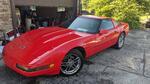
I have a 1990 C4, it likes to bog down whenever I press on the accelerator, either slightly or all the way to the floor, but only for a few seconds at least, then feels fine. It also runs rough and shakes a lot at stop lights while in gear, happens whether car is cold or hot, any suggestions on what it could be?

Safety Car


Joined: May 2001
Posts: 4,752
Likes: 1,642
From: Fairfax Virginia
A 1990 C4 that bogs is frequently a 1990 C4 that needs a "good tune up" and check up. A new set of wires and plugs frequently cleans up the idle and more.
Does the car start up normally and then transition to Closed Loop like it should? How about the MAF sensor? Are you getting any OBD1 Codes like the Check engine light?
The shaking at a stop light sounds like you are missing a cylinder or two at idle.
What is the fuel pressure your engine is running? It is supposed to be about 43 psi at idle. How old is the Fuel Pressure Regulator? How about the fuel injectors? Have they ever been changed?
The newer gasoline we all get in the North East contains Ethanol which eats the rubber parts in the fuel pressure Diaphragm. If you are not sure if it is okay just pull the vacuum line that connects to it and smell it. If it smells like raw gas then it is likely that your FPR Diaphragm is shot. The fuel pressure regulator can clearly make an effect like bogging so it might be a problem. The injectors are also eaten by the Ethanol unless you have updated them.
Last but not least is the age of the Oxygen Sensor. IF your Oxygen sensor is over 24 months old it NEEDS to be replaced. They can work for more than 24 months but their accuracy is no longer as trustworthy as a nice new O2 would be.
The Big 3 for these L98 Corvettes is they need a functional Oxygen Sensor, A accurate Coolant Temperature Sender and a working MAF sensor. The Oxygen sensors slow down and send a narrower signal as they age, then they slow down. They are cheap but invaluable to the EFI system. The MAF's are frequently ignored and they are a very important sensor. The MAF measures the volume of air being Combusted by the engine. Any vacuum air leakage around the MAF to the throttle body can allow extra air enter and cause issues.
Buy a set of the Factory Service Manuals available in hardback or DVD
Check your Fuel pressure, If you don't have a gauge get one as you will use it every so often.
Check your Fuel pressure regulator
Replace the Oxygen sensor
Look for any air leaking into the MAF to the throttle body
Pull a spark plug and replace the set if needed
Open hood in a dark place one night and look for sparks jumping around, if you see any, replace the Spark plug wires
That should be a good list for starters... As always if you happen to know someone with a scanner that works on the older OBD1 system as to use it.
Does the car start up normally and then transition to Closed Loop like it should? How about the MAF sensor? Are you getting any OBD1 Codes like the Check engine light?
The shaking at a stop light sounds like you are missing a cylinder or two at idle.
What is the fuel pressure your engine is running? It is supposed to be about 43 psi at idle. How old is the Fuel Pressure Regulator? How about the fuel injectors? Have they ever been changed?
The newer gasoline we all get in the North East contains Ethanol which eats the rubber parts in the fuel pressure Diaphragm. If you are not sure if it is okay just pull the vacuum line that connects to it and smell it. If it smells like raw gas then it is likely that your FPR Diaphragm is shot. The fuel pressure regulator can clearly make an effect like bogging so it might be a problem. The injectors are also eaten by the Ethanol unless you have updated them.
Last but not least is the age of the Oxygen Sensor. IF your Oxygen sensor is over 24 months old it NEEDS to be replaced. They can work for more than 24 months but their accuracy is no longer as trustworthy as a nice new O2 would be.
The Big 3 for these L98 Corvettes is they need a functional Oxygen Sensor, A accurate Coolant Temperature Sender and a working MAF sensor. The Oxygen sensors slow down and send a narrower signal as they age, then they slow down. They are cheap but invaluable to the EFI system. The MAF's are frequently ignored and they are a very important sensor. The MAF measures the volume of air being Combusted by the engine. Any vacuum air leakage around the MAF to the throttle body can allow extra air enter and cause issues.
Buy a set of the Factory Service Manuals available in hardback or DVD
Check your Fuel pressure, If you don't have a gauge get one as you will use it every so often.
Check your Fuel pressure regulator
Replace the Oxygen sensor
Look for any air leaking into the MAF to the throttle body
Pull a spark plug and replace the set if needed
Open hood in a dark place one night and look for sparks jumping around, if you see any, replace the Spark plug wires
That should be a good list for starters... As always if you happen to know someone with a scanner that works on the older OBD1 system as to use it.

Pro


Joined: Aug 2020
Posts: 647
Likes: 126
From: Liliha Bakery stuffing my face with coco puffs!
1990 is speed density and uses a MAP sensor so no MAF sensor but aside from that^^^all else applies. Be nice if you can scan the data...but any CEL codes?
Last edited by stew86MCSS396; Oct 1, 2020 at 06:15 PM.
Racer
Joined: Jul 2019
Posts: 399
Likes: 37
From: Kansas City Metro Area, Missouri
I don't know if it is the same on a 90, but on my '94 if I connect pin 4 and 12 on my obd port then turn the car on it will read me the codes.

Burning Brakes


Joined: Mar 2010
Posts: 1,094
Likes: 68
From: Providence RI
Sounds like the throttle position sensor. My 91 had a lag off idle and it ended up being the TPS. You can test them with a multimeter. TPS issues don’t always throw codes, and sometimes you need a breakout box to see their data as our ECMs are so slow regarding their baud / refresh rates.
I’d start there and check the condition of the cap, rotor, plugs and wires. After that if all checks out, fuel pressure is next.
Also, the stock injectors are negatively impacted by ethanol. Read up on how to ohm them out to check for ones that have failed.
I’d start there and check the condition of the cap, rotor, plugs and wires. After that if all checks out, fuel pressure is next.
Also, the stock injectors are negatively impacted by ethanol. Read up on how to ohm them out to check for ones that have failed.
Last edited by Deepa; Oct 1, 2020 at 09:36 PM.

Team Owner


Joined: Jul 2004
Posts: 28,430
Likes: 3,282
From: Hartford WI
Sounds like the throttle position sensor. My 91 had a lag off idle and it ended up being the TPS. You can test them with a multimeter. TPS issues don’t always throw codes, and sometimes you need a breakout box to see their data as our ECMs are so slow regarding their baud / refresh rates.
Also, the stock injectors are negatively impacted by ethanol. Read up on how to ohm them out to check for ones that have failed.
Also, the stock injectors are negatively impacted by ethanol. Read up on how to ohm them out to check for ones that have failed.
This you need to check on. Some have said that Multecs do not extend to the 90s but I am not sure.

If it is Multec, I would just get a set from FIC and put them where they belong. As a target or in the trash. I don't think it affects anything more than Multec injectors since they are fuel cooled and the windings get eaten up with the ethanol.
Burning Brakes
Joined: Mar 2010
Posts: 1,094
Likes: 68
From: Providence RI
I was stumped with a surging idle and poor low end performance. I tried data logs on my laptop. Car went back to the tuner and he needed a breakout box to see tps in real time to catch the issue. The issue was a poor weather pack pin that was loose when it was cold, and made contact constantly when it was hot. Drove him crazy and he was a top tier tech for GM in the 90s. They’d send him out to issues others couldn’t fix.
my 91 had Multecs stock.
my 91 had Multecs stock.
Last edited by Deepa; Oct 1, 2020 at 11:50 PM.
Thread Starter
Cruising
Joined: Sep 2020
Posts: 11
Likes: 1
From: NJ
A 1990 C4 that bogs is frequently a 1990 C4 that needs a "good tune up" and check up. A new set of wires and plugs frequently cleans up the idle and more.
Does the car start up normally and then transition to Closed Loop like it should? How about the MAF sensor? Are you getting any OBD1 Codes like the Check engine light?
The shaking at a stop light sounds like you are missing a cylinder or two at idle.
What is the fuel pressure your engine is running? It is supposed to be about 43 psi at idle. How old is the Fuel Pressure Regulator? How about the fuel injectors? Have they ever been changed?
The newer gasoline we all get in the North East contains Ethanol which eats the rubber parts in the fuel pressure Diaphragm. If you are not sure if it is okay just pull the vacuum line that connects to it and smell it. If it smells like raw gas then it is likely that your FPR Diaphragm is shot. The fuel pressure regulator can clearly make an effect like bogging so it might be a problem. The injectors are also eaten by the Ethanol unless you have updated them.
Last but not least is the age of the Oxygen Sensor. IF your Oxygen sensor is over 24 months old it NEEDS to be replaced. They can work for more than 24 months but their accuracy is no longer as trustworthy as a nice new O2 would be.
The Big 3 for these L98 Corvettes is they need a functional Oxygen Sensor, A accurate Coolant Temperature Sender and a working MAF sensor. The Oxygen sensors slow down and send a narrower signal as they age, then they slow down. They are cheap but invaluable to the EFI system. The MAF's are frequently ignored and they are a very important sensor. The MAF measures the volume of air being Combusted by the engine. Any vacuum air leakage around the MAF to the throttle body can allow extra air enter and cause issues.
Buy a set of the Factory Service Manuals available in hardback or DVD
Check your Fuel pressure, If you don't have a gauge get one as you will use it every so often.
Check your Fuel pressure regulator
Replace the Oxygen sensor
Look for any air leaking into the MAF to the throttle body
Pull a spark plug and replace the set if needed
Open hood in a dark place one night and look for sparks jumping around, if you see any, replace the Spark plug wires
That should be a good list for starters... As always if you happen to know someone with a scanner that works on the older OBD1 system as to use it.
Does the car start up normally and then transition to Closed Loop like it should? How about the MAF sensor? Are you getting any OBD1 Codes like the Check engine light?
The shaking at a stop light sounds like you are missing a cylinder or two at idle.
What is the fuel pressure your engine is running? It is supposed to be about 43 psi at idle. How old is the Fuel Pressure Regulator? How about the fuel injectors? Have they ever been changed?
The newer gasoline we all get in the North East contains Ethanol which eats the rubber parts in the fuel pressure Diaphragm. If you are not sure if it is okay just pull the vacuum line that connects to it and smell it. If it smells like raw gas then it is likely that your FPR Diaphragm is shot. The fuel pressure regulator can clearly make an effect like bogging so it might be a problem. The injectors are also eaten by the Ethanol unless you have updated them.
Last but not least is the age of the Oxygen Sensor. IF your Oxygen sensor is over 24 months old it NEEDS to be replaced. They can work for more than 24 months but their accuracy is no longer as trustworthy as a nice new O2 would be.
The Big 3 for these L98 Corvettes is they need a functional Oxygen Sensor, A accurate Coolant Temperature Sender and a working MAF sensor. The Oxygen sensors slow down and send a narrower signal as they age, then they slow down. They are cheap but invaluable to the EFI system. The MAF's are frequently ignored and they are a very important sensor. The MAF measures the volume of air being Combusted by the engine. Any vacuum air leakage around the MAF to the throttle body can allow extra air enter and cause issues.
Buy a set of the Factory Service Manuals available in hardback or DVD
Check your Fuel pressure, If you don't have a gauge get one as you will use it every so often.
Check your Fuel pressure regulator
Replace the Oxygen sensor
Look for any air leaking into the MAF to the throttle body
Pull a spark plug and replace the set if needed
Open hood in a dark place one night and look for sparks jumping around, if you see any, replace the Spark plug wires
That should be a good list for starters... As always if you happen to know someone with a scanner that works on the older OBD1 system as to use it.
Corvette Stories
The Best of Corvette for Corvette Enthusiasts

Top 10 Most Explosive Corvettes Ever Made: Power-to-Weight Ratio Ranked!
Joe Kucinski
150 hp to 1,250 hp: Every Corvette Generation Compared by the Specs That Matter
Joe Kucinski
8 Coolest Corvette Pace Cars (and Replicas) of All Time
Verdad Gallardo
Top 10 Corvette Engines RANKED by Peak Torque (70+ Years of Muscle!)
Joe Kucinski
Corvette ZR1X Will Be Pacing the Indy 500, And Could Probably Race, Too!
Verdad Gallardo
Top 10 Corvettes Coming to Mecum Indy 2026!
Brett Foote
Top 10 C9 Corvette MUST-HAVES to Fix These C8 Generation Flaws!
Michael S. Palmer
10 Revolutionary 'Corvette Firsts' Most People Don't Know
Joe Kucinski
5 Reasons to Upgrade to an LS6-Powered Corvette; 5 Reasons to Stay LT2
Michael S. Palmer
Thread Starter
Cruising
Joined: Sep 2020
Posts: 11
Likes: 1
From: NJ
Really interesting actually, I haven’t seen the CEL in a long time in my car, so I pulled the MAP sensor today to see if that could be the problem, and to see if the CEL was burned out or something. Did that then the car stalled and shot me a code. 👍🏼
Team Owner
Joined: Jul 2004
Posts: 28,430
Likes: 3,282
From: Hartford WI
Of course it does. It needs to see MAP data. Question is, what is the MAP data?
Safety Car
Joined: May 2001
Posts: 4,752
Likes: 1,642
From: Fairfax Virginia
The MAP data is readily available using a Scanner. The MAP sensor does the same thing as the MAF just in a different way. The purpose of the sensor is to measure accurately the amount of air being ingested by the combustion process. It is critical that the sensor is accurate or you get driving issues like you are having. If you could see the MAP data our Fellow Corvette Forum member AKLIM would know if it is in the ballpark. People with cars with a MAP can tell you if the number your car is seeing is in the proper range at least.
"A MAP sensor measures the air pressure or vacuum in the intake manifold and the mass of air entering the engine can be calculated from this using the ideal gas law. This technique is called speed density and is very common with aftermarket ECUs."
"What PSI should a MAP sensor read?
At sea level, atmospheric pressure is about 14.7 psi (pounds per square inch). When the engine is off, the absolute pressure inside the intake equals atmospheric pressure, so the MAP will indicate about 14.7 psi. At a perfect vacuum (-28"?), the MAP sensor will read 0 psi."
I saw these two items on the web and thought they may be of interest to you.
"A MAP sensor measures the air pressure or vacuum in the intake manifold and the mass of air entering the engine can be calculated from this using the ideal gas law. This technique is called speed density and is very common with aftermarket ECUs."
"What PSI should a MAP sensor read?
At sea level, atmospheric pressure is about 14.7 psi (pounds per square inch). When the engine is off, the absolute pressure inside the intake equals atmospheric pressure, so the MAP will indicate about 14.7 psi. At a perfect vacuum (-28"?), the MAP sensor will read 0 psi."
I saw these two items on the web and thought they may be of interest to you.
Team Owner
Joined: Jul 2004
Posts: 28,430
Likes: 3,282
From: Hartford WI
The MAP data is readily available using a Scanner. The MAP sensor does the same thing as the MAF just in a different way. The purpose of the sensor is to measure accurately the amount of air being ingested by the combustion process. It is critical that the sensor is accurate or you get driving issues like you are having. If you could see the MAP data our Fellow Corvette Forum member AKLIM would know if it is in the ballpark. People with cars with a MAP can tell you if the number your car is seeing is in the proper range at least.
"A MAP sensor measures the air pressure or vacuum in the intake manifold and the mass of air entering the engine can be calculated from this using the ideal gas law. This technique is called speed density and is very common with aftermarket ECUs."
"What PSI should a MAP sensor read?
At sea level, atmospheric pressure is about 14.7 psi (pounds per square inch). When the engine is off, the absolute pressure inside the intake equals atmospheric pressure, so the MAP will indicate about 14.7 psi. At a perfect vacuum (-28"?), the MAP sensor will read 0 psi."
I saw these two items on the web and thought they may be of interest to you.
"A MAP sensor measures the air pressure or vacuum in the intake manifold and the mass of air entering the engine can be calculated from this using the ideal gas law. This technique is called speed density and is very common with aftermarket ECUs."
"What PSI should a MAP sensor read?
At sea level, atmospheric pressure is about 14.7 psi (pounds per square inch). When the engine is off, the absolute pressure inside the intake equals atmospheric pressure, so the MAP will indicate about 14.7 psi. At a perfect vacuum (-28"?), the MAP sensor will read 0 psi."
I saw these two items on the web and thought they may be of interest to you.
Thread Starter
Cruising
Joined: Sep 2020
Posts: 11
Likes: 1
From: NJ
Hello,
Sorry for responding so late about my issue, completely forgot about this post until recently. For anyone wondering, my issue was pretty interesting! I did a TON of diagnostics; checking fuel pressure, replacing map sensor, etc etc. However, none of that fixed my problem so I decided that I would start replacing common things until the problem resolved itself. I bought a full set of new spark plugs and spark plug wires and learned about how each distributor plug goes to a corresponding cylinder. This is where I found my problem! I read so much online about how it's impossible for the car to run unless the correct wires are going to the correct cylinder, and SOMEHOW the last person to replace my spark plugs and wires had them almost all in the wrong order!!!! I recall looking at the average diagram for Chevy's V8's and wondering if I had the correct diagram because every wire on my corvette was not how it looked on the diagram, crazy! I have no idea how it was running and running kind of decently with the complete wrong firing order.
Sorry for responding so late about my issue, completely forgot about this post until recently. For anyone wondering, my issue was pretty interesting! I did a TON of diagnostics; checking fuel pressure, replacing map sensor, etc etc. However, none of that fixed my problem so I decided that I would start replacing common things until the problem resolved itself. I bought a full set of new spark plugs and spark plug wires and learned about how each distributor plug goes to a corresponding cylinder. This is where I found my problem! I read so much online about how it's impossible for the car to run unless the correct wires are going to the correct cylinder, and SOMEHOW the last person to replace my spark plugs and wires had them almost all in the wrong order!!!! I recall looking at the average diagram for Chevy's V8's and wondering if I had the correct diagram because every wire on my corvette was not how it looked on the diagram, crazy! I have no idea how it was running and running kind of decently with the complete wrong firing order.

Burning Brakes

Joined: Jul 2017
Posts: 750
Likes: 86
From: St Petersburg
all of the above could be correct but on my car it turned out to be the fuel pressure regulator
cheap part and easy to replace but takes a bit of removal of some parts
car would start hard then run OK but as time went on it got worse. when I took out the original the diaphragms were split
starts great now and of course has more power getting all the fuel it's supposed to
I originally replaced the fuel pump but that wasn't it. I have no problem replacing cheap old parts it's 31 years old
cheap part and easy to replace but takes a bit of removal of some parts
car would start hard then run OK but as time went on it got worse. when I took out the original the diaphragms were split
I originally replaced the fuel pump but that wasn't it. I have no problem replacing cheap old parts it's 31 years old
Last edited by BillDurant; Dec 26, 2020 at 09:47 AM.