




Code 36...again. Please help!

Thread Starter
Advanced


Joined: May 2017
Posts: 93
Likes: 15
From: Indiana
 Code 36...again. Please help!
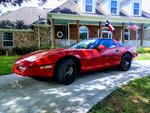
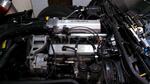
I’ve seen countless threads on this but I haven’t found an answer to this issue. I bought a 1987 coupe back in July with a check engine light. Guy I bought it from ran the code for me at it came up 32 and 36. I disconnected the battery and code 32 went away but 36 still stays on. I’ve replaced both relays with the proper relays I bought from Eckler’s and I’ve cleaned the MAF countless times. It’s not the stock MAF sensor, it’s by some company named “Spectra,” or something along those lines. I’ve read around that these knock offs rarely work and have trouble communicating with the ECM in the long run. My car performs just fine, it ran rich before I replaced both relays but that problem has been solved. Code comes on at second start up after being cleared. I’m mostly asking if anyone has found a company that makes or a place to buy the MAF sensors that actually work well. Or if anyone has a “solve all” that’d be great. I just want this light gone once and for all, so any help would be fantastic.
Thanks!
Thanks!
Drifting

Joined: Apr 2020
Posts: 1,925
Likes: 610
From: Orange, CA
One solution is to reprogram the ECM to eliminate the code check for the MAF burn-off circuit. This requires an adapter to allow an aftermarket chip to be inserted (Moates sells one) and a burned chip with the changes.
Thread Starter
Advanced
Joined: May 2017
Posts: 93
Likes: 15
From: Indiana
Thanks for your suggestion there, I wasn’t for sure if that was an option or not. So would I have to burn a chip myself or am I able to purchase one online? I’m not the best at programming things nor do I have the tech to do so easily. Also, if I alter the code in the long run will the ECM run off of pre-set settings? I’m assuming while the code is being thrown the car is using it’s stock settings since it can’t read the current conditions, and that’s working pretty well so far.
Drifting
Joined: Apr 2020
Posts: 1,925
Likes: 610
From: Orange, CA
Thanks for your suggestion there, I wasn’t for sure if that was an option or not. So would I have to burn a chip myself or am I able to purchase one online? I’m not the best at programming things nor do I have the tech to do so easily. Also, if I alter the code in the long run will the ECM run off of pre-set settings? I’m assuming while the code is being thrown the car is using it’s stock settings since it can’t read the current conditions, and that’s working pretty well so far.
I can burn the chip for you and send it your way, and it'll be a hell of a lot cheaper than trying to find one online, that I can guarantee. I still have some of these chips laying around so I don't mind. However, you would still need to purchase the adapter to make that work. If that's a route you're interested in, feel free to shoot me a PM. Feel free to let others chime in with their experience though! I don't own an earlier car, but I have burned chips for other members with earlier cars and they all worked out. I don't do mail-order tuning, just making small changes to the code like changing error codes and fan activation temperatures and such.
Melting Slicks


Joined: Jun 2011
Posts: 2,383
Likes: 385
From: Leland , North Carolina
The slightest vacuum leak will set a code 36. I have been down this road to despair with this thing many times but figured it out eventually. I had a vacuum leak on the manifold on one of my cars that was almost impossible to find. Broken hoses, relays , Cracked brake booster. a new MAF that did not have the burn off wire incorporated in it. Etc.. I bought a used MAF from Howell to fix that particular 36.
Last edited by TommyFox; Dec 30, 2020 at 12:19 PM.
Drifting

Joined: Nov 2015
Posts: 1,712
Likes: 331
Finalist 2020 C4 of the Year - Unmodified
On an '87 (and other earlier years), code 36 only indicates the burn off circuit did not complete correctly the last time the ignition was turned off. This is a known and stupid code. Extra dumb thing, disconnecting the battery and starting up makes it appear code 36 is gone, but it's not, it won't show up again until the engine reaches closed loop and ignition turned off for 5 minutes or so. Replacing the MAF with common, workable MAFs found today does not solve this as they typically don't have burn off circuits. Even if they do, they are usually unable to make the ECM happy, the burn off circuit check is too fussy. Don't waste $600 on an original Bosch MAF, my opinion.
Best method is what Nomake Wan said, get the ECM MEMCAL modified, only change needed is disabling code 36. Good idea to update to flash as Wan also mentioned, as the old EEPROM can wear out eventually and few have the equipment to burn one anyway. I did the disable, though I had a pro change the MEMCAL for new fuel injectors at the same time. Works fine with a typical replacement MAF from Rockauto.
Make sure to ask for a digital copy (as in a computer file) of the original MEMCAL as well as the modified version, just in case.
Tons of other threads for this on the site, search around.
Best method is what Nomake Wan said, get the ECM MEMCAL modified, only change needed is disabling code 36. Good idea to update to flash as Wan also mentioned, as the old EEPROM can wear out eventually and few have the equipment to burn one anyway. I did the disable, though I had a pro change the MEMCAL for new fuel injectors at the same time. Works fine with a typical replacement MAF from Rockauto.
Make sure to ask for a digital copy (as in a computer file) of the original MEMCAL as well as the modified version, just in case.
Tons of other threads for this on the site, search around.
Melting Slicks
Joined: Jun 2011
Posts: 2,383
Likes: 385
From: Leland , North Carolina
I had the same thing happen on mine and spent numerous hours trying to fix it. I had multiple small vacuum leaks on cracked vacuum hoses and also PVC hose like in the vid. I finally fixed it after fixing all the vacuum leaks.
A very small vacuum leak can cause an irritating redundant code 36 until 'Kingdom com'....
Melting Slicks
Joined: Jun 2011
Posts: 2,383
Likes: 385
From: Leland , North Carolina
I had this code 36 set on both my current 87 and 89 due to a VACUUM LEAK ONLY. Nothing else faulty.
More than once. You can replace MAF sensors and relays until one is blue in the face but if you have a slight vacuum leak you will most likely get a code 36. I just recently replaced my water pump and forgot to connect a vacuum hose under the throttle body.
Guess what ? Code 36....
Corvette Stories
The Best of Corvette for Corvette Enthusiasts

Top 10 Most Expensive Corvettes Ever Sold on Bring A Trailer
Brett Foote
10 Things Every Corvette Owner Needs (2026 Edition)
Michael S. Palmer
8 Most "Only Corvette Owners Understand" Quirks and Problems
Pouria Savadkouei
10 Reasons the C6 Z06 is Still A Performance Benchmark After 20 Years
Joe Kucinski
How Much Horsepower Every Corvette Engine "LOST" in 1972
Joe Kucinski
Top 10 DOs and DON'Ts for Protecting Your Convertible Top!
Michael S. Palmer
Top 10 Most Explosive Corvettes Ever Made: Power-to-Weight Ratio Ranked!
Joe Kucinski
150 hp to 1,250 hp: Every Corvette Generation Compared by the Specs That Matter
Joe Kucinski
8 Coolest Corvette Pace Cars (and Replicas) of All Time
Verdad Gallardo
Melting Slicks
Joined: Aug 2003
Posts: 3,399
Likes: 394
From: Lakeville MI
Please stop propagating this nonsense about vacuum leaks pertaining to code 36. It is dead wrong.
Burn-off cycle explained:
Here's an example log to illustrate what is going on during the burn-off cycle from the ecm's perspective (use chrome to open link and wait for it to generate chart):
https://datazap.me/u/tequilaboy/burn...7-8&mark=64-67
After a 5 second delay after the ignition has been switched off, the burn-off cycle will be activated for one second and the resulting voltage will be monitored and compared against pre-set limits. This can be seen while scanning by observing the unlimited airflow signal. Converting from voltage to flow using the MAF tables below, the acceptable flow range is between roughly 5 gm/sec and 36 gm/sec (which corresponds to 400 mv - 1.9 v).
Look for the prominent IAC reset cycle to indicate when the ignition was switched off and note the drop in the unlimited airflow signal that occurs 5 seconds later (see the yellow markers).
In this log you will see the unlimited airflow signal bouncing between 27 and 29 gm/sec (or around 1.65 volts) during the burn-off cycle. This is within the acceptable range, so no failure was detected in this example. Unfortunately, I don't have any example logs showing what happens with a failed maf or with failed relays, but you are free to imagine how the signal will be affected.
Note: The normal maf control signal (mass airflow) is limited by the max maf vs rpm table, so you typically won't see the burn-off cycle by observing the mass airflow signal directly unless it should happen to fall below the limit value. In this particular case, the max maf limit was set to 26 gm/sec below 400 rpm. With standard tuning, this limit would be set to 23 gm/sec below 400 rpm.
Some mafs simply do not fall within the acceptable voltage range. If all else fails, you can re-tune the code 36 parameters, disable code 36, or use a modern maf that does not require burn-off and disable code 36 in parallel, or live with the code/ses lamp.
This data was obtained by scanning at 8192 baud with DataCat. Scanning with proper tools is essential for a thorough diagnosis. I can't emphasize this enough.
Acceptable voltage/flow range obtained from MAF tables 1 and 2 shown in green:
Volts Grams/sec
01.92 37.13
01.90 36 *
01.83 33.75
01.74 30.56
01.65 27.56
01.55 24.94
01.46 22.28
01.28 18.78
01.10 15.36
00.91 11.95
00.73 9.16
00.55 6.83
00.40 5 *
00.37 4.94
* You really need to interpolate between points to get the exact flow values at 400 mv and 1.9 v, but this is close enough for this discussion.
parameters involved:
SCALAR: MAF Burn off time 1.00 seconds
SCALAR: MAF Burn off delay 5.00 seconds
;--------------------------------------------------------
; ERR # 36 Params
; >> MAF Burn off Diag <<
;--------------------------------------------------------
LC221: FCB 3 ; 0.3 Second Dly prior to Burn off CAL = Arg * 10
LC222: FCB 6 ; 6 fails req for ERR #36 If HLM air meter
LC223: FCB 95 ; 1.90 VDC, Fail B/O test if HLM A/D GT 1.90 VDC
LC224: FCB 20 ; Fail B/O test if A/D < 400 mvdc
Note: this car has had some tuning of the MAF tables, so the values shown here do not necessarily reflect standard tuning. They are shown for reference purposes.
TABLE: MAF Table #1
Volts Grams/sec
01.46 22.28
01.28 18.78
01.10 15.36
00.91 11.95
00.73 9.16
00.55 6.83
00.37 4.94
00.18 3.59
00.00 9.16
TABLE: MAF Table #2
Volts Grams/sec
02.19 47.63
02.10 44.44
02.01 40.69
01.92 37.13
01.83 33.75
01.74 30.56
01.65 27.56
01.55 24.94
01.46 22.31
TABLE: MAF Table #3
Volts Grams/sec
02.93 82.03
02.83 77.16
02.74 72.30
02.65 67.76
02.56 63.22
02.47 59.01
02.38 55.12
02.29 51.23
02.19 47.66
TABLE: MAF Table #3
Volts Grams/sec
02.93 82.03
02.83 77.16
02.74 72.30
02.65 67.76
02.56 63.22
02.47 59.01
02.38 55.12
02.29 51.23
02.19 47.66
TABLE: MAF Table #4
Volts Grams/sec
03.66 134.47
03.57 124.98
03.47 117.07
03.38 110.74
03.29 104.41
03.20 98.61
03.11 92.81
03.02 87.54
02.93 82.27
TABLE: MAF Table #5
Volts Grams/sec
04.39 206.19
04.30 195.68
04.21 185.98
04.11 177.08
04.02 167.38
03.93 158.48
03.84 150.40
03.75 142.31
03.66 134.23
TABLE: MAF Table #6
Volts Grams/sec
05.12 254.00
05.07 254.00
05.03 254.00
04.98 254.00
04.94 254.00
04.89 254.00
04.85 254.00
04.80 254.00
04.75 254.00
04.71 254.00
04.66 247.03
04.62 239.06
04.57 232.09
04.52 225.12
04.48 218.14
04.43 212.17
04.39 206.19
TABLE: Maximum Air Flow vs. RPM
RPM Grams/sec
6400 255.00
6000 255.00
5600 255.00
5200 255.00
4800 255.00
4400 255.00
4000 255.00
3600 255.00
3200 255.00
2800 254.00
2400 181.00
2000 125.00
1600 85.00
1200 55.00
800 35.00
400 26.00
00 26.00
Burn-off cycle explained:
Here's an example log to illustrate what is going on during the burn-off cycle from the ecm's perspective (use chrome to open link and wait for it to generate chart):
https://datazap.me/u/tequilaboy/burn...7-8&mark=64-67
After a 5 second delay after the ignition has been switched off, the burn-off cycle will be activated for one second and the resulting voltage will be monitored and compared against pre-set limits. This can be seen while scanning by observing the unlimited airflow signal. Converting from voltage to flow using the MAF tables below, the acceptable flow range is between roughly 5 gm/sec and 36 gm/sec (which corresponds to 400 mv - 1.9 v).
Look for the prominent IAC reset cycle to indicate when the ignition was switched off and note the drop in the unlimited airflow signal that occurs 5 seconds later (see the yellow markers).
In this log you will see the unlimited airflow signal bouncing between 27 and 29 gm/sec (or around 1.65 volts) during the burn-off cycle. This is within the acceptable range, so no failure was detected in this example. Unfortunately, I don't have any example logs showing what happens with a failed maf or with failed relays, but you are free to imagine how the signal will be affected.
Note: The normal maf control signal (mass airflow) is limited by the max maf vs rpm table, so you typically won't see the burn-off cycle by observing the mass airflow signal directly unless it should happen to fall below the limit value. In this particular case, the max maf limit was set to 26 gm/sec below 400 rpm. With standard tuning, this limit would be set to 23 gm/sec below 400 rpm.
Some mafs simply do not fall within the acceptable voltage range. If all else fails, you can re-tune the code 36 parameters, disable code 36, or use a modern maf that does not require burn-off and disable code 36 in parallel, or live with the code/ses lamp.
This data was obtained by scanning at 8192 baud with DataCat. Scanning with proper tools is essential for a thorough diagnosis. I can't emphasize this enough.
Acceptable voltage/flow range obtained from MAF tables 1 and 2 shown in green:
Volts Grams/sec
01.92 37.13
01.90 36 *
01.83 33.75
01.74 30.56
01.65 27.56
01.55 24.94
01.46 22.28
01.28 18.78
01.10 15.36
00.91 11.95
00.73 9.16
00.55 6.83
00.40 5 *
00.37 4.94
* You really need to interpolate between points to get the exact flow values at 400 mv and 1.9 v, but this is close enough for this discussion.
parameters involved:
SCALAR: MAF Burn off time 1.00 seconds
SCALAR: MAF Burn off delay 5.00 seconds
;--------------------------------------------------------
; ERR # 36 Params
; >> MAF Burn off Diag <<
;--------------------------------------------------------
LC221: FCB 3 ; 0.3 Second Dly prior to Burn off CAL = Arg * 10
LC222: FCB 6 ; 6 fails req for ERR #36 If HLM air meter
LC223: FCB 95 ; 1.90 VDC, Fail B/O test if HLM A/D GT 1.90 VDC
LC224: FCB 20 ; Fail B/O test if A/D < 400 mvdc
Note: this car has had some tuning of the MAF tables, so the values shown here do not necessarily reflect standard tuning. They are shown for reference purposes.
TABLE: MAF Table #1
Volts Grams/sec
01.46 22.28
01.28 18.78
01.10 15.36
00.91 11.95
00.73 9.16
00.55 6.83
00.37 4.94
00.18 3.59
00.00 9.16
TABLE: MAF Table #2
Volts Grams/sec
02.19 47.63
02.10 44.44
02.01 40.69
01.92 37.13
01.83 33.75
01.74 30.56
01.65 27.56
01.55 24.94
01.46 22.31
TABLE: MAF Table #3
Volts Grams/sec
02.93 82.03
02.83 77.16
02.74 72.30
02.65 67.76
02.56 63.22
02.47 59.01
02.38 55.12
02.29 51.23
02.19 47.66
TABLE: MAF Table #3
Volts Grams/sec
02.93 82.03
02.83 77.16
02.74 72.30
02.65 67.76
02.56 63.22
02.47 59.01
02.38 55.12
02.29 51.23
02.19 47.66
TABLE: MAF Table #4
Volts Grams/sec
03.66 134.47
03.57 124.98
03.47 117.07
03.38 110.74
03.29 104.41
03.20 98.61
03.11 92.81
03.02 87.54
02.93 82.27
TABLE: MAF Table #5
Volts Grams/sec
04.39 206.19
04.30 195.68
04.21 185.98
04.11 177.08
04.02 167.38
03.93 158.48
03.84 150.40
03.75 142.31
03.66 134.23
TABLE: MAF Table #6
Volts Grams/sec
05.12 254.00
05.07 254.00
05.03 254.00
04.98 254.00
04.94 254.00
04.89 254.00
04.85 254.00
04.80 254.00
04.75 254.00
04.71 254.00
04.66 247.03
04.62 239.06
04.57 232.09
04.52 225.12
04.48 218.14
04.43 212.17
04.39 206.19
TABLE: Maximum Air Flow vs. RPM
RPM Grams/sec
6400 255.00
6000 255.00
5600 255.00
5200 255.00
4800 255.00
4400 255.00
4000 255.00
3600 255.00
3200 255.00
2800 254.00
2400 181.00
2000 125.00
1600 85.00
1200 55.00
800 35.00
400 26.00
00 26.00


Melting Slicks
Joined: Jun 2011
Posts: 2,383
Likes: 385
From: Leland , North Carolina
Melting Slicks
Joined: Aug 2003
Posts: 3,399
Likes: 394
From: Lakeville MI
The ecm is kept alive for 11.26 seconds after ign off. When scanning in 8192 baud mode, data will continue to flow during this time as can be seen in the log. This log simply demonstrates what happens when the ign is switched off from a running state while scanning at 8192 baud. Nothing special was done to record this log. It came from a customer's car and just happened to capture the ign off and burn-off cycle, so it is useful for this discussion.
As can be seen, the IAC cycles fully open, fully closed and then opens to the start position to prepare for the next start-up. 160 counts is the start position for 1989 cars (144 counts for earlier cars). This is all normal behavior. I've shown this signal because it serves as very obvious visual indicator of when the ign is switched off.
If scanning at 160 baud, you may not see anything (or only 1 or 2 samples) after ign off due to the slow frame rate and limited (25 byte) 160 baud data stream, so this may explain what you see with your scanner. I don't have much 160 baud data on hand to confirm, but I can do some digging. Sorry, I don't have a laptop available at the moment and I don't want to drag this pc out to the car to test (but have done so in the past). Its an all-in-one touch screen, so kinda like a big tablet, but also kinda ridiculous to use in the car.
Back to code 36: During the 1 second burn off, if the maf voltage is outside of the 400mv-1.9 volt range, a counter will be incremented. After 6 counts, the code 36 dtc will be set. 6* 6.25 ms = 37.5 ms, so it doesn't take long.
You should be able to see this behavior on the maf signal wire with a voltage meter or o-scope, but it is much easier to scan assuming you have the right tools available.
Note: The light green line (unlim airflow diag) is the important signal here since the mass airflow signal is being limited by the table and does not show the effect. The unlimited airflow signal directly follows the a/d conversion (including scaling) but without limitation. It is therefore the better indicator of the actual maf voltage.
Voltage out of range is likely due to bad maf sensor, relay or wiring issues. The behavior of the unlimited airflow signal (light green line in log) should offer a clue as to what has failed, but often it is the maf itself that is the culprit, especially with after-market or replacement mafs. No signal response would point to power issues, low voltage or high voltage out of range could be due to a short to ground or vbat, or a bad sensor.
Here's another log just for fun. Different car this time. It is equipped with a Blowerworks maf, so no burn-off and no code 36 (ever). This log includes maf voltage and exclusive maf air temp signals. Note the different behavior of the unlimited airflow (labelled as maf raw input) and mass air flow signals compared to the original log. The maf signals are not pulled up after ign off in this case due to input circuitry changes and there is no burn-off, so the signals decay naturally to zero with no flow.
https://datazap.me/u/tequilaboy/maf-...rk=28818-28865
As can be seen, the IAC cycles fully open, fully closed and then opens to the start position to prepare for the next start-up. 160 counts is the start position for 1989 cars (144 counts for earlier cars). This is all normal behavior. I've shown this signal because it serves as very obvious visual indicator of when the ign is switched off.
If scanning at 160 baud, you may not see anything (or only 1 or 2 samples) after ign off due to the slow frame rate and limited (25 byte) 160 baud data stream, so this may explain what you see with your scanner. I don't have much 160 baud data on hand to confirm, but I can do some digging. Sorry, I don't have a laptop available at the moment and I don't want to drag this pc out to the car to test (but have done so in the past). Its an all-in-one touch screen, so kinda like a big tablet, but also kinda ridiculous to use in the car.
Back to code 36: During the 1 second burn off, if the maf voltage is outside of the 400mv-1.9 volt range, a counter will be incremented. After 6 counts, the code 36 dtc will be set. 6* 6.25 ms = 37.5 ms, so it doesn't take long.
You should be able to see this behavior on the maf signal wire with a voltage meter or o-scope, but it is much easier to scan assuming you have the right tools available.
Note: The light green line (unlim airflow diag) is the important signal here since the mass airflow signal is being limited by the table and does not show the effect. The unlimited airflow signal directly follows the a/d conversion (including scaling) but without limitation. It is therefore the better indicator of the actual maf voltage.
Voltage out of range is likely due to bad maf sensor, relay or wiring issues. The behavior of the unlimited airflow signal (light green line in log) should offer a clue as to what has failed, but often it is the maf itself that is the culprit, especially with after-market or replacement mafs. No signal response would point to power issues, low voltage or high voltage out of range could be due to a short to ground or vbat, or a bad sensor.
Here's another log just for fun. Different car this time. It is equipped with a Blowerworks maf, so no burn-off and no code 36 (ever). This log includes maf voltage and exclusive maf air temp signals. Note the different behavior of the unlimited airflow (labelled as maf raw input) and mass air flow signals compared to the original log. The maf signals are not pulled up after ign off in this case due to input circuitry changes and there is no burn-off, so the signals decay naturally to zero with no flow.
https://datazap.me/u/tequilaboy/maf-...rk=28818-28865
Last edited by tequilaboy; Aug 7, 2023 at 06:43 PM.
Drifting
Joined: Nov 2015
Posts: 1,712
Likes: 331
Finalist 2020 C4 of the Year - Unmodified
FYI, my code 36 information was from my '87 and '87 FSM.
Only thought how "fixing" a vacuum leak might trigger a code 36 is if:
a) The burn circuit is failing check.
and
b) The car is not getting to closed loop due to the vacuum change. The burn circuit is only checked after the engine has reached closed loop and turned off. This means the vacuum change prevented closed loop, so no code 36 logged even though burn circuit didn't perform properly.
Seems unlikely this would happen, I'd expect the vacuum problem was properly fixed.
Only thought how "fixing" a vacuum leak might trigger a code 36 is if:
a) The burn circuit is failing check.
and
b) The car is not getting to closed loop due to the vacuum change. The burn circuit is only checked after the engine has reached closed loop and turned off. This means the vacuum change prevented closed loop, so no code 36 logged even though burn circuit didn't perform properly.
Seems unlikely this would happen, I'd expect the vacuum problem was properly fixed.
Melting Slicks
Joined: Jun 2011
Posts: 2,383
Likes: 385
From: Leland , North Carolina
FYI, my code 36 information was from my '87 and '87 FSM.
Only thought how "fixing" a vacuum leak might trigger a code 36 is if:
a) The burn circuit is failing check.
and
b) The car is not getting to closed loop due to the vacuum change. The burn circuit is only checked after the engine has reached closed loop and turned off. This means the vacuum change prevented closed loop, so no code 36 logged even though burn circuit didn't perform properly.
Seems unlikely this would happen, I'd expect the vacuum problem was properly fixed.
Only thought how "fixing" a vacuum leak might trigger a code 36 is if:
a) The burn circuit is failing check.
and
b) The car is not getting to closed loop due to the vacuum change. The burn circuit is only checked after the engine has reached closed loop and turned off. This means the vacuum change prevented closed loop, so no code 36 logged even though burn circuit didn't perform properly.
Seems unlikely this would happen, I'd expect the vacuum problem was properly fixed.
Drifting
Joined: Apr 2020
Posts: 1,925
Likes: 610
From: Orange, CA

Melting Slicks
Joined: Jun 2011
Posts: 2,383
Likes: 385
From: Leland , North Carolina
TommyFox's 89 (I think he sold it) he mentions was a cobbled, changed-up, Heinz 57 conglomeration of parts and thinking. Not sure how any meaningful cause and effect conclusion could be drawn from such a mash-up.
Drifting

Joined: Jun 2018
Posts: 1,402
Likes: 287
From: Brisbane Australia
C4 of Year Finalist (performance mods) 2019
Uh, no, The 84 does not have a MAF (or burnoff) and the 85 does not have a Code 36 (or any other DTC) for the burnoff circuit/function that is unique to the 1985 only. The MAF relays and Code 36 DTC are 1986-1989.
I'm with @kael. The way I read the Code 36 DTC, it sets if the burn-off function on the previous engine shut down did not occur. The 1988 FSM (only year manual I have with a Code 36) does not explain the parameter for DTC 36 to set. But because 36 is monitoring a function that occurs when the engine is NOT running, I don't see how 36 could be set by a vacuum leak when the engine IS running. The 36 DTC shouldn't be active if the engine is running.
What exactly happens, what is the feed-back to the ECM, what circuit is the DTC monitoring, to set the 36 DTC? << These parameters are not in the 88 FSM.
I'm with @kael. The way I read the Code 36 DTC, it sets if the burn-off function on the previous engine shut down did not occur. The 1988 FSM (only year manual I have with a Code 36) does not explain the parameter for DTC 36 to set. But because 36 is monitoring a function that occurs when the engine is NOT running, I don't see how 36 could be set by a vacuum leak when the engine IS running. The 36 DTC shouldn't be active if the engine is running.
What exactly happens, what is the feed-back to the ECM, what circuit is the DTC monitoring, to set the 36 DTC? << These parameters are not in the 88 FSM.

Drifting
Joined: Jun 2018
Posts: 1,402
Likes: 287
From: Brisbane Australia
C4 of Year Finalist (performance mods) 2019
Yes I believe it’s because he doesn’t want to get in an argument with people who know less than him. This is a good forum but like all forums there are some that only believe their own ****. Anyway that’s a very quick generalization.