When you click on links to various merchants on this site and make a purchase, this can result in this site earning a commission. Affiliate programs and affiliations include, but are not limited to, the eBay Partner Network.
I'm installing a standalone, and I want to keep knock sensor functionality. However, new ECUs (including standalones) keep the chassis ground and sensor ground planes isolated from one another to reduce noise in the sensor readings. The stock 1-wire knock sensor is grounded directly to the chassis ground via the engine block, so I'd have to connect the knock sensor negative wire to the chassis ground. This would bridge the gap between the two ground planes, which is not desirable.
As far as I can tell, the only way around this is to use a 2-wire knock sensor like this one. (Apparently some 2-wire sensors still connect the ground pin to engine ground, but I'm not sure how to tell without the sensor in hand.) It would bolt to the engine block rather than going into the coolant passage, and I'm not sure how that would affect the sensing effectiveness. I'm also not sure the best place to mount a pair of 2-wire sensors - back of the head? It has to be a machined surface, so the side of the block wouldn't work. A lot/all of the sensors are 8mm, but apparently people have just drilled them out to accept a larger bolt without seeing a difference in sensor output.
After a bit of research, it looks like a 2-wire sensor should work. 1-wire sensors are confusingly called "broadband" sensors, but the reality is that they're designed to detect a certain frequency +/- ~10%. I read that SBC knocks at 7kHz, so this is probably 6300-7700Hz. In contrast, 2-wire sensors are supposed to have a flat frequency response from 5-18kHz. (Actually, here's a datasheet of one that says 3-25kHz.) Kind of strange that 2-wire sensors appear to be so much better but are considerably cheaper. I guess better tech isn't always more expensive, or economies of scale could come into play. The lower amplitude ratio of 2-wire sensors could also require more sensitive electronics to read, and I think you often need two of the 2-wire sensors on a V8 for that reason.
Lastly, I'm a bit confused about the differences between the various offerings. I see 2-wire knock sensors from $12 to $64. Hopefully Bosch has some documentation that sheds some light.
Last edited by C4ProjectCar; May 23, 2021 at 05:43 PM.
I'm installing a standalone, and I want to keep knock sensor functionality. However, new ECUs (including standalones) keep the chassis ground and sensor ground planes isolated from one another to reduce noise in the sensor readings. The stock 1-wire knock sensor is grounded directly to the chassis ground via the engine block, so I'd have to connect the knock sensor negative wire to the chassis ground. This would bridge the gap between the two ground planes, which is not desirable.
As far as I can tell, the only way around this is to use a 2-wire knock sensor like this one. (Apparently some 2-wire sensors still connect the ground pin to engine ground, but I'm not sure how to tell without the sensor in hand.) It would bolt to the engine block rather than going into the coolant passage, and I'm not sure how that would affect the sensing effectiveness. I'm also not sure the best place to mount a pair of 2-wire sensors - back of the head? It has to be a machined surface, so the side of the block wouldn't work. A lot/all of the sensors are 8mm, but apparently people have just drilled them out to accept a larger bolt without seeing a difference in sensor output.
After a bit of research, it looks like a 2-wire sensor should work. 1-wire sensors are confusingly called "broadband" sensors, but the reality is that they're designed to detect a certain frequency +/- ~10%. I read that SBC knocks at 7kHz, so this is probably 6300-7700Hz. In contrast, 2-wire sensors are supposed to have a flat frequency response from 5-18kHz. (Actually, here's a datasheet of one that says 3-25kHz.) Kind of strange that 2-wire sensors appear to be so much better but are considerably cheaper. I guess better tech isn't always more expensive, or economies of scale could come into play. The lower amplitude ratio of 2-wire sensors could also require more sensitive electronics to read, and I think you often need two of the 2-wire sensors on a V8 for that reason.
Lastly, I'm a bit confused about the differences between the various offerings. I see 2-wire knock sensors from $12 to $64. Hopefully Bosch has some documentation that sheds some light.
I've been doing some digging, and from what I've read, the 2 wire sensors are designed to have the signal wire shield terminated at the sensor and so the sensing pad and shield ground are connected together for proper shield drainage. You can supposedly even run them with just the signal wire.
The bosch sensors usually vary in sensing range and pad size, they're also pretty sensitive to the mounting surface, bosch has a spec for size and shape.
The coolant bolts are one of the best spots for mounting the sensors and it would be worth it to have a stud made that lets you mount the sensor there. The heads are usually frowned upon because valve train noise makes it difficult to pick up the knock events. You might be able to get away with it with hydraulic lifters, but any slop in the valve train will get picked up and will need to be properly filtered out.
The bosch KS4-P is one of if not the most popular option, datasheet here (https://controls.is/data/Data%20Shee...nsor_KS4-P.pdf).
I've been doing some digging, and from what I've read, the 2 wire sensors are designed to have the signal wire shield terminated at the sensor and so the sensing pad and shield ground are connected together for proper shield drainage. You can supposedly even run them with just the signal wire.
The bosch sensors usually vary in sensing range and pad size, they're also pretty sensitive to the mounting surface, bosch has a spec for size and shape.
The coolant bolts are one of the best spots for mounting the sensors and it would be worth it to have a stud made that lets you mount the sensor there. The heads are usually frowned upon because valve train noise makes it difficult to pick up the knock events. You might be able to get away with it with hydraulic lifters, but any slop in the valve train will get picked up and will need to be properly filtered out.
The bosch KS4-P is one of if not the most popular option, datasheet here (https://controls.is/data/Data%20Shee...nsor_KS4-P.pdf).
I've read a little bit on them needing shielding but wasn't really sure what it was saying. If I'm understanding, I should use shielded wire and connect (solder?) the shield to the back of the sensing pad?
Coolant bolts? Do you mean the drain plug where the stock sensor mounts? If so, the issue is that there's no machined surface for the sensor to snug up against. Or are you saying to make a stud with a shoulder as large as the sensor's compression sleeve?
I've been looking at the KS4-P, as it's the only one that seems to have a public-facing datasheet. Kinda crazy, it's $50 at Amazon but only $10 at RockAuto.
I've read a little bit on them needing shielding but wasn't really sure what it was saying. If I'm understanding, I should use shielded wire and connect (solder?) the shield to the back of the sensing pad?
Coolant bolts? Do you mean the drain plug where the stock sensor mounts? If so, the issue is that there's no machined surface for the sensor to snug up against. Or are you saying to make a stud with a shoulder as large as the sensor's compression sleeve?
I've been looking at the KS4-P, as it's the only one that seems to have a public-facing datasheet. Kinda crazy, it's $50 at Amazon but only $10 at RockAuto.
The shield drain should get pinned into the sensor ground pin on the sensor, one of the 2 pins should be directly connected to the sensing pad. Shielding gets complicated, you can double bond where both ends of the shield is connected to ground, or you can single bond where only one end is. I'd start with a single bonded shield, with the drain bonded at the sensor, see if there is an abnormal trigger after the noise learn completes on your amplifier, if not, you are all set, if there is, double bond it. KS4-R has an integral cable, but that may make it alot harder to find let alone replace, but it makes it that much easier to install.
Yeah where the stock sensor mounts, I've done that on a few motorcycle engines I've tuned for FSAE, I turned a stud that threaded into an engine mount location near the top of the cylinder, having access to a metal lathe made it easy, but there are a few readily available studs made for the bosch sensors. Heres a link to one I found. https://www.eficonnection.com/home/p...e-knock-sensor
A KS4-P for $14 shipped is a steal, thanks for the link.
Bosch does a lot of OE development so I would not be surprised if the other random sensors are a variant of the KS4-P that are tuned for different frequencies, have a slightly different package or connector, or have different sensing pads, they could also have higher or lower output voltages.
Completely unrelated, but my forum tool bar is gone on PC so I can't hyperlink or insert images inline, otherwise I would have.
Last edited by ThatOneKid; May 23, 2021 at 08:39 PM.
Believe me, that was my first thought too! I was shocked to see that it's $6 shipping with estimated delivery this Friday. I guess the not-so-good old days of extortionate shipping charges online are mostly over.
Originally Posted by ThatOneKid
The shield drain should get pinned into the sensor ground pin on the sensor, one of the 2 pins should be directly connected to the sensing pad. Shielding gets complicated, you can double bond where both ends of the shield is connected to ground, or you can single bond where only one end is. I'd start with a single bonded shield, with the drain bonded at the sensor, see if there is an abnormal trigger after the noise learn completes on your amplifier, if not, you are all set, if there is, double bond it. KS4-R has an integral cable, but that may make it alot harder to find let alone replace, but it makes it that much easier to install.
Yeah where the stock sensor mounts, I've done that on a few motorcycle engines I've tuned for FSAE, I turned a stud that threaded into an engine mount location near the top of the cylinder, having access to a metal lathe made it easy, but there are a few readily available studs made for the bosch sensors. Heres a link to one I found. https://www.eficonnection.com/home/p...e-knock-sensor
A KS4-P for $14 shipped is a steal, thanks for the link.
Bosch does a lot of OE development so I would not be surprised if the other random sensors are a variant of the KS4-P that are tuned for different frequencies, have a slightly different package or connector, or have different sensing pads, they could also have higher or lower output voltages.
Completely unrelated, but my forum tool bar is gone on PC so I can't hyperlink or insert images inline, otherwise I would have.
That's very helpful, thanks for spelling it out for me!
Cool that you did FSAE, I wish my school had a team. That stud looks like just the ticket. A little pricey, but it's a heck of a lot better than nothing. I have access to a lathe but not enough skill to fabricate even something this simple. Maybe it would be a good reason to learn...
Guess CF has you running the beta or something! That's wild. Assuming "go advanced" doesn't help?
Edit: I guess the last detail is the plug - datasheet calls for a "2-Pin RB-Kp.1" or a "2-Pin Jetronic". I can't find the former, but I believe this is the latter?
Last edited by C4ProjectCar; May 23, 2021 at 10:09 PM.
Might want to look into the 2000-2002 l31 vortec engine some of the express vans used it and the 410 ecu, I believe they used dual knock sensors that are 2 wire units. It would still be a 350 block, and 4" bore so the sensor would most likely be a good match to your lt1/l98 block.
Be aware the 2 wire sensors and 1 wire sensors could be different, some resonant and others are broadband and require a knock filter as used in the 84-91 l98's. Although I can't remember which is resonant and which isn't. If going with a stand alone system simply use what they suggest, and be prepared to do a fair amount of calibration to get it to actually function properly. It's rarely a plug and play scenario with stand alone system and knock sensors bro
The newer knock sensors for the ls platform are different depending on bore size. If using one in an old sbc block you will have a considerable amount of time calibrating it. What efi system are you planning to use? If it is Holley, there are a few good threads on the holley forums that will walk you through sensor selection as well as setup, and confirmation it is working right.
I have the Holley Sniper Stealth 4150 and it does not have any provisions for a knock sensor. I wish it did, I have an external Knock sensor that was sold by MSD years ago. This is where I learned that any loud bang or clunk would trigger the knock sensor. Loose parts can drive you nuts with false knock detection. There are a lot of parts that could trigger the Knock sensor on my 427 BB.
I would love to have it automatically retard the ignition upon hearing the first knock. The newer cars can individually retard a specific cylinder after it hears a knock. This is the trick that helped the Corvette Race cars finish the races they were in and really improved their reliability. The race cars were all breaking their Pistons Glans above the oil rings which is from repeated detonation. The material above the oil ring can break off and destroy the cylinder walls if the detonation is left alone. If Number 6 knocks it would retard the Spark to #6 by 10* and after another rotation if the knock stopped it would re-advance the ignition. If the know was still present then the ECM would take another 10* of timing until the knock stopped.
Just remember that a knock sensor is essentially a Microphone tuned for specific ranges of sounds. They should be standard on the new EFI systems being marketed. The Holley Software for the Sniper is amazing with all it's capabilities. It would not be hard to add the knock sensor feature to the software.
Might want to look into the 2000-2002 l31 vortec engine some of the express vans used it and the 410 ecu, I believe they used dual knock sensors that are 2 wire units. It would still be a 350 block, and 4" bore so the sensor would most likely be a good match to your lt1/l98 block.
Be aware the 2 wire sensors and 1 wire sensors could be different, some resonant and others are broadband and require a knock filter as used in the 84-91 l98's. Although I can't remember which is resonant and which isn't. If going with a stand alone system simply use what they suggest, and be prepared to do a fair amount of calibration to get it to actually function properly. It's rarely a plug and play scenario with stand alone system and knock sensors bro
Originally Posted by Bill Chase
The newer knock sensors for the ls platform are different depending on bore size. If using one in an old sbc block you will have a considerable amount of time calibrating it. What efi system are you planning to use? If it is Holley, there are a few good threads on the holley forums that will walk you through sensor selection as well as setup, and confirmation it is working right.
Thanks. I was expecting to have to calibrate it, but hopefully it's not too big a task and is doable on the street. I'm running MaxxECU, which I'm guessing you've never heard of. It looks like they make calibration fairly easy. There's an "induce knock" button that lets you set advance to X angle for Y seconds. It looks like you can just creep up on knock while watching knock levels in the datalog and populate the sensitivity table accordingly. I'm NA with everything forged, so I'm not too nervous about the process, although it would be much easier on a dyno where I could hold a certain load and RPM.
Originally Posted by ctmccloskey
I have the Holley Sniper Stealth 4150 and it does not have any provisions for a knock sensor. I wish it did, I have an external Knock sensor that was sold by MSD years ago. This is where I learned that any loud bang or clunk would trigger the knock sensor. Loose parts can drive you nuts with false knock detection. There are a lot of parts that could trigger the Knock sensor on my 427 BB.
I would love to have it automatically retard the ignition upon hearing the first knock. The newer cars can individually retard a specific cylinder after it hears a knock. This is the trick that helped the Corvette Race cars finish the races they were in and really improved their reliability. The race cars were all breaking their Pistons Glans above the oil rings which is from repeated detonation. The material above the oil ring can break off and destroy the cylinder walls if the detonation is left alone. If Number 6 knocks it would retard the Spark to #6 by 10* and after another rotation if the knock stopped it would re-advance the ignition. If the know was still present then the ECM would take another 10* of timing until the knock stopped.
Just remember that a knock sensor is essentially a Microphone tuned for specific ranges of sounds. They should be standard on the new EFI systems being marketed. The Holley Software for the Sniper is amazing with all it's capabilities. It would not be hard to add the knock sensor feature to the software.
Definitely cool that newer tech can detect knock per cylinder. Once I install a trigger wheel on the crank, the ECU I'm running (MaxxECU Race) will be able to do that. It's a little strange to me that not every ECU on the market supports knock detection.
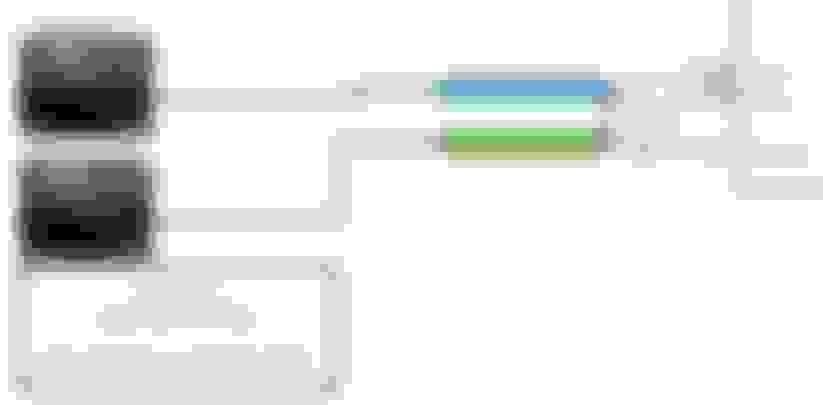
I found a few more alternatives for mounting the sensor to the coolant drain plugs. Here's a brass adapter that comes with a sensor for $33. I might email the company to see if I could buy it without the sensor. I also found this thread that says that later LS motors use the adapter pictured below. Bizarrely, I can't find any reference to this part anywhere else. I even reverse-searched this image, and it's nowhere else. I wish I could find it, because a mass-produced GM part would be dirt cheap.
Thanks. I was expecting to have to calibrate it, but hopefully it's not too big a task and is doable on the street. I'm running MaxxECU, which I'm guessing you've never heard of. It looks like they make calibration fairly easy. There's an "induce knock" button that lets you set advance to X angle for Y seconds. It looks like you can just creep up on knock while watching knock levels in the datalog and populate the sensitivity table accordingly. I'm NA with everything forged, so I'm not too nervous about the process, although it would be much easier on a dyno where I could hold a certain load and RPM.
Definitely cool that newer tech can detect knock per cylinder. Once I install a trigger wheel on the crank, the ECU I'm running (MaxxECU Race) will be able to do that. It's a little strange to me that not every ECU on the market supports knock detection.
I found a few more alternatives for mounting the sensor to the coolant drain plugs. Here's a brass adapter that comes with a sensor for $33. I might email the company to see if I could buy it without the sensor. I also found this thread that says that later LS motors use the adapter pictured below. Bizarrely, I can't find any reference to this part anywhere else. I even reverse-searched this image, and it's nowhere else. I wish I could find it, because a mass-produced GM part would be dirt cheap.
LS's have a machined boss on the side of the block, no adapters that I know of.
I have heard of Maxx ecu, they all say calibration is straightforward, but it isn't, and it will take time to completely dial it in, adjust sensitivity so it isn't pulling timing due to false knock. Some food for thought, ask 10 good tuner/dealers of stand alone efi systems and 8 will tell you dump the knock sensor, especially for an na street car. I'm not trying to scare you off of it, just be mindful of the fact it will take a considerable amount of time to get it calibrated.
Tuning it to not pull excessive timing for "burst knock" is what will take time. Also tuning it to save you from a bad tank of gas will take time. The factory has an unlimited budget and the best in the world doing individual calibration on every car and engine combo they sell. For example adding headers, large exhaust pipes, different suspension bushings can all have an effect on what the knock sensor picks up. If all you had was the engine it would be much easier to get it done. And each little change you make can, and usually does, have an effect on the knock sensor. Especially for a street or endurance type car. I went down this rabbit hole thinking it would be simple and easy, 3 very good tuners with an impeccable reputation basically laughed at me and said throw the knock sensor in the trash, have it tuned for the conditions and fuel I plan to run, then pull a couple degrees of timing to keep it safe, and once I find a good source of gasoline stick with it. If you think about it, to tune a knock sensor you will have to basically make the engine ping at various loads and rpm. I don't know about you, but I'm not real eager to go out and make my brand new engine ping. Nor do I want to spend days on a load cell dyno paying someone to recreate every possible scenario where the engine could ping. I know it's difficult for a lot of younger people to believe but prior to around 1984 almost all cars were carbureted with old school tech ignitions and they lived a long time without a knock sensor. It's not going to save you from an improperly tuned engine, it is only designed to save you from the odd tank of bad gasoline, and that's it, all the engine coolant temp and intake air temp modifiers have to be right as well. You'd basically have to have a perfectly tuned system , and I mean PERFECT. To see the protection afforded by a knock sensor. The factory did it, for you to recreate that in a performance application will likely exceed your skill level and budget. No offense, just passing on what's been shared with me.
Google solid motor mount false knock, spend some time reading on why most will actually find ways to disable the factory knock sensor once they start modifying their cars. If that's not enough to deter you be prepared to spend a lot of money and time dialing it in for little to no real world benefits. Again, just sharing what's been conveyed to me from some very good tuners.
I have heard of Maxx ecu, they all say calibration is straightforward, but it isn't, and it will take time to completely dial it in, adjust sensitivity so it isn't pulling timing due to false knock. Some food for thought, ask 10 good tuner/dealers of stand alone efi systems and 8 will tell you dump the knock sensor, especially for an na street car. I'm not trying to scare you off of it, just be mindful of the fact it will take a considerable amount of time to get it calibrated.
Originally Posted by Bill Chase
Tuning it to not pull excessive timing for "burst knock" is what will take time. Also tuning it to save you from a bad tank of gas will take time. The factory has an unlimited budget and the best in the world doing individual calibration on every car and engine combo they sell. For example adding headers, large exhaust pipes, different suspension bushings can all have an effect on what the knock sensor picks up. If all you had was the engine it would be much easier to get it done. And each little change you make can, and usually does, have an effect on the knock sensor. Especially for a street or endurance type car. I went down this rabbit hole thinking it would be simple and easy, 3 very good tuners with an impeccable reputation basically laughed at me and said throw the knock sensor in the trash, have it tuned for the conditions and fuel I plan to run, then pull a couple degrees of timing to keep it safe, and once I find a good source of gasoline stick with it. If you think about it, to tune a knock sensor you will have to basically make the engine ping at various loads and rpm. I don't know about you, but I'm not real eager to go out and make my brand new engine ping. Nor do I want to spend days on a load cell dyno paying someone to recreate every possible scenario where the engine could ping. I know it's difficult for a lot of younger people to believe but prior to around 1984 almost all cars were carbureted with old school tech ignitions and they lived a long time without a knock sensor. It's not going to save you from an improperly tuned engine, it is only designed to save you from the odd tank of bad gasoline, and that's it, all the engine coolant temp and intake air temp modifiers have to be right as well. You'd basically have to have a perfectly tuned system , and I mean PERFECT. To see the protection afforded by a knock sensor. The factory did it, for you to recreate that in a performance application will likely exceed your skill level and budget. No offense, just passing on what's been shared with me.
Originally Posted by Bill Chase
Google solid motor mount false knock, spend some time reading on why most will actually find ways to disable the factory knock sensor once they start modifying their cars. If that's not enough to deter you be prepared to spend a lot of money and time dialing it in for little to no real world benefits. Again, just sharing what's been conveyed to me from some very good tuners.
Thanks Bill. I'll be running boost, and eventually quite high levels of it, so I consider knock sensing to be a must-have. For the cost, I consider it worth it even if I have to set the sensitivity very low to avoid false knock. Heck, even if all I get out of my $50 is a way to see knock sensor levels in my datalogs.
I appreciate your realistic perspective on calibration. Do you necessarily have to make it knock to calibrate? I'm envisioning setting conservative timing (~20°), doing a few pulls, and setting sensitivity so that noise levels X% higher than what I saw would be considered knock. That wouldn't help me at part throttle, but I really only need the protection at WOT. Do normal noise levels change that much in the engine in different driving conditions (oil temp, coolant temp, etc)?
Thanks Bill. I'll be running boost, and eventually quite high levels of it, so I consider knock sensing to be a must-have. For the cost, I consider it worth it even if I have to set the sensitivity very low to avoid false knock. Heck, even if all I get out of my $50 is a way to see knock sensor levels in my datalogs.
I appreciate your realistic perspective on calibration. Do you necessarily have to make it knock to calibrate? I'm envisioning setting conservative timing (~20°), doing a few pulls, and setting sensitivity so that noise levels X% higher than what I saw would be considered knock. That wouldn't help me at part throttle, but I really only need the protection at WOT. Do normal noise levels change that much in the engine in different driving conditions (oil temp, coolant temp, etc)?
The factory used a 'knock filter' that is calibrated to a very specific frequency and amplitude and duration. Every single car had a totally different filter on it, to account for differences in engine mounts, exhaust design, valvetrain, etc. It's not just a **** that says "sensitivity" that you turn up or down.
Bill is absolutely correct that doing knock sensing the correct way, as GM did it, will likely exceed your technical abilities and that of most tuners you will meet. Proper tuning of a knock system requires looking at the raw signal from the sensors and painstakingly going through step by step with the motor to determine exactly where in the frequency range knock appears, then filtering so that only those waveforms are actually passed on to be used for knock retard. There are aftermarket systems which attempt to make this easier for you, but they are pretty expensive. Plex comes to mind, and it's $1000+.
Tuning 'by ear' and then disabling knock feedback and making sure you put quality gas in the tank is a much simpler, much more straightforward method.
The factory used a 'knock filter' that is calibrated to a very specific frequency and amplitude and duration. Every single car had a totally different filter on it, to account for differences in engine mounts, exhaust design, valvetrain, etc. It's not just a **** that says "sensitivity" that you turn up or down.
Bill is absolutely correct that doing knock sensing the correct way, as GM did it, will likely exceed your technical abilities and that of most tuners you will meet. Proper tuning of a knock system requires looking at the raw signal from the sensors and painstakingly going through step by step with the motor to determine exactly where in the frequency range knock appears, then filtering so that only those waveforms are actually passed on to be used for knock retard. There are aftermarket systems which attempt to make this easier for you, but they are pretty expensive. Plex comes to mind, and it's $1000+.
Tuning 'by ear' and then disabling knock feedback and making sure you put quality gas in the tank is a much simpler, much more straightforward method.
Of course I realize frequency is a factor, but isn't knock frequency determined primarily by cylinder bore? Even if not, it seems like it would be easy to find my engine's resonant frequency with the old "bang the block with a hammer" trick.
I'm looking at Plex, and it seems pretty similar to MaxxECU's knock detection. Per-cylinder detection, frequency vs bore size calculator, knock threshold vs RPM (except MaxxECU also factors in MAP)... There's no telling the difference in the filtering circuitry and software magic, so perhaps that's a major difference.
It would be hard to make the argument that you can tune any single thing on your car even to within spitting distance of the factory calibration, so it's a red herring to discuss the difficulty it would take to tune anything to factory levels of perfection. The question is the amount of work it takes to get a system that is just better than nothing. Is it really that hard to get a semblance of useful knock detection? Especially running flex fuel, I'd rather have the safety net even if it means pulling timing even in some instances it isn't necessary. The alternative is "find a safe tune, then pull a few degrees across the board", so I'm not getting a bleeding edge tune either way.
Regardless, it's $50. That's worth at least giving it a shot.
Edit: How many hours would you estimate it would take to calibrate a knock sensing system to within 50% false positive/50% false negative?
Last edited by C4ProjectCar; May 25, 2021 at 12:24 PM.





 Retrofitting 2-wire knock sensor?