When you click on links to various merchants on this site and make a purchase, this can result in this site earning a commission. Affiliate programs and affiliations include, but are not limited to, the eBay Partner Network.
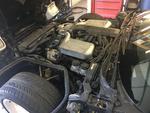
So my 96 sat on jackstands for around a year and when I finally got it down to bun off the fuel I noticed my power brake booster has a bad vacuum leak that is heard when I push the brake pedal down. So a few questions:
1. I can feel the shaft that is depressed via the brake pedal and it does have what appears to be some rubber gunk/rust on it based on what my fingers look like after grabbing it.. Since this appears to be a pretty major job to replace, I figure I have two choices besides that. Keep driving it and hope it goes away.. or maybe try rubbing some rubber seal expander on the shaft and getting down on my knees for bit and ask for forgiveness. Was looking at reviews on this:
2. I havent popped open my factory manual but it looks to me like the entire brake master cylinder has to be removed.. and also will need to break my back and neck climbing into the drivers area and removing nuts etc... Am I right as to how horrific this job is going to be?
The rubber seal you are feeling the rod go thru does not seal the vacuum portion of the booster. If its got a vacuum leak its gotta come out.
Im aware. Just depends on how far the external portion of the rod goes into the booster.. if what I can touch hits a seal, it may work even though most will be scraped off by the dust boot, Nothing to lose.
I could also bleed my brakes which would allow the rod to go very deep.. However, could trash my master cylinder. Big mistake some make, bleeding brakes on an old master.
Has nothing to do with the rod from the brake pedal or that shaft seal. What he's saying is that if the booster is failing it means that the diaphragm inside has ruptured or is failing, which means that the booster needs replacing. The seals have nothing to do with it. It's the diaphragm that's critical.
So my 96 sat on jackstands for around a year and when I finally got it down to bun off the fuel I noticed my power brake booster has a bad vacuum leak that is heard when I push the brake pedal down. So a few questions:
1. I can feel the shaft that is depressed via the brake pedal and it does have what appears to be some rubber gunk/rust on it based on what my fingers look like after grabbing it.. Since this appears to be a pretty major job to replace, I figure I have two choices besides that. Keep driving it and hope it goes away.. or maybe try rubbing some rubber seal expander on the shaft and getting down on my knees for bit and ask for forgiveness. Was looking at reviews on this: https://www.amazon.com/Hapco-Product...1M1A0O61&psc=1
2. I havent popped open my factory manual but it looks to me like the entire brake master cylinder has to be removed.. and also will need to break my back and neck climbing into the drivers area and removing nuts etc... Am I right as to how horrific this job is going to be?
Opinions? Thoughts?
Just finished doing this job recently with my son on his 1990. It wasn't too terrible. I'm a 250+ lbs guy and I was the one up under the dash WITHOUT removing the seat. Yes, it was uncomfortable, but it was far from impossible. I needed a pretty odd stack of extensions, wobble extensions, and a U-joint on my ratchet in order to get to the two nuts up under the dash holding the booster on. The tricky part when installing the new one was that the two studs that secure the booster to the firewall ALSO go through the brake pedal bracket to secure it. When we pulled out the old, the bracket sagged down a bit such that the holes no longer lined up. I had to have my son push the new booster mounting studs through the firewall while I applied a pretty good amout of upward force on the brake pedal bracket to get them lined up.
On the 90, we were able to remove the master cylinder WITHOUT disconnecting the brake lines from it. There was enough room to push it aside and wrangle the old booster out. We did have to remove the ECM bracket and set the ECM out of the way, but didn't have to pull any of the connectors out. Total time for removing the old and installing the new was probably around 3 hours (and I'm a pretty cautious, methodical guy). Unless the 96 is dramatically different, I wouldn't be too scared of this job.
Has nothing to do with the rod from the brake pedal or that shaft seal. What he's saying is that if the booster is failing it means that the diaphragm inside has ruptured or is failing, which means that the booster needs replacing. The seals have nothing to do with it. It's the diaphragm that's critical.
I recently did the PB booster on my 92. Easy test to see if it has a vacuum leak is to put vice grips on the vacuum hose going to the intake. If your idle changes you got a leak. Don't clamp them too tight. If you have a manual transmission the replacement booster won't fit. You'll need to find a used one from a manual transmission car. I pulled the seat on my car and it's so much easier. Plus I vacuumed and cleaned so much I pulled the passenger seat just to clean. I also did my plugs and wires with the booster out. It was so easy doing the plugs with the booster out of the way.
So my 96 sat on jackstands for around a year and when I finally got it down to bun off the fuel I noticed my power brake booster has a bad vacuum leak that is heard when I push the brake pedal down. So a few questions:
1. I can feel the shaft that is depressed via the brake pedal and it does have what appears to be some rubber gunk/rust on it based on what my fingers look like after grabbing it.. Since this appears to be a pretty major job to replace, I figure I have two choices besides that. Keep driving it and hope it goes away.. or maybe try rubbing some rubber seal expander on the shaft and getting down on my knees for bit and ask for forgiveness. Was looking at reviews on this: https://www.amazon.com/Hapco-Product...1M1A0O61&psc=1
2. I havent popped open my factory manual but it looks to me like the entire brake master cylinder has to be removed.. and also will need to break my back and neck climbing into the drivers area and removing nuts etc... Am I right as to how horrific this job is going to be?
Opinions? Thoughts?
It absolutely most certainly WILL NOT just go away. The diaphragm is no longer with us.
To confirm what you are saying, there is no leak until you push on the brake pedal?
When you push on the brake pedal it is quite firm like there is little or no vac assist?
When you start the car, holding foot firm on brake pedal, does the pedal become easier to push down the instant the engine starts or stay firm?
Removal is not outrageously difficult, two nuts inside under the dash, two nuts on the master cylinder, and you will need to move the PCM being a 96 as well. easier job on an 84-89, i just did one a couple weeks ago.
I used to rebuild those PBR boosters here in Australia, they are used on a fair few different models of Australian cars. Unfortunately i am no longer able to get the rebuild kits from PBR anymore, only replacement complete assembly.
This will show you some of the internals, however i do not recomend you open the booster yourself unless you have the correct tool to re-assemble and very strongly suggest you read the section about brake booster rebuilding in the factory service manual first. There is a big spring in there under constant load, so be very careful.
I recently did the PB booster on my 92. Easy test to see if it has a vacuum leak is to put vice grips on the vacuum hose going to the intake. If your idle changes you got a leak. Don't clamp them too tight. If you have a manual transmission the replacement booster won't fit. You'll need to find a used one from a manual transmission car. I pulled the seat on my car and it's so much easier. Plus I vacuumed and cleaned so much I pulled the passenger seat just to clean. I also did my plugs and wires with the booster out. It was so easy doing the plugs with the booster out of the way.
You can use the one from a ZR-1, but you do need to drill 4 new holes in the firewall for the 4 studs on the rear face of the booster. You may recall seeing 6 holes in the bracket on the inside of the car where the booster bolts up? Need to drill the firewall to match those extra 4, and need to do it from the engine bay side. Sometimes the ECM bracket serves well enough as a template.
It absolutely most certainly WILL NOT just go away. The diaphragm is no longer with us.
To confirm what you are saying, there is no leak until you push on the brake pedal?
When you push on the brake pedal it is quite firm like there is little or no vac assist?
When you start the car, holding foot firm on brake pedal, does the pedal become easier to push down the instant the engine starts or stay firm?
Removal is not outrageously difficult, two nuts inside under the dash, two nuts on the master cylinder, and you will need to move the PCM being a 96 as well. easier job on an 84-89, i just did one a couple weeks ago.
I used to rebuild those PBR boosters here in Australia, they are used on a fair few different models of Australian cars. Unfortunately i am no longer able to get the rebuild kits from PBR anymore, only replacement complete assembly.
This will show you some of the internals, however i do not recomend you open the booster yourself unless you have the correct tool to re-assemble and very strongly suggest you read the section about brake booster rebuilding in the factory service manual first. There is a big spring in there under constant load, so be very careful. https://www.youtube.com/watch?v=FUdPJhLV7bI&t=28s
To confirm what you are saying, there is no leak until you push on the brake pedal? YES
When you push on the brake pedal it is quite firm like there is little or no vac assist? NO
When you start the car, holding foot firm on brake pedal, does the pedal become easier to push down the instant the engine starts or stay firm? EASIER
It absolutely most certainly WILL NOT just go away. The diaphragm is no longer with us.
To confirm what you are saying, there is no leak until you push on the brake pedal?
When you push on the brake pedal it is quite firm like there is little or no vac assist?
When you start the car, holding foot firm on brake pedal, does the pedal become easier to push down the instant the engine starts or stay firm?
Removal is not outrageously difficult, two nuts inside under the dash, two nuts on the master cylinder, and you will need to move the PCM being a 96 as well. easier job on an 84-89, i just did one a couple weeks ago.
I used to rebuild those PBR boosters here in Australia, they are used on a fair few different models of Australian cars. Unfortunately i am no longer able to get the rebuild kits from PBR anymore, only replacement complete assembly.
This will show you some of the internals, however i do not recomend you open the booster yourself unless you have the correct tool to re-assemble and very strongly suggest you read the section about brake booster rebuilding in the factory service manual first. There is a big spring in there under constant load, so be very careful. https://www.youtube.com/watch?v=FUdPJhLV7bI&t=28s
The Poppet valve can also leak. It has vacum on it.
To confirm what you are saying, there is no leak until you push on the brake pedal? YES
When you push on the brake pedal it is quite firm like there is little or no vac assist? NO
When you start the car, holding foot firm on brake pedal, does the pedal become easier to push down the instant the engine starts or stay firm? EASIER
No vac assist or no to that comment?
Either way, that booster is likely buggered, and very close to total failure. You can see the size of the split in my video, that is total failure. A split that is 1/10th of that size will still hiss, but the booster will still function, albeit with limited capacity.
If you hear a hissing noise inside the car constantly when you have your foot on the brake, the diaphragm is rooted. It is normal to hear a hiss as you push down, but it should be very brief.
There is no seal on the rear of the booster. The way it works is the reaction disc inside the rear half of the unit stays against the air inlet and thus holds the front and rear halves of the booster at manifold vacuum. When you press on the pedal, the pushrod moves the reaction disc forwards, which then does two things, it opens the rear half of the booster to atmospheric pressure, and seals the front half so it stays at manifold vacuum, causing the diaphragm to pull the piston to the front of the booster.
When the diaphragm has a split, the reaction disc is still pushed forwards and seals the front half via the center air passage, but at the same time the diaphragm allows atmospheric pressure to be drawn through the booster from inside the car and into the engine.
The Poppet valve can also leak. It has vacum on it.
Ummm... the WHAT???
There is no "poppet valve", there is a reaction disc, and i describe above how that functions.
You reaching in with your hand is not going to come anywhere close to the reaction disc. In your first post you say there is a leak when you push the pedal. Clearly, the reaction disc is NOT leaking, it is doing it's job correctly.
In well over 2 decades of rebuilding these boosters i have never once seen a reaction disc fail. They came in the rebuild kits, but i rarely bothered to replace them. Often it was hard to tell which was the used one.
Just went out to the workshop and pulled one apart for you, these photos are of the vacuum piston, and description of the parts are below the photos.
As you will clearly see, there is no hope you will reach the reaction disc from inside the vehicle, or from outside the booster for that matter. It is deep in the middle of the booster, and there is almost 0% chance this is your problem, and i say this because there is no vacuum in the rear half of a correctly functioning booster when the brake is applied. The reaction disc is obviously doing it's job, or it would hiss constantly and stop hissing when you push the pedal, you report the opposite.
This is the pushrod coming out of the vacuum piston
These are the components when removed from the vacuum piston, left is forward pushrod, right is rear pushrod assembly, and middle is the reaction disc.
This is where the reaction disc goes inside the piston.
Quote:
Originally Posted by barchetta1View Post
To confirm what you are saying, there is no leak until you push on the brake pedal? YES
When you push on the brake pedal it is quite firm like there is little or no vac assist? NO
When you start the car, holding foot firm on brake pedal, does the pedal become easier to push down the instant the engine starts or stay firm? EASIER
No vac assist or no to that comment?
I answered your question directly, no. It is not quite firm like there is little to no vac assist. It easy to push. When it starts to hiss, which is after the brakes are slowing the car, or holding it on an incline, then I think it becomes harder to push.
There is no "poppet valve", there is a reaction disc, and i describe above how that functions."
It's gotta make ya laugh doesn't it....
You're an expert but you had to ask us mere mortals here, and you seem to want to argue with the diagnostics information given by someone that has more than 20 years experience in rebuilding the very same booster you are asking about.
You start out by trying to suggest there is a way to seal the rear of the booster from inside the dash, even though you have said it is leaking when the pedal is pressed. Clearly, and of course you would know this because you know all about these boosters, there is NO VACUUM IN THE REAR HALF OF THE BOOSTER WHEN IT IS FUNCTIONING CORRECTLY, SO WHY WOULD YOU WANT TO SEAL THE BOOSTER FROM INSIDE THE CAR??? Even in the booster you show, which isn't the same, if that valve was leaking it would have a vacuum leak with FOOT OFF the brake pedal, not foot on. Only one way that vacuum can draw on the rear half of the booster when the pedal is pressed, and that is a failed diaphragm. But you knew that already
To top it off, you come along and show a diagram of a booster made by a different manufacturer, which is a slightly different design, and has different components, to achieve the same end goal. In that diagram you show, the valve you speak of is OPEN TO ATMOSPHERE when you push on the pedal making your theory of a leaking valve completely incorrect, but you'd have known that too.
I answered your question directly, no. It is not quite firm like there is little to no vac assist. It easy to push. When it starts to hiss, which is after the brakes are slowing the car, or holding it on an incline, then I think it becomes harder to push.
Like i told you, the diaphragm is split.
Not going over it again. If you want to challenge what is said and suggest my diagnosis is wrong, have fun mate








 power brake booster leak