



Running e85?

Thread Starter
Intermediate

Joined: Aug 2021
Posts: 28
Likes: 3
 Running e85?
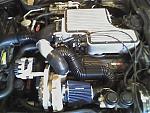
Hey guys, I've got a 94 c4 6 speed manual swap with the lt1 rocking the cc306 with 1.65 rockers, 44lb injectors, full length headers, 58mm bbk throttle body, the torquehead 24x kit and a few other minor supporting mods.
I've been wondering about running e85 recently, I live in Iowa and e85 in my area is currently $1.50/gal while 91/93 is $4+ and I've been running vp racing octane which claims up to 8 octane numbers. without the octane booster I have some drivability issues but it's still completely drivable. However it would much cheaper to just run the e85. I know to add ~30% to my fuel map, possibly add more timing and should change my hoses all to some kind of stainless or e85 safe line, but I was wondering what else I would need. Do you think I'll need a bigger fuel pump, or anything? or will it run on my current setup? please let me know and thanks guys
I've been wondering about running e85 recently, I live in Iowa and e85 in my area is currently $1.50/gal while 91/93 is $4+ and I've been running vp racing octane which claims up to 8 octane numbers. without the octane booster I have some drivability issues but it's still completely drivable. However it would much cheaper to just run the e85. I know to add ~30% to my fuel map, possibly add more timing and should change my hoses all to some kind of stainless or e85 safe line, but I was wondering what else I would need. Do you think I'll need a bigger fuel pump, or anything? or will it run on my current setup? please let me know and thanks guys
Melting Slicks

Joined: Aug 2003
Posts: 3,401
Likes: 397
From: Lakeville MI
On a mass basis, its more like 43%-50% more fuel depending upon which fuel you use for a base (E10 or ethanol-free gas).
What is the current power level, injector duty cycle and fuel pump capacity? If over 60-70% injector duty cycle now the injectors are borderline, but the fuel pump is likely the primary limitation.
You can always blend fuel up to the limits of your fuel system and gain some if not most of the benefits, if desired. On another car I run about an E30 blend, since that's about the limit of the car's fuel system.
As you can see here, its about out of fuel (injector-limited) up top: https://datazap.me/u/tequilaboy/evo-...mark=2847-2862
Brake-boosting here for boost control tuning/evaluation purposes (not fuel limited): https://datazap.me/u/tequilaboy/evo-...2285-2323-2305
What is the current power level, injector duty cycle and fuel pump capacity? If over 60-70% injector duty cycle now the injectors are borderline, but the fuel pump is likely the primary limitation.
You can always blend fuel up to the limits of your fuel system and gain some if not most of the benefits, if desired. On another car I run about an E30 blend, since that's about the limit of the car's fuel system.
As you can see here, its about out of fuel (injector-limited) up top: https://datazap.me/u/tequilaboy/evo-...mark=2847-2862
Brake-boosting here for boost control tuning/evaluation purposes (not fuel limited): https://datazap.me/u/tequilaboy/evo-...2285-2323-2305
Last edited by tequilaboy; Dec 28, 2022 at 01:39 PM.

Instructor

Joined: Nov 2012
Posts: 216
Likes: 54
From: central indiana
im not familiar with that setup. i presume it is ignition only? does it utilize hptuners for modification?
fuel will be your biggest change. maybe a few degrees of timing to capitalize on ethanols resistance to knock.
fuel will be your biggest change. maybe a few degrees of timing to capitalize on ethanols resistance to knock.

Racer


Joined: Mar 2020
Posts: 387
Likes: 148
From: Langton, Ontario, Canada
2025 C4 of the Year Finalist - Unmodified
Ask yourself how often you drive your car, and how long it may sit between uses. Ethanol is well known to attract water, and when that happens, it becomes a gel that gums up filters, pumps, and injectors. If your car is a daily driver, no big deal. But if it sits for weeks or months at a time, as can happen in the north, then you WILL have problems. Keep using it if you want, but made sure you can take the top hatch off your tank easily so that you can clean it out, if it starts precipitating out during storage. OR store the car with better gas than that if you can. I've had it happen with boats, and you don't want that headache.
Corvette Stories
The Best of Corvette for Corvette Enthusiasts

Top 10 Most Expensive Corvettes Ever Sold on Bring A Trailer
Brett Foote
10 Things Every Corvette Owner Needs (2026 Edition)
Michael S. Palmer
8 Most "Only Corvette Owners Understand" Quirks and Problems
Pouria Savadkouei
10 Reasons the C6 Z06 is Still A Performance Benchmark After 20 Years
Joe Kucinski
How Much Horsepower Every Corvette Engine "LOST" in 1972
Joe Kucinski
Top 10 DOs and DON'Ts for Protecting Your Convertible Top!
Michael S. Palmer
Top 10 Most Explosive Corvettes Ever Made: Power-to-Weight Ratio Ranked!
Joe Kucinski
150 hp to 1,250 hp: Every Corvette Generation Compared by the Specs That Matter
Joe Kucinski
8 Coolest Corvette Pace Cars (and Replicas) of All Time
Verdad Gallardo
Instructor
Joined: Nov 2012
Posts: 216
Likes: 54
From: central indiana
i've used ethanol in a 2018 camaro for several years. the longest it sat in the car was about 9 weeks, up until 2 weeks ago. it was well below freezing for several days in my detached, unheated garage. no adverse affects, but i certainly wouldn't recommend it. historically i always put it up for winter after running a couple tanks of 93 through it first.

Drifting

Joined: Jun 2020
Posts: 1,709
Likes: 734
From: Stay dangerous my friends
Not sure I have any more to contribute, but let me say a few things. Best way to do it is to install an ethanol content sensor, and add fuel volume % to VE tables for tuning. And a wideband controlled/monitored system. Since AFR is lambda based from the wideband, you don't need to change the targets, as indicating 14.7 is still 1.0 Lambda. Timing is a little bit more complicated to manage, but you can add timing for knock limited timing areas of the ignition timing map for improvement. This area is limited for 10:1 compression but larger of course for 14:1 or forced indction. E85 pumps can provide anywhere between E55 to E95 (supposed to be E55-85 but sometimes it well exceeds the 85), so you would be dedicated to a single batch/pump for fixed tuning, without accommodations for having to add gasoline to manage E20 E30 E40 E50 and so on trying to manualy test it and change. Pump gas here is E5 to E10, so there's a lot of math and testing to do otherwise if you have partial E85 and E10. All this is easily done with a modern Holley EFI, I don't have any tuning experience with TQH.
Add Lucas E85 treatment to every tank full, or you'll be growing a corrosive swamp after some time. Steel and aluminum parts especially effected, for full E85 long term you should most definitely have stainless. Gasket, O-ring, hose, injectors, FP diaphram materials also need to be compatible.
Add Lucas E85 treatment to every tank full, or you'll be growing a corrosive swamp after some time. Steel and aluminum parts especially effected, for full E85 long term you should most definitely have stainless. Gasket, O-ring, hose, injectors, FP diaphram materials also need to be compatible.

