





Another EGR diagnostic question

Thread Starter
Racer


Joined: Sep 2001
Posts: 266
Likes: 7
From: Sumner WA
 Another EGR diagnostic question
My search through the archives revealed EGR diagnostics has been discussed at least a dozen times, but I'm experiencing a little different than usual.
My car suddenly started running like crap all through the RPM range and wasn't setting any codes. It felt like it wanted to stall, or was missing on 1 or more cylinders. Since it has been absolutely freezing all week (20f and below) I thought maybe I had a cracked distributor cap, or wires, or plugs. So I replaced the cap and wires and didn't have any change. I'm replacing the plugs today if I can get out of chores from my wife. I finally got a code to show up yesterday and it was code 32, EGR. I used the procedures from my Haynes manual and 65Z01's web site and determined the EGR valve and solenoid are both bad. I checked the valve by applying vacuum to it with the engine off to see if it would hold. I couldn't even build up any vacuum so I figured AHA that's the problem. I bought a new EGR valve and did the same test with it still in the box and had the exact same results. Now I'm thinking UHOH, maybe that's not the problem and I just wasted $60. Nobody had the solenoid in stock so I ordered one and hope it will be in very soon. The solenoid was also unable to hold when I applied vacuum to the side opposite the tube that goes to the EGR valve. The vacuum all leaked within 1 second. I verified it was receiving voltage by using my voltmeter on the electrical connections. Which would mean the solenoid is bad according to the Haynes manual. I also verified I have vacuum going to the EGR solenoid.
I guess my question is, Did I test the EGR valve incorrectly?
Also, the Haynes manual says apply vacuum to the manifold side of the EGR solenoid. I'm thinking maybe I did it backwards, since the EGR side is connected to the manifold through the EGR.
If it helps, the new EGR valve is marked "POS" on top which I assume means positive EGR.
Thanks,
Ron
[Modified by RonsRed88, 3:22 PM 1/25/2003]
My car suddenly started running like crap all through the RPM range and wasn't setting any codes. It felt like it wanted to stall, or was missing on 1 or more cylinders. Since it has been absolutely freezing all week (20f and below) I thought maybe I had a cracked distributor cap, or wires, or plugs. So I replaced the cap and wires and didn't have any change. I'm replacing the plugs today if I can get out of chores from my wife. I finally got a code to show up yesterday and it was code 32, EGR. I used the procedures from my Haynes manual and 65Z01's web site and determined the EGR valve and solenoid are both bad. I checked the valve by applying vacuum to it with the engine off to see if it would hold. I couldn't even build up any vacuum so I figured AHA that's the problem. I bought a new EGR valve and did the same test with it still in the box and had the exact same results. Now I'm thinking UHOH, maybe that's not the problem and I just wasted $60. Nobody had the solenoid in stock so I ordered one and hope it will be in very soon. The solenoid was also unable to hold when I applied vacuum to the side opposite the tube that goes to the EGR valve. The vacuum all leaked within 1 second. I verified it was receiving voltage by using my voltmeter on the electrical connections. Which would mean the solenoid is bad according to the Haynes manual. I also verified I have vacuum going to the EGR solenoid.
I guess my question is, Did I test the EGR valve incorrectly?
Also, the Haynes manual says apply vacuum to the manifold side of the EGR solenoid. I'm thinking maybe I did it backwards, since the EGR side is connected to the manifold through the EGR.
If it helps, the new EGR valve is marked "POS" on top which I assume means positive EGR.
Thanks,
Ron
[Modified by RonsRed88, 3:22 PM 1/25/2003]

Burning Brakes

Joined: Feb 2000
Posts: 927
Likes: 0
From: Saginaw TX
Re: Another EGR diagnostic question (RonsRed88)
A couple of questions. When you tried to pull vacuum on the EGR valve, did you connect your vacuum pump directly to the valve or to the line running to the valve? You also said you connected to the solenoid opposite the fitting going to the EGR valve. Now if you connected to the line at the solenoid going to the EGR valve, your vacuum line between the solenoid and EGR may be bad. When you connected to the solenoid opposite the EGR valve side, that would have been the manifold side. The valve opens and passes exhaust gases when vacuum is applied to the valve.
Good Luck and hope you find the problem.
Good Luck and hope you find the problem.

Burning Brakes
Joined: Feb 2000
Posts: 958
Likes: 1
From: SF Bay area, CA USA
Re: Another EGR diagnostic question (RonsRed88)
It is very common to get aftermarket EGR valves that don't work. I got 2 bad ones before aI bought a GM one and it worked fine. The valve should hold vacuum for a few seconds and then bleed off.
Your code may be caused by a bad EGR temp switch. It is the switch that screws into the tube that connects between the passenger side exhaust manifold and the intake manifold next to the EGR valve. The wire connects behind the distributor.
I kind of don't think your problem is caused bt the EGR valve. Any other codes? Did you do any ohter repairs before this problem started.
Your code may be caused by a bad EGR temp switch. It is the switch that screws into the tube that connects between the passenger side exhaust manifold and the intake manifold next to the EGR valve. The wire connects behind the distributor.
I kind of don't think your problem is caused bt the EGR valve. Any other codes? Did you do any ohter repairs before this problem started.
Thread Starter
Racer
Joined: Sep 2001
Posts: 266
Likes: 7
From: Sumner WA
Re: Another EGR diagnostic question (mash557)
I connected the vacuum pump directly to the EGR valve. And it looks like I tested the correct side of the solenoid from what you are saying. That rules out the tube from the solenoid to the valve.
BTW I found a great article on EGR systems in the documentation that came with my mighty vac pump. I guess that teaches me for not reading the documentation. According to the article there needs to be pressure from intake manifold to help push the valve open. The vacuum at the top of the valve apparently just gives it a little more help and opens the valve when a signal is received from the solenoid. I still think my valve is bad though because I don't see any movement when I apply vacuum with the engine running. I'm going to replace both when I get the solenoid in. I just hate taking the plenum off, those torx screws at the base of the runners are such a pain.
Ron
BTW I found a great article on EGR systems in the documentation that came with my mighty vac pump. I guess that teaches me for not reading the documentation. According to the article there needs to be pressure from intake manifold to help push the valve open. The vacuum at the top of the valve apparently just gives it a little more help and opens the valve when a signal is received from the solenoid. I still think my valve is bad though because I don't see any movement when I apply vacuum with the engine running. I'm going to replace both when I get the solenoid in. I just hate taking the plenum off, those torx screws at the base of the runners are such a pain.
Ron
Thread Starter
Racer
Joined: Sep 2001
Posts: 266
Likes: 7
From: Sumner WA
Re: Another EGR diagnostic question (weekendwrench)
The temperature sensors sounds like a possibility. I only get the code when the engine is very cold. As soon as it gets a bit warmer the SES light goes off. Is it difficult to replace? It looks pretty rusty and crusty. Do I just unscrew it from the EGR tube?
Ron
Ron
Melting Slicks


Joined: Apr 2002
Posts: 2,631
Likes: 2
From: Clever, MO aka SOMO
Re: Another EGR diagnostic question (RonsRed88)
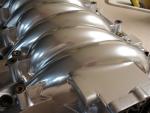
Ron, you don't have to loosen or remove the runners to r/r the egr valve. When I did mine on my '88, I just removed the torx holding the plenum on, and of course the other little things attached to it also. Then I just gently pull the plenum up away from the end of the runners so that I could get to the egr on the intake. It fits snug, but it'll come up. I even left the throttle body attached to the plenum. I was finished in an hour. You'll need new plenum/runner gaskets too. Just be gentle!! :yesnod: :yesnod:
Good luck
:auto: :auto:
Good luck
:auto: :auto:
Corvette Stories
The Best of Corvette for Corvette Enthusiasts

Top 10 Most Expensive Corvettes Ever Sold on Bring A Trailer
Brett Foote
10 Things Every Corvette Owner Needs (2026 Edition)
Michael S. Palmer
8 Most "Only Corvette Owners Understand" Quirks and Problems
Pouria Savadkouei
10 Reasons the C6 Z06 is Still A Performance Benchmark After 20 Years
Joe Kucinski
How Much Horsepower Every Corvette Engine "LOST" in 1972
Joe Kucinski
Top 10 DOs and DON'Ts for Protecting Your Convertible Top!
Michael S. Palmer
Top 10 Most Explosive Corvettes Ever Made: Power-to-Weight Ratio Ranked!
Joe Kucinski
150 hp to 1,250 hp: Every Corvette Generation Compared by the Specs That Matter
Joe Kucinski
8 Coolest Corvette Pace Cars (and Replicas) of All Time
Verdad Gallardo
Thread Starter
Racer
Joined: Sep 2001
Posts: 266
Likes: 7
From: Sumner WA
Re: Another EGR diagnostic question (weekendwrench)
Thanks everyone, I'll let you know how this turns out. I'm going to replace each part one at a time and test so I know which part for sure is causing the problem. I might as well learn something while I'm at it.
Ron
Ron

Team Owner

Joined: Dec 2000
Posts: 90,675
Likes: 304
From: SE NY
Cruise-In II Veteran
Re: Another EGR diagnostic question (RonsRed88)
When I had my intake base off I soldered an extension Grn wire into the wire from the EGR Temp sw wire to bring the connector up to the right side of the dist for easy access. Even with the base removed it was a PITA getting at the original connector.
You might get another connector, cut the Grn wire near the old EGR Temp sw, install the new connector onto that wire and plug the new sw in there. Then just tuck the extra length of wire in behind the right side of the dist.
You might get another connector, cut the Grn wire near the old EGR Temp sw, install the new connector onto that wire and plug the new sw in there. Then just tuck the extra length of wire in behind the right side of the dist.