


torque converter recommendations

Thread Starter
Intermediate

Joined: May 2024
Posts: 38
Likes: 3
From: ohio

Annd I just realized your trans is a 94 so no HPtuners. I actually have no idea how the ECU is going evaluate the transmission. I've only ever tuned 4l60e using a stand-alone or 99+ ECU. So I could be way off about the adaptives it might not matter at all. Thats lucky if its true.
Now, that is not to say we don't know how the transmission is controlled; They all work the same way. It has an EPC and shift solenoids. The solenoids are either ON or OFF. Like a switch. There is no delay on behalf of the ECU. The EPC gets a PWM and is controlled the same way as I stated, everything is same as I said. Only thing is how the transmission evaluted by the ECU, the ECU might not be trying to measure shift time because of its age. Which would be a good thing. So its same or better.
There is nothing unexpected it might do. You turn solenoids on, or off, and you regulate pressure vs throttle or torque model
Now, that is not to say we don't know how the transmission is controlled; They all work the same way. It has an EPC and shift solenoids. The solenoids are either ON or OFF. Like a switch. There is no delay on behalf of the ECU. The EPC gets a PWM and is controlled the same way as I stated, everything is same as I said. Only thing is how the transmission evaluted by the ECU, the ECU might not be trying to measure shift time because of its age. Which would be a good thing. So its same or better.
There is nothing unexpected it might do. You turn solenoids on, or off, and you regulate pressure vs throttle or torque model
"]https://cimg1.ibsrv.net/gimg/www.corvetteforum.com-vbulletin/2000x787/image_a0c3573a06f68d3261fbd535ff4ed0e112 c64064.png[/img]
the programmed shift time in the ecm on a stock bin alot of people zero out some these tables (specifically shift time) then control the trans using other tables

line pressure controls

shift points in each mode

all control options for my 4L60E

Advanced

Joined: Mar 2024
Posts: 77
Likes: 21
From: Dayton
Lots of good info here and I've been down this road. Ran the S10 a year or two, tried the Yank ST2800 for ten minutes then upgraded to the latest and greatest at the time the Yank SS3600. By far the biggest improvement. I ran across Dana at Probuilt, and he suggested his modified Transgo kit. Installed it per his instructions, some handwritten on the Transgo sheet. It's worked flawless for the last 20 years. I also installed a trans cooler at the time. 1993 Lt1/4L60.
I'd recommend changing that rear gear first.
I'd recommend changing that rear gear first.
Thread Starter
Intermediate
Joined: May 2024
Posts: 38
Likes: 3
From: ohio
Lots of good info here and I've been down this road. Ran the S10 a year or two, tried the Yank ST2800 for ten minutes then upgraded to the latest and greatest at the time the Yank SS3600. By far the biggest improvement. I ran across Dana at Probuilt, and he suggested his modified Transgo kit. Installed it per his instructions, some handwritten on the Transgo sheet. It's worked flawless for the last 20 years. I also installed a trans cooler at the time. 1993 Lt1/4L60.
I'd recommend changing that rear gear first.
I'd recommend changing that rear gear first.
I probably won't go with 3.73 gears cause I still want some cruise speed so 3.07 it is
This will not be a drag car this is a car that is meant to be roadtripable and streetraceable

Safety Car


Joined: Oct 2007
Posts: 4,206
Likes: 1,075
From: South Florida
I looked at all the tables
I see the shift time in the list but I do not see anything about adaptive. Luckily you have the tuner so if you find anything that says adaptive you can turn it off.
Shift time - what this does normally in a modern ECU is , it will measure your shift time by looking at the RPM drop to determine when the shift ends, and then compare that with the desired shift time in the table. Then, if the shift is too slow, it rises your transmission global pressure slightly each time until the shift happens on schedule.
The issue is that high stall in numerically low gears (like overdrive) don't have enough RPM drop for the ECU to calculate a reasonable shift time. It will just hang. And then report max shift time and continually add pressure to the transmission to some maximum.
When you fool with any of the pressure tables, it is generally accepted among professionals that they should not be changed unless you have a transmission 0-300psi gauge mechanical on the top tapped into the top of the transmission to determine whetehr your changes are 'good' or 'bad'. And whether its good or bad is determined by the application, for example 185psi in a stock application 4l80e at WOT is considered 'normal' but with over 500hp we want to see 195 to 205psi instead, which is 'good'. Even though both numbers are 'good' one is better for performance (more pressure) but without the 0-300 gauge, you are blind, the number in the table are MEANINGLESS with respect to gauge 0-300psi pressure.
Nevertheless with some basic understanding of how the EPC works and especially if you can log the mA (current) going to the EPC You can make small changes to transmission pressure to firm up some of the shifting without the 0-300psi gauge because your own perception of a shift , whether its tight or strong enough, or maybe its just barely good and it needs some help, is able to guide you with these small changes. The real danger is not knowing how high the pressure is at part throttle (could be too high! wear out the trans) And the possibility that one of your blind changes could slip it by accident (ooops) which wouldn't have happened (or less likely) if you had the gauge to warn you.
I would leave the ECU alone (mostly - you should address shift points WHEN to shift to make your life comfortable with the new converter, and possibly add a small amount of pressure to some places if they feel sloppy, it IS an old transmission, just be sure you are adding to load regions and not cruise) and just use the boost valve to raise the pressure for you, the shift kit will take care of that, the separator plate hole will make it quick and firm I believe it, just fine.
Other stuff to emphasize
1. fluid level is absolutely the easiest and most common screw up when doing trans service in general. You will absolutely want to inspect the DIPSTICK and be sure that it accurately can tell when the pan is FULL. And make sure you know how and when to check the level (warmed up, have drove it around to fill the drums, engine still running, flat level surface)
2. Reminder not to toast your transmission hard parts. If you happen to desire a rebuilt unit I would take YOUR unit out gingerly and set it aside, and install a next different unit. Rather than re-building yours. Keep yours in good shape for rare parts and possibly to put back in if something goes wrong with the new unit.
3. When its out address the driveshaft unions (U-joint type of items) And other bearing, bushing, vibrating (consider a lighter or more balanced driveshaft/tubes that rotate) again keep your old stuff and mark the way it was installed with white paint so if you have some issues with new parts the old one can go back how it came out.
Also, Now is your chance to do the rear main seal when the trans is out.
4. Have the right hardware (arp?) for the flex plate , loctite, follow the service manual procedure for the flex plate installation. Do not just look it up online. Find the real service manual page.
Use a brand new flex plate SFI approved they are not expensive.
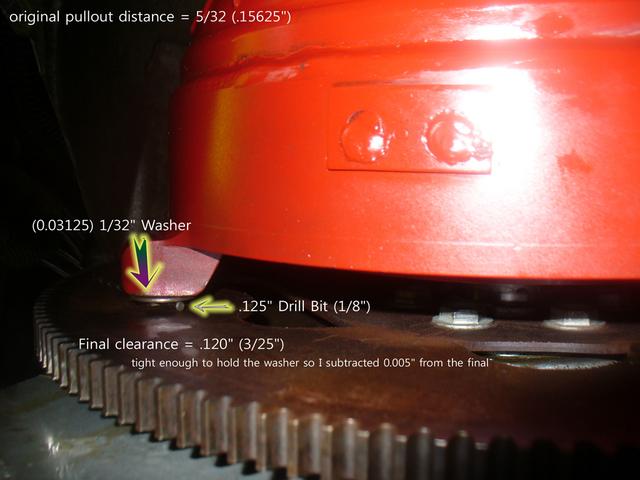
5. Make sure you measure and follow the torque converter pull out spacing as per the instructions from the converter builder. All converters must be pulled away, out of the pump, iirc its around .125" , you will/may need thin washers to do this, and you should weigh them and get them all the same exact mass.
here is mine for example (I documented everything about my transmission rebuilding and installation I recommend you do the same for reference)
take pictures as you go, consider making a video, tripod + remote control = potential way to catch mistakes later once the vehicle has some problems
Other opinion
I think your rear gear is fine. Think about where the vehicle is going in the next 10 years. If you plan to keep it, 5 to 10 years from now maybe something happens and,
...My recommendation is start prepping for the eventual LS swap. Get a cheap L33 and 4l60e combo going in your garage.
Ultimately that is the best $$ per reliability and power spent, using a stock LS engine like the L33 has many benefits and they are still affordable and available...
And those parts retain high value and accumulate value, likely if you decide you don't need them, you can sell for more than you paid.
I see the shift time in the list but I do not see anything about adaptive. Luckily you have the tuner so if you find anything that says adaptive you can turn it off.
Shift time - what this does normally in a modern ECU is , it will measure your shift time by looking at the RPM drop to determine when the shift ends, and then compare that with the desired shift time in the table. Then, if the shift is too slow, it rises your transmission global pressure slightly each time until the shift happens on schedule.
The issue is that high stall in numerically low gears (like overdrive) don't have enough RPM drop for the ECU to calculate a reasonable shift time. It will just hang. And then report max shift time and continually add pressure to the transmission to some maximum.
When you fool with any of the pressure tables, it is generally accepted among professionals that they should not be changed unless you have a transmission 0-300psi gauge mechanical on the top tapped into the top of the transmission to determine whetehr your changes are 'good' or 'bad'. And whether its good or bad is determined by the application, for example 185psi in a stock application 4l80e at WOT is considered 'normal' but with over 500hp we want to see 195 to 205psi instead, which is 'good'. Even though both numbers are 'good' one is better for performance (more pressure) but without the 0-300 gauge, you are blind, the number in the table are MEANINGLESS with respect to gauge 0-300psi pressure.
Nevertheless with some basic understanding of how the EPC works and especially if you can log the mA (current) going to the EPC You can make small changes to transmission pressure to firm up some of the shifting without the 0-300psi gauge because your own perception of a shift , whether its tight or strong enough, or maybe its just barely good and it needs some help, is able to guide you with these small changes. The real danger is not knowing how high the pressure is at part throttle (could be too high! wear out the trans) And the possibility that one of your blind changes could slip it by accident (ooops) which wouldn't have happened (or less likely) if you had the gauge to warn you.
I would leave the ECU alone (mostly - you should address shift points WHEN to shift to make your life comfortable with the new converter, and possibly add a small amount of pressure to some places if they feel sloppy, it IS an old transmission, just be sure you are adding to load regions and not cruise) and just use the boost valve to raise the pressure for you, the shift kit will take care of that, the separator plate hole will make it quick and firm I believe it, just fine.
Other stuff to emphasize
1. fluid level is absolutely the easiest and most common screw up when doing trans service in general. You will absolutely want to inspect the DIPSTICK and be sure that it accurately can tell when the pan is FULL. And make sure you know how and when to check the level (warmed up, have drove it around to fill the drums, engine still running, flat level surface)
2. Reminder not to toast your transmission hard parts. If you happen to desire a rebuilt unit I would take YOUR unit out gingerly and set it aside, and install a next different unit. Rather than re-building yours. Keep yours in good shape for rare parts and possibly to put back in if something goes wrong with the new unit.
3. When its out address the driveshaft unions (U-joint type of items) And other bearing, bushing, vibrating (consider a lighter or more balanced driveshaft/tubes that rotate) again keep your old stuff and mark the way it was installed with white paint so if you have some issues with new parts the old one can go back how it came out.
Also, Now is your chance to do the rear main seal when the trans is out.
4. Have the right hardware (arp?) for the flex plate , loctite, follow the service manual procedure for the flex plate installation. Do not just look it up online. Find the real service manual page.
Use a brand new flex plate SFI approved they are not expensive.
5. Make sure you measure and follow the torque converter pull out spacing as per the instructions from the converter builder. All converters must be pulled away, out of the pump, iirc its around .125" , you will/may need thin washers to do this, and you should weigh them and get them all the same exact mass.
here is mine for example (I documented everything about my transmission rebuilding and installation I recommend you do the same for reference)
take pictures as you go, consider making a video, tripod + remote control = potential way to catch mistakes later once the vehicle has some problems
Other opinion
I think your rear gear is fine. Think about where the vehicle is going in the next 10 years. If you plan to keep it, 5 to 10 years from now maybe something happens and,
...My recommendation is start prepping for the eventual LS swap. Get a cheap L33 and 4l60e combo going in your garage.
Ultimately that is the best $$ per reliability and power spent, using a stock LS engine like the L33 has many benefits and they are still affordable and available...
And those parts retain high value and accumulate value, likely if you decide you don't need them, you can sell for more than you paid.
Safety Car
Joined: Oct 2007
Posts: 4,206
Likes: 1,075
From: South Florida
Ah yes and consult Dana at probuilt his advice is free!!! He will tell you mods for the shift kit GREAT idea somebody mentioned and infinitely valuable the famous 700R4L60E.com
And I forgot to mention the cooler aspects. The 4l60e and 4l80e should generally run between 165*F and 185*F during normal operation. You will desire a powerful large cooler with a fan and some way to regulate the fan. If you need help making a fan controller I have a design I made using arduino heres an early sketch when I was working it all out, this works but I addedmore since
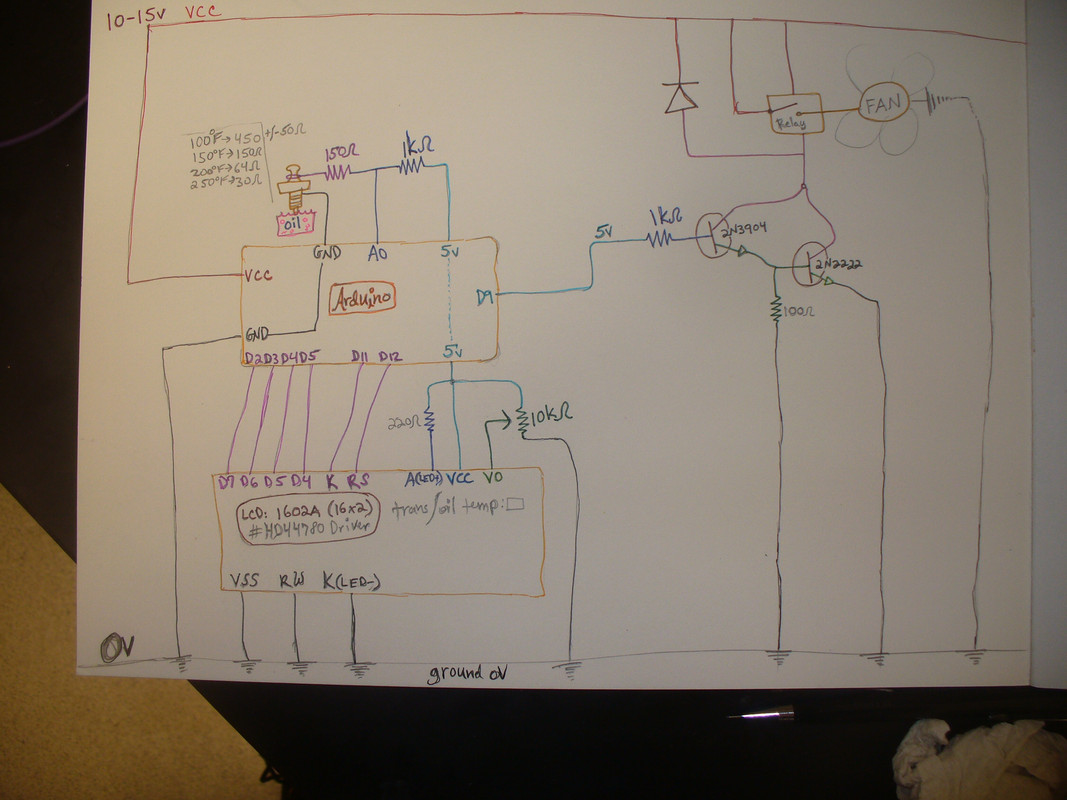
It is common when making power during a race for the trans temps to climb, they may climb from say 190*F to over 200*F and is a real danger for this transmission when the fluids start to get up there beyond 200's *F. Therefore the transmission cooler needs to be evaluated with respect to application, for example basic daily drivers can get away with much less cooling than a race car, just like the radiator and oil cooling of any vehicle obviously. But extra care should be taken to monitor the transmission fluid and provide the necessary cooling to keep that temp from racing up over 200*F if possible. Although I do like to see the fluid once every couple of months go near 200*F perhaps 205*F just to be sure any water is being chased out. But nobody does that on purpose I'm just special needs
And I forgot to mention the cooler aspects. The 4l60e and 4l80e should generally run between 165*F and 185*F during normal operation. You will desire a powerful large cooler with a fan and some way to regulate the fan. If you need help making a fan controller I have a design I made using arduino heres an early sketch when I was working it all out, this works but I addedmore since
It is common when making power during a race for the trans temps to climb, they may climb from say 190*F to over 200*F and is a real danger for this transmission when the fluids start to get up there beyond 200's *F. Therefore the transmission cooler needs to be evaluated with respect to application, for example basic daily drivers can get away with much less cooling than a race car, just like the radiator and oil cooling of any vehicle obviously. But extra care should be taken to monitor the transmission fluid and provide the necessary cooling to keep that temp from racing up over 200*F if possible. Although I do like to see the fluid once every couple of months go near 200*F perhaps 205*F just to be sure any water is being chased out. But nobody does that on purpose I'm just special needs
Thread Starter
Intermediate
Joined: May 2024
Posts: 38
Likes: 3
From: ohio
I looked at all the tables
I see the shift time in the list but I do not see anything about adaptive. Luckily you have the tuner so if you find anything that says adaptive you can turn it off.
Shift time - what this does normally in a modern ECU is , it will measure your shift time by looking at the RPM drop to determine when the shift ends, and then compare that with the desired shift time in the table. Then, if the shift is too slow, it rises your transmission global pressure slightly each time until the shift happens on schedule.
The issue is that high stall in numerically low gears (like overdrive) don't have enough RPM drop for the ECU to calculate a reasonable shift time. It will just hang. And then report max shift time and continually add pressure to the transmission to some maximum.
When you fool with any of the pressure tables, it is generally accepted among professionals that they should not be changed unless you have a transmission 0-300psi gauge mechanical on the top tapped into the top of the transmission to determine whetehr your changes are 'good' or 'bad'. And whether its good or bad is determined by the application, for example 185psi in a stock application 4l80e at WOT is considered 'normal' but with over 500hp we want to see 195 to 205psi instead, which is 'good'. Even though both numbers are 'good' one is better for performance (more pressure) but without the 0-300 gauge, you are blind, the number in the table are MEANINGLESS with respect to gauge 0-300psi pressure.
Nevertheless with some basic understanding of how the EPC works and especially if you can log the mA (current) going to the EPC You can make small changes to transmission pressure to firm up some of the shifting without the 0-300psi gauge because your own perception of a shift , whether its tight or strong enough, or maybe its just barely good and it needs some help, is able to guide you with these small changes. The real danger is not knowing how high the pressure is at part throttle (could be too high! wear out the trans) And the possibility that one of your blind changes could slip it by accident (ooops) which wouldn't have happened (or less likely) if you had the gauge to warn you.
I would leave the ECU alone (mostly - you should address shift points WHEN to shift to make your life comfortable with the new converter, and possibly add a small amount of pressure to some places if they feel sloppy, it IS an old transmission, just be sure you are adding to load regions and not cruise) and just use the boost valve to raise the pressure for you, the shift kit will take care of that, the separator plate hole will make it quick and firm I believe it, just fine.
Other stuff to emphasize
1. fluid level is absolutely the easiest and most common screw up when doing trans service in general. You will absolutely want to inspect the DIPSTICK and be sure that it accurately can tell when the pan is FULL. And make sure you know how and when to check the level (warmed up, have drove it around to fill the drums, engine still running, flat level surface)
2. Reminder not to toast your transmission hard parts. If you happen to desire a rebuilt unit I would take YOUR unit out gingerly and set it aside, and install a next different unit. Rather than re-building yours. Keep yours in good shape for rare parts and possibly to put back in if something goes wrong with the new unit.
3. When its out address the driveshaft unions (U-joint type of items) And other bearing, bushing, vibrating (consider a lighter or more balanced driveshaft/tubes that rotate) again keep your old stuff and mark the way it was installed with white paint so if you have some issues with new parts the old one can go back how it came out.
Also, Now is your chance to do the rear main seal when the trans is out.
4. Have the right hardware (arp?) for the flex plate , loctite, follow the service manual procedure for the flex plate installation. Do not just look it up online. Find the real service manual page.
Use a brand new flex plate SFI approved they are not expensive.
5. Make sure you measure and follow the torque converter pull out spacing as per the instructions from the converter builder. All converters must be pulled away, out of the pump, iirc its around .125" , you will/may need thin washers to do this, and you should weigh them and get them all the same exact mass.
here is mine for example (I documented everything about my transmission rebuilding and installation I recommend you do the same for reference)
take pictures as you go, consider making a video, tripod + remote control = potential way to catch mistakes later once the vehicle has some problems
Other opinion
I think your rear gear is fine. Think about where the vehicle is going in the next 10 years. If you plan to keep it, 5 to 10 years from now maybe something happens and,
...My recommendation is start prepping for the eventual LS swap. Get a cheap L33 and 4l60e combo going in your garage.
Ultimately that is the best $$ per reliability and power spent, using a stock LS engine like the L33 has many benefits and they are still affordable and available...
And those parts retain high value and accumulate value, likely if you decide you don't need them, you can sell for more than you paid.
I see the shift time in the list but I do not see anything about adaptive. Luckily you have the tuner so if you find anything that says adaptive you can turn it off.
Shift time - what this does normally in a modern ECU is , it will measure your shift time by looking at the RPM drop to determine when the shift ends, and then compare that with the desired shift time in the table. Then, if the shift is too slow, it rises your transmission global pressure slightly each time until the shift happens on schedule.
The issue is that high stall in numerically low gears (like overdrive) don't have enough RPM drop for the ECU to calculate a reasonable shift time. It will just hang. And then report max shift time and continually add pressure to the transmission to some maximum.
When you fool with any of the pressure tables, it is generally accepted among professionals that they should not be changed unless you have a transmission 0-300psi gauge mechanical on the top tapped into the top of the transmission to determine whetehr your changes are 'good' or 'bad'. And whether its good or bad is determined by the application, for example 185psi in a stock application 4l80e at WOT is considered 'normal' but with over 500hp we want to see 195 to 205psi instead, which is 'good'. Even though both numbers are 'good' one is better for performance (more pressure) but without the 0-300 gauge, you are blind, the number in the table are MEANINGLESS with respect to gauge 0-300psi pressure.
Nevertheless with some basic understanding of how the EPC works and especially if you can log the mA (current) going to the EPC You can make small changes to transmission pressure to firm up some of the shifting without the 0-300psi gauge because your own perception of a shift , whether its tight or strong enough, or maybe its just barely good and it needs some help, is able to guide you with these small changes. The real danger is not knowing how high the pressure is at part throttle (could be too high! wear out the trans) And the possibility that one of your blind changes could slip it by accident (ooops) which wouldn't have happened (or less likely) if you had the gauge to warn you.
I would leave the ECU alone (mostly - you should address shift points WHEN to shift to make your life comfortable with the new converter, and possibly add a small amount of pressure to some places if they feel sloppy, it IS an old transmission, just be sure you are adding to load regions and not cruise) and just use the boost valve to raise the pressure for you, the shift kit will take care of that, the separator plate hole will make it quick and firm I believe it, just fine.
Other stuff to emphasize
1. fluid level is absolutely the easiest and most common screw up when doing trans service in general. You will absolutely want to inspect the DIPSTICK and be sure that it accurately can tell when the pan is FULL. And make sure you know how and when to check the level (warmed up, have drove it around to fill the drums, engine still running, flat level surface)
2. Reminder not to toast your transmission hard parts. If you happen to desire a rebuilt unit I would take YOUR unit out gingerly and set it aside, and install a next different unit. Rather than re-building yours. Keep yours in good shape for rare parts and possibly to put back in if something goes wrong with the new unit.
3. When its out address the driveshaft unions (U-joint type of items) And other bearing, bushing, vibrating (consider a lighter or more balanced driveshaft/tubes that rotate) again keep your old stuff and mark the way it was installed with white paint so if you have some issues with new parts the old one can go back how it came out.
Also, Now is your chance to do the rear main seal when the trans is out.
4. Have the right hardware (arp?) for the flex plate , loctite, follow the service manual procedure for the flex plate installation. Do not just look it up online. Find the real service manual page.
Use a brand new flex plate SFI approved they are not expensive.
5. Make sure you measure and follow the torque converter pull out spacing as per the instructions from the converter builder. All converters must be pulled away, out of the pump, iirc its around .125" , you will/may need thin washers to do this, and you should weigh them and get them all the same exact mass.
here is mine for example (I documented everything about my transmission rebuilding and installation I recommend you do the same for reference)
take pictures as you go, consider making a video, tripod + remote control = potential way to catch mistakes later once the vehicle has some problems
Other opinion
I think your rear gear is fine. Think about where the vehicle is going in the next 10 years. If you plan to keep it, 5 to 10 years from now maybe something happens and,
...My recommendation is start prepping for the eventual LS swap. Get a cheap L33 and 4l60e combo going in your garage.
Ultimately that is the best $$ per reliability and power spent, using a stock LS engine like the L33 has many benefits and they are still affordable and available...
And those parts retain high value and accumulate value, likely if you decide you don't need them, you can sell for more than you paid.
Found the high stall fix for 94-95 c4's the adaptive shift mostly looks at the vehicle speed diag which can be disabled which makes the trans use pressures and assumed variables

you can turn this off to disable stall wall which fixes shift conformation lag by not checking rpm its a single step fix that is kept hush hush by tuners
The only adjustments you must make are kickdown mode adjustments


here is where you can adjust the kickdown rpm thresholds and shift points
it is highly recommended by a few tuners to do slight adjustments to kickdown until it feels right
line pressures are usually only adjusted to preference by most tuners ive seen
this guy has a vid on some of this stuff
Safety Car
Joined: Oct 2007
Posts: 4,206
Likes: 1,075
From: South Florida
Good job finding that. Yeah its usually just a switch, "on" or "off" for that diagnostic/feature in any ECU.
As to shifting adjustments....
I'm one of those people that likes to adjust tables by the way it feels. I like to think that I can tell when something is wrong or right without a gauge.
But. Its just what you think, not reality.
Sometimes you get lucky if you are sensitive enough to be able to tell. Or sometimes its the way a drivetrain reports visceral feeling to your sensations; Some cars feel 'numb' than others which can feel too harsh, every little thing. There is something to be said on the importance of the mounting system with respect to how the transmission shifts and feels, the vibrations are energy being release, and the mounting of the engine and transmission will influence the energy transfer of a shift or going into a shift that can reach the tire. I have found that an engine mount high up, like on the head high up on the block somewhere, attached to the frame somewhere like strut tower using a stiff rubber strut, can have a noticeably if not dramatic impact on the powerful feeling of a shift. Especially with manual transmission because of the on and off nature of a shift at part throttle cruising, where the engine tends to pull away from your efforts, against the engine mount, making the synchronization more difficult . But I digress. I recommend address the engine mounts, perhaps some poly-style mounts to help stiffen the engine a bit. And a mount up high on the head, you can get the rubber strut on ebay to do that specifically for an engine. And then the transmission is where I would use a softer mount than the engine. Soft or Same is the rule. The transmission mount is meant to act like a fuse, that will blow when the engine is twisting too much or too often, to let you know the engine mounts need evaluation. This is my recommendation and maybe then you can really feel the transmission shift harshness, and be able to dial it in more easily with the computer. When torque is applied to output shaft the counter torque is meant to be handled by the dowel union between block and bellhousing, so if you can picture it happening, trying to twist the driveshaft against a sticky tire follow the stress into the bellhousing where it dowels to the block and tries to twist the engine, as the engine tries to turn the flexplate from the inside
As to shifting adjustments....
I'm one of those people that likes to adjust tables by the way it feels. I like to think that I can tell when something is wrong or right without a gauge.
But. Its just what you think, not reality.
Sometimes you get lucky if you are sensitive enough to be able to tell. Or sometimes its the way a drivetrain reports visceral feeling to your sensations; Some cars feel 'numb' than others which can feel too harsh, every little thing. There is something to be said on the importance of the mounting system with respect to how the transmission shifts and feels, the vibrations are energy being release, and the mounting of the engine and transmission will influence the energy transfer of a shift or going into a shift that can reach the tire. I have found that an engine mount high up, like on the head high up on the block somewhere, attached to the frame somewhere like strut tower using a stiff rubber strut, can have a noticeably if not dramatic impact on the powerful feeling of a shift. Especially with manual transmission because of the on and off nature of a shift at part throttle cruising, where the engine tends to pull away from your efforts, against the engine mount, making the synchronization more difficult . But I digress. I recommend address the engine mounts, perhaps some poly-style mounts to help stiffen the engine a bit. And a mount up high on the head, you can get the rubber strut on ebay to do that specifically for an engine. And then the transmission is where I would use a softer mount than the engine. Soft or Same is the rule. The transmission mount is meant to act like a fuse, that will blow when the engine is twisting too much or too often, to let you know the engine mounts need evaluation. This is my recommendation and maybe then you can really feel the transmission shift harshness, and be able to dial it in more easily with the computer. When torque is applied to output shaft the counter torque is meant to be handled by the dowel union between block and bellhousing, so if you can picture it happening, trying to twist the driveshaft against a sticky tire follow the stress into the bellhousing where it dowels to the block and tries to twist the engine, as the engine tries to turn the flexplate from the inside
Corvette Stories
The Best of Corvette for Corvette Enthusiasts

How Much Horsepower Every Corvette Engine "LOST" in 1972
Joe Kucinski
Top 10 DOs and DON'Ts for Protecting Your Convertible Top!
Michael S. Palmer
Top 10 Most Explosive Corvettes Ever Made: Power-to-Weight Ratio Ranked!
Joe Kucinski
150 hp to 1,250 hp: Every Corvette Generation Compared by the Specs That Matter
Joe Kucinski
8 Coolest Corvette Pace Cars (and Replicas) of All Time
Verdad Gallardo
Top 10 Corvette Engines RANKED by Peak Torque (70+ Years of Muscle!)
Joe Kucinski
Corvette ZR1X Will Be Pacing the Indy 500, And Could Probably Race, Too!
Verdad Gallardo
Top 10 Corvettes Coming to Mecum Indy 2026!
Brett Foote
Top 10 C9 Corvette MUST-HAVES to Fix These C8 Generation Flaws!
Michael S. Palmer
Thread Starter
Intermediate
Joined: May 2024
Posts: 38
Likes: 3
From: ohio
Good job finding that. Yeah its usually just a switch, "on" or "off" for that diagnostic/feature in any ECU.
As to shifting adjustments....
I'm one of those people that likes to adjust tables by the way it feels. I like to think that I can tell when something is wrong or right without a gauge.
But. Its just what you think, not reality.
Sometimes you get lucky if you are sensitive enough to be able to tell. Or sometimes its the way a drivetrain reports visceral feeling to your sensations; Some cars feel 'numb' than others which can feel too harsh, every little thing. There is something to be said on the importance of the mounting system with respect to how the transmission shifts and feels, the vibrations are energy being release, and the mounting of the engine and transmission will influence the energy transfer of a shift or going into a shift that can reach the tire. I have found that an engine mount high up, like on the head high up on the block somewhere, attached to the frame somewhere like strut tower using a stiff rubber strut, can have a noticeably if not dramatic impact on the powerful feeling of a shift. Especially with manual transmission because of the on and off nature of a shift at part throttle cruising, where the engine tends to pull away from your efforts, against the engine mount, making the synchronization more difficult . But I digress. I recommend address the engine mounts, perhaps some poly-style mounts to help stiffen the engine a bit. And a mount up high on the head, you can get the rubber strut on ebay to do that specifically for an engine. And then the transmission is where I would use a softer mount than the engine. Soft or Same is the rule. The transmission mount is meant to act like a fuse, that will blow when the engine is twisting too much or too often, to let you know the engine mounts need evaluation. This is my recommendation and maybe then you can really feel the transmission shift harshness, and be able to dial it in more easily with the computer. When torque is applied to output shaft the counter torque is meant to be handled by the dowel union between block and bellhousing, so if you can picture it happening, trying to twist the driveshaft against a sticky tire follow the stress into the bellhousing where it dowels to the block and tries to twist the engine, as the engine tries to turn the flexplate from the inside
As to shifting adjustments....
I'm one of those people that likes to adjust tables by the way it feels. I like to think that I can tell when something is wrong or right without a gauge.
But. Its just what you think, not reality.
Sometimes you get lucky if you are sensitive enough to be able to tell. Or sometimes its the way a drivetrain reports visceral feeling to your sensations; Some cars feel 'numb' than others which can feel too harsh, every little thing. There is something to be said on the importance of the mounting system with respect to how the transmission shifts and feels, the vibrations are energy being release, and the mounting of the engine and transmission will influence the energy transfer of a shift or going into a shift that can reach the tire. I have found that an engine mount high up, like on the head high up on the block somewhere, attached to the frame somewhere like strut tower using a stiff rubber strut, can have a noticeably if not dramatic impact on the powerful feeling of a shift. Especially with manual transmission because of the on and off nature of a shift at part throttle cruising, where the engine tends to pull away from your efforts, against the engine mount, making the synchronization more difficult . But I digress. I recommend address the engine mounts, perhaps some poly-style mounts to help stiffen the engine a bit. And a mount up high on the head, you can get the rubber strut on ebay to do that specifically for an engine. And then the transmission is where I would use a softer mount than the engine. Soft or Same is the rule. The transmission mount is meant to act like a fuse, that will blow when the engine is twisting too much or too often, to let you know the engine mounts need evaluation. This is my recommendation and maybe then you can really feel the transmission shift harshness, and be able to dial it in more easily with the computer. When torque is applied to output shaft the counter torque is meant to be handled by the dowel union between block and bellhousing, so if you can picture it happening, trying to twist the driveshaft against a sticky tire follow the stress into the bellhousing where it dowels to the block and tries to twist the engine, as the engine tries to turn the flexplate from the inside
Also would you recommend doing a 4l80E swap since i plan to make some big numbers in the future? This is a question for when do do the huge build with a 383 setup with a procharger and all the other stuff yknow the whole 9 yards.
Last edited by Silvertheflyguy; Dec 21, 2024 at 03:51 AM.

Le Mans Master


Joined: Feb 1999
Posts: 9,922
Likes: 38
From: South Carolina
St. Jude Donor '03 & '05
Ah yes and consult Dana at probuilt his advice is free!!! He will tell you mods for the shift kit GREAT idea somebody mentioned and infinitely valuable the famous 700R4L60E.com
And I forgot to mention the cooler aspects. The 4l60e and 4l80e should generally run between 165*F and 185*F during normal operation. You will desire a powerful large cooler with a fan and some way to regulate the fan. If you need help making a fan controller I have a design I made using arduino heres an early sketch when I was working it all out, this works but I addedmore since
It is common when making power during a race for the trans temps to climb, they may climb from say 190*F to over 200*F and is a real danger for this transmission when the fluids start to get up there beyond 200's *F. Therefore the transmission cooler needs to be evaluated with respect to application, for example basic daily drivers can get away with much less cooling than a race car, just like the radiator and oil cooling of any vehicle obviously. But extra care should be taken to monitor the transmission fluid and provide the necessary cooling to keep that temp from racing up over 200*F if possible. Although I do like to see the fluid once every couple of months go near 200*F perhaps 205*F just to be sure any water is being chased out. But nobody does that on purpose I'm just special needs
And I forgot to mention the cooler aspects. The 4l60e and 4l80e should generally run between 165*F and 185*F during normal operation. You will desire a powerful large cooler with a fan and some way to regulate the fan. If you need help making a fan controller I have a design I made using arduino heres an early sketch when I was working it all out, this works but I addedmore since
It is common when making power during a race for the trans temps to climb, they may climb from say 190*F to over 200*F and is a real danger for this transmission when the fluids start to get up there beyond 200's *F. Therefore the transmission cooler needs to be evaluated with respect to application, for example basic daily drivers can get away with much less cooling than a race car, just like the radiator and oil cooling of any vehicle obviously. But extra care should be taken to monitor the transmission fluid and provide the necessary cooling to keep that temp from racing up over 200*F if possible. Although I do like to see the fluid once every couple of months go near 200*F perhaps 205*F just to be sure any water is being chased out. But nobody does that on purpose I'm just special needs
Safety Car
Joined: Oct 2007
Posts: 4,206
Likes: 1,075
From: South Florida
If you want more info on how to setup engines for forced induction I have a few handy lists to share and you can review my build thread in sig, I assembled such a vehicle specifically to demonstrate the power and reliability of a stock, free (LM7) LS engine. I have an L33 standing by as well for demonstration how to set one up, and whenever I am satisfied and plan to take the LM7 apart to show its practically mint internals still even at such high mileage (almost 250,000 miles so far) I will put in the L33 and go flexfuel for the final chapter so to speak.
Aside from LS stuff you've probably heard enough already. The 4l80e has some details I can add
First, it is heavy, around 250lbs+ full of fluids and some things. I think empty of fluid and without converter its like 180lbs. It will add a chunk of weight to the vehicle for sure. And its rotating mass and friction are higher than the 4l60e so it will eat more fuel as well. How much more? The 4l80e has been shown to require (going by dyno comparison) about 4 to 5hp more than the 4l60e. And you might say 5hp is nothing on paper. Well imagine cruising on the highway at 70mph, what kind of power does that take? Maybe 30 or 50hp just guessing? We can calculate easily but I dont want to get distracted. When you add 5hp to that its like turning on a couple A/C Compressors, it will impact the fuel economy by 3 to 4mpg. If I can get 28mpg with the 4l60e at 3200lbs then I will get 24mph with the 4l80e at same weight for example.
Next, uhhhh actually thats all the bad stuff, weight and friction. You pay more per mile basically in fuel, and your vehicle is heavier. Thats pretty much it.
The upsides are numerous here are some highlights
1. Stock 4l80e hard parts support lets say an easy 800rwhp with minimal modifications. And people have done 1000 but thats not going to be totally reliable up there with factory transmission internals all the way around. I like the limit power around 750 to 800rwhp generally and build the vehicle for about 1000 so we have plenty of headroom in the fuel system and chassis capability, so nothing is stressed all the way out, when something goes 'wrong' like an alternator failure the engine just shrugs and keeps going with plenty of fuel.
2. The insides 4l80e are simple compared to a 4l60e, its like babys first transmission. You know how we give children larger devices which are more robust and difficult to break? Like a childrens watch or game device, can be dropped and smacked and chewed on. A dog toy maybe. You can think of the 4l80e like a dog toy I guess. All that extra weight and friction is there to support the incredible twisting force which a truck could apply in some situations with giant tires getting stuck on rocks or whatever.
What this means for us is that the 4l80e is much easier to rebuild than the 4l60e. I was shocked to find that most of the snap rings are large enough to get in and out easily, unlike the 4l60 which I struggle with a bit. Large shaft make it easy to slip and re-size O-rings. Large drums make it easy to use a generic spring compressor tool - you don't need as many special tools with the 4l80e you can generalize a lot more. And so on
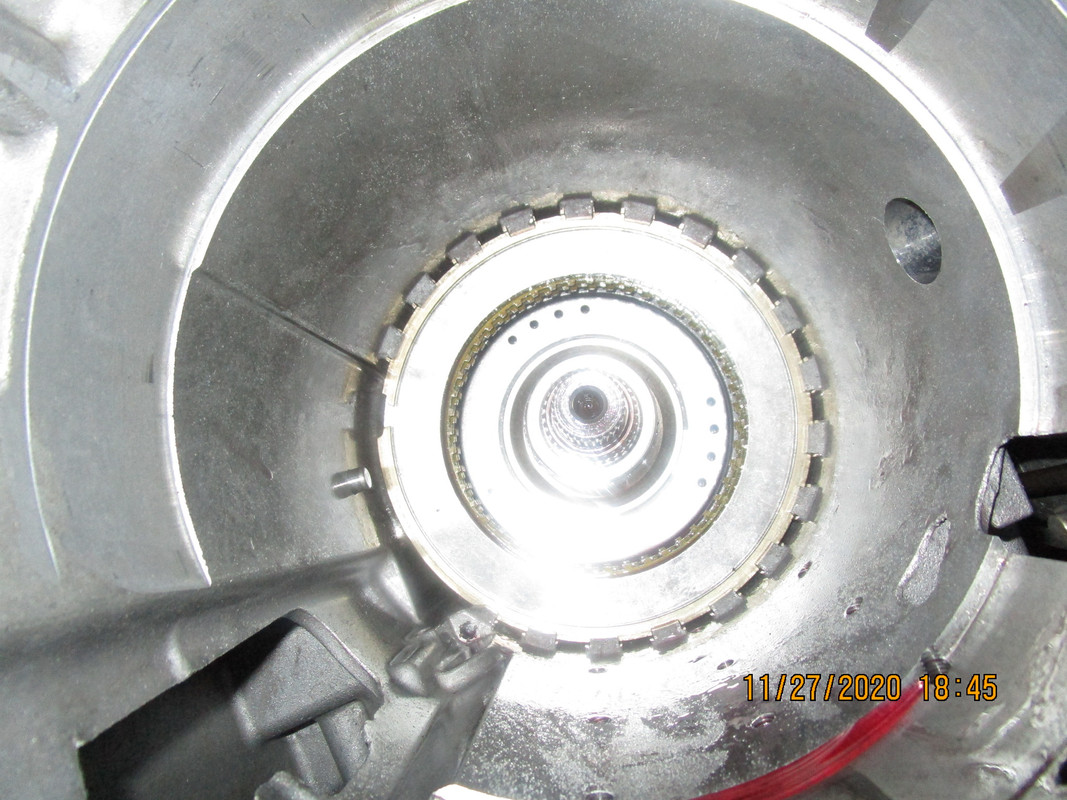
3. Independent drums for gear ratio changes. Unlike the 4l60e which utilizes a band over drum to enter some gear ratio, the 4l80e has a separate piston and clutch pack for each gear ratio, and the largest most robust of them is the 2nd gear intermediate clutch pack, an enormous ring of clutches that uses the case itself to brace for impact instead of its own rotating drum.
4. Its old like the 60e, so we can find all of it's flaws and improvements. And... unlike the 60e... there isn't much to improve on. At least, not at the stock transmission level. You don't even need or want the trans-go shift kit for a 4l80e because its already so close to being perfect you just tap a hole here, drill a hole there, and wham shift kit. If you'd like a list of 4l80e mods I will provide heck why dont I just put the list here now since we are on this
Heres a link to my 4l80e rebuild (one of them)
https://www.yellowbullet.com/posts/73332462/
This is the short list of mods, credit to Clinebarger and Dana for all! , I used a combination of their recommendations to tailor suite my needs
[*Oo-> Use only 2002-2004 rear lube 4l80e! <-oO*]
transmission-go AFL valve fix kit
.044" - .054" Lube to line orifice, this is drilled into pump (After doing this way, I changed my mind, I prefer to use the Lube to Line PR valve from Sonnax instead)
1/4" Pump return enlarged and filed smooth all pumps get this make sure you do it and deburr
Only use Borg Warner high energy clutches
Dual fed internally, no leaky shift kit plates, no leaky over-pressure mod
Do Not use HD2 shift kit!
1500 grit polished sprag races
2nd gear feed @ .097", 3rd gear @ .108", 4th @ .125"
Feed holes match well with 2800-3200rpm Yank Converter 9.5" Triple lockup
You must use lightweight 9.5" converter to reduce rotating mass and bushing wear.
All checkballs maintained!
Leave direct drum internal seal on (Do not remove like so many online tutorials recommend) This is Dana's advice
Rollerized rear output thrust surface (many ways to do this) Research!
Set Rear Roller Thrust for output shaft end play @ .003" from original 0.025" tightens up the 4l80e significantly and reduced friction
Front end play near .010" - .015" using new .075" pump washer
reaction carrier tightened up to center support at .012" from .037" (requires .005" shims)
all plastic thrust are replaced with metal (metal thrust kit)
.108" Thick HD intermediate snap ring absolutely required no matter what
Sonnax boost valve (OEM pressure) & PR valve w/ Internal pressure relief from Sonnax
.035" orifice added to edge of direct drum to prevent centrifugal apply (allows +7000rpm 4l80e)
File case tangs and pump recess de-burring before assembly and properly cleaning is essential, do not rush!
all new clutches, sprags, bearings, bushings, seals, thrust washers, bonded pistons standard rebuild kit item
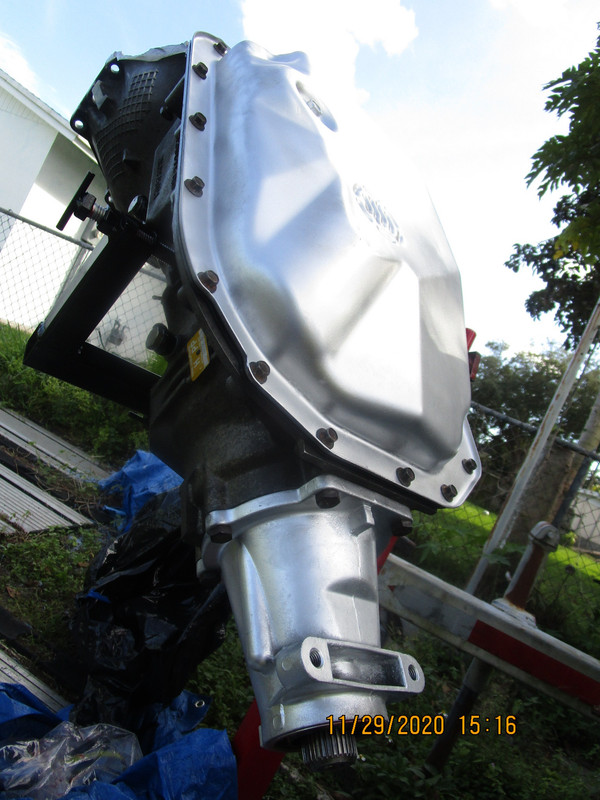
Massive unit, imagine me trying to fit this under a vehicle, and then get it on a jack somehow, and raising it into a nissan tunnel that used to house 4-cylinder. *shudder* Fun! Yearrr!
This is 2nd gear clutch pack. Look how it engaged to the case lugs! No Band for 2nd gear. Only for reverse.... (foreshadowing)
Melting Slicks


Joined: Mar 2002
Posts: 2,876
Likes: 764
From: Sligo PA
I agree the 4L80e swap is really the way to go. I swapped one in my 84 years ago. When I did mine I pulled the trans from a 2009 Express 3/4 ton van. The frame on the van was rotten so I knew why it was in the salvage yard. I took it apart and swapped out a few valves in the valve body with Sonnax stuff. Then I installed the CK Performance kit https://www.ckperformance.com/View/4...ATION-KIT-LATE. I like their stuff better than Transgo. The best part about using a 4L80e is that when I break it I can just go get another one for $200. I don't have to spend thousands of dollars on a rebuild.
People online who don't know any better will complain about the weight. I've weighed a 4L80e and a 4L60e with a freight scale. I even made a thread about it here. They're only 50 pounds different. If you go with a well made billet converter this will help reduce rotating weight as they are way smaller and lighter than stock. I run mine with 3.73 gears in the rear. I love 3.73's in this car on the street with the 4L80e's gear ratio. I had a 4L60e in the car when I first LS swapped it. I didn't like first gear on the 4L60e with 3.73's. But with the new trans it's a lot better. Also the later style 4L80e has a dual bolt pattern bell housing. So you can use it with an LS or a SBC. The hardest part is making the C beam adapter. There are lots of threads here showing how others have done it. This one is mine. I also upgraded to a 1350 steel drive shaft at the same time. If you kept the 1310 shaft it would be a little easier.
People online who don't know any better will complain about the weight. I've weighed a 4L80e and a 4L60e with a freight scale. I even made a thread about it here. They're only 50 pounds different. If you go with a well made billet converter this will help reduce rotating weight as they are way smaller and lighter than stock. I run mine with 3.73 gears in the rear. I love 3.73's in this car on the street with the 4L80e's gear ratio. I had a 4L60e in the car when I first LS swapped it. I didn't like first gear on the 4L60e with 3.73's. But with the new trans it's a lot better. Also the later style 4L80e has a dual bolt pattern bell housing. So you can use it with an LS or a SBC. The hardest part is making the C beam adapter. There are lots of threads here showing how others have done it. This one is mine. I also upgraded to a 1350 steel drive shaft at the same time. If you kept the 1310 shaft it would be a little easier.
Le Mans Master
Joined: Feb 1999
Posts: 9,922
Likes: 38
From: South Carolina
St. Jude Donor '03 & '05
The 4L80 is by far the best auto swap I wish I had done years ago. After 2 builds on the 4L60, and failures, it took Dana at Pro Built to build a damn good one. Still running after almost 20 years, low miles though.. Hard to explain.
On our C4s, two items are weak when you start pumping out HP. The Transmission and Dan 36 rearend. I went through 2 of those before Ikerds built me a D44.
Its not if they are going to break, the 4l60/E and D36, its just when..
If, I had the time. I would do an LS type motor, 4L80, and D44. maybe next time I will
On our C4s, two items are weak when you start pumping out HP. The Transmission and Dan 36 rearend. I went through 2 of those before Ikerds built me a D44.
Its not if they are going to break, the 4l60/E and D36, its just when..
If, I had the time. I would do an LS type motor, 4L80, and D44. maybe next time I will
Melting Slicks
Joined: Mar 2002
Posts: 2,876
Likes: 764
From: Sligo PA
Safety Car
Joined: Oct 2007
Posts: 4,206
Likes: 1,075
From: South Florida
LS motorsets quickly break down into individual parts that re-sell for more than the motorset cost. It just takes time to pull them apart and clean up the parts and list them for sale and then put them into boxes and shipping and all of that. But yes most of the quality low mileage truck motorsets complete with harness and transmission from 02-07 are basically free if are able to do all of that to a few of them and keep the best of the best parts. Been doing the same thing with JDM motorsets for 20 years my guys, but those are getting rare now and the price has gone wayyy up used to get a 2jz-gte auto motorset for 1400 I would get 10 of them with 100k to 150k miles, now they are 5000+ and have over 200k so old aged, so worse and higher mileage and three times the price. Because there is no substitute for them. And the same thing will happen mark my words to the LM7/L33/LQx variety of LS truck motorsets sometime within the next decade I would imagine. The L33 particularly being so rare I can foresee going from where it is now, the price of 4 decent tires, to roughly 5 times that, being again that there is no substitute. You cannot get a non-afl non-dod non-vti non-emissions hobbled non-direct injected seq-efi floating forged rod aluminum engine for price of 4 decent tires any other way on this planet and never again probably given the direction combustion automotives are going with down sizing and emissions bs piling on top
Melting Slicks
Joined: Mar 2002
Posts: 2,876
Likes: 764
From: Sligo PA
LS motorsets quickly break down into individual parts that re-sell for more than the motorset cost. It just takes time to pull them apart and clean up the parts and list them for sale and then put them into boxes and shipping and all of that. But yes most of the quality low mileage truck motorsets complete with harness and transmission from 02-07 are basically free if are able to do all of that to a few of them and keep the best of the best parts. Been doing the same thing with JDM motorsets for 20 years my guys, but those are getting rare now and the price has gone wayyy up used to get a 2jz-gte auto motorset for 1400 I would get 10 of them with 100k to 150k miles, now they are 5000+ and have over 200k so old aged, so worse and higher mileage and three times the price. Because there is no substitute for them. And the same thing will happen mark my words to the LM7/L33/LQx variety of LS truck motorsets sometime within the next decade I would imagine. The L33 particularly being so rare I can foresee going from where it is now, the price of 4 decent tires, to roughly 5 times that, being again that there is no substitute. You cannot get a non-afl non-dod non-vti non-emissions hobbled non-direct injected seq-efi floating forged rod aluminum engine for price of 4 decent tires any other way on this planet and never again probably given the direction combustion automotives are going with down sizing and emissions bs piling on top
LS stuff is funny. I've been selling used car and truck parts on ebay for 10 years off and on. In the last 4 or so years I switched to selling whole engines and transmissions instead of small parts. So between making money and pulling engines for my own projects I've seen a bunch of them between salvage yards here in western PA and eastern Ohio. In this corner of the world I've NEVER seen an L33. Never once. But I have LQ9's everywhere. Also we have quite a few 2WD 4L80e's. When I sell those the people who buy them always say they can't find them in their state. Not the later style anyway. Around here every city plumber or electrician drives a 3/4 ton 2wd Express van. And after about 10 years the frame is so rotten you can put your fist through it. So it fails safety inspection and the van gets scrapped. Well not in Ohio they don't have inspections. But anyway it's just funny how certain cars/trucks with certain options were sold in specific areas. I guess around here we didn't get L33's.