When you click on links to various merchants on this site and make a purchase, this can result in this site earning a commission. Affiliate programs and affiliations include, but are not limited to, the eBay Partner Network.
i have a 94 c4 with a 3.07 rear end and 255/45/17 tires and i want to know of a good stall converter that is streetable that wont feel squishy in stop and go traffic with the comp cams 503 and 1.6 rockers. i would apreciate links as long as it isn't a circle D converter im not spending a grand on a stall converter
Converter is the most important part of an entire build. The only converter I will use in daily driver applications (street strip) for over a decade is 9.5" lockup and I prefer Yank.
I assume you are talking about a 4l60e. The health and current state of the transmission is a part of converter selection. The 4l60e/700R4 (same thing more or less) needs (quite) a few updates for reliability before I would throw a converter at it. To take advantage of any converter and reduce the slipping generally you will desire a shift-kit (trans-go) at the bare minimum. And on top of that a bit of tuning the transmission depending on its age. When adding a converter if there is enough stall the adaptive 4l60e shifting will not function correctly because the ECU uses RPM drop to identify a shift has completed. Hopefully yours is not computer controlled so you don't worry about this. So it will hang up with high pressure waiting after a shift to occur in numerically lower gear ratios (3rd & 4th more likely) and keep adding line pressure to the maximum because it thinks the shift hasn't happened for several seconds. So adaptive shifting needs to be tuned off if the converter stall is high enough to cause that. For me it happened around 2800rpm stall which is the tightest 9.5" Converter I can get. This means more precise shift pressure settings from the end-user are required. For most people that means attaching a Line Pressure 0-300psi gauge to the transmission and tuning the pressure properly. That is the right way to do any transmission upgrades and converter installs. But this is generally ignored and overlooked because people do not understand what they are doing and in a hurry to just get it done as fast as possible. A shift kit , separator plate hole selection, and proper boost valve really helps when you plan to ignore setting the pressure using a gauge proper, just helps with the general volume and pressure increase over stock when selected for properly, might help with blind luck
Years ago, people would use a Chevy OEM S10 pick up converter. I think it was about 2400 rpm stall. It was behind the V6. It was cheap and strong. I used it in my 93 for a while, before building the engine etc up.
Lingenfelter Used to sell it too. If they sold it, that means it was well tested by them, because they didnt sell garbage.
The 9.5 inch aftermarket converters are awesome. They work great, and due to less rotating mass free up some hp/tq. Car will be quicker either converter.
Start looking at stickier tires after a converter change.
Converter is the most important part of an entire build. The only converter I will use in daily driver applications (street strip) for over a decade is 9.5" lockup and I prefer Yank.
I assume you are talking about a 4l60e. The health and current state of the transmission is a part of converter selection. The 4l60e/700R4 (same thing more or less) needs (quite) a few updates for reliability before I would throw a converter at it. To take advantage of any converter and reduce the slipping generally you will desire a shift-kit (trans-go) at the bare minimum. And on top of that a bit of tuning the transmission depending on its age. When adding a converter if there is enough stall the adaptive 4l60e shifting will not function correctly because the ECU uses RPM drop to identify a shift has completed. Hopefully yours is not computer controlled so you don't worry about this. So it will hang up with high pressure waiting after a shift to occur in numerically lower gear ratios (3rd & 4th more likely) and keep adding line pressure to the maximum because it thinks the shift hasn't happened for several seconds. So adaptive shifting needs to be tuned off if the converter stall is high enough to cause that. For me it happened around 2800rpm stall which is the tightest 9.5" Converter I can get. This means more precise shift pressure settings from the end-user are required. For most people that means attaching a Line Pressure 0-300psi gauge to the transmission and tuning the pressure properly. That is the right way to do any transmission upgrades and converter installs. But this is generally ignored and overlooked because people do not understand what they are doing and in a hurry to just get it done as fast as possible. A shift kit , separator plate hole selection, and proper boost valve really helps when you plan to ignore setting the pressure using a gauge proper, just helps with the general volume and pressure increase over stock when selected for properly, might help with blind luck
So at this point it sounds like I should just buy a built one that I can just drop in or manual swap and just turn off the automatic in my ECM cause I know jack diddly squat about automatic transmissions and the shift speed doesn't seem worth all of the screwing around with it
Also yes I have a 94 vert c4 so if the 4l60E from that year has the electronic adaptive shift I have it
Years ago, people would use a Chevy OEM S10 pick up converter. I think it was about 2400 rpm stall. It was behind the V6. It was cheap and strong. I used it in my 93 for a while, before building the engine etc up.
Lingenfelter Used to sell it too. If they sold it, that means it was well tested by them, because they didnt sell garbage.
The 9.5 inch aftermarket converters are awesome. They work great, and due to less rotating mass free up some hp/tq. Car will be quicker either converter.
Start looking at stickier tires after a converter change.
I'll look into that thanks. I'm fine with a little cam surge and I like snappy response so the 2400 stall sounds good and should cooperate with my trans
Is the transmission shifting good now, especially 3 to 4? Is the fluid nice and red?
And to change one out is a but time consuming, and labor may run up to a 1000 bucks and some high end places.
The 94 will electronically handle a 2200-2400, many hear have done it.
Is the transmission shifting good now, especially 3 to 4? Is the fluid nice and red?
And to change one out is a but time consuming, and labor may run up to a 1000 bucks and some high end places.
The 94 will electronically handle a 2200-2400, many hear have done it.
yes the transmission shifts like new but i do need to change the fluid
i plan to do the converter swap myself
yes the transmission shifts like new but i do need to change the fluid
i plan to do the converter swap myself
Okay, Cool.
Only hard part for me was the left bolt holding the transmission to the engine. I used a few 3/8 extensions and a swivel socket. I think its 13mm or 14mm.
Exhaust is easy to remove.
And I held the engine up with a piece of wood on a jack stand.
Okay, Cool.
Only hard part for me was the left bolt holding the transmission to the engine. I used a few 3/8 extensions and a swivel socket. I think its 13mm or 14mm.
Exhaust is easy to remove.
And I held the engine up with a piece of wood on a jack stand.
I really appreciate the tips man thank you so much
I hate to say it but for a street car it's hard to go with an off the shelf converter. I started with a Circle D in my 4l60e. I called them and gave them the specs for my cam and a bunch of other info and they recommended a part number. Then a few years later I swapped in a 4l80e. Then I called FTI and had them make a billet converter for me based on my setup. Both were great on the street and did exactly what I wanted. I always heard good things from Yank but I never had one. Just avoid B&M unless it's a beater race car.
But I agree with what others have said. The converter is probably the most important part of the build. It will absolutely make you either love or hate the car especially if you have a big cam.
I hate to say it but for a street car it's hard to go with an off the shelf converter. I started with a Circle D in my 4l60e. I called them and gave them the specs for my cam and a bunch of other info and they recommended a part number. Then a few years later I swapped in a 4l80e. Then I called FTI and had them make a billet converter for me based on my setup. Both were great on the street and did exactly what I wanted. I always heard good things from Yank but I never had one. Just avoid B&M unless it's a beater race car.
But I agree with what others have said. The converter is probably the most important part of the build. It will absolutely make you either love or hate the car especially if you have a big cam.
yes the transmission shifts like new but i do need to change the fluid
i plan to do the converter swap myself
If somebody has a stock 4l60e and a stockish amount of power - and the transmission seems to be good working condition but has high mileage over 120k? 150k? something like that...
I am not completely against a cheaper converter, like the S10 version or something like that. For a couple reasons, if my logic makes sense,
The logic is this:
The trans is old and will need service soon. When it does finally go, it could take the converter out with it.
So if you use a very expensive converter on an old aged transmission without any of the shift-lifespan-improvement features added, it makes more sense to use a cheaper, lower quality converter? especially if you don't want to fool with the ECU reprogramming also...
You can kind of kill 3 birds with 1 stone, the cheaper converter, the less risk of the trans failure, and the avoiding of extra cost of beefing up an aged transmission and avoid the cost of ECU reprogramming, just by using a 'worse' cheaper converter. Hmm thats 4 birds
May not be the best performance, may not be the most fun, not the ideal converter. But could save a bucket of money and gives you a taste of the future, bigger better badder converter in case you want to rebuild the trans and go again faster funner go agin?
I usually am the type to go for the 'best' solution and the 'right' converter is the 'best' in terms of performance and longevity but ONLY if the transmission is prepped and ready to keep the converter alive and not waste your money... which still happens to build 4l60e's all the time btw... The only people I Know for sure 100% that can build a proper 4l60e is Dana a probuilt automatics ('PBA' on this and many forum) and clinebarger (Chris Linebarger) These two people taught me over 20 years how to build the classic 60e/80e transmissions and because I know that I am competent at building them and that they know 1000% more than I do, I can strongly highly recommend these guys, both PBA and Clinebarger would help you for free build your own if you want, and they offer their own builds
If somebody has a stock 4l60e and a stockish amount of power - and the transmission seems to be good working condition but has high mileage over 120k? 150k? something like that...
I am not completely against a cheaper converter, like the S10 version or something like that. For a couple reasons, if my logic makes sense,
The logic is this:
The trans is old and will need service soon. When it does finally go, it could take the converter out with it.
So if you use a very expensive converter on an old aged transmission without any of the shift-lifespan-improvement features added, it makes more sense to use a cheaper, lower quality converter? especially if you don't want to fool with the ECU reprogramming also...
You can kind of kill 3 birds with 1 stone, the cheaper converter, the less risk of the trans failure, and the avoiding of extra cost of beefing up an aged transmission and avoid the cost of ECU reprogramming, just by using a 'worse' cheaper converter. Hmm thats 4 birds
May not be the best performance, may not be the most fun, not the ideal converter. But could save a bucket of money and gives you a taste of the future, bigger better badder converter in case you want to rebuild the trans and go again faster funner go agin?
I usually am the type to go for the 'best' solution and the 'right' converter is the 'best' in terms of performance and longevity but ONLY if the transmission is prepped and ready to keep the converter alive and not waste your money... which still happens to build 4l60e's all the time btw... The only people I Know for sure 100% that can build a proper 4l60e is Dana a probuilt automatics ('PBA' on this and many forum) and clinebarger (Chris Linebarger) These two people taught me over 20 years how to build the classic 60e/80e transmissions and because I know that I am competent at building them and that they know 1000% more than I do, I can strongly highly recommend these guys, both PBA and Clinebarger would help you for free build your own if you want, and they offer their own builds
my trans is at 130k but has had EVERY fluid change done on time so it basically like new when I had it inspected at a trans shop they said that it behaved like it just got off the show room floor and I found a converter from monster transmissions that doesn't cost an arm and a leg but is a stall speed that I like. I like snappy instant throttle not like my ranger with a near 3k stall stock 2400 is better than the stock stall so I can still launch harder but this will never see actual track time just some street shenanigans
my trans is at 130k but has had EVERY fluid change done on time so it basically like new when I had it inspected at a trans shop they said that it behaved like it just got off the show room floor and I found a converter from monster transmissions that doesn't cost an arm and a leg but is a stall speed that I like. I like snappy instant throttle not like my ranger with a near 3k stall stock 2400 is better than the stock stall so I can still launch harder but this will never see actual track time just some street shenanigans
The thing about these autos is, one good slip and its over, converter AND trans are full of brown sticky mess clogging all the passages and filters.
In your case I would strongly recommend since the trans is still very healthy, that you read up on trans-go shift kits, and see if you would feel up to the challenge of installing it yourself from under the car. Just mainly the easy mods can make a big difference, the separator plate holes drilled proper, the boost valve and various spring, would really tighten up the operation for what is left of it's lifespan. Actually if you are taking out the trans anyways to do converter its easily to do just flip the transmission over and go...
The reason I say DIY is because you cannot trust a transmission shop. They will contaminate it or purposefully cause some failure to sell you a new transmission.
If you don't feel up to the diy maybe find a helpful enthusiast near you to lend a hand, Still much safer than any transmission shop.
On the ECU end, If you decide not to do the shift kit, at least raise the shift pressures and double up on the torque management. In my opinion these can have similar longevity improvements or MORE than the shift kit because torque management will take the stress away from clutches during a shift, it has a massive lifespan improving influence if added correctly. This is just something to think about if you don't want to mess with the transmission physically. But whatever you do , never disable the torque management feature for a stockish transmission. That would be up there with crazy think.
This would be my best guess as to the easiest diy part with the biggest impact for your application using a cheaper converter with no ECM programming
You can find many youtube videos show how to do easily from under the car.
If you are swapping converter then pump will be accessible also which means there is alot of this you can install as well
Remember you will certainly need a new transmission filter when removing the pan and possibly a transmission pan gasket.
Again to repeat I am not against using a cheaper sub-par converter on a higher mileage 60e unit just to send it into the final decade of service in a mild application. At the very least I would put a couple sonnax parts in the pump, the boost valve for sure, its the best way to kind-of-avoid reprogramming the ECU and still getting a mild pressure bump. Boost valve I am confident you can DIY its pretty easy. The valve body takes some care and cleanliness but I think you can do it just based on how you type and comfort level with the numerical value of words on the screen I am putting up that you are getting down.
Basically, don't let anyone else touch your car, ever. And for those things you feel comfortable doing, you can understand why.
The thing about these autos is, one good slip and its over, converter AND trans are full of brown sticky mess clogging all the passages and filters.
In your case I would strongly recommend since the trans is still very healthy, that you read up on trans-go shift kits, and see if you would feel up to the challenge of installing it yourself from under the car. Just mainly the easy mods can make a big difference, the separator plate holes drilled proper, the boost valve and various spring, would really tighten up the operation for what is left of it's lifespan. Actually if you are taking out the trans anyways to do converter its easily to do just flip the transmission over and go...
The reason I say DIY is because you cannot trust a transmission shop. They will contaminate it or purposefully cause some failure to sell you a new transmission.
If you don't feel up to the diy maybe find a helpful enthusiast near you to lend a hand, Still much safer than any transmission shop.
On the ECU end, If you decide not to do the shift kit, at least raise the shift pressures and double up on the torque management. In my opinion these can have similar longevity improvements or MORE than the shift kit because torque management will take the stress away from clutches during a shift, it has a massive lifespan improving influence if added correctly. This is just something to think about if you don't want to mess with the transmission physically. But whatever you do , never disable the torque management feature for a stockish transmission. That would be up there with crazy think.
This would be my best guess as to the easiest diy part with the biggest impact for your application using a cheaper converter with no ECM programming
You can find many youtube videos show how to do easily from under the car.
If you are swapping converter then pump will be accessible also which means there is alot of this you can install as well
Remember you will certainly need a new transmission filter when removing the pan and possibly a transmission pan gasket.
Again to repeat I am not against using a cheaper sub-par converter on a higher mileage 60e unit just to send it into the final decade of service in a mild application. At the very least I would put a couple sonnax parts in the pump, the boost valve for sure, its the best way to kind-of-avoid reprogramming the ECU and still getting a mild pressure bump. Boost valve I am confident you can DIY its pretty easy. The valve body takes some care and cleanliness but I think you can do it just based on how you type and comfort level with the numerical value of words on the screen I am putting up that you are getting down.
Basically, don't let anyone else touch your car, ever. And for those things you feel comfortable doing, you can understand why.
I really appreciate all of the information and knowledge you provided about what I can do to my car to prepare it for what I want to achieve. Having easy access to good info about what I need to do to my car and what can happen if I skimp out has motivated me to not only install the shift kit but also do a full overhaul so I can keep my transmission for a long, long time, even with the added power.
When looking into converters, I have decided to go with a non-el-cheapo converter. I also plan to build an above-ground set of ramps made of block so I can drive my car onto them and do all the underbody work, like the transmission and differential. Taking out the transmission also provides the perfect opportunity to redo my engine mounts and replace all of my engine seals, especially the rear main seal.
The time and money spent will be well worth it in the coming years, and having a reliable transmission and engine will be great for road trips and the occasional on-the-spot race.
the only question i have is should i pair the shift kit with the sure cure or just the shift kit alone
Last edited by Silvertheflyguy; Dec 19, 2024 at 11:18 PM.
I really appreciate all of the information and knowledge you provided about what I can do to my car to prepare it for what I want to achieve. Having easy access to good info about what I need to do to my car and what can happen if I skimp out has motivated me to not only install the shift kit but also do a full overhaul so I can keep my transmission for a long, long time, even with the added power.
When looking into converters, I have decided to go with a non-el-cheapo converter. I also plan to build an above-ground set of ramps made of block so I can drive my car onto them and do all the underbody work, like the transmission and differential. Taking out the transmission also provides the perfect opportunity to redo my engine mounts and replace all of my engine seals, especially the rear main seal.
The time and money spent will be well worth it in the coming years, and having a reliable transmission and engine will be great for road trips and the occasional on-the-spot race.
the only question i have is should i pair the shift kit with the sure cure or just the shift kit alone
The term 'shift kit' is a kind of slang. The original idea of a 'shift kit' I can try to explain like this
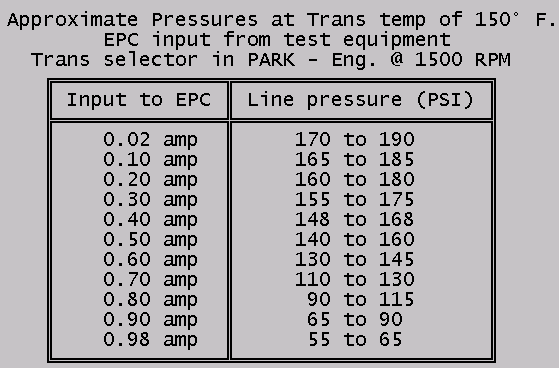
In the picture we see two major contributors to 'shift kit' term. The first on the left side is the boost valve, which is used to regulate the front pump output, there is a solenoid called EPC (electronic pressure control?) solenoid that the ECU sends a Duty Cycle (PWM) signal to on the order of 1Amp to around 50mA (the range of adjustment) which can move the boost valve by exhausting some fraction of pump output. This is one major different from the 700R4 which used the TV cable to regulate pump output. So we kind of went from cable to drive by wire on that.
The boost valve surface area exposed to the fluid is slave to pressure times area = force. So for example by leaving the ECU programming factory, one can obtain higher pressure output from the front pump by installing a boost valve with a larger surface area, so it gets hit by the same pressure but because area is larger now the force on it is also larger so it moves farther, which changes pump exhaust fluid and causes more pressure output from the pump to the entire transmission. To prevent confusion, the pressure that the EPC supplies to the boost valve is not the same as the global transmission pressure that we would measure with a gauge to determine transmission health which is the result of the boost valves actions. So when discussing EPC pressure we generally refer to Amperage, or EPC boost signal as a function of duty cycle % such as 40% or 80%. The lower the amperage, the more global transmission pressure is developed. This is done presumably so that when the connector on transmission from the ECU is severed, the pressure will be maximum so you can drive home without slipping it.
Can you simply program the ECU for more pressure from the EPC and avoid buying a boost valve with larger area?
Sort of but not really. You can increase the pressure across the board with the EPC and even disable the factory limitation on maximum pressure, but the maximum total pressure still will likely be lower by 10 to 25psi than the upgrade boost valve would produce in most healthy transmissions. So the boost valve is preferable over simple reprogramming by itself. Both together work the best of course., dialed in properly with a mechanical 0-300psi gauge on the transmission. This needs to be done for rebuilt units especially.
Pressure is nice to help the transmission shift firmly, reduce wear, reduce heating. However, when shift is too harsh parts can be damaged. And also, high pressure can wear out the transmission quickly if its left very high for long. So we only want the high pressure when we really need it, like wide open throttle. This is taken into account in the boost valve from sonnax if you read some of their literature its a non-linear increase to pressure, they boast about that it doesn't add much at low output but really helps at wot. The sonnax is the ideal boost valve.
The next, on the right side, is where it shows to drill holes of a certain size. For example, 1-2 **** 0.082 vs 0.093 for 'full race'. That is the so called 'shift kit' part of the original idea of a shift kit, just the hole sizes and the boost valve.
With just those two modifications, a transmission can be made to shift bone jarringly hard. Look how little difference there is between 0.082 and 0.093" to your eyes. Its the kind of hole you drill too large and regret frequently. Anyways - The point is that pressure and volume contribute to filling the drums which apply pistons to the clutch packs. Increase the hole size, you increase the volume fill rate which helps firm the shift and reduce shift time without increasing pressure. Increase the pressure (boost valve on the left), it also increases the filling rate, and causes a more firm engagement. If the pressure is very high but the separator plate hole is very small, it will still be difficult to fill the drum and apply clutches quickly, so the transmission could still slip even with high pressure. Therefore it is very important for longevity and torque handling ability that both be done together.
To put this into perspective, in the 90's we would pull the TH350 stock plate out and drill some holes and maybe change a couple springs and call that a shift kit.
So now lets discuss the two large kits, sonnax sure cure and trans-go 'shift kit'.
The picture i posted is from trans-go kit. Which is more of a traditional shift kit. They focus on the shifting firmness, pressure, volume, and make some improvements and fixes to much needed area like the screens in the valve body and spring kit in the 3-4 and some orifice corrections, and gives options for whether hold gears or not.
The trans-go kit is kind of 'small' in that it doesn't really reach all over the transmissions issues like the sure cure does. Presumably because it was also intended to be mostly done without removing the transmission from the vehicle. Yes some of the parts go inside but majority of it can be done from under the car on your back in the dirt.
next,
Sure cure is more of a pull the transmission pump out, type of kit and address internal issues mainly with the pump aging imo
It will address the PR valve and have you dismantle the pump and ream for oversized PR valve
address issues with lockup TCC valve, and converter regulator valve
there is some overlap in these kits with some of the valve body parts, i think, like the accumulator spring
The sure cure kit does address one of the shift separator plate orifices but just the 3-4 I think is mentioned, obviously you can drill the others while you are in there but this is how the kit reads
Also it will have you look at the AFL valve situation and there is optional reamer and larger valve for that iirc
and a bunch of little options , a pump bushing, a shim kit, theres probably different version for each of these kits also, over the years and some parts only apply to the 93-94 era units. So you have to read carefully. The deeper you go, the more risk of changing a wrong part or following the direction for the wrong year. In the 90's I drilled a hole that I was not supposed to and it sent me back to square one.
they are essentially different kits with some overlap in the seals and some of the springs I would tentatively permit.
The reason I didn't just say this in the first place is because of what you said about 'overhaul'. I am not sure you know what overhaul is. Overhaul is when you take the transmission completely apart and buy a complete rebuild kit for it like this
Those are overhaul kits. And there is much more to this than initially meets the eye.
Its more of a philosophy, really
First, transmission builders tend to habitually choose parts and kits that they are familiar with. I'm sure with all the complexity you can imagine why.
This leads us to an interesting place, the more you learn transmissions and preferable parts, the more particular you get about certain parts from certain places.
For example, I will only use Borg Warner clutches. Its my preference. So when a kit comes with some other clutches, I have to buy Borgs also to replace the kit parts.
And this is a recurring theme throughout the transmission building and learning process.
For example a superior choice to using the OEM output shaft support bushing and thrust washer in an 80e is to rollerize it using a needle bearing and some shims over an extra long shaft support bushing that we counter taper forcefully by beating it into shape and then install backwards. This is a popular mod that was started, afaik, a long time ago using parts from a Th400 that somebody figured out how to get into the 4l80e and became so popular they now sell kits to do it. But they are not included in the general rebuild kits you find from say, rockauto like I linked.
And this list goes on and on, for parts and mods you can do, that only certain builders know how to do, and how it will have long term impact on lifespan. For example the grit sand paper and cloth material used to prep the sprag races, the chamfer and re-sizing of lubrication orifice of shafts, the careful filing of tangs on some of the drums, the extra thick snap ring from some aircraft unit that happens to fit yours perfectly with extra thickness, etc....
This is why you cannot really, effectively, overhaul the 60e transmission yourself for the first time, in theory, and have it last the life it should. And furthermore, why pretty much any transmission shop cannot do it properly either. They do not have the unified single brain of an individual who have spent their life's work on developing the nuances of these transmissions for performance applications. Transmission shops do NOT build performance units. They will not know the tricks and extra parts and modifications that need to be done. That is why I strongly recommend Clinebarger and Probuilt automatics if you desire a overhauled transmission unit.
Now all of that aside, if the trans has good fluid color and still works fine, I would not overhaul it. No way. The overhaul is very expensive and leads to many errors during installation which often get blamed on the builder. Transmission building is practically impossible to turn a profit because one person does a bad install and it eats 10x of transmission sales worth of profits when they blame you for their mistake. Couple that to the unfortunate fact that transmission shops don't really understand performance or cleanliness and you have a recipe for scam artists building shoddy transmissions and sabotaging yours because that is the only way to turn a profit, quantity not quality. That has been my experience with pretty much every trans shop I ever trusted in my youth, everything from metal shavings in the pan after they gave it back to me, to taking my shift kit and not even installing it, they just kept the kit and gave me back the stock transmission. How would you even know? So I started building my own and found that the 60e is far more difficult than the 80e, for performance applications anyways, due to it's 'delicate' nature, which is really more of engineers doing the best they could at the time. It's 'fine' but if you really want one to handle 500 or 700hp then you need somebody who really know what the F they are doing build it with all those little secrets. A novice could probably get away with a stock overhaul though, if you have the right tools.
Oh yeah overhauls require a bunch of special tools, especially for the 60e, The tools can rival the cost of the transmission rebuild. So take that intoaccount as well as part of the cost of an overhaul.
To conclude this, sorry about the words but I want this info here to put people on the right track with these units and decision making.
I see you want to do this right but I will strongly caution you from over-spending and over-worrying. I am cautionary by default so when I say these recommendation understand that I evaluate the risk and reward of novice and DIY ventures , not just the part integrity or the chances of natural failures by themselves just from contact with air and dirty fingers.
-Keep the factory transmission with clean red good smelling fluid, do not overhaul yet
-Have the trans-go kit address the shift firmness and use the separator plate hole diameters that the converter manufacturer will recommend for your app
-Use a Yank 9.5" converter if you want a quality converter, and note that they can open and clean it for you if the trans ruins it at some point, and rebuild the converter, for reasonable cost, so all is not lost if the trans fails and ruins the converter.
Why I would go this way
1. prevents you from having to open the transmission(remove pump and so forth), which can avoid many potential problems and mistakes (don't worry about the 3-4 springs just save them)
2. Plate holes and boost valve address firmness. And you might get lucky and not have to disable adaptives. You will know I guess when the shifts get overly harsh by themselves over time.... and require ECU reset to 'fix' and you'll know you need a little tuning done to the ECU (start by turning off adaptives)
This usually happens in 4th gear with higher stalls anyways where the high pressure might not be noticeable, however it will overall impact global pressure during normal operation so you don't want that very high pressure all the time, it needs to be addressed. You might need to put a gauge on the transmission to be able to tell though.
Maybe just plan to turn off adaptives anyways. Good time to invest in HPtuners.... I can also help you with that tuning
so: Firmness, Stall, and avoid a rebuild.
The final trick to this pathway, is knowing when its TIME for an overhaul.
Once the transmission starts to slip, STOP driving and get an overhaul. Don't keep driving and burn the unit out completely. This is perhaps the most important advice I can offer.
The reason you need to stop right away is to keep the existing parts in the transmission that are still good, good. In other words, they are limited supply, and most are re-usable, valuable parts, you can pretty much salvage all ofthem and simply replace the clutch packs, pistons, seals, bushings, steels, and go again with the same hard parts.
But if you keep driving on a slipping or bad acting unit, you will damage the hard parts, like planetary and burn up the shafts. Then the transmission is completely trashed garbage and re-using parts becomes a guessing game, a potential waste of time. And to make things worse, and difficult, because these units change from year to year, a common issue is that you will find a replacement part, lets say you burnt the output shaft or damaged a drum for example. Well yours is a 94 lets say, and you find a 95 or 98 shaft or drum, they might look pretty close but there could be this tiny difference that you do not notice and did not research fully, or maybe the seller lied or didnt know it was a different year than stated, this kind of $#!t happens ALL the time in the transmission world, so you rebuild an entire expensive new unit with 1 wrong part you didn't notice and wham back to square one, wasted all that time and money. Because the hard part was ruined because someone kept driving on a bad acting transmission. You can still get a bad hard part from a good working transmission, like its common to have some bushing wear lead to shaft wobble and the teflon seals cut through the steel shafts. However it is much less likely if you catch it early.
And one more thing during an overhaul if you ever do one, the bushings, the bushing are perhaps the most important part to change, and one of the most difficult. If you attempt a self OEM style rebuild I recommend you send or take the bushings somewhere that both installs and removes them on a daily basis, so it will quick and easily done, otherwise if you attempt this one your first try will probably scuff those bushing or nick them. I know I did.
Really hope I answered your question with my meandering but it has to be said somebody gota say it lmao
Annd I just realized your trans is a 94 so no HPtuners. I actually have no idea how the ECU is going evaluate the transmission. I've only ever tuned 4l60e using a stand-alone or 99+ ECU. So I could be way off about the adaptives it might not matter at all. Thats lucky if its true.
Now, that is not to say we don't know how the transmission is controlled; They all work the same way. It has an EPC and shift solenoids. The solenoids are either ON or OFF. Like a switch. There is no delay on behalf of the ECU. The EPC gets a PWM and is controlled the same way as I stated, everything is same as I said. Only thing is how the transmission evaluted by the ECU, the ECU might not be trying to measure shift time because of its age. Which would be a good thing. So its same or better.
There is nothing unexpected it might do. You turn solenoids on, or off, and you regulate pressure vs throttle or torque model
The term 'shift kit' is a kind of slang. The original idea of a 'shift kit' I can try to explain like this
In the picture we see two major contributors to 'shift kit' term. The first on the left side is the boost valve, which is used to regulate the front pump output, there is a solenoid called EPC (electronic pressure control?) solenoid that the ECU sends a Duty Cycle (PWM) signal to on the order of 1Amp to around 50mA (the range of adjustment) which can move the boost valve by exhausting some fraction of pump output. This is one major different from the 700R4 which used the TV cable to regulate pump output. So we kind of went from cable to drive by wire on that.
The boost valve surface area exposed to the fluid is slave to pressure times area = force. So for example by leaving the ECU programming factory, one can obtain higher pressure output from the front pump by installing a boost valve with a larger surface area, so it gets hit by the same pressure but because area is larger now the force on it is also larger so it moves farther, which changes pump exhaust fluid and causes more pressure output from the pump to the entire transmission. To prevent confusion, the pressure that the EPC supplies to the boost valve is not the same as the global transmission pressure that we would measure with a gauge to determine transmission health which is the result of the boost valves actions. So when discussing EPC pressure we generally refer to Amperage, or EPC boost signal as a function of duty cycle % such as 40% or 80%. The lower the amperage, the more global transmission pressure is developed. This is done presumably so that when the connector on transmission from the ECU is severed, the pressure will be maximum so you can drive home without slipping it.
Can you simply program the ECU for more pressure from the EPC and avoid buying a boost valve with larger area?
Sort of but not really. You can increase the pressure across the board with the EPC and even disable the factory limitation on maximum pressure, but the maximum total pressure still will likely be lower by 10 to 25psi than the upgrade boost valve would produce in most healthy transmissions. So the boost valve is preferable over simple reprogramming by itself. Both together work the best of course., dialed in properly with a mechanical 0-300psi gauge on the transmission. This needs to be done for rebuilt units especially.
Pressure is nice to help the transmission shift firmly, reduce wear, reduce heating. However, when shift is too harsh parts can be damaged. And also, high pressure can wear out the transmission quickly if its left very high for long. So we only want the high pressure when we really need it, like wide open throttle. This is taken into account in the boost valve from sonnax if you read some of their literature its a non-linear increase to pressure, they boast about that it doesn't add much at low output but really helps at wot. The sonnax is the ideal boost valve.
The next, on the right side, is where it shows to drill holes of a certain size. For example, 1-2 **** 0.082 vs 0.093 for 'full race'. That is the so called 'shift kit' part of the original idea of a shift kit, just the hole sizes and the boost valve.
With just those two modifications, a transmission can be made to shift bone jarringly hard. Look how little difference there is between 0.082 and 0.093" to your eyes. Its the kind of hole you drill too large and regret frequently. Anyways - The point is that pressure and volume contribute to filling the drums which apply pistons to the clutch packs. Increase the hole size, you increase the volume fill rate which helps firm the shift and reduce shift time without increasing pressure. Increase the pressure (boost valve on the left), it also increases the filling rate, and causes a more firm engagement. If the pressure is very high but the separator plate hole is very small, it will still be difficult to fill the drum and apply clutches quickly, so the transmission could still slip even with high pressure. Therefore it is very important for longevity and torque handling ability that both be done together.
To put this into perspective, in the 90's we would pull the TH350 stock plate out and drill some holes and maybe change a couple springs and call that a shift kit.
So now lets discuss the two large kits, sonnax sure cure and trans-go 'shift kit'.
The picture i posted is from trans-go kit. Which is more of a traditional shift kit. They focus on the shifting firmness, pressure, volume, and make some improvements and fixes to much needed area like the screens in the valve body and spring kit in the 3-4 and some orifice corrections, and gives options for whether hold gears or not.
The trans-go kit is kind of 'small' in that it doesn't really reach all over the transmissions issues like the sure cure does. Presumably because it was also intended to be mostly done without removing the transmission from the vehicle. Yes some of the parts go inside but majority of it can be done from under the car on your back in the dirt.
next,
Sure cure is more of a pull the transmission pump out, type of kit and address internal issues mainly with the pump aging imo
It will address the PR valve and have you dismantle the pump and ream for oversized PR valve
address issues with lockup TCC valve, and converter regulator valve
there is some overlap in these kits with some of the valve body parts, i think, like the accumulator spring
The sure cure kit does address one of the shift separator plate orifices but just the 3-4 I think is mentioned, obviously you can drill the others while you are in there but this is how the kit reads
Also it will have you look at the AFL valve situation and there is optional reamer and larger valve for that iirc
and a bunch of little options , a pump bushing, a shim kit, theres probably different version for each of these kits also, over the years and some parts only apply to the 93-94 era units. So you have to read carefully. The deeper you go, the more risk of changing a wrong part or following the direction for the wrong year. In the 90's I drilled a hole that I was not supposed to and it sent me back to square one.
they are essentially different kits with some overlap in the seals and some of the springs I would tentatively permit.
The reason I didn't just say this in the first place is because of what you said about 'overhaul'. I am not sure you know what overhaul is. Overhaul is when you take the transmission completely apart and buy a complete rebuild kit for it like this
Those are overhaul kits. And there is much more to this than initially meets the eye.
Its more of a philosophy, really
First, transmission builders tend to habitually choose parts and kits that they are familiar with. I'm sure with all the complexity you can imagine why.
This leads us to an interesting place, the more you learn transmissions and preferable parts, the more particular you get about certain parts from certain places.
For example, I will only use Borg Warner clutches. Its my preference. So when a kit comes with some other clutches, I have to buy Borgs also to replace the kit parts.
And this is a recurring theme throughout the transmission building and learning process.
For example a superior choice to using the OEM output shaft support bushing and thrust washer in an 80e is to rollerize it using a needle bearing and some shims over an extra long shaft support bushing that we counter taper forcefully by beating it into shape and then install backwards. This is a popular mod that was started, afaik, a long time ago using parts from a Th400 that somebody figured out how to get into the 4l80e and became so popular they now sell kits to do it. But they are not included in the general rebuild kits you find from say, rockauto like I linked.
And this list goes on and on, for parts and mods you can do, that only certain builders know how to do, and how it will have long term impact on lifespan. For example the grit sand paper and cloth material used to prep the sprag races, the chamfer and re-sizing of lubrication orifice of shafts, the careful filing of tangs on some of the drums, the extra thick snap ring from some aircraft unit that happens to fit yours perfectly with extra thickness, etc....
This is why you cannot really, effectively, overhaul the 60e transmission yourself for the first time, in theory, and have it last the life it should. And furthermore, why pretty much any transmission shop cannot do it properly either. They do not have the unified single brain of an individual who have spent their life's work on developing the nuances of these transmissions for performance applications. Transmission shops do NOT build performance units. They will not know the tricks and extra parts and modifications that need to be done. That is why I strongly recommend Clinebarger and Probuilt automatics if you desire a overhauled transmission unit.
Now all of that aside, if the trans has good fluid color and still works fine, I would not overhaul it. No way. The overhaul is very expensive and leads to many errors during installation which often get blamed on the builder. Transmission building is practically impossible to turn a profit because one person does a bad install and it eats 10x of transmission sales worth of profits when they blame you for their mistake. Couple that to the unfortunate fact that transmission shops don't really understand performance or cleanliness and you have a recipe for scam artists building shoddy transmissions and sabotaging yours because that is the only way to turn a profit, quantity not quality. That has been my experience with pretty much every trans shop I ever trusted in my youth, everything from metal shavings in the pan after they gave it back to me, to taking my shift kit and not even installing it, they just kept the kit and gave me back the stock transmission. How would you even know? So I started building my own and found that the 60e is far more difficult than the 80e, for performance applications anyways, due to it's 'delicate' nature, which is really more of engineers doing the best they could at the time. It's 'fine' but if you really want one to handle 500 or 700hp then you need somebody who really know what the F they are doing build it with all those little secrets. A novice could probably get away with a stock overhaul though, if you have the right tools.
Oh yeah overhauls require a bunch of special tools, especially for the 60e, The tools can rival the cost of the transmission rebuild. So take that intoaccount as well as part of the cost of an overhaul.
To conclude this, sorry about the words but I want this info here to put people on the right track with these units and decision making.
I see you want to do this right but I will strongly caution you from over-spending and over-worrying. I am cautionary by default so when I say these recommendation understand that I evaluate the risk and reward of novice and DIY ventures , not just the part integrity or the chances of natural failures by themselves just from contact with air and dirty fingers.
-Keep the factory transmission with clean red good smelling fluid, do not overhaul yet
-Have the trans-go kit address the shift firmness and use the separator plate hole diameters that the converter manufacturer will recommend for your app
-Use a Yank 9.5" converter if you want a quality converter, and note that they can open and clean it for you if the trans ruins it at some point, and rebuild the converter, for reasonable cost, so all is not lost if the trans fails and ruins the converter.
Why I would go this way
1. prevents you from having to open the transmission(remove pump and so forth), which can avoid many potential problems and mistakes (don't worry about the 3-4 springs just save them)
2. Plate holes and boost valve address firmness. And you might get lucky and not have to disable adaptives. You will know I guess when the shifts get overly harsh by themselves over time.... and require ECU reset to 'fix' and you'll know you need a little tuning done to the ECU (start by turning off adaptives)
This usually happens in 4th gear with higher stalls anyways where the high pressure might not be noticeable, however it will overall impact global pressure during normal operation so you don't want that very high pressure all the time, it needs to be addressed. You might need to put a gauge on the transmission to be able to tell though.
Maybe just plan to turn off adaptives anyways. Good time to invest in HPtuners.... I can also help you with that tuning
so: Firmness, Stall, and avoid a rebuild.
The final trick to this pathway, is knowing when its TIME for an overhaul.
Once the transmission starts to slip, STOP driving and get an overhaul. Don't keep driving and burn the unit out completely. This is perhaps the most important advice I can offer.
The reason you need to stop right away is to keep the existing parts in the transmission that are still good, good. In other words, they are limited supply, and most are re-usable, valuable parts, you can pretty much salvage all ofthem and simply replace the clutch packs, pistons, seals, bushings, steels, and go again with the same hard parts.
But if you keep driving on a slipping or bad acting unit, you will damage the hard parts, like planetary and burn up the shafts. Then the transmission is completely trashed garbage and re-using parts becomes a guessing game, a potential waste of time. And to make things worse, and difficult, because these units change from year to year, a common issue is that you will find a replacement part, lets say you burnt the output shaft or damaged a drum for example. Well yours is a 94 lets say, and you find a 95 or 98 shaft or drum, they might look pretty close but there could be this tiny difference that you do not notice and did not research fully, or maybe the seller lied or didnt know it was a different year than stated, this kind of $#!t happens ALL the time in the transmission world, so you rebuild an entire expensive new unit with 1 wrong part you didn't notice and wham back to square one, wasted all that time and money. Because the hard part was ruined because someone kept driving on a bad acting transmission. You can still get a bad hard part from a good working transmission, like its common to have some bushing wear lead to shaft wobble and the teflon seals cut through the steel shafts. However it is much less likely if you catch it early.
And one more thing during an overhaul if you ever do one, the bushings, the bushing are perhaps the most important part to change, and one of the most difficult. If you attempt a self OEM style rebuild I recommend you send or take the bushings somewhere that both installs and removes them on a daily basis, so it will quick and easily done, otherwise if you attempt this one your first try will probably scuff those bushing or nick them. I know I did.
Really hope I answered your question with my meandering but it has to be said somebody gota say it lmao
Alright got it just do the trans-go kit for my year pair it with a good Yank 9.5 converter and dont do a rebuild until it slips. I appreciate the in depth explanation and cautionary tales so I don't go screwing up my transmission LOL.
Annd I just realized your trans is a 94 so no HPtuners. I actually have no idea how the ECU is going evaluate the transmission. I've only ever tuned 4l60e using a stand-alone or 99+ ECU. So I could be way off about the adaptives it might not matter at all. Thats lucky if its true.
Now, that is not to say we don't know how the transmission is controlled; They all work the same way. It has an EPC and shift solenoids. The solenoids are either ON or OFF. Like a switch. There is no delay on behalf of the ECU. The EPC gets a PWM and is controlled the same way as I stated, everything is same as I said. Only thing is how the transmission evaluted by the ECU, the ECU might not be trying to measure shift time because of its age. Which would be a good thing. So its same or better.
There is nothing unexpected it might do. You turn solenoids on, or off, and you regulate pressure vs throttle or torque model
I have tuner pro and some bin files for my 94 vette so I'll look at the transmission section and look for the boxes to see if it measures shift time






 torque converter recommendations