When you click on links to various merchants on this site and make a purchase, this can result in this site earning a commission. Affiliate programs and affiliations include, but are not limited to, the eBay Partner Network.
84, 4+3, second owner 56k, has an issue when starting warm. Cold and hot starts are fine. Usually after sitting for about an hour and engine temp is around 120-140. It doesn't want to keep running and requires feathering the accelerator for about a minute until it settles into an idle that keeps it going. After that the car runs fine until the same scenario happens again. Almost like it's starving for fuel or the ECM is not receiving correct inputs and the idle is commanded too low. I replaced the original MAP sensor with an ACDelco thinking the original might have grown tired but it made no difference. I have +5v ref signal and WIN ALDL shows MAP voltage range within specs of about 1v at idle and around 4v at WOT. Coolant sensor upgraded to newer 2 wire sensor and ECM engine temp is within 5 degrees of the cluster sending unit. Fuel pressure measured between throttle bodies at 11 PSI steady at idle and WOT. Both IAC Valves have been replaced as well. I have no Check Engine light however WIN aldl shows an occasional Flag code 34 MAP Sensor (signal voltage low) however it doesn’t stay there all the time.
So, after I tried the new MAP I unplugged the wire harness to the MAP sensor and the engine instantly died. I was under the belief that the Engine would run on the ECM Tables in case the sensor failed. Is this not the case? I have a spare ECM and they both do the exact same thing so it’s not that. Looking to the brain trust here for some experience and insight.
Thanks Tom
The car is totally stock with the cross-fire system all intact.
Also FWIW I had issues with hesitation at throttle tip-in, dying with throttle lift-off and surging idle. Turned out it was the 40+ year old EGR valve. Original Rochester EGR was very stuck.
@typical boomer thanks the the replies! I have followed a lot of your threads in the 10 months I have been working on this car and they have been a big help!
I didn’t see anything I haven’t already been over, sometimes more than once! My original EGR was frozen and the EGR Switch was bad…. Both replaced several months ago and working perfectly now.
any idea if the engine should continue to ru with the MAP sensor unplugged?
Update to my own question in case someone else stumbles across this thread. My question was, “will the engine continue to run with the MAP sensor unplugged”.
So yes, the ECM has a table of preset values it uses in case the MAP sensor fails. However, the ECM still needs to see the +5V reference signal in order to work. You can disconnect and plug the vacuum line and that will cause the ECM to run on the tables and not actual values of the running engine. See the troubleshooting instructions for code 34 in the FSM.
Thanks for the reply! Designed FP is 9-13 psi, 11 is more than enough to feed these 2 small injectors IMO. The failure to idle issue only lasts less than a minute and then it performs flawlessly. I have no throttle stumbling or other hesitation issues after the idle settles out that would indicate a fuel starvation issue. Besides, if FP was an issue it wouldn’t start and run perfectly from both cold and hot starts.
From: Arizona - If you don’t know CFI, STOP proliferating the myths around it...
I'm just gonna throw this out there on CFI injector FP. For every 1lb low from 13psi, you are 20% low, do the math. These motors are FP sensitive, but this is not your issue.
I'm just gonna throw this out there on CFI injector FP. For every 1lb low from 13psi, you are 20% low, do the math. These motors are FP sensitive, but this is not your issue.
@Buccaneer Coming from the CFI master I’ll take your recommendation to heart. As you stated FP probably isn’t the issue here but I will adjust to 13 and see how it performs. Currently rebuilding a pair of throttle bodies and I have the regulator plug and idle plugs removed for adjustment after installation. Appreciate the input.
From: Arizona - If you don’t know CFI, STOP proliferating the myths around it...
The only reason I mention FP is because if your at 11# and your fuel pump is not up to snuff, it will more than likely drop off even further at WOT. If your flow goes down, so will your FP and power as you go lean. That is why I always recommend 13#s which is still GM spec. GL.
The only reason I mention FP is because if your at 11# and your fuel pump is not up to snuff, it will more than likely drop off even further at WOT. If your flow goes down, so will your FP and power as you go lean. That is why I always recommend 13#s which is still GM spec. GL.
Hey, thanks for the update. I bought the car from the original owner but it had been sitting since 2002 so the fuel system was trashed. See pic below for fuel pump and sending unit assembly I pulled from the tank. 🤢 As this was the first thing I had to tackle to get it running I cleaned the tank and flushed the entire fuel system and replaced both injectors as they were clogged up as well. At the time I didn’t know about the 85 pump and just went with the stock replacement or I might have went with the higher flow/pressure pump.
To check FP I made up a fuel line with in-line gauge to plumb between the carbs to check fuel pressure. Although it’s at 11 PSI it doesn’t drop any pressure when I run it up to WOT. I know this isn’t the same as an engine under load but for testing it’s pretty close however, as I sated before, I will push it up the 13 PSI recommended setting. Not building a race car here lol, just a weekend cruiser and car show hound.
From: Arizona - If you don’t know CFI, STOP proliferating the myths around it...
OH DAMN! That would be a problem for sure. Oh, if you are running the 85/87 corvette pump, you should not have any issues. !3psi max is all you need for a stock motor, sometimes 12 even works well. GL



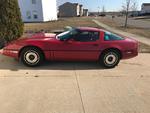




 84 MAP Sensor and Warm Start Issues.
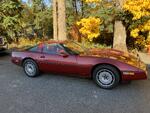














 Oh, if you are running the 85/87 corvette pump, you should not have any issues. !3psi max is all you need for a stock motor, sometimes 12 even works well. GL