





stealth ram custom plenums

Thread Starter
Pro


Joined: Oct 2001
Posts: 682
Likes: 23
From: loxahatchee fla
 Re: stealth ram custom plenums (DiabolicalDave)
DiabolicalDave
yes the holley FUEL RAILs and BASE work with this and if you have the base and fuel rails you can just bolt it on. I should have the base and plenum available as a kit fairly soon Ill post when I can, and the combo price.
CorvetteZ51Racer
while I don,t have flow speed data Ive always tried for 320fps intake flow air speeds at 500rpm past peak hp and a minimum of 200 fps at peak torque on street engines.
BTW FOR THOSE OF YOU WHO DON,T KNOW WHAT WE ARE TALKING ABOUT!
ok after looking into this for several years heres what Ive found ITS NOT AN EXACT SCIENCE but..YOU CAN GET CLOSE ON YOUR EDUCATED ESTIMATES and YES IM LEAVING A BUNCH OF STUFF LIKE FLAME FRONTS,IGNITION TIMEING,PRESSURE PEAKS, ROD LENGTH,ETC> out of this discussion
(1) volumetric efficiency filling the cylinders and the resulting pressure pulse pushing the piston down into the cylinder, if graphed follows the engines torque curve graph extremely closely, or put another way the efficiency of the cylinders filling and scavaging increases with the rpm level untill a point where theres just not enough [b]TIME to effectively fill the cylinders,</b once that rpm level is reached the TORQUE peaks and altho the total HP may continue to climb for awhile because the NUMBER OF LESS EFFICIENT power stroke increases per second the effectiveness of each individual power stroke effectively falls in power as the cylinder filling time and cylinder burn time gets lower
(2) the pressure produced in the cylinder that depends on the cam timing and RPM level exserts pressure for only about 20-24 degrees of the 720 degrees in the 4-stroke engines repeating cycle and the EFFECTIVE cam timing (VALVES FLOWING AIR)filling the cylinders is limited to about 250 degrees with even a hot cam (less with a stock cam)
(3) displacement and cam timeing plus compression ratio and rod to stroke ratio have an effect on where and when in the intake stroke the max flow rate happends in the port.

(4) now lets look at port size and engine displacement, lets say you have a 350 chevy with a cam that effective flow is in the 230 degree range, (that would be about a 250 degree cam) look here, we see the average 250 degree cam is most efficient at about 5200rpm

so taking a 350 displacement/8= 43.75cid per cylinder, at a max piston speed of 4000 fpm .at 5200 rpm thats 43.3 intake strokes per second, at the probable max engine speed of 6857 rpm thats 57 intake strokes a second thats 1899cid of air at 5200rpm and potential 2493 cid of air at 6857 rpm but remember the valves only effectively open 230 degrees or 32% of the time so the port needs to potentially flow between 5935cid and 7790 cid of air per second, thats between 5935cid and 7790cid flowing past the valve through a port, the calculator say a 2.6sq inch port is the correct size at that displacement and rpm level, now 5935 cid of air flowing past a port 2.6 sq inchs in size is moving at 190cfps (cubic feet per second), at 6875 its moveing at 325 cfps but theres not enough time to fill the cylinders
so as a crude guide your looking too find a port size that keeps the air flow velocity at between 190fps and 325 fps
now lets look at my 383, its about 10% larger so its quite logical to figure the engines port speeds will be 10% higher with same ports or youll need a port that flows 10% more, NOT a 10% BIGGER PORT at that cam timeing and torque peak.
Now in your application with a 190fps-325fps air flow as a target plug your own engines info using the same math and see what port size you get, example lets say we want to build a 468bbc (468 bbc have a 4 "stroke so we have a 6000rpm max (STOCK)engine speed that,s 58.5cid x 8 cylinder displacement ,and with that cam timing about a 4000rpm torque peak, that,s 6088cid per second and 211 cfpm at 4000rpm and 317cfpm at 6000rpm , that suggests 2.66 sq inches-4.0 sq inches at 6000rpm for that 468 bbc
http://www.rbracing-rsr.com/runnertorquecalc.html
if youll look and compare youll see why the 468 engines tend to run better in the mid range rpms with oval port heads
http://www.newcovenant.com/speedcraf...runnerarea.htm
so the bottom line here is your looking for a port that flows about 2.0 sq inchs and 210cfm at 5000rpm and 2.68 sq inches 270cfm at 6857rpm average the two and youll be looking for a port of about 2.3-2.6 square inchs that flows between about 250cfm-270cfm at your cams peak lift because remember the port cant flow enough due to time restrictions at the peak rpm range
[Modified by grumpyvette, 2:43 AM 2/13/2003]
yes the holley FUEL RAILs and BASE work with this and if you have the base and fuel rails you can just bolt it on. I should have the base and plenum available as a kit fairly soon Ill post when I can, and the combo price.
CorvetteZ51Racer
while I don,t have flow speed data Ive always tried for 320fps intake flow air speeds at 500rpm past peak hp and a minimum of 200 fps at peak torque on street engines.
BTW FOR THOSE OF YOU WHO DON,T KNOW WHAT WE ARE TALKING ABOUT!
ok after looking into this for several years heres what Ive found ITS NOT AN EXACT SCIENCE but..YOU CAN GET CLOSE ON YOUR EDUCATED ESTIMATES and YES IM LEAVING A BUNCH OF STUFF LIKE FLAME FRONTS,IGNITION TIMEING,PRESSURE PEAKS, ROD LENGTH,ETC> out of this discussion
(1) volumetric efficiency filling the cylinders and the resulting pressure pulse pushing the piston down into the cylinder, if graphed follows the engines torque curve graph extremely closely, or put another way the efficiency of the cylinders filling and scavaging increases with the rpm level untill a point where theres just not enough [b]TIME to effectively fill the cylinders,</b once that rpm level is reached the TORQUE peaks and altho the total HP may continue to climb for awhile because the NUMBER OF LESS EFFICIENT power stroke increases per second the effectiveness of each individual power stroke effectively falls in power as the cylinder filling time and cylinder burn time gets lower
(2) the pressure produced in the cylinder that depends on the cam timing and RPM level exserts pressure for only about 20-24 degrees of the 720 degrees in the 4-stroke engines repeating cycle and the EFFECTIVE cam timing (VALVES FLOWING AIR)filling the cylinders is limited to about 250 degrees with even a hot cam (less with a stock cam)
(3) displacement and cam timeing plus compression ratio and rod to stroke ratio have an effect on where and when in the intake stroke the max flow rate happends in the port.
(4) now lets look at port size and engine displacement, lets say you have a 350 chevy with a cam that effective flow is in the 230 degree range, (that would be about a 250 degree cam) look here, we see the average 250 degree cam is most efficient at about 5200rpm
so taking a 350 displacement/8= 43.75cid per cylinder, at a max piston speed of 4000 fpm .at 5200 rpm thats 43.3 intake strokes per second, at the probable max engine speed of 6857 rpm thats 57 intake strokes a second thats 1899cid of air at 5200rpm and potential 2493 cid of air at 6857 rpm but remember the valves only effectively open 230 degrees or 32% of the time so the port needs to potentially flow between 5935cid and 7790 cid of air per second, thats between 5935cid and 7790cid flowing past the valve through a port, the calculator say a 2.6sq inch port is the correct size at that displacement and rpm level, now 5935 cid of air flowing past a port 2.6 sq inchs in size is moving at 190cfps (cubic feet per second), at 6875 its moveing at 325 cfps but theres not enough time to fill the cylinders
so as a crude guide your looking too find a port size that keeps the air flow velocity at between 190fps and 325 fps
now lets look at my 383, its about 10% larger so its quite logical to figure the engines port speeds will be 10% higher with same ports or youll need a port that flows 10% more, NOT a 10% BIGGER PORT at that cam timeing and torque peak.
Now in your application with a 190fps-325fps air flow as a target plug your own engines info using the same math and see what port size you get, example lets say we want to build a 468bbc (468 bbc have a 4 "stroke so we have a 6000rpm max (STOCK)engine speed that,s 58.5cid x 8 cylinder displacement ,and with that cam timing about a 4000rpm torque peak, that,s 6088cid per second and 211 cfpm at 4000rpm and 317cfpm at 6000rpm , that suggests 2.66 sq inches-4.0 sq inches at 6000rpm for that 468 bbc
http://www.rbracing-rsr.com/runnertorquecalc.html
if youll look and compare youll see why the 468 engines tend to run better in the mid range rpms with oval port heads
http://www.newcovenant.com/speedcraf...runnerarea.htm
so the bottom line here is your looking for a port that flows about 2.0 sq inchs and 210cfm at 5000rpm and 2.68 sq inches 270cfm at 6857rpm average the two and youll be looking for a port of about 2.3-2.6 square inchs that flows between about 250cfm-270cfm at your cams peak lift because remember the port cant flow enough due to time restrictions at the peak rpm range
[Modified by grumpyvette, 2:43 AM 2/13/2003]

Racer

Joined: Oct 2001
Posts: 311
Likes: 2
From: Roseburg OR
Re: stealth ram custom plenums (grumpyvette)
I'm interested. can you send me info in when you are producing these. In case I miss the post later. The price of the superram and mini ram is just too high for me to justify with my other commitments . hawmanai@yahoo.com

Team Owner

Joined: May 2002
Posts: 24,337
Likes: 25
From: San Diego , CA Double Yellow DirtBags 1985..Z51..6-speed
Re: stealth ram custom plenums
Have I ever told you I love you guys? :chevy
You don't learn this stuff in college... at least not in the first four years. :nonod: The problem is, the guys doing this research aren't wasting their precious time teaching undergrads.
Do you guys (grumpyvette, Z51Racer) have any books you'd recommend, or some other source I could dig into in my spare time? See ya.. gotta read up on these website now. :cheers:
[Modified by CentralCoaster, 1:32 AM 2/13/2003]
You don't learn this stuff in college... at least not in the first four years. :nonod: The problem is, the guys doing this research aren't wasting their precious time teaching undergrads.
Do you guys (grumpyvette, Z51Racer) have any books you'd recommend, or some other source I could dig into in my spare time? See ya.. gotta read up on these website now. :cheers:
[Modified by CentralCoaster, 1:32 AM 2/13/2003]

Drifting


Joined: Dec 2002
Posts: 1,861
Likes: 4
From: Houston TX
Re: stealth ram custom plenums (CentralCoaster)
Do you guys (grumpyvette, Z51Racer) have any books you'd recommend, or some other source I could dig into in my spare time? See ya.. gotta read up on these website now. :cheers:

Melting Slicks


Joined: Oct 2000
Posts: 2,158
Likes: 9
From: N.E. WA
Re: stealth ram custom plenums (CorvetteZ51Racer)
I would love to see some dyno numbers with know head, and cam combo's.
1) Stock L98 vette with Stealth
2) Maybe a 219 and ported heads
3) How about a Hot Cam and ported heads (or maybe 190 195 AFR's)
4) Something fairly big to check max power. CC306 or bigger
5) Stroked engines
Ok maybe I'm getting ahead of the game. I am sure they're coming. I've got a car that needs a manifold if you need a test bed! :D
Keep up the good work, I'm sure many will have interest.
1) Stock L98 vette with Stealth
2) Maybe a 219 and ported heads
3) How about a Hot Cam and ported heads (or maybe 190 195 AFR's)
4) Something fairly big to check max power. CC306 or bigger
5) Stroked engines
Ok maybe I'm getting ahead of the game. I am sure they're coming. I've got a car that needs a manifold if you need a test bed! :D
Keep up the good work, I'm sure many will have interest.
Corvette Stories
The Best of Corvette for Corvette Enthusiasts

5 Best & 5 Worst Corvette Daily Drivers
Joe Kucinski
The Headlights of Every Corvette Generation Explained
Joe Kucinski
5 Best & 5 Most Overrated Corvette Track Packages of All Time!
Joe Kucinski
Every 2027 Corvette Engine Explained
Joe Kucinski
Designer Imagines A Corvette That Looks More Like a Corvette Than the Corvette
Verdad Gallardo
10 Ugly Corvettes That We Still Kinda Love
Joe Kucinski
Top 10 Most Expensive Corvettes Ever Sold on Bring A Trailer
Brett Foote
10 Things Every Corvette Owner Needs (2026 Edition)
Michael S. Palmer
8 Most "Only Corvette Owners Understand" Quirks and Problems
Pouria Savadkouei
Thread Starter
Pro
Joined: Oct 2001
Posts: 682
Likes: 23
From: loxahatchee fla
Re: stealth ram custom plenums (ANTI VENOM)
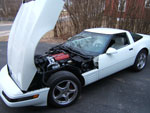
a HOLLEY STEALTH RAM offers outstanding hp potential far exceeding a standard TPI intake but its about 1/2" too tall to fit under a stock C-4 corvette hood,so I built and tested SEVERAL custom PLENUMs heres the FINAL PROTO-TYPE THAT DOES FIT UNDER A C-4 CORVETTE HOOD
HERES THE CUSTOM PLENUM [/b]
.
.

HERES THE STOCK STEALTH RAM ALMOST 1.1 " taller[/color]
.
.

the custom plenums that allow a standard HOLLEY STEALTH RAM base to be used under a stock L98 hood should be available early next week, Ill have them put some on E-bay from the first production run thats being built now
these will work great with a supercharger also because they are all welded and internally reinforced to handle boost better than the stock TPI or removable top plenum,remember at even 6lbs of boost that plenum has well over 252 sq inches of surface area, (that would be 1500 pounds of force potentially causeing leaks) thats one of the reasons it took 9 proto-types and $4500 in testing to get it correct
(notice the production model is much better/smooth finnished than the proto-type dyno test version)
[Modified by grumpyvette, 4:05 PM 2/22/2003]
Le Mans Master


Joined: Apr 2000
Posts: 6,341
Likes: 1
From: Shelton CT
Re: stealth ram custom plenums (grumpyvette)
Did you guys do any actual testing to stock and non stock and combination cars? or just slapped a stock 'like' plenum on top of the holley intake??
Thread Starter
Pro
Joined: Oct 2001
Posts: 682
Likes: 23
From: loxahatchee fla
Re: stealth ram custom plenums (MrNuke)
yes it has been quite extensively flow and road tested on my 383 corvette, for flow, fuel distribution,throttle responce and hp, (with and without a nitrous plate) while the hp is meaningless because it was tested on a modified engine, I can tell you that it runs almost identically to the factory HOLLEY STEALTH RAM plenum
Thread Starter
Pro
Joined: Oct 2001
Posts: 682
Likes: 23
From: loxahatchee fla
Re: stealth ram custom plenums (grumpyvette)
look at your options
a super ram at JEGS costs $1316 (base ,runners,plenum)plus you need to reuse your old fuel rails, if you only buy the runners and plenum its still $779 but if you do that much of the super rams potential air flow improvement is lost
a mini ram costs about $1100 with fuel rails and has a narrow torque range
a complete HOLLEY STEALTH RAM WITH FUEL RAILS CAN BE PURCHASED FOR $480+ $250 for a custom plenum and your still at only about $730 with a intake system that out flows both http://www.thunderracing.com/index.c...yid=1125#P2944
[Modified by grumpyvette, 2:49 AM 2/21/2003]
a super ram at JEGS costs $1316 (base ,runners,plenum)plus you need to reuse your old fuel rails, if you only buy the runners and plenum its still $779 but if you do that much of the super rams potential air flow improvement is lost
a mini ram costs about $1100 with fuel rails and has a narrow torque range
a complete HOLLEY STEALTH RAM WITH FUEL RAILS CAN BE PURCHASED FOR $480+ $250 for a custom plenum and your still at only about $730 with a intake system that out flows both http://www.thunderracing.com/index.c...yid=1125#P2944
[Modified by grumpyvette, 2:49 AM 2/21/2003]

Le Mans Master
Joined: Jan 2002
Posts: 5,320
Likes: 4
From: Kyle TX (Because Mojo Made me fill it in)
Re: stealth ram custom plenums (grumpyvette)
not sure if it is the pic or if it is different, but the tb holes look about a 1/2" smaller in diameter than the one on the olley plenum. can you take close pics of both tb holes with a ruler measuring the diameter.
Thread Starter
Pro
Joined: Oct 2001
Posts: 682
Likes: 23
From: loxahatchee fla
Re: stealth ram custom plenums (VetteNoob)
the picture is distorted slightly , the throttle body bores are about 2.25" or 57 mm
the picture of the plenum with the scratched up surface was a proto-type with 2.1" bores or 53mm bores
we did lots of testing to get the air flow correct
HERES THE CUSTOM PLENUM [/b]
.
.
HERES THE STOCK STEALTH RAM ALMOST 1.1 " taller[/color]
.
.
[Modified by grumpyvette, 4:06 PM 2/22/2003]
the picture of the plenum with the scratched up surface was a proto-type with 2.1" bores or 53mm bores
we did lots of testing to get the air flow correct
HERES THE CUSTOM PLENUM [/b]
.
.
HERES THE STOCK STEALTH RAM ALMOST 1.1 " taller[/color]
.
.
[Modified by grumpyvette, 4:06 PM 2/22/2003]

Racer
Joined: Jan 2002
Posts: 337
Likes: 0
From: Southern California
Re: stealth ram custom plenums (CentralCoaster)
Just a reply about your question on good books to read. Heywood's book "Internal Combustion Engine Fundamentals" is great if you want a lot of theory, but if you want to balance it with some empirical data (practical application) then you might also want to check out a 2-volume set by Taylor entitled "The Internal Combustion Engine in Theory and Practice". Neither are cheap but many consider these two to be THE sources for engine theory so I guess you get what you pay for.
Combined they should give you something to read for a day or two..... :)
:seeya
Combined they should give you something to read for a day or two..... :)
:seeya
Racer
Joined: Jan 2002
Posts: 337
Likes: 0
From: Southern California
Re: stealth ram custom plenums (grumpyvette)
Looks like you've done a lot of work on this plenum, congratulations! It'll be interesting to see if this plenum will get a reputation for lots of low end torque (like the SuperRam) or high rpm horsepower (like the Miniram). Who knows, maybe it'll even be the best of both worlds where it'll have the better personalities of both without the installation problems of the SR and without the poor air distribution front/back that some MR tests have shown.
I don't know if you plan on doing sophisticated engine testing beyond seat of the pants testing, but it would be interesting to map the A/F ratios of each cylinder from idle to say, 7,000 rpm on a 350 and a 383 SBC. I know, I know, it's only time and money..... :D
One suggestion though, you might want to consider making the throttle bores 58mm instead of 57mm. I think that would appeal a lot more to the folks that are planning on using a 58mm throttle body. No sense in making it a "restrictor plate" engine intake. :eek:
:seeya
I don't know if you plan on doing sophisticated engine testing beyond seat of the pants testing, but it would be interesting to map the A/F ratios of each cylinder from idle to say, 7,000 rpm on a 350 and a 383 SBC. I know, I know, it's only time and money..... :D
One suggestion though, you might want to consider making the throttle bores 58mm instead of 57mm. I think that would appeal a lot more to the folks that are planning on using a 58mm throttle body. No sense in making it a "restrictor plate" engine intake. :eek:
:seeya
Team Owner
Joined: May 2002
Posts: 24,337
Likes: 25
From: San Diego , CA Double Yellow DirtBags 1985..Z51..6-speed
Re: stealth ram custom plenums (C4racing)
Just a reply about your question on good books to read. Heywood's book "Internal Combustion Engine Fundamentals" is great if you want a lot of theory, but if you want to balance it with some empirical data (practical application) then you might also want to check out a 2-volume set by Taylor entitled "The Internal Combustion Engine in Theory and Practice". Neither are cheap but many consider these two to be THE sources for engine theory so I guess you get what you pay for.
Combined they should give you something to read for a day or two..... :)
:seeya
Combined they should give you something to read for a day or two..... :)
:seeya