When you click on links to various merchants on this site and make a purchase, this can result in this site earning a commission. Affiliate programs and affiliations include, but are not limited to, the eBay Partner Network.
I've installed centered hood vents (generic Trackspec) and fender vents (Race Louvers)... but I also have the entire Trackspec C4 hood vent ensemble, nothing installed. Here's everything (overkill) for discussion of locations and options:
The Radiator is a Howe Racing custom piece that lays forward, so the Trackspec C4 small horizontal vent would be perfect position (perhaps too far forward for standard radiator position) so I will install that.
This is what I believe to be the setup that works well together, and also thoroughly discussed with ChatGPT on the options as a sanity check. The small front vent should be left out for OEM straignt up or lean back radiator placement, especially with the center pieces behind it.
Other details... the full fender liner is installed (which is a good thing if you can have it)... The OEM liner creates a sealed high-pressure chamber, and since the tire pumps enormous volume into the top of the well, the side venting (with the liner trimmed in this area) should be effective.
If you have to remove the top liner... true for many track and autocross C4's I've noticed... the forward lateral Trackspec vent (ommitted) will help out. Then the vent behind it is a little bit of an issue as it will likely cause cross venting, and a mess aerodynamically.
I'm glad to see I'm not the only one that doesn't hesitate to cut and modify the hood for functional changes!
Nice, i think you've done well.
There were at least three other threads on hood louvers, I thought about piggy backing on them but I didn't want to be critical of any other solutions without wind tunnel test data.
Some general assumptions we can make on aerodynamics for cars based on research and documentation, and common sense:
1. Lift is bad, drag is bad, eliminating lift without excessive drag penalty is beneficial (obviously)
2. The top front 1/4 portion of the hood is a high pressure area, so it's beneficial to have that surface pushing down on the front
3. The radiator exit blast is generally high pressure being fed from the front of the car, further diffused increasing the pressure... and is therefore much higher than above the hood, sort of lifting up the front with pressure exerted to the under side of the hood.
4. The OEM setup for the high pressure blast from the radiator exiting under the car is not beneficial in consideration of the first point.
5. The low pressure area on top of the hood is about the middle half, this is where the greatest pressure differential may be.
6. Isolating/compartmentalizing the radiator blast and tire blast is beneficial in consideration of the first point.
7. Reduction of turbulence and air pressure under the car is beneficial... Increasing the pressure on top of the car is beneficial.
8. The radiator performance is proportional to the pressure differential between the front of the radiator and behind the radiator, this higher the better. Not velocity but pressure.
For a street car, let's say running hot, it's questionable that hood vents are the right direction, as it's possible to get an exhaust leak that contaminates the air ahead of the air intakes below the windshield. If it's over heating on the track (was common on the C5's) the only reasonable fix was heat extraction vents placed to maximize cooling through the radiator. The Aero benefit was secondary.
I myself looked at it primarily for aero benefit, and cooling benefit is secondary, and the forward most small center vent would be the exception. Just my thoughts... for maximum cooling on track I would install all of them for a lay forward radiator (although that's practically nobody)... and without the small forward vent for everyone.
I'm thinking of leaving out the small front center vent anyway. Maybe just the aft side pieces added for now. Thoughts?
I was primarily going for keeping it cool. At a stop and low speed you can see the heat waves coming out of the aft side vents. Also they are placed near the low pressure area so should do a decent job of relieving high pressure up force from under the car.
I was primarily going for keeping it cool. At a stop and low speed you can see the heat waves coming out of the aft side vents. Also they are placed near the low pressure area so should do a decent job of relieving high pressure up force from under the car.
As far as radiator hot air exit goes, it's worthwhile looking at how the GM engineers dealt with the C7 Z06, sealed exit into the hood louvres.
Now it could well be that exiting hot air at the front of the hood is not ideal aerodynamically, but quite often these things are a compromise. Obviously keeping the hot air out of the engine bay, and ultimately out of the underneath of the car, was considered more important.
As far as radiator hot air exit goes, it's worthwhile looking at how the GM engineers dealt with the C7 Z06...
I think that's an excellent arrangement, of course it has significant aero benefits, although I don't think I can pull that off without much trouble. Does that C7 radiator tilt forward? I think it would have to, if the engineers had any sense.
For vent placement... I did the same to tilt top forward which is best to feed a path from the nose intake to the hood vents, but the OEM arrangements are straight up or tilted back. Tilted back feds the bottom of the car well (LT1/4/5). The OEM arrangements would not benefit at all from the Trackspec front grill in my opinion, it's above the airbox and in front of the radiator. Maybe looks but I don't particularly like the looks of that one.
I did this. This is also an exotic muscle carbon fiber hood
i wish my center vents were a little bigger
I am also considering adding a lower front hood vent like you did in the front center of the hood. One question i have is how you did this vent. Isnt there a crease in the center of the hood at that point? How did you straddle it
I think that's an excellent arrangement, of course it has significant aero benefits, although I don't think I can pull that off without much trouble. Does that C7 radiator tilt forward? I think it would have to, if the engineers had any sense.
For vent placement... I did the same to tilt top forward which is best to feed a path from the nose intake to the hood vents, but the OEM arrangements are straight up or tilted back. Tilted back feds the bottom of the car well (LT1/4/5). The OEM arrangements would not benefit at all from the Trackspec front grill in my opinion, it's above the airbox and in front of the radiator. Maybe looks but I don't particularly like the looks of that one.
I did this. This is also an exotic muscle carbon fiber hood
i wish my center vents were a little bigger
I am also considering adding a lower front hood vent like you did in the front center of the hood. One question i have is how you did this vent. Isnt there a crease in the center of the hood at that point? How did you straddle it
That’s nice! I haven’t installed the forward center vent yet, but the center section floats so that the top and bottom rails can contour the hood shape with the crease. With the OEM radiator locations, I doubt that it’s useful for anything though, as stated. Most likely I will sell the three forward pieces of that kit, and install the rear sections.
So when I had my old hood that had a huge hole in it (you've seen it I'm sure), my built 383 would run about 180 degrees, oil was around 200 ish and trans was around 150 ish. On and off highway, didnt matter. I do have a big aluminum radiator, and 2 stacked plate coolers in front of it, one for oil, one for trans. So when id park obviously you could see the heat escape out the hood. When I installed the cowl hood I figured my engine temp would go up a little bit (and I actually wanted it to as the engine seemed to want it). But no... Stayed the exact same.... So this was interesting to me that a big *** hole in hood really had no effect in the cooling of engine at all except cool down was quicker. Yes the cowl hood vents also, but they are not big vents. I just thought that was interesting thats all..
You may have said this already and I missed it. Are you still using the upper wheel wells with the side vents? If you are I'm sure you cut them somehow. If you did cut them can I convince you to post a picture of what you did? I really want a set of these. Mine is just a street car so I don't have any rules to follow. Not looking to reduce heat. Wanting the down force benefit and the looks.
You may have said this already and I missed it. Are you still using the upper wheel wells with the side vents? If you are I'm sure you cut them somehow. If you did cut them can I convince you to post a picture of what you did? I really want a set of these. Mine is just a street car so I don't have any rules to follow. Not looking to reduce heat. Wanting the down force benefit and the looks.
The wheel well is compartmentalized from an aero perspective and retaining the upper enclosure, and venting the high pressure produced by the tire at the top of course, separate from the hood venting. Also venting the aft side of the wheel well to the side, which is closed off to the bottom a little bit. I believe that if the upper shroud is removed, the pressure under the hood increases which means that the cooling decreases and lift increases, and pressure under the car increases… so the theory is sound. If you want to work out some options, ChatGPT is fairly effective, provide it some pictures and details.
also for aero, even though I’m running a front spoiler/dam and not a splitter, the flat floor behind it is important to develop a low pressure zone and also to minimize air from the radiator exit from just spilling under the car.
the aft section of the wheel well vent is trimmed as shown to accommodate
I hve to ask if you were like me-measure it at least six times before I cut lol!!
the center two I had to spend a lot of time measuring and layout as they are not specifically designed for the C4.
The two I installed yesterday, the process was perfect symmetry to the structure so I used the template on the under. Side of the hood, even with the structure, and drilled just two holes to locate with a small 1/16 drill bit and then transferred the template to the outside, and cut the holes with a two inch circular high speed… which is slow but very accurate… only plunged through near the corners, rest just 1/2 way. Retraced with a small air powered reciprocating saw that works fast. Located the vents and used the small 1/16 clicos. Drilled the 1/8 holes through the vent edges sort of like a zipper order to bend-confirm the edges to the hood shape, and added 1/8 clecos as I went, And redrilled the starter ones with 1/8. This works well because the template holes can get you into trouble, drilling 4 holes to start would miss a couple by the time it was all zipped up. For example if you start on each side and converge, it can cause waviness or stress on the vent so that the rivets will come loose.
I think I asked this on another thread. And I'm pretty sure @AZSP33D answered me, but I can't for the life of me find that old thread. And I can't remember your answer. So if I did already ask this I'm sorry.
This my very basic understanding of hood venting. As the car moves down the road air is pulled into the air dam. This air is basically forced through the radiator. This causes a high pressure area of hot air under the hood that doesn't have a good exit path. This pressure lifts the car from the underside of the hood. The benefit of hood vents is to give that air a place to go. To escape after it passes through the radiator and out the hood vent. This stops the lifting effect and removes heat faster.
So this is my question. To accomplish the same thing couldn't you remove the cowl seal that's below the wipers? This would make an opening that would allow the air to escape. Other than looks I'm not understanding what a vent does that removing that seal wouldn't also do. Wouldn't this give you the same venting advantages as a cowl hood?
*edit* I found that thread here. After re-reading it I don't understand. I don't see how a hood vent would do anything different than a cowl hood or by just removing that seal. I'm sure I'm looking at it wrong though.




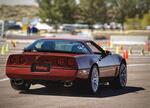

 Hood Vent Placement Discussion