When you click on links to various merchants on this site and make a purchase, this can result in this site earning a commission. Affiliate programs and affiliations include, but are not limited to, the eBay Partner Network.
So just wondering if this is normal or not, my fellow winter drivers can chip in. My 85 heater absolutely sucks if I'm moving. In traffic it works great, but as soon as I'm on the highway about all it does is keep you from freezing to death. I've changed the heater core out since the old one leaked, but it works just as terribly as it did before anyways. I do have a 180 thermostat instead of a 195, but I can't imagine 15 degrees making that big of a difference.
Its not the end of the world since I have a newer car that has heated seats and a heater that could melt satan, but itd be nice to be able to take the vette out sometimes when its at freezing temperatures and not have to bundle up like I'm outside.
There is a heater hose into and out of the heater core. Under the hood, when the car is warmed up and the heater is set to full Hot, how much 'heat' do you feel heat in both hoses?
The c4's have a great heater, should be unbearably hot in no time even with 180 thermostat. Check your coolant valve to heater is opening fully, otherwise check your heater core or hoses are not blocked with corrosion blocking flow.
Had an 85 for over 20 years, the heater always worked great. Also check the heater damper valve works under dash and adjustment cable screw has not come loose or slipped
I'll check the valve, I had to cut the hoses off when I did the heater core so I can't imagine thats the problem. The weird thing to me is that it works fine when I'm sitting in traffic and it heats up a bit, its just when I'm moving that it sucks. I know the temperature control works fine, getting that thing back on when I did the heater core was a real pain in the ***.
That valve is not really needed. You could run hoses instead. The only downside is that might get slightly warmer "cold" in the summer. The air-door for hot/cold will bypass the heater core, but it is still in the same enclosure. With the valve you also bypass the water to avoid heating the heater core.
This is for 1984 but I think the air flow is identical.
It is only at "max cold" the water is diverted from the heater core. Anything higher and it is a mix of heated and non heated air.
As others have already said, C-4's have great heat. In my previous 91 and current 95 it's unusual for me to actually have to use heater.. Once the engine was warm the interior stayed very comfortable. Normally the only thing I'd have to run was the defroster during certain weather conditions.
How stable is the coolant temperature on the cluster between traffic low speed and highway driving? It shouldn't ever be any lower than 1-2 degrees above the thermostat rating. Thermostats regulate minimum temperature. If the temp is dropping lower than thermostat rating at highway speed it seems to me that the thermostat is not closing fully or properly. (Or has holes drilled in it to facilitate filling the cooling system.)
In traffic, when the car is not moving there is no airflow through the radiator. Cooling airflow is provided by the cooling fan. When the a/c is not on, the cooling fan doesn't turn on until about 220F. This is 40F higher than the thermostat controlled minimum. This delta influences heater output. A lot!
If the temperature is "on the thermostat" (not below) at highway speed, investigate the heater control valve. If it is not fully opening, some of the flow is being bypassed, and not going through the core. If the core is not receiving full flow, heater output may be adequate with 220F coolant, but not with 180F. If coolant temp falls below 180 at highway speed, the thermostat is not closing.
If the heater valve is full-open, no bypass, the coolant temperature is "on the thermostat", and heater output is not adequate for the conditions, you have to change the thermostat. The delta between low speed and high speed coolant temps will be less as well.
How stable is the coolant temperature on the cluster between traffic low speed and highway driving? It shouldn't ever be any lower than 1-2 degrees above the thermostat rating. Thermostats regulate minimum temperature. If the temp is dropping lower than thermostat rating at highway speed it seems to me that the thermostat is not closing fully or properly. (Or has holes drilled in it to facilitate filling the cooling system.)
In traffic, when the car is not moving there is no airflow through the radiator. Cooling airflow is provided by the cooling fan. When the a/c is not on, the cooling fan doesn't turn on until about 220F. This is 40F higher than the thermostat controlled minimum. This delta influences heater output. A lot!
If the temperature is "on the thermostat" (not below) at highway speed, investigate the heater control valve. If it is not fully opening, some of the flow is being bypassed, and not going through the core. If the core is not receiving full flow, heater output may be adequate with 220F coolant, but not with 180F. If coolant temp falls below 180 at highway speed, the thermostat is not closing.
If the heater valve is full-open, no bypass, the coolant temperature is "on the thermostat", and heater output is not adequate for the conditions, you have to change the thermostat. The delta between low speed and high speed coolant temps will be less as well.
It gets a little under on the highway but not much. Floats around like 170-174. Mind you thats after it opens, I can see the temperature drop once it does. But its usually not getting too hot in traffic either given its 30 degrees outside, usually no more than like 190. I long ago changed my fans to come on at 200. I'll probably just bypass the valve this weekend and see what happens.
IR thermometer on the heater core in/out pipes check at idle and while holding 2K rpm or thereabouts might rule that out.
Those heater valves can do weird things. If the core is getting hot you have something wonky going on with the blend door I imagine.
Ok took a while since I needed to fix my gauge cluster again but I got back around to it. Pulled the heater valve, its not stuck and blowing through the coolant lines was easy. Ditto for the heater core. I hooked it all back up and it works just as terribly as before. I'm thinking maybe I have a different definition of good heat because it does work, just badly.
Blend doors are also ok. Did you know its really cold when its 28 degrees? I guess MAYBE they're not shutting all the way, but it certainly moves. For now I guess I'll park it for the winter and drive my 2010 GTI which has an excellent heater and heated seats to boot.
If engine is warm then it should be able to blow more hot air than needed regardless of outside tempereature. My 84 has great heat, even in freezing conditions. And yes, we have winter here in Sweden.
Pulled the heater valve, its not stuck and blowing through the coolant lines was easy.
Did you put your finger over the core side of the same inlet tube and verify that the bypass was fully-closed? I.e., each tube is fully-isolated from the other when the valve is open?
Vacuum leak? Not one big enough to cause engine running issues, but one in the climate system tubing or climate control head.
You might have proper vacuum for the valve to open when the throttle blade is closed at idle or stop and go traffic. Once you put the engine under constant load and keep the throttle blade cracked you lose vacuum control.
This is a known problem with a lot of vacuum controlled climate systems in vehicles as they age. With Fords, I have rebuillt and swapped in new o-rings in several climate control heads over the years to fix these types of issues.
An easy way to check would be to remove the valve and insert a splice tube on the heater core hose as suggested. If that doesn't fix the problem, I would make quadruple sure the system is totally filled with coolant and there are no airlocks. If certain it is totally filled, then start looking into whether the water pump is bad or weak.
Did you put your finger over the core side of the same inlet tube and verify that the bypass was fully-closed? I.e., each tube is fully-isolated from the other when the valve is open?
Ok I didn't think about it from that angle. I had entirely pulled the valve+piping out with the intent of running a bypass hose, but the parts store was out of the size I needed. So I just blew through the core and both pipes on the valve to verify they weren't blocked and checked the movement of the heater valve, then reassembled. I'll order up some hose and maybe its failed between the pipes.
The heater valve on my 86 worked perfectly fine cold and when off the car, when up to temp it would stick closed every time.
Odd failure mode, the unreasonably expensive replacement that I could have cobbled something together for less
money fixed it right up. Was driving around in low 30's temps today and had plenty of heat with the auto climate
set to heater/75f auto.



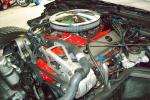


 early c4 heater performance