




Having an overheating issue with 85 c4

Thread Starter
2nd Gear

Joined: Dec 2025
Posts: 2
Likes: 0
 Having an overheating issue with 85 c4
I’ve replaced the relays, the temp switch, radiator and the thermostat. When I’m on the highway I’m about 190° but when I get to city roads and lights/stops I watch the temp climb and it rose to 250 (yikes!) any suggestions? I’ve tested both my fans and they both work
edit: prior my fans wernt turning on at all until I replaced the sensor on the passenger side of the engine, my fans are kicking on later at about 243° and shutting off about 232-236° and that was when it was just idling in the driveway
edit: prior my fans wernt turning on at all until I replaced the sensor on the passenger side of the engine, my fans are kicking on later at about 243° and shutting off about 232-236° and that was when it was just idling in the driveway
Last edited by SharkSeal; Dec 4, 2025 at 07:16 PM.
Thread Starter
2nd Gear
Joined: Dec 2025
Posts: 2
Likes: 0
Melting Slicks


Joined: May 2019
Posts: 3,217
Likes: 1,392
From: Mid-Atlantic
2025 C4 of the Year Finalist - Unmodified
2023 C4 of the Year Finalist - Unmodified
2022 C4 of the Year Finalist - Unmodified
2021 C4 of the Year - Unmodified Finalist
Getting all of the air out of the coolant system can be a long and tedious process and it's often the cause of legitimate overheating.
I find that the best way to fill coolant is to remove the thermostat and pour it directly into the block.
These cars are designed to run hot, I'd add. A lot of times they're not actually overheating, regardless of what the gauge says.
I find that the best way to fill coolant is to remove the thermostat and pour it directly into the block.
These cars are designed to run hot, I'd add. A lot of times they're not actually overheating, regardless of what the gauge says.

Burning Brakes


Joined: Aug 2008
Posts: 866
Likes: 220
From: Tampa, FL
I've dealt with a lot of overheating issues over the years on really junk project cars I've bought, and there's at least a dozen different reasons for it.
My personal opinion though, if the car otherwise runs well (and you aren't losing coolant), and it's not leaking anywhere (like not from the weep hole in the water pump), then I would flush the system. Have you ever changed out the coolant since you've owned the car?
There's a "petcock" / valve on the bottom of the radiator that you can use to drain the entire radiator. I would drain a little bit, just a little bit, and then pour in some radiator flush. NOT coolant seal... but radiator FLUSH. This will get rid of any scale or gelatinous stuff that's formed along the inside of the aluminum and everywhere else in the cooling system. Run it for a few miles like that (follow the directions).
Then, I would completely drain the entire cooling system (once the car has cooled off). I would do this, not through the valve in the radiator, but actually by removing the lower radiator hose... that way you can get any gunk out. Have a catch pan underneath it of course, and let it all drain out. It should be almost brown is my guess. You can also release the valve since it usually sits a little bit lower and will get the last bit out.
At this point, you can probably replace the lower radiator hose anyway since you've removed it... they're cheap. Make sure you use new clamps and tighten them down.
Next, I'd remove the thermostat housing neck, and I'd replace the thermostat with a 180 degree thermostat. I get a lot of **** for this, but I know I'm right. Our engines were designed with a 180 degree thermostat in mind. I fight with people on this all the time. People get so upset when you recommend a cooler thermostat, and they say things like... the engine won't fully warm up, or some nonsense.
Back in the 70s, all cars used a 180 degree thermostat. This was normal. A 160 degree thermostat was normal for cars in the 1950s. Engineers determined that 180 degrees was the optimal temperature for combustion efficiency and engine life. At some point in the late 70s / early 1980s (1980 or 81 I believe), the EPA mandated 195 degree thermostats in all cars. They did this for no other reason than to improve the efficiency of the 1st gen catalytic converters (which were ****... the charcoal pellet style ones).
So, your engine can ABSOLUTELY use a 180 degree thermostat, and it will not only run better, but even give you a bit more power. Our small block chevy motors, particularly the pre-1986 engines, are basically exactly the same as they've been since the 60s and 70s. Many of the same pistons that were offered in the 70s, are the same pistons that are offered today, including the same Hastings ring part numbers, etc. So, the idea that running 15 degrees cooler will somehow destroy your engine because it will never fully warm up, is totally preposterous. The other argument people like to give is that the computer expects a 195 degree thermostat, and therefore won't run properly or won't go into closed loop mode. Loop mode is a function of the O2 sensor, which... as soon as it warms up, begins providing input to the ECM and it changes over... usually around 122 degrees. There are even kits to convert the older non-heated O2 sensor cars to the newer 4-wire (1-wire compatible) O2 sensors (which I highly recommend). Heated O2 Sensor Retro Kit Early 1 Wire GM
Basically, 1 wire plugs in the same, and then you get two grounds, one for the heater, and one for the 1-wire, which now grounds via a wire in addition to the block, and of course, a positive for the O2 sensor heater. Anyway, the ECM also has an Intake Air Temperature sensor, as well as a CTS so it always knows what the temperature of the engine is, and appropriately adjusts the fuel map.
I'm only going nuts on this because there's always some dude that loses their mind when someone suggests a cooler thermostat. 180 degrees will do your car a world of good.
Anyway... back to your issue. With everything buttoned up, minus the thermostat neck, I would begin re-filling coolant through the thermostat neck. I highly recommend you use something like this:
Redline Water Wetter - or
Rislone Hyper Cool -
Either one will work really well, and is guaranteed to help transfer heat quicker and faster. You only need one bottle. For your coolant, make sure you get the green coolant that's meant for your car. If you only have an Advance Auto Parts store near-by, they seal Peak Antifreeze, and they only sell it as being for "Early Asian Vehicles." I don't know why they don't list it for North American vehicles... I guess they assume 80s GM cars aren't around anymore, but this is the one you want to use.
"Top off" the coolant in the thermostat housing until it's full or starts pouring out of the other side. Re-install everything WITHOUT a thermostat... FIRST... you do this to help burp the system. With everything bolted together. Keep the overflow tank full and drive it around for a bit. Just easy, you don't want to beat on it in case you have a lot of air in the system. As long as you filled it enough, it should self-burp. But keep an eye on the temperature gauge for spikes.
The first few minutes of running, you may want to remove the radiator cap (before the car really warms up) and see if it's low, and then fill it again. Either way, drive it around a bit and keep checking the overflow and the temperature gauge. Don't open the radiator once the car starts to warm up (obviously).
Let the car cool, remove the thermostat housing, and install a 180 degree thermostat, and then put it back together, and re-top-off the overflow tank, etc. You should be good to go...
My personal opinion though, if the car otherwise runs well (and you aren't losing coolant), and it's not leaking anywhere (like not from the weep hole in the water pump), then I would flush the system. Have you ever changed out the coolant since you've owned the car?
There's a "petcock" / valve on the bottom of the radiator that you can use to drain the entire radiator. I would drain a little bit, just a little bit, and then pour in some radiator flush. NOT coolant seal... but radiator FLUSH. This will get rid of any scale or gelatinous stuff that's formed along the inside of the aluminum and everywhere else in the cooling system. Run it for a few miles like that (follow the directions).
Then, I would completely drain the entire cooling system (once the car has cooled off). I would do this, not through the valve in the radiator, but actually by removing the lower radiator hose... that way you can get any gunk out. Have a catch pan underneath it of course, and let it all drain out. It should be almost brown is my guess. You can also release the valve since it usually sits a little bit lower and will get the last bit out.
At this point, you can probably replace the lower radiator hose anyway since you've removed it... they're cheap. Make sure you use new clamps and tighten them down.
Next, I'd remove the thermostat housing neck, and I'd replace the thermostat with a 180 degree thermostat. I get a lot of **** for this, but I know I'm right. Our engines were designed with a 180 degree thermostat in mind. I fight with people on this all the time. People get so upset when you recommend a cooler thermostat, and they say things like... the engine won't fully warm up, or some nonsense.
Back in the 70s, all cars used a 180 degree thermostat. This was normal. A 160 degree thermostat was normal for cars in the 1950s. Engineers determined that 180 degrees was the optimal temperature for combustion efficiency and engine life. At some point in the late 70s / early 1980s (1980 or 81 I believe), the EPA mandated 195 degree thermostats in all cars. They did this for no other reason than to improve the efficiency of the 1st gen catalytic converters (which were ****... the charcoal pellet style ones).
So, your engine can ABSOLUTELY use a 180 degree thermostat, and it will not only run better, but even give you a bit more power. Our small block chevy motors, particularly the pre-1986 engines, are basically exactly the same as they've been since the 60s and 70s. Many of the same pistons that were offered in the 70s, are the same pistons that are offered today, including the same Hastings ring part numbers, etc. So, the idea that running 15 degrees cooler will somehow destroy your engine because it will never fully warm up, is totally preposterous. The other argument people like to give is that the computer expects a 195 degree thermostat, and therefore won't run properly or won't go into closed loop mode. Loop mode is a function of the O2 sensor, which... as soon as it warms up, begins providing input to the ECM and it changes over... usually around 122 degrees. There are even kits to convert the older non-heated O2 sensor cars to the newer 4-wire (1-wire compatible) O2 sensors (which I highly recommend). Heated O2 Sensor Retro Kit Early 1 Wire GM
Basically, 1 wire plugs in the same, and then you get two grounds, one for the heater, and one for the 1-wire, which now grounds via a wire in addition to the block, and of course, a positive for the O2 sensor heater. Anyway, the ECM also has an Intake Air Temperature sensor, as well as a CTS so it always knows what the temperature of the engine is, and appropriately adjusts the fuel map.
I'm only going nuts on this because there's always some dude that loses their mind when someone suggests a cooler thermostat. 180 degrees will do your car a world of good.
Anyway... back to your issue. With everything buttoned up, minus the thermostat neck, I would begin re-filling coolant through the thermostat neck. I highly recommend you use something like this:
Redline Water Wetter - or
Rislone Hyper Cool -
Either one will work really well, and is guaranteed to help transfer heat quicker and faster. You only need one bottle. For your coolant, make sure you get the green coolant that's meant for your car. If you only have an Advance Auto Parts store near-by, they seal Peak Antifreeze, and they only sell it as being for "Early Asian Vehicles." I don't know why they don't list it for North American vehicles... I guess they assume 80s GM cars aren't around anymore, but this is the one you want to use.
"Top off" the coolant in the thermostat housing until it's full or starts pouring out of the other side. Re-install everything WITHOUT a thermostat... FIRST... you do this to help burp the system. With everything bolted together. Keep the overflow tank full and drive it around for a bit. Just easy, you don't want to beat on it in case you have a lot of air in the system. As long as you filled it enough, it should self-burp. But keep an eye on the temperature gauge for spikes.
The first few minutes of running, you may want to remove the radiator cap (before the car really warms up) and see if it's low, and then fill it again. Either way, drive it around a bit and keep checking the overflow and the temperature gauge. Don't open the radiator once the car starts to warm up (obviously).
Let the car cool, remove the thermostat housing, and install a 180 degree thermostat, and then put it back together, and re-top-off the overflow tank, etc. You should be good to go...

Team Owner


Joined: Jan 2003
Posts: 20,306
Likes: 242
From: Summerland B.C. Canada
The sensor in passenger side head is actually a switch for the booster fan, which only comes on at high temperatures. Your main fan is controlled by ECM from input of sensor in front intake base.
Does your main fan come on if you jump terminal A and B on the ALCL connector with ignition in run ?

Burning Brakes
Joined: Aug 2008
Posts: 866
Likes: 220
From: Tampa, FL
Just want to add to what @AGENT 86 said. If you have to replace any of these sensors, do not add any Teflon tape or PTFE sealer to them. They should already come with all of the anti-leak sealer they need on the threads. Adding Teflon tape and PTFE sealer paste to the threads can actually prevent the grounds from working properly. Never thought I'd say this, but I had an engine where I went through three sensors thinking they were all bad, and then thinking it was a wiring issue, only to realize I was coating the threads and they weren't grounding out like they were supposed to.
Team Owner
Joined: Jan 2003
Posts: 20,306
Likes: 242
From: Summerland B.C. Canada
Just curious if this is a new ride for you.
If it is, it’s possible the previous owner may have tied the main fan into the same switch that runs booster fan and swapped out switch with a lower temp switch, that eventually failed and you replaced with a stock temp switch.
If it is, it’s possible the previous owner may have tied the main fan into the same switch that runs booster fan and swapped out switch with a lower temp switch, that eventually failed and you replaced with a stock temp switch.
Corvette Stories
The Best of Corvette for Corvette Enthusiasts

How Much Horsepower Every Corvette Engine "LOST" in 1972
Joe Kucinski
Top 10 DOs and DON'Ts for Protecting Your Convertible Top!
Michael S. Palmer
Top 10 Most Explosive Corvettes Ever Made: Power-to-Weight Ratio Ranked!
Joe Kucinski
150 hp to 1,250 hp: Every Corvette Generation Compared by the Specs That Matter
Joe Kucinski
8 Coolest Corvette Pace Cars (and Replicas) of All Time
Verdad Gallardo
Top 10 Corvette Engines RANKED by Peak Torque (70+ Years of Muscle!)
Joe Kucinski
Corvette ZR1X Will Be Pacing the Indy 500, And Could Probably Race, Too!
Verdad Gallardo
Top 10 Corvettes Coming to Mecum Indy 2026!
Brett Foote
Top 10 C9 Corvette MUST-HAVES to Fix These C8 Generation Flaws!
Michael S. Palmer
Melting Slicks
Joined: May 2019
Posts: 3,217
Likes: 1,392
From: Mid-Atlantic
2025 C4 of the Year Finalist - Unmodified
2023 C4 of the Year Finalist - Unmodified
2022 C4 of the Year Finalist - Unmodified
2021 C4 of the Year - Unmodified Finalist
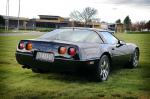
Eventually I'll settle on which one I want to run all of the time. Just haven't decided yet.


Safety Car

Joined: Aug 2009
Posts: 3,751
Likes: 276
From: Melbourne, Victoria, Australia
 Overheat the engine once and the temp sensor can be screwed, the ecm temp sensor is different to gauge temp sensor.
 There are cheap infra red temp guns you can point to top radiator hose or radiator. to confirm the dash gauge is showing roughly the same.
I have had this happen to my 85 blew a hose, stopped the car quickly replaced the hose with spare did not even get too hot but the dash gauge sensor showed way higher than actual. They are cheap easy to replace, otherwise check the area between radiator and a/c condenser. Our C4s are highway trash collectors, leaves plastic bags all go into the front airdam up over a/c condenser and get trapped between that space. That shows up when stopped in traffic raising the temperature above normal, the fans don't draw the same volume of airflow of air going through radiator while driving along, fans while car is stopped also tend to cause air to recirculate some hot air will get drawn back around to front car depending how good the sealing is around radiator ducts and deflector condition...
Good luck, just remember normal ecm wants to keep the coolant around 220-230 so always a good idea to fit a lower temp fan switch or adjustable controller. To keep the car running cooler say 180-200, however on hot days in traffic these cars coolant temps will be up quite a bit.
Larger 2 row radiators (2x the standard 1 inch rows will dramatically improve cooling capacity and heat soak ability in heavy stop start traffic.
Pro


Joined: Jul 2023
Posts: 535
Likes: 279
From: Marysville WA
I've dealt with a lot of overheating issues over the years on really junk project cars I've bought, and there's at least a dozen different reasons for it.
My personal opinion though, if the car otherwise runs well (and you aren't losing coolant), and it's not leaking anywhere (like not from the weep hole in the water pump), then I would flush the system. Have you ever changed out the coolant since you've owned the car?
There's a "petcock" / valve on the bottom of the radiator that you can use to drain the entire radiator. I would drain a little bit, just a little bit, and then pour in some radiator flush. NOT coolant seal... but radiator FLUSH. This will get rid of any scale or gelatinous stuff that's formed along the inside of the aluminum and everywhere else in the cooling system. Run it for a few miles like that (follow the directions).
Then, I would completely drain the entire cooling system (once the car has cooled off). I would do this, not through the valve in the radiator, but actually by removing the lower radiator hose... that way you can get any gunk out. Have a catch pan underneath it of course, and let it all drain out. It should be almost brown is my guess. You can also release the valve since it usually sits a little bit lower and will get the last bit out.
At this point, you can probably replace the lower radiator hose anyway since you've removed it... they're cheap. Make sure you use new clamps and tighten them down.
Next, I'd remove the thermostat housing neck, and I'd replace the thermostat with a 180 degree thermostat. I get a lot of **** for this, but I know I'm right. Our engines were designed with a 180 degree thermostat in mind. I fight with people on this all the time. People get so upset when you recommend a cooler thermostat, and they say things like... the engine won't fully warm up, or some nonsense.
Back in the 70s, all cars used a 180 degree thermostat. This was normal. A 160 degree thermostat was normal for cars in the 1950s. Engineers determined that 180 degrees was the optimal temperature for combustion efficiency and engine life. At some point in the late 70s / early 1980s (1980 or 81 I believe), the EPA mandated 195 degree thermostats in all cars. They did this for no other reason than to improve the efficiency of the 1st gen catalytic converters (which were ****... the charcoal pellet style ones).
So, your engine can ABSOLUTELY use a 180 degree thermostat, and it will not only run better, but even give you a bit more power. Our small block chevy motors, particularly the pre-1986 engines, are basically exactly the same as they've been since the 60s and 70s. Many of the same pistons that were offered in the 70s, are the same pistons that are offered today, including the same Hastings ring part numbers, etc. So, the idea that running 15 degrees cooler will somehow destroy your engine because it will never fully warm up, is totally preposterous. The other argument people like to give is that the computer expects a 195 degree thermostat, and therefore won't run properly or won't go into closed loop mode. Loop mode is a function of the O2 sensor, which... as soon as it warms up, begins providing input to the ECM and it changes over... usually around 122 degrees. There are even kits to convert the older non-heated O2 sensor cars to the newer 4-wire (1-wire compatible) O2 sensors (which I highly recommend). Heated O2 Sensor Retro Kit Early 1 Wire GM
Basically, 1 wire plugs in the same, and then you get two grounds, one for the heater, and one for the 1-wire, which now grounds via a wire in addition to the block, and of course, a positive for the O2 sensor heater. Anyway, the ECM also has an Intake Air Temperature sensor, as well as a CTS so it always knows what the temperature of the engine is, and appropriately adjusts the fuel map.
I'm only going nuts on this because there's always some dude that loses their mind when someone suggests a cooler thermostat. 180 degrees will do your car a world of good.
Anyway... back to your issue. With everything buttoned up, minus the thermostat neck, I would begin re-filling coolant through the thermostat neck. I highly recommend you use something like this:
Redline Water Wetter - https://www.amazon.com/Red-Line-8020...dp/B000CPI5ZK/
or
Rislone Hyper Cool - https://www.amazon.com/Hy-Lube-Super...dp/B001DKSQQQ/
Either one will work really well, and is guaranteed to help transfer heat quicker and faster. You only need one bottle. For your coolant, make sure you get the green coolant that's meant for your car. If you only have an Advance Auto Parts store near-by, they seal Peak Antifreeze, and they only sell it as being for "Early Asian Vehicles." I don't know why they don't list it for North American vehicles... I guess they assume 80s GM cars aren't around anymore, but this is the one you want to use.
"Top off" the coolant in the thermostat housing until it's full or starts pouring out of the other side. Re-install everything WITHOUT a thermostat... FIRST... you do this to help burp the system. With everything bolted together. Keep the overflow tank full and drive it around for a bit. Just easy, you don't want to beat on it in case you have a lot of air in the system. As long as you filled it enough, it should self-burp. But keep an eye on the temperature gauge for spikes.
The first few minutes of running, you may want to remove the radiator cap (before the car really warms up) and see if it's low, and then fill it again. Either way, drive it around a bit and keep checking the overflow and the temperature gauge. Don't open the radiator once the car starts to warm up (obviously).
Let the car cool, remove the thermostat housing, and install a 180 degree thermostat, and then put it back together, and re-top-off the overflow tank, etc. You should be good to go...
My personal opinion though, if the car otherwise runs well (and you aren't losing coolant), and it's not leaking anywhere (like not from the weep hole in the water pump), then I would flush the system. Have you ever changed out the coolant since you've owned the car?
There's a "petcock" / valve on the bottom of the radiator that you can use to drain the entire radiator. I would drain a little bit, just a little bit, and then pour in some radiator flush. NOT coolant seal... but radiator FLUSH. This will get rid of any scale or gelatinous stuff that's formed along the inside of the aluminum and everywhere else in the cooling system. Run it for a few miles like that (follow the directions).
Then, I would completely drain the entire cooling system (once the car has cooled off). I would do this, not through the valve in the radiator, but actually by removing the lower radiator hose... that way you can get any gunk out. Have a catch pan underneath it of course, and let it all drain out. It should be almost brown is my guess. You can also release the valve since it usually sits a little bit lower and will get the last bit out.
At this point, you can probably replace the lower radiator hose anyway since you've removed it... they're cheap. Make sure you use new clamps and tighten them down.
Next, I'd remove the thermostat housing neck, and I'd replace the thermostat with a 180 degree thermostat. I get a lot of **** for this, but I know I'm right. Our engines were designed with a 180 degree thermostat in mind. I fight with people on this all the time. People get so upset when you recommend a cooler thermostat, and they say things like... the engine won't fully warm up, or some nonsense.
Back in the 70s, all cars used a 180 degree thermostat. This was normal. A 160 degree thermostat was normal for cars in the 1950s. Engineers determined that 180 degrees was the optimal temperature for combustion efficiency and engine life. At some point in the late 70s / early 1980s (1980 or 81 I believe), the EPA mandated 195 degree thermostats in all cars. They did this for no other reason than to improve the efficiency of the 1st gen catalytic converters (which were ****... the charcoal pellet style ones).
So, your engine can ABSOLUTELY use a 180 degree thermostat, and it will not only run better, but even give you a bit more power. Our small block chevy motors, particularly the pre-1986 engines, are basically exactly the same as they've been since the 60s and 70s. Many of the same pistons that were offered in the 70s, are the same pistons that are offered today, including the same Hastings ring part numbers, etc. So, the idea that running 15 degrees cooler will somehow destroy your engine because it will never fully warm up, is totally preposterous. The other argument people like to give is that the computer expects a 195 degree thermostat, and therefore won't run properly or won't go into closed loop mode. Loop mode is a function of the O2 sensor, which... as soon as it warms up, begins providing input to the ECM and it changes over... usually around 122 degrees. There are even kits to convert the older non-heated O2 sensor cars to the newer 4-wire (1-wire compatible) O2 sensors (which I highly recommend). Heated O2 Sensor Retro Kit Early 1 Wire GM
Basically, 1 wire plugs in the same, and then you get two grounds, one for the heater, and one for the 1-wire, which now grounds via a wire in addition to the block, and of course, a positive for the O2 sensor heater. Anyway, the ECM also has an Intake Air Temperature sensor, as well as a CTS so it always knows what the temperature of the engine is, and appropriately adjusts the fuel map.
I'm only going nuts on this because there's always some dude that loses their mind when someone suggests a cooler thermostat. 180 degrees will do your car a world of good.
Anyway... back to your issue. With everything buttoned up, minus the thermostat neck, I would begin re-filling coolant through the thermostat neck. I highly recommend you use something like this:
Redline Water Wetter - https://www.amazon.com/Red-Line-8020...dp/B000CPI5ZK/
or
Rislone Hyper Cool - https://www.amazon.com/Hy-Lube-Super...dp/B001DKSQQQ/
Either one will work really well, and is guaranteed to help transfer heat quicker and faster. You only need one bottle. For your coolant, make sure you get the green coolant that's meant for your car. If you only have an Advance Auto Parts store near-by, they seal Peak Antifreeze, and they only sell it as being for "Early Asian Vehicles." I don't know why they don't list it for North American vehicles... I guess they assume 80s GM cars aren't around anymore, but this is the one you want to use.
"Top off" the coolant in the thermostat housing until it's full or starts pouring out of the other side. Re-install everything WITHOUT a thermostat... FIRST... you do this to help burp the system. With everything bolted together. Keep the overflow tank full and drive it around for a bit. Just easy, you don't want to beat on it in case you have a lot of air in the system. As long as you filled it enough, it should self-burp. But keep an eye on the temperature gauge for spikes.
The first few minutes of running, you may want to remove the radiator cap (before the car really warms up) and see if it's low, and then fill it again. Either way, drive it around a bit and keep checking the overflow and the temperature gauge. Don't open the radiator once the car starts to warm up (obviously).
Let the car cool, remove the thermostat housing, and install a 180 degree thermostat, and then put it back together, and re-top-off the overflow tank, etc. You should be good to go...
I recently replaced the CTS after getting a code 15 and weird hesitation on the road. Lost a bit of coolant swapping the sensor so refilled using one of those burping funnels. I let it run for quite a while until I thought there were no more air bubbles coming up. Even so it seemed to run just a bit hotter afterward so I'm thinking I didn't get all the air out.
I'm going to put in a 180* thermostat. Would you recommend one with a "jiggle pin" or just a good non Chinese one?

Le Mans Master


Joined: Jul 2004
Posts: 6,227
Likes: 697
From: Clifton Park, NY ............Clearwater, FL ... 85 Original Owner
I've dealt with a lot of overheating issues over the years on really junk project cars I've bought, and there's at least a dozen different reasons for it.
My personal opinion though, if the car otherwise runs well (and you aren't losing coolant), and it's not leaking anywhere (like not from the weep hole in the water pump), then I would flush the system. Have you ever changed out the coolant since you've owned the car?
There's a "petcock" / valve on the bottom of the radiator that you can use to drain the entire radiator. I would drain a little bit, just a little bit, and then pour in some radiator flush. NOT coolant seal... but radiator FLUSH. This will get rid of any scale or gelatinous stuff that's formed along the inside of the aluminum and everywhere else in the cooling system. Run it for a few miles like that (follow the directions).
Then, I would completely drain the entire cooling system (once the car has cooled off). I would do this, not through the valve in the radiator, but actually by removing the lower radiator hose... that way you can get any gunk out. Have a catch pan underneath it of course, and let it all drain out. It should be almost brown is my guess. You can also release the valve since it usually sits a little bit lower and will get the last bit out.
At this point, you can probably replace the lower radiator hose anyway since you've removed it... they're cheap. Make sure you use new clamps and tighten them down.
Next, I'd remove the thermostat housing neck, and I'd replace the thermostat with a 180 degree thermostat. I get a lot of **** for this, but I know I'm right. Our engines were designed with a 180 degree thermostat in mind. I fight with people on this all the time. People get so upset when you recommend a cooler thermostat, and they say things like... the engine won't fully warm up, or some nonsense.
Back in the 70s, all cars used a 180 degree thermostat. This was normal. A 160 degree thermostat was normal for cars in the 1950s. Engineers determined that 180 degrees was the optimal temperature for combustion efficiency and engine life. At some point in the late 70s / early 1980s (1980 or 81 I believe), the EPA mandated 195 degree thermostats in all cars. They did this for no other reason than to improve the efficiency of the 1st gen catalytic converters (which were ****... the charcoal pellet style ones).
So, your engine can ABSOLUTELY use a 180 degree thermostat, and it will not only run better, but even give you a bit more power. Our small block chevy motors, particularly the pre-1986 engines, are basically exactly the same as they've been since the 60s and 70s. Many of the same pistons that were offered in the 70s, are the same pistons that are offered today, including the same Hastings ring part numbers, etc. So, the idea that running 15 degrees cooler will somehow destroy your engine because it will never fully warm up, is totally preposterous. The other argument people like to give is that the computer expects a 195 degree thermostat, and therefore won't run properly or won't go into closed loop mode. Loop mode is a function of the O2 sensor, which... as soon as it warms up, begins providing input to the ECM and it changes over... usually around 122 degrees. There are even kits to convert the older non-heated O2 sensor cars to the newer 4-wire (1-wire compatible) O2 sensors (which I highly recommend). Heated O2 Sensor Retro Kit Early 1 Wire GM
Basically, 1 wire plugs in the same, and then you get two grounds, one for the heater, and one for the 1-wire, which now grounds via a wire in addition to the block, and of course, a positive for the O2 sensor heater. Anyway, the ECM also has an Intake Air Temperature sensor, as well as a CTS so it always knows what the temperature of the engine is, and appropriately adjusts the fuel map.
I'm only going nuts on this because there's always some dude that loses their mind when someone suggests a cooler thermostat. 180 degrees will do your car a world of good.
Anyway... back to your issue. With everything buttoned up, minus the thermostat neck, I would begin re-filling coolant through the thermostat neck. I highly recommend you use something like this:
Redline Water Wetter - https://www.amazon.com/Red-Line-8020...dp/B000CPI5ZK/
or
Rislone Hyper Cool - https://www.amazon.com/Hy-Lube-Super...dp/B001DKSQQQ/
Either one will work really well, and is guaranteed to help transfer heat quicker and faster. You only need one bottle. For your coolant, make sure you get the green coolant that's meant for your car. If you only have an Advance Auto Parts store near-by, they seal Peak Antifreeze, and they only sell it as being for "Early Asian Vehicles." I don't know why they don't list it for North American vehicles... I guess they assume 80s GM cars aren't around anymore, but this is the one you want to use.
"Top off" the coolant in the thermostat housing until it's full or starts pouring out of the other side. Re-install everything WITHOUT a thermostat... FIRST... you do this to help burp the system. With everything bolted together. Keep the overflow tank full and drive it around for a bit. Just easy, you don't want to beat on it in case you have a lot of air in the system. As long as you filled it enough, it should self-burp. But keep an eye on the temperature gauge for spikes.
The first few minutes of running, you may want to remove the radiator cap (before the car really warms up) and see if it's low, and then fill it again. Either way, drive it around a bit and keep checking the overflow and the temperature gauge. Don't open the radiator once the car starts to warm up (obviously).
Let the car cool, remove the thermostat housing, and install a 180 degree thermostat, and then put it back together, and re-top-off the overflow tank, etc. You should be good to go...
My personal opinion though, if the car otherwise runs well (and you aren't losing coolant), and it's not leaking anywhere (like not from the weep hole in the water pump), then I would flush the system. Have you ever changed out the coolant since you've owned the car?
There's a "petcock" / valve on the bottom of the radiator that you can use to drain the entire radiator. I would drain a little bit, just a little bit, and then pour in some radiator flush. NOT coolant seal... but radiator FLUSH. This will get rid of any scale or gelatinous stuff that's formed along the inside of the aluminum and everywhere else in the cooling system. Run it for a few miles like that (follow the directions).
Then, I would completely drain the entire cooling system (once the car has cooled off). I would do this, not through the valve in the radiator, but actually by removing the lower radiator hose... that way you can get any gunk out. Have a catch pan underneath it of course, and let it all drain out. It should be almost brown is my guess. You can also release the valve since it usually sits a little bit lower and will get the last bit out.
At this point, you can probably replace the lower radiator hose anyway since you've removed it... they're cheap. Make sure you use new clamps and tighten them down.
Next, I'd remove the thermostat housing neck, and I'd replace the thermostat with a 180 degree thermostat. I get a lot of **** for this, but I know I'm right. Our engines were designed with a 180 degree thermostat in mind. I fight with people on this all the time. People get so upset when you recommend a cooler thermostat, and they say things like... the engine won't fully warm up, or some nonsense.
Back in the 70s, all cars used a 180 degree thermostat. This was normal. A 160 degree thermostat was normal for cars in the 1950s. Engineers determined that 180 degrees was the optimal temperature for combustion efficiency and engine life. At some point in the late 70s / early 1980s (1980 or 81 I believe), the EPA mandated 195 degree thermostats in all cars. They did this for no other reason than to improve the efficiency of the 1st gen catalytic converters (which were ****... the charcoal pellet style ones).
So, your engine can ABSOLUTELY use a 180 degree thermostat, and it will not only run better, but even give you a bit more power. Our small block chevy motors, particularly the pre-1986 engines, are basically exactly the same as they've been since the 60s and 70s. Many of the same pistons that were offered in the 70s, are the same pistons that are offered today, including the same Hastings ring part numbers, etc. So, the idea that running 15 degrees cooler will somehow destroy your engine because it will never fully warm up, is totally preposterous. The other argument people like to give is that the computer expects a 195 degree thermostat, and therefore won't run properly or won't go into closed loop mode. Loop mode is a function of the O2 sensor, which... as soon as it warms up, begins providing input to the ECM and it changes over... usually around 122 degrees. There are even kits to convert the older non-heated O2 sensor cars to the newer 4-wire (1-wire compatible) O2 sensors (which I highly recommend). Heated O2 Sensor Retro Kit Early 1 Wire GM
Basically, 1 wire plugs in the same, and then you get two grounds, one for the heater, and one for the 1-wire, which now grounds via a wire in addition to the block, and of course, a positive for the O2 sensor heater. Anyway, the ECM also has an Intake Air Temperature sensor, as well as a CTS so it always knows what the temperature of the engine is, and appropriately adjusts the fuel map.
I'm only going nuts on this because there's always some dude that loses their mind when someone suggests a cooler thermostat. 180 degrees will do your car a world of good.
Anyway... back to your issue. With everything buttoned up, minus the thermostat neck, I would begin re-filling coolant through the thermostat neck. I highly recommend you use something like this:
Redline Water Wetter - https://www.amazon.com/Red-Line-8020...dp/B000CPI5ZK/
or
Rislone Hyper Cool - https://www.amazon.com/Hy-Lube-Super...dp/B001DKSQQQ/
Either one will work really well, and is guaranteed to help transfer heat quicker and faster. You only need one bottle. For your coolant, make sure you get the green coolant that's meant for your car. If you only have an Advance Auto Parts store near-by, they seal Peak Antifreeze, and they only sell it as being for "Early Asian Vehicles." I don't know why they don't list it for North American vehicles... I guess they assume 80s GM cars aren't around anymore, but this is the one you want to use.
"Top off" the coolant in the thermostat housing until it's full or starts pouring out of the other side. Re-install everything WITHOUT a thermostat... FIRST... you do this to help burp the system. With everything bolted together. Keep the overflow tank full and drive it around for a bit. Just easy, you don't want to beat on it in case you have a lot of air in the system. As long as you filled it enough, it should self-burp. But keep an eye on the temperature gauge for spikes.
The first few minutes of running, you may want to remove the radiator cap (before the car really warms up) and see if it's low, and then fill it again. Either way, drive it around a bit and keep checking the overflow and the temperature gauge. Don't open the radiator once the car starts to warm up (obviously).
Let the car cool, remove the thermostat housing, and install a 180 degree thermostat, and then put it back together, and re-top-off the overflow tank, etc. You should be good to go...
BTW, there is no such rule/law that states the EPA mandated 195 degree thermostats in all cars.