




Gas test-regular was better

Thread Starter
Melting Slicks

Joined: Feb 2004
Posts: 3,055
Likes: 0
From: Sarcasm. Just one of the many services I offer.
 Gas test-regular was better
I just ran a test with my 86---filled it up with 87 octane, when the tank was empty the computer stated i was getting a little over 15mpg. I ran 93 octane and after the tank was empty i was getting 14mpg. The car also seemed to have more power with the 87 octane :auto:

Team Owner


Joined: Sep 2001
Posts: 62,160
Likes: 1,733
From: Athens AL
C7 of the Year - Unmodified Finalist 2021
C4 of Year Finalist (performance mods) 2019
Re: Gas test-regular was better (ir0nmaiden420)
Its not surprising.
The 86 with Iron heads has a rather low compression ratio compared to newer ones, adding octane levels only hurts, it wouldnt help.
89 octane seems to work best for mine.
The 86 with Iron heads has a rather low compression ratio compared to newer ones, adding octane levels only hurts, it wouldnt help.
89 octane seems to work best for mine.

Le Mans Master


Joined: Feb 2002
Posts: 7,858
Likes: 2
Re: Gas test-regular was better (vader86)
Don't the L98's use knock sensors and an electronic spark control module to listen for knock and adjust timing as necessary? :confused:
Its not surprising.
The 86 with Iron heads has a rather low compression ratio compared to newer ones, adding octane levels only hurts, it wouldnt help.
89 octane seems to work best for mine.
The 86 with Iron heads has a rather low compression ratio compared to newer ones, adding octane levels only hurts, it wouldnt help.
89 octane seems to work best for mine.
Team Owner
Joined: Sep 2001
Posts: 62,160
Likes: 1,733
From: Athens AL
C7 of the Year - Unmodified Finalist 2021
C4 of Year Finalist (performance mods) 2019
Re: Gas test-regular was better (Lone Ranger)
Don't the L98's use knock sensors and an electronic spark control module to listen for knock and adjust timing as necessary? :confused:
.
.
Not sure what youre getting at. Too much octane in an engine that doesnt need it can hurt performance, just like having not enough octane in an engine that does.

Large Impressive Member

Joined: Jul 2003
Posts: 65,811
Likes: 71
From: Good health is merely the slowest possible rate at which one can die
St. Jude Donor '04-'05-'06-'07
Re: Gas test-regular was better (vader86)
Not sure what youre getting at. Too much octane in an engine that doesnt need it can hurt performance, just like having not enough octane in an engine that does.

Team Owner
Joined: May 2002
Posts: 24,337
Likes: 25
From: San Diego , CA Double Yellow DirtBags 1985..Z51..6-speed
Re: Gas test-regular was better (vader86)
The 86 with Iron heads has a rather low compression ratio compared to newer ones, adding octane levels only hurts, it wouldnt help.
89 octane seems to work best for mine.

Advanced

Joined: Feb 2004
Posts: 57
Likes: 0
From: Birmingham AL
Re: Gas test-regular was better (ir0nmaiden420)
Here are my thoughts on the octane matter:
Diesels have great torque (usually).
Yet Diesel fuel has a very low octane.
What is going on is that low octane fuel is actually more powerful (but also much harder to ignite). That's a great thing up until you get premature detonation...but diesels don't have that problem by design.
So the lower your octane, the more torque that you get out of the fuel itself...right up until the point that you get premature detonation.
The cooler your engine runs (and the lower your compression ratio), the lower octane that you can get away with, up to a point, at least.
Combine those two things, take them to the extreme, and you pretty well come up with what nitrous oxide gives you: which is to say more torque at any given RPM.
So if you want better gas mileage, then run the lowest octane that you can.
But if high performance is what you want, then you want higher compression (and air is free, after all) in order to get more overall power (but this time from the air more than the fuel) out of each explosion in each cylinder.
Diesels have great torque (usually).
Yet Diesel fuel has a very low octane.
What is going on is that low octane fuel is actually more powerful (but also much harder to ignite). That's a great thing up until you get premature detonation...but diesels don't have that problem by design.
So the lower your octane, the more torque that you get out of the fuel itself...right up until the point that you get premature detonation.
The cooler your engine runs (and the lower your compression ratio), the lower octane that you can get away with, up to a point, at least.
Combine those two things, take them to the extreme, and you pretty well come up with what nitrous oxide gives you: which is to say more torque at any given RPM.
So if you want better gas mileage, then run the lowest octane that you can.
But if high performance is what you want, then you want higher compression (and air is free, after all) in order to get more overall power (but this time from the air more than the fuel) out of each explosion in each cylinder.
Corvette Stories
The Best of Corvette for Corvette Enthusiasts

Top 10 Most Expensive Corvettes Ever Sold on Bring A Trailer
Brett Foote
10 Things Every Corvette Owner Needs (2026 Edition)
Michael S. Palmer
8 Most "Only Corvette Owners Understand" Quirks and Problems
Pouria Savadkouei
10 Reasons the C6 Z06 is Still A Performance Benchmark After 20 Years
Joe Kucinski
How Much Horsepower Every Corvette Engine "LOST" in 1972
Joe Kucinski
Top 10 DOs and DON'Ts for Protecting Your Convertible Top!
Michael S. Palmer
Top 10 Most Explosive Corvettes Ever Made: Power-to-Weight Ratio Ranked!
Joe Kucinski
150 hp to 1,250 hp: Every Corvette Generation Compared by the Specs That Matter
Joe Kucinski
8 Coolest Corvette Pace Cars (and Replicas) of All Time
Verdad Gallardo
Drifting

Joined: Feb 2003
Posts: 1,292
Likes: 0
From: Beavercreek OR
Re: Gas test-regular was better (vader86)
Excuse me Mr Vader et al, what is the stock compression, 8.5:1, 9.5:1, I don't recall? And doesn't the General suggest 91 octane :confused: BTW the stroker is averaging 21.1 MPG, but I am kind of a Jekl&Hyde. I definately get into it when I like, several times a day in mixed driving conditions. 91 octane.
[Modified by 86Moon, 10:37 PM 3/8/2004]
[Modified by 86Moon, 10:37 PM 3/8/2004]
Team Owner
Joined: Sep 2001
Posts: 62,160
Likes: 1,733
From: Athens AL
C7 of the Year - Unmodified Finalist 2021
C4 of Year Finalist (performance mods) 2019
Re: Gas test-regular was better (86Moon)
Excuse me Mr Vader et al, what is the stock compression, 8.5:1, 9.5:1, I don't recall? And doesn't the General suggest 91 octane :confused:
I think its listed at 9.5:1 in the manual, I think. I dont have the 86 owners manual, so I dont know what octane is recommended. If I can remember to look it up tomorrow I will.

Burning Brakes


Joined: Feb 2003
Posts: 1,212
Likes: 0
From: OH
Re: Gas test-regular was better (vader86)
Excuse me Mr Vader et al, what is the stock compression, 8.5:1, 9.5:1, I don't recall? And doesn't the General suggest 91 octane :confused:
I can never remember, people keep telling different things.
I think its listed at 9.5:1 in the manual, I think. I dont have the 86 owners manual, so I dont know what octane is recommended. If I can remember to look it up tomorrow I will.
I can never remember, people keep telling different things.
I think its listed at 9.5:1 in the manual, I think. I dont have the 86 owners manual, so I dont know what octane is recommended. If I can remember to look it up tomorrow I will.
[Modified by rsafier, 2:38 AM 3/9/2004]
Team Owner
Joined: May 2002
Posts: 24,337
Likes: 25
From: San Diego , CA Double Yellow DirtBags 1985..Z51..6-speed
Re: Gas test-regular was better (rsafier)
In my 85 manual I am pretty sure it just says 86/7 octane is needed.
You're wasting your $$ running premium, and you're probably making less power. But if it makes you feel better, enjoy!
*psst!.. Your vette basically has a truck engine. Now tell me, if you had an '85 Chevy pickup, would you put premium in it? Or does the Corvette's pretty shape, low ride height, and tuck away headlights make it need premium?
[Modified by CentralCoaster, 1:16 AM 3/9/2004]

Race Director

Joined: Sep 2000
Posts: 17,298
Likes: 33
From: The Top of Utah
Re: Gas test-regular was better (rsafier)
Amazingly most that have posted, here, "get it". Many Corvette owners think that more, (especially, more expensive) is better. 'Tain't necessarily so! Case in point:
Iron headed 1984 - 1986, L83 and L98 engine have 9.0:1 compression ratio. Higher octane ISN'T cheap insurance. It's a waste of money AND performance. I have my base timing set a 14* btdc and use 85 octane gasoline.
RACE ON!!!
I've always run premium (93 around me), figure its cheap insurance. I've Plus I have the timing bumped up to 12 degrees.
RACE ON!!!

Drifting
Joined: Aug 2001
Posts: 1,550
Likes: 27
From: Minneapolis MN
Re: Gas test-regular was better (CentralCoaster)
You're wasting your $$ running premium, and you're probably making less power. But if it makes you feel better, enjoy!
*psst!.. Your vette basically has a truck engine. Now tell me, if you had an '85 Chevy pickup, would you put premium in it? Or does the Corvette's pretty shape, low ride height, and tuck away headlights make it need premium?
[Modified by CentralCoaster, 1:16 AM 3/9/2004]
*psst!.. Your vette basically has a truck engine. Now tell me, if you had an '85 Chevy pickup, would you put premium in it? Or does the Corvette's pretty shape, low ride height, and tuck away headlights make it need premium?
[Modified by CentralCoaster, 1:16 AM 3/9/2004]

Race Director
Joined: Sep 2000
Posts: 17,298
Likes: 33
From: The Top of Utah
Re: Gas test-regular was better (FlyboyZR1)
Wow I always thought premium was best for my '86 (iron heads).
Always have run regular in the 62,64 and 87, I might be cheap, but the octane ratings just don't seem to justify the cost.
RACE ON!!!

Team Owner
Joined: Jan 2004
Posts: 22,185
Likes: 65
From: NJ
Re: Gas test-regular was better (nodoubt)
Here are my thoughts on the octane matter:
Diesels have great torque (usually).
Yet Diesel fuel has a very low octane.
What is going on is that low octane fuel is actually more powerful (but also much harder to ignite). That's a great thing up until you get premature detonation...but diesels don't have that problem by design.
So the lower your octane, the more torque that you get out of the fuel itself...right up until the point that you get premature detonation.
The cooler your engine runs (and the lower your compression ratio), the lower octane that you can get away with, up to a point, at least.
Combine those two things, take them to the extreme, and you pretty well come up with what nitrous oxide gives you: which is to say more torque at any given RPM.
So if you want better gas mileage, then run the lowest octane that you can.
But if high performance is what you want, then you want higher compression (and air is free, after all) in order to get more overall power (but this time from the air more than the fuel) out of each explosion in each cylinder.
Diesels have great torque (usually).
Yet Diesel fuel has a very low octane.
What is going on is that low octane fuel is actually more powerful (but also much harder to ignite). That's a great thing up until you get premature detonation...but diesels don't have that problem by design.
So the lower your octane, the more torque that you get out of the fuel itself...right up until the point that you get premature detonation.
The cooler your engine runs (and the lower your compression ratio), the lower octane that you can get away with, up to a point, at least.
Combine those two things, take them to the extreme, and you pretty well come up with what nitrous oxide gives you: which is to say more torque at any given RPM.
So if you want better gas mileage, then run the lowest octane that you can.
But if high performance is what you want, then you want higher compression (and air is free, after all) in order to get more overall power (but this time from the air more than the fuel) out of each explosion in each cylinder.
Octane doesnt give you more power, putting a higher octane fuel in an engine that doesnt need it doesnt do anything except waste money.
[Modified by Chevy Guy, 12:22 AM 3/10/2004]
Le Mans Master
Joined: Feb 2002
Posts: 7,858
Likes: 2
Re: Gas test-regular was better (CFI-EFI)
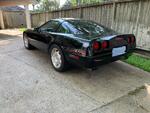
So what about 87 octane in an LT1? Is the extra 1.0 of comp (10.5:1 vs. 9.5:1) enough extra compression to bring about peak power with 93 grade, or would 91 or even 87 be worth taking a chance on? I always burn 93 grade in my LT1 :)
[Modified by Lone Ranger, 12:33 PM 3/9/2004]
[Modified by Lone Ranger, 12:33 PM 3/9/2004]
Drifting


Joined: Jul 2002
Posts: 1,705
Likes: 5
From: OKC Oklahoma
Re: Gas test-regular was better (Lone Ranger)
So what about 87 octane in an LT1? Is the extra 1.0 of comp (10.5:1 vs. 9.5:1) enough extra compression to bring about peak power with 93 grade, or would 91 or even 87 be worth taking a chance on? I always burn 93 grade in my LT1 :)
[Modified by Lone Ranger, 12:33 PM 3/9/2004]
[Modified by Lone Ranger, 12:33 PM 3/9/2004]