





I saw a post the other day which stateed that running a 160 deg thermostat will not allow suficient heating of the engine oil and will lead to premature wear on piston rings. I do not understand how this equates.
Any ideas?
I currently run a 160 deg stat and if this is happening in my engine I need to pull it ASAP.
Take care.
90Indy
Any ideas?
I currently run a 160 deg stat and if this is happening in my engine I need to pull it ASAP.
Take care.
90Indy

I think engine wear in general is affected by too cold a running temperature, whether that be at 160 or not is probably open to debate.
Its all about oil flow and the thin cushion of oil everything rides on which provides the only protection against wear. Long term, not getting the oil hot enough to burn out the impurities of combustion also contributes in not providing adequate lubrication.
I personally would not use a 160 thermostat, by thats my opinion.
Its all about oil flow and the thin cushion of oil everything rides on which provides the only protection against wear. Long term, not getting the oil hot enough to burn out the impurities of combustion also contributes in not providing adequate lubrication.
I personally would not use a 160 thermostat, by thats my opinion.

On this site http://www.patgosscarworld.com/sept01.htm about half way down the page:
-------
Pat: Is a cooler engine better? A controversy is ongoing in the Corvette owner’s community of which I am a member over the installation of 160° thermostats over the factory-recommended 190° type. Potential oil viscosity differences, as well as emissions issues seem to weigh against this change. What is your recommendation of this modification? Mike W. – CO
A: Is a cooler engine better? Better for what? What year? Is it fuel injected? Is it electronic fuel injection?
A “modern” fuel injected engine will produce more power with a 160 degree thermostat. It will also experience a shortened life expectancy , lower fuel economy, more oil contamination, and more oil sludge build-up.
Also, unless the computer is reprogrammed, or the P.R.O.M. is replaced, 160 degrees will cause the Service Engine Soon light to illuminate. Are these good things? Not in my world.
In reality, within normal operating limits, the hotter an engine runs the better it is; longer life, better fuel economy, less sludge, far less oil contamination, but slightly less engine performance.
Here’s how it happens. Engine sensors are arranged in a hierarchy. That is as it pertains to their ability to influence fuel mixture and ignition timing. At the upper end of the hierarchy is the engine coolant temperature sensor (CTS). In a cold engine the CTS sends a signal to the computer, which causes the computer to command longer injector on-time, thereby injecting more fuel into the cylinders. This is necessary when the engine truly is cold to achieve good drivability, however once the metal of the cylinders has thoroughly warmed, the amount of fuel needed for proper drivability is greatly reduced.
Because there is no practical way to measure cylinder temperatures and because the cylinders, and the coolant, warm in a linear fashion and because coolant temperature is easy to sense, the computer regulates fuel delivery relative to coolant temperature.
Install the 160 degree thermostat and the cylinders warm in a non-linear fashion relative to coolant temperature. The computer receives a cool signal from the CTS and adds fuel thinking the engine is colder than it really is.
This creates a rich fuel mixture, which isn’t completely burned, which collects in the oil and thins the oil, and reduces the oil’s ability to properly lubricate. Additionally the excess fuel washes away the oil on the cylinder walls used for piston ring lubrication, adding to ring wear.
Next, low coolant temperature causes low oil temperature, low oil temperature causes moisture and acid build-up in the oil. Hey, the oil doesn’t get hot enough to evaporate these by-products. Water and acid accumulation in engine oil causes the oil to become thick and viscous ultimately leading to thick, gummy sludge.
If you still haven’t had enough, the excess acid etches the soft metal surfaces of bearings during periods of disuse, and the extra fuel often destroys the catalytic converter.
So bottom line, if you want a little more power a cooler engine is wonderful, but what a price to pay for a few extra horsepower.
----------
On this site http://www.thedodgegarage.com/turbo_tricks.html
about half way down the page, underneath the photo of the thermostat:
----------
Now some of you may think that "Wow 180 is good 160 MUST be better!", this isn't so- as a matter of fact rings like to be HOT and cylinder heads like to be COOL. The best temps for rings is 180F+ with temperatures below that radically increasing ring wear.
-----------
And this site http://carnut.com/ramblin/cool3.html
has a good line graph which shows the sweet spot for power vs wear is, whaddaya know, about 185 to 190 degrees-- right where the stock 180 tstat the GM engineers knowledgeably decided to use as factory original equipment (for LT1/LT4/LT5)keeps the coolant temp most of the time! A quote from the above referenced site:
"Years of research show use of 160 degree thermostats is way too low to be considered for performance or engine longevity. As the chart above illustrates, engine wear increased by DOUBLE at 160 , than at 185 degrees. The 160's were invented for and commonly used in older, open loop cooling systems where only 6 pound radiator caps were used, and low 212 degree boiling points were the limit. We know better now. "
-----------
Looks like the pro's agree! 160 is too cool and increases wear in most cases!
-------
Pat: Is a cooler engine better? A controversy is ongoing in the Corvette owner’s community of which I am a member over the installation of 160° thermostats over the factory-recommended 190° type. Potential oil viscosity differences, as well as emissions issues seem to weigh against this change. What is your recommendation of this modification? Mike W. – CO
A: Is a cooler engine better? Better for what? What year? Is it fuel injected? Is it electronic fuel injection?
A “modern” fuel injected engine will produce more power with a 160 degree thermostat. It will also experience a shortened life expectancy , lower fuel economy, more oil contamination, and more oil sludge build-up.
Also, unless the computer is reprogrammed, or the P.R.O.M. is replaced, 160 degrees will cause the Service Engine Soon light to illuminate. Are these good things? Not in my world.
In reality, within normal operating limits, the hotter an engine runs the better it is; longer life, better fuel economy, less sludge, far less oil contamination, but slightly less engine performance.
Here’s how it happens. Engine sensors are arranged in a hierarchy. That is as it pertains to their ability to influence fuel mixture and ignition timing. At the upper end of the hierarchy is the engine coolant temperature sensor (CTS). In a cold engine the CTS sends a signal to the computer, which causes the computer to command longer injector on-time, thereby injecting more fuel into the cylinders. This is necessary when the engine truly is cold to achieve good drivability, however once the metal of the cylinders has thoroughly warmed, the amount of fuel needed for proper drivability is greatly reduced.
Because there is no practical way to measure cylinder temperatures and because the cylinders, and the coolant, warm in a linear fashion and because coolant temperature is easy to sense, the computer regulates fuel delivery relative to coolant temperature.
Install the 160 degree thermostat and the cylinders warm in a non-linear fashion relative to coolant temperature. The computer receives a cool signal from the CTS and adds fuel thinking the engine is colder than it really is.
This creates a rich fuel mixture, which isn’t completely burned, which collects in the oil and thins the oil, and reduces the oil’s ability to properly lubricate. Additionally the excess fuel washes away the oil on the cylinder walls used for piston ring lubrication, adding to ring wear.
Next, low coolant temperature causes low oil temperature, low oil temperature causes moisture and acid build-up in the oil. Hey, the oil doesn’t get hot enough to evaporate these by-products. Water and acid accumulation in engine oil causes the oil to become thick and viscous ultimately leading to thick, gummy sludge.
If you still haven’t had enough, the excess acid etches the soft metal surfaces of bearings during periods of disuse, and the extra fuel often destroys the catalytic converter.
So bottom line, if you want a little more power a cooler engine is wonderful, but what a price to pay for a few extra horsepower.
----------
On this site http://www.thedodgegarage.com/turbo_tricks.html
about half way down the page, underneath the photo of the thermostat:
----------
Now some of you may think that "Wow 180 is good 160 MUST be better!", this isn't so- as a matter of fact rings like to be HOT and cylinder heads like to be COOL. The best temps for rings is 180F+ with temperatures below that radically increasing ring wear.
-----------
And this site http://carnut.com/ramblin/cool3.html
has a good line graph which shows the sweet spot for power vs wear is, whaddaya know, about 185 to 190 degrees-- right where the stock 180 tstat the GM engineers knowledgeably decided to use as factory original equipment (for LT1/LT4/LT5)keeps the coolant temp most of the time! A quote from the above referenced site:
"Years of research show use of 160 degree thermostats is way too low to be considered for performance or engine longevity. As the chart above illustrates, engine wear increased by DOUBLE at 160 , than at 185 degrees. The 160's were invented for and commonly used in older, open loop cooling systems where only 6 pound radiator caps were used, and low 212 degree boiling points were the limit. We know better now. "
-----------
Looks like the pro's agree! 160 is too cool and increases wear in most cases!
Well, I guess that about sums it up for me. The 160 stat is quickly on its way out. I never thought about the rich condition this would create. I certainly appreciate the time you took to post.
Thanks to all.
90Indy
Thanks to all.
90Indy

I'm keeping my 160 stat 
My oil stays at 180-190 and my coolant 160-175
And for the record my car goes into closed loop at 135

My oil stays at 180-190 and my coolant 160-175
And for the record my car goes into closed loop at 135
Quote:
Thanks to all.
90Indy
If you have a '90 as your handle seems to indicate, the L98 stock t-stat was 195 degrees, but a 180 ought to work well in your L98. 180 was stock in all the LT1's, LT4's, LT5's. Its also stock in LS1's, and the new LS2. Now you know why. Its the best combo of performance and engine longevity. The GM engineers realize this and that's why they chose it Originally Posted by 90Indy
Well, I guess that about sums it up for me. The 160 stat is quickly on its way out. I never thought about the rich condition this would create. I certainly appreciate the time you took to post.Thanks to all.
90Indy

I believe Stant is the OEM brand used by GM. Stock LT1 tstats bear the initials "STC" which stands for Standard Thomson Corporation, which is the parent company of Stant.

I've been running year around a 160 deg T-stat & fan switch in the IROC for 7rys and in the Vette for over 4yrs; both cars now have over 144k miles and are pulling strongly. Compression tests on the Vette have shown no loss over this time period.
Actually the O2 sensor is king with our ECM, when in closed loop mode. Since the ECM will go into closed loop mode well below 160deg F, running this T-stat has no effect on rich/lean conditions with the exception of at WOT, which is exactly where we want it.
With a 160 deg T-stat measured oil temps are usually 15deg higher or about 175deg F. Since the measurement point is far from the chambers it's fairly safe to assume that oil temps reach much higher temps along the path through the engine.
Also motor oils all contain additives to neutralize acids, disperse particles and provide anti-oxidents. Just run a quality motor oil and change your oil at regular intervals and don't worry about a low temp T-stat.
To get an idea of the actual power difference a low temp T-stat can make, drop the hammer with coolant temps around 160deg F and then wait till they reach "normal" 210deg F or so and drop the hammer again. If you can run this test at a drag strip you will indeed see the differnce in your time slips.
Actually the O2 sensor is king with our ECM, when in closed loop mode. Since the ECM will go into closed loop mode well below 160deg F, running this T-stat has no effect on rich/lean conditions with the exception of at WOT, which is exactly where we want it.
With a 160 deg T-stat measured oil temps are usually 15deg higher or about 175deg F. Since the measurement point is far from the chambers it's fairly safe to assume that oil temps reach much higher temps along the path through the engine.
Also motor oils all contain additives to neutralize acids, disperse particles and provide anti-oxidents. Just run a quality motor oil and change your oil at regular intervals and don't worry about a low temp T-stat.
To get an idea of the actual power difference a low temp T-stat can make, drop the hammer with coolant temps around 160deg F and then wait till they reach "normal" 210deg F or so and drop the hammer again. If you can run this test at a drag strip you will indeed see the differnce in your time slips.
Corvette Stories
The Best of Corvette for Corvette Enthusiasts
Explore

Corvette ZR1X Will Be Pacing the Indy 500, And Could Probably Race, Too!
Verdad Gallardo
Top 10 Corvettes Coming to Mecum Indy 2026!
Brett Foote
Top 10 C9 Corvette MUST-HAVES to Fix These C8 Generation Flaws!
Michael S. Palmer
10 Revolutionary 'Corvette Firsts' Most People Don't Know
Joe Kucinski
5 Reasons to Upgrade to an LS6-Powered Corvette; 5 Reasons to Stay LT2
Michael S. Palmer
2027 Corvette vs The World: Every C8 vs Its Closest Competitor
Joe Kucinski
10 Most Common Corvette Problems of the Last 20 Years!
Joe Kucinski
5 MOST and 5 LEAST Popular Corvette Model Years in History!
Joe Kucinski
2027 Corvette Buyer's Guide: Everything You Need to Know!
Joe Kucinski


Quote:
I believe Stant is the OEM brand used by GM. Stock LT1 tstats bear the initials "STC" which stands for Standard Thomson Corporation, which is the parent company of Stant.
Originally Posted by Lone Ranger
If you have a '90 as your handle seems to indicate, the L98 stock t-stat was 195 degrees, but a 180 ought to work well in your L98. 180 was stock in all the LT1's, LT4's, LT5's. Its also stock in LS1's, and the new LS2. Now you know why. Its the best combo of performance and engine longevity. The GM engineers realize this and that's why they chose it I believe Stant is the OEM brand used by GM. Stock LT1 tstats bear the initials "STC" which stands for Standard Thomson Corporation, which is the parent company of Stant.
Thats not the reason that the 180 is used in the LT1-4 engines. The reason being is the reverse flow of the water. Water enters the engine through the top and is pushed down through the block on the LT1-4 series. With a 180 T-stat it will run in the 210-228 degree range. So by the time it gets into the block it is considerably hotter then the 180 it entered the heads at. I was told the reason GM did this was so they could run a cooler head and increase compression without knock. If you notice the LT series engines have 10.4 to 10.8 compression.
I do run a 160 in mine but it is not my daily driver. I only put about 3000 miles a year on it so wear isnt as big of a deal. At one time there was a graph floating around that showed the increased engine wear from running it cooler. The best I remember, it was a little more with a 160-180 degree motor but there was a big jump when in the 140 degree range and less temps.


I would not assume that GM makes every decision
with the best interest of 'vette enthusiasts in mind.
.
195 t-stat
4000 fan-on

with the best interest of 'vette enthusiasts in mind.
.
195 t-stat
4000 fan-on

I've read,and listened to most arguments for and against the 160, and how you can gain a little at the track-I don't go to the track, and I believe I'll stick with the 180-my engine gets to 204 now with the fan switch I use, on 200, off 185, oil temps are within 15 degrees.Yes the graph an accompaning article mentioned showed (by their test) the 180 was the best all around choice.
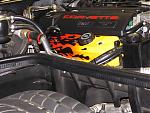


One thing most are forgetting, The thermo stat doesn't control the operating temp of our LT1/4s. The only thing it does is open earlier (160) than a (180) stat as the engine warms up. Your radiator, coolant condition, water pump condition, fans and engine condition control the operating temps. Most LT1/4s run at a higher temp than the setting on the stat.
With that said, I agree with a colder operating temp will decrease engine life, but it is not the stat's fault. Yes, the oil temp is important to be high enough to burn off impurities. Spirited driving gets the oil temps up in the 200-220 range which is just where the synthetic oils love to be.
Remember, the thermostat was designed to help the engine warm quickly where it will run as designed. Too many people try to control the operating temps with a thermostat.
With that said, I agree with a colder operating temp will decrease engine life, but it is not the stat's fault. Yes, the oil temp is important to be high enough to burn off impurities. Spirited driving gets the oil temps up in the 200-220 range which is just where the synthetic oils love to be.
Remember, the thermostat was designed to help the engine warm quickly where it will run as designed. Too many people try to control the operating temps with a thermostat.
Quote:
with the best interest of 'vette enthusiasts in mind.
.
195 t-stat
4000 fan-on
No, but they probably know a little bit more about this stuff than most of us weekend enthusiasts...Originally Posted by silver84
I would not assume that GM makes every decisionwith the best interest of 'vette enthusiasts in mind.
.
195 t-stat
4000 fan-on

There is a lot of good information posted in this thread. One point not made clear, is that the average owner, changing to a 160* stat, will not see the benifit of increased performance through cooler temps, but WILL see the additional wear it can create. A stat change alone, will have little effect on the ultimate operating temperature. It was stated above, that the purpose of the stat is to affect a quick warm up. That is true. However, with a 160* stat, the warm up is slowed when 160* is reached and the stat opens. The extended warm up period only causes more of the wear cited in previous posts. The benifits of increased lower temp performance are only available during the prolonged warm up period. If the car is driven long enough to reach it's "normal" operating temp, the benifit of "cool engine" performance has passed, but the engine has still suffered increased wear of the slow warm up. I agree with 65Z01, that 1/4 mile times will be quicker at the cooler temps, but for daily use, the 160 stat is a bad idea. For the guys that know and understand the consequences and are willing to keep their oil fresh, benifits are possible. As a general rule, a 160 stat is a bad idea.
RACE ON!!!
RACE ON!!!



I had a 160 in my 95 for 2 years. The result was better fuel economy and better performance. An added benifit is that for automatic transmission cars the tranny fluid is also cooler.
A manul fan switch is a must to take advantage of the 160.
As a 160 them doesnt mean you will see 160 operating temps all the time.
Its silly to believe that a 30 degree change in thermostat opening temps will affect the internal combustion temps. Also with synthetic oil and frequent changes the operating temps the engine will see will be hight enough to burn off any moisture in the oil.
Also passed inspection with the motor cold, almost identical as to when it was hot (previous year with the 195 therm).
A manul fan switch is a must to take advantage of the 160.
As a 160 them doesnt mean you will see 160 operating temps all the time.
Its silly to believe that a 30 degree change in thermostat opening temps will affect the internal combustion temps. Also with synthetic oil and frequent changes the operating temps the engine will see will be hight enough to burn off any moisture in the oil.
Also passed inspection with the motor cold, almost identical as to when it was hot (previous year with the 195 therm).

A “modern” fuel injected engine will produce more power with a 160 degree thermostat. It will also experience a shortened life expectancy , lower fuel economy, more oil contamination, and more oil sludge build-up.
I respectfully disagree with that. I had a 160 therm and a manual fan switch in my 95 for 2 years (15K miles) I picked up 2 tenths at the track and 2 mpg. Having a 160 them does not mean your coolant stays at 160 all the time.
Also, unless the computer is reprogrammed, or the P.R.O.M. is replaced, 160 degrees will cause the Service Engine Soon light to illuminate. Are these good things? Not in my world.
I have installed manual fan switchs and 160 therms in about 8 LT1 Corvettes. I have never had a check engine light come on because of that.
In reality, within normal operating limits, the hotter an engine runs the better it is; longer life, better fuel economy, less sludge, far less oil contamination, but slightly less engine performance.
Yeah sure, having the coolant cycle between ambiant startup temp and 235 degrees when the fans come on is real good for the motor, and I bet the auto trans fluid like the heat too.
Here’s how it happens. Engine sensors are arranged in a hierarchy. That is as it pertains to their ability to influence fuel mixture and ignition timing. At the upper end of the hierarchy is the engine coolant temperature sensor (CTS). In a cold engine the CTS sends a signal to the computer, which causes the computer to command longer injector on-time, thereby injecting more fuel into the cylinders. This is necessary when the engine truly is cold to achieve good drivability, however once the metal of the cylinders has thoroughly warmed, the amount of fuel needed for proper drivability is greatly reduced.
Because there is no practical way to measure cylinder temperatures and because the cylinders, and the coolant, warm in a linear fashion and because coolant temperature is easy to sense, the computer regulates fuel delivery relative to coolant temperature.
EGT is measured in many engines with a sensor in the exhaust manifold, like diesels.
Install the 160 degree thermostat and the cylinders warm in a non-linear fashion relative to coolant temperature. The computer receives a cool signal from the CTS and adds fuel thinking the engine is colder than it really is.
This is just not true in many engines. Anyone have an Auto-Tap? The pulse with and duration do not change between a coolant temp of 160 and 190. (Correction, they didn’t change on my 95 LT1, as we are talking Corvettes here) Also, why should a 160 therm change they way heat energy is transferred from the block to the coolant as in liner with a 195 and non linear with a 160-?
This creates a rich fuel mixture, which isn’t completely burned, which collects in the oil and thins the oil, and reduces the oil’s ability to properly lubricate. Additionally the excess fuel washes away the oil on the cylinder walls used for piston ring lubrication, adding to ring wear.
That’s bull in my book. Maybe in an old car with a big *** Holly 850 double pumper running Castrol GTX 10-40. But in a modern Corvette engine the difference between maximum rich and lean is not that great (unless there is a sensor malfunction).
Next, low coolant temperature causes low oil temperature, low oil temperature causes moisture and acid build-up in the oil. Hey, the oil doesn’t get hot enough to evaporate these by-products. Water and acid accumulation in engine oil causes the oil to become thick and viscous ultimately leading to thick, gummy sludge.
If you still haven’t had enough, the excess acid etches the soft metal surfaces of bearings during periods of disuse, and the extra fuel often destroys the catalytic converter.
So bottom line, if you want a little more power a cooler engine is wonderful, but what a price to pay for a few extra horsepower.
All because of a 160 therm? Well the next time you get you Corvette with the 160 therm inspected take a look at the emmissions printout, notice anything? Why isnt it running rich and failing. My car passed twice with numbers that were almost identical to the first inspection when it had the 195 therm and heated up to 220 degrees coolant temp during the “treadmill” phase. It ran just as clean with the 160 on a cold engine.
----------
On this site http://www.thedodgegarage.com/turbo_tricks.html
about half way down the page, underneath the photo of the thermostat:
----------
Now some of you may think that "Wow 180 is good 160 MUST be better!", this isn't so- as a matter of fact rings like to be HOT and cylinder heads like to be COOL. The best temps for rings is 180F+ with temperatures below that radically increasing ring wear.
WOW, so how exactly is that measured? I guess all those early C4s with low temp therms should be blowing smoke past those worn out rings by now.
-----------
And this site http://carnut.com/ramblin/cool3.html
has a good line graph which shows the sweet spot for power vs wear is, whaddaya know, about 185 to 190 degrees-- right where the stock 180 tstat the GM engineers knowledgeably decided to use as factory original equipment (for LT1/LT4/LT5)keeps the coolant temp most of the time! A quote from the above referenced site:
"Years of research show use of 160 degree thermostats is way too low to be considered for performance or engine longevity. As the chart above illustrates, engine wear increased by DOUBLE at 160 , than at 185 degrees. The 160's were invented for and commonly used in older, open loop cooling systems where only 6 pound radiator caps were used, and low 212 degree boiling points were the limit. We know better now. "
-----------
Looks like the pro's agree! 160 is too cool and increases wear in most cases!
Years of research? Exactly how old is that article? The last time cooling systems ran in open loop with 6 pound caps, I had a full head of hair and six pack abs. The oil technology today is fantastic, synth oil can hold many times more dirt in suspension than fossil oil, and operate at extreem temps that would fry dino oil.
Running a 160 therm , my engine will wear out in 50% of the time than if I let it cycle between startup temp and 235 degrees? Right.
I respectfully disagree with that. I had a 160 therm and a manual fan switch in my 95 for 2 years (15K miles) I picked up 2 tenths at the track and 2 mpg. Having a 160 them does not mean your coolant stays at 160 all the time.
Also, unless the computer is reprogrammed, or the P.R.O.M. is replaced, 160 degrees will cause the Service Engine Soon light to illuminate. Are these good things? Not in my world.
I have installed manual fan switchs and 160 therms in about 8 LT1 Corvettes. I have never had a check engine light come on because of that.
In reality, within normal operating limits, the hotter an engine runs the better it is; longer life, better fuel economy, less sludge, far less oil contamination, but slightly less engine performance.
Yeah sure, having the coolant cycle between ambiant startup temp and 235 degrees when the fans come on is real good for the motor, and I bet the auto trans fluid like the heat too.
Here’s how it happens. Engine sensors are arranged in a hierarchy. That is as it pertains to their ability to influence fuel mixture and ignition timing. At the upper end of the hierarchy is the engine coolant temperature sensor (CTS). In a cold engine the CTS sends a signal to the computer, which causes the computer to command longer injector on-time, thereby injecting more fuel into the cylinders. This is necessary when the engine truly is cold to achieve good drivability, however once the metal of the cylinders has thoroughly warmed, the amount of fuel needed for proper drivability is greatly reduced.
Because there is no practical way to measure cylinder temperatures and because the cylinders, and the coolant, warm in a linear fashion and because coolant temperature is easy to sense, the computer regulates fuel delivery relative to coolant temperature.
EGT is measured in many engines with a sensor in the exhaust manifold, like diesels.
Install the 160 degree thermostat and the cylinders warm in a non-linear fashion relative to coolant temperature. The computer receives a cool signal from the CTS and adds fuel thinking the engine is colder than it really is.
This is just not true in many engines. Anyone have an Auto-Tap? The pulse with and duration do not change between a coolant temp of 160 and 190. (Correction, they didn’t change on my 95 LT1, as we are talking Corvettes here) Also, why should a 160 therm change they way heat energy is transferred from the block to the coolant as in liner with a 195 and non linear with a 160-?
This creates a rich fuel mixture, which isn’t completely burned, which collects in the oil and thins the oil, and reduces the oil’s ability to properly lubricate. Additionally the excess fuel washes away the oil on the cylinder walls used for piston ring lubrication, adding to ring wear.
That’s bull in my book. Maybe in an old car with a big *** Holly 850 double pumper running Castrol GTX 10-40. But in a modern Corvette engine the difference between maximum rich and lean is not that great (unless there is a sensor malfunction).
Next, low coolant temperature causes low oil temperature, low oil temperature causes moisture and acid build-up in the oil. Hey, the oil doesn’t get hot enough to evaporate these by-products. Water and acid accumulation in engine oil causes the oil to become thick and viscous ultimately leading to thick, gummy sludge.
If you still haven’t had enough, the excess acid etches the soft metal surfaces of bearings during periods of disuse, and the extra fuel often destroys the catalytic converter.
So bottom line, if you want a little more power a cooler engine is wonderful, but what a price to pay for a few extra horsepower.
All because of a 160 therm? Well the next time you get you Corvette with the 160 therm inspected take a look at the emmissions printout, notice anything? Why isnt it running rich and failing. My car passed twice with numbers that were almost identical to the first inspection when it had the 195 therm and heated up to 220 degrees coolant temp during the “treadmill” phase. It ran just as clean with the 160 on a cold engine.
----------
On this site http://www.thedodgegarage.com/turbo_tricks.html
about half way down the page, underneath the photo of the thermostat:
----------
Now some of you may think that "Wow 180 is good 160 MUST be better!", this isn't so- as a matter of fact rings like to be HOT and cylinder heads like to be COOL. The best temps for rings is 180F+ with temperatures below that radically increasing ring wear.
WOW, so how exactly is that measured? I guess all those early C4s with low temp therms should be blowing smoke past those worn out rings by now.
-----------
And this site http://carnut.com/ramblin/cool3.html
has a good line graph which shows the sweet spot for power vs wear is, whaddaya know, about 185 to 190 degrees-- right where the stock 180 tstat the GM engineers knowledgeably decided to use as factory original equipment (for LT1/LT4/LT5)keeps the coolant temp most of the time! A quote from the above referenced site:
"Years of research show use of 160 degree thermostats is way too low to be considered for performance or engine longevity. As the chart above illustrates, engine wear increased by DOUBLE at 160 , than at 185 degrees. The 160's were invented for and commonly used in older, open loop cooling systems where only 6 pound radiator caps were used, and low 212 degree boiling points were the limit. We know better now. "
-----------
Looks like the pro's agree! 160 is too cool and increases wear in most cases!
Years of research? Exactly how old is that article? The last time cooling systems ran in open loop with 6 pound caps, I had a full head of hair and six pack abs. The oil technology today is fantastic, synth oil can hold many times more dirt in suspension than fossil oil, and operate at extreem temps that would fry dino oil.
Running a 160 therm , my engine will wear out in 50% of the time than if I let it cycle between startup temp and 235 degrees? Right.
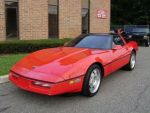
I changed my 195* t-stat out for a 160* quite seom time agao, and for onaly 3 months...then changed it it a 180*, with the fans reprogrammed around it. It runs between 185-205*, I believe these are perfect temps for a daily driver with a power/longevity perspective.

Several CFers have measured rwhp while changing thermostats between a 180/195 and a 160. No hp change was measured. Continental Motors ran an experiment with a number of small (25 hp) identical engines and measured their performance and tore the engines down and compared cylinder bore dimensions before and after. The engines were run at maximum hp and only the coolant temperature was changed. What they found was that cooler temps produced LESS hp, more cylinder wear and higher specific fuel consumption (lower hp/gal-hours). The higher the operating temperature the higher the hp, the lower the cylinder wear, and the lower the fuel consumption. The temperatures ran from 160 F to 240 F as I recall.
Theory about what should happen with lower coolant temps is fine, but apparently it doesn't jibe with the practical experiment that Continental ran!
Theory about what should happen with lower coolant temps is fine, but apparently it doesn't jibe with the practical experiment that Continental ran!
Warren s, okay, if 160's are so great then how come GM and virtually every other automobile manufacturer on the planet will put no tstat lower than 180 in as OEM new? Because they know 160 is too cool? 180 is the lowest temp tstat you'll find as OEM in any new car. Hmm... 