




Weird code 33

Thread Starter
Instructor


Joined: Sep 2002
Posts: 137
Likes: 0
From: Toa Baja Puerto Rico
 Weird code 33
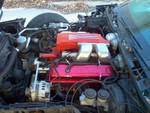
My 87 Coupe, auto tranny and the usual bolt-ons developed a code 33. The weird thing is that I took out the MAF sensor and cleaned it using throttle body cleaner. I sprayed it from 12 inches away so as not to damage the filaments. I air dried it and the filaments were (visually) OK. I also checked and cleaned the power relay and burn-off relay connectors and the MAF sensor connectors. When I start the engine, the car sounds like it has a hot cam, the idle is very rough and it misfires when I try to accelerate (in neutral). At this time the SES light is OFF. When the SES light turns ON, the missing dissapears, it accelerates smoothly and there are no apparent problems. Next time I start the engine, it idles very rough and misses badly until the SES light turns ON. Then everything is OK then: smooth idle and crisp throttle response. What is the matter with this car??? Any help would be appreciated.

Melting Slicks

Joined: Oct 2004
Posts: 2,510
Likes: 4
From: Austin Texas
Originally Posted by alfonso gomez
My 87 Coupe, auto tranny and the usual bolt-ons developed a code 33. The weird thing is that I took out the MAF sensor and cleaned it using throttle body cleaner. I sprayed it from 12 inches away so as not to damage the filaments. I air dried it and the filaments were (visually) OK. I also checked and cleaned the power relay and burn-off relay connectors and the MAF sensor connectors. When I start the engine, the car sounds like it has a hot cam, the idle is very rough and it misfires when I try to accelerate (in neutral). At this time the SES light is OFF. When the SES light turns ON, the missing dissapears, it accelerates smoothly and there are no apparent problems. Next time I start the engine, it idles very rough and misses badly until the SES light turns ON. Then everything is OK then: smooth idle and crisp throttle response. What is the matter with this car??? Any help would be appreciated.


Le Mans Master

Joined: Oct 2003
Posts: 6,130
Likes: 2
From: seattle WA
You really need the Helms to trouble shoot that. To many possibilities, bad maf sensor, bad relay, circuit 900 shorted to ground or bad ecm,poor connections, half a dozen other circuits with open grounds could also be the problem.You really need the Helms for the diagnostics or you'll just be throwing $$$$ at it. Good Luck!
Last edited by rick lambert; Jan 18, 2005 at 03:53 PM.
Melting Slicks
Joined: Oct 2004
Posts: 2,510
Likes: 4
From: Austin Texas
Originally Posted by rick lambert
You really need the Helms to trouble shoot that. To many possibilities, bad maf sensor, bad relay, circuit 900 shorted to ground or bad ecm,poor connections, half a dozen other circuits with open grounds could also be the problem.You really need the Helms for the diagnostics or you'll just be throwing $$$$ at it. Good Luck!
 with Rick. The interesting thing is how the idle gets better after awhile, which is what I was concentrating on. So many variables such as the engine may be switching from 'open loop' to 'closed loop' which causes the operation of the engine to improve. Take a look here for an 'almost comprehensable' explanation of 'open' and 'closed' loop operation:
http://para.noid.org/~lj/PCM%20Tutorial/PCMtutorial.htm
If you disconnect the MAF connector, start the engine, is the behavior the same...


Burning Brakes

Joined: Aug 2001
Posts: 1,238
Likes: 0
From: walled lake MI
with the comments above.first, you can see if the MAF is bad by hooking up a Tech-I or some diagnostic tool to see what the ECM is seeing.
second, MikeC4 is on the money with the fact that the ECM "gives up" on the MAF if it is bad and uses a default strategy that may involve a airflow "guess" based on the other sensors. the "guess" may be good to drive the car around, but will never pass emissions or may not perform well in transient manouvers (such as slamming on the throttle). great suggestion to disconnect the MAF to see if the behavior is the same.
the "closed loop" and "open loop" stuff will not come into play until quite a bit after you start the car cold. the temps need to be pretty close to normal, and i'm sure there is a timer in there that will not activate closed loop until after X seconds have passed since the engine has started.

Team Owner


Joined: Jan 2003
Posts: 20,333
Likes: 263
From: Summerland B.C. Canada
http://members.shaw.ca/corvette86/Code%2033.pdf
And here's one for 88421Vette
http://members.shaw.ca/corvette86/Code%2021.pdf
And here's one for 88421Vette
http://members.shaw.ca/corvette86/Code%2021.pdf
Thread Starter
Instructor
Joined: Sep 2002
Posts: 137
Likes: 0
From: Toa Baja Puerto Rico
OK, people. Before embarking on a fairly complicated diagnostic, I thought for a moment: if I disconnect the MAF sensor and the performance improves, it may be the MAF sensor gone bad. But if the relays are bad, the result would be the same since disconnecting the MAF also takes the MAF relays out of the picture. Since the relays are cheap ($12.44 each at Western Auto) I went ahead and bought 2 of them. Disconnected the battery, changed the relays, and connected the battery again. Engine started well and there is no SES light. Now I have to check the IAC and set properly the TPS since I have a slighty erratic idle.
Thanks to all for your help.
Thanks to all for your help.
Corvette Stories
The Best of Corvette for Corvette Enthusiasts

Every 2027 Corvette Engine Explained
Joe Kucinski
Designer Imagines A Corvette That Looks More Like a Corvette Than the Corvette
Verdad Gallardo
10 Ugly Corvettes That We Still Kinda Love
Joe Kucinski
Top 10 Most Expensive Corvettes Ever Sold on Bring A Trailer
Brett Foote
10 Things Every Corvette Owner Needs (2026 Edition)
Michael S. Palmer
8 Most "Only Corvette Owners Understand" Quirks and Problems
Pouria Savadkouei
10 Reasons the C6 Z06 is Still A Performance Benchmark After 20 Years
Joe Kucinski
How Much Horsepower Every Corvette Engine "LOST" in 1972
Joe Kucinski
Top 10 DOs and DON'Ts for Protecting Your Convertible Top!
Michael S. Palmer
Melting Slicks
Joined: Oct 2004
Posts: 2,510
Likes: 4
From: Austin Texas
Originally Posted by MikeC4
with Rick. The interesting thing is how the idle gets better after awhile, which is what I was concentrating on. So many variables such as the engine may be switching from 'open loop' to 'closed loop' which causes the operation of the engine to improve. Take a look here for an 'almost comprehensable' explanation of 'open' and 'closed' loop operation:http://para.noid.org/~lj/PCM%20Tutorial/PCMtutorial.htm
If you disconnect the MAF connector, start the engine, is the behavior the same...