



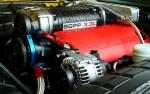




compression and boost

Thread Starter
Le Mans Master


Joined: Oct 2003
Posts: 8,862
Likes: 85
From: PA
St. Jude Donor '08
 compression and boost
lets discuss it
low vrs high compr.
tuning...
drivability....
boost levels.....
ect...
how much more boost is need to equal higher compression engine?
my 18psi @ 8.37 equals XXpsi on 9.1 engine. i understand that cam, head design, and many other varables have to be determined.
i am starting this tread to generate conversion. i am sure some of the responces will be obvoius, which is cool, hoping for for some technical jargin.
like i said lookin to start a good tread :cheersv
low vrs high compr.
tuning...
drivability....
boost levels.....
ect...
how much more boost is need to equal higher compression engine?
my 18psi @ 8.37 equals XXpsi on 9.1 engine. i understand that cam, head design, and many other varables have to be determined.
i am starting this tread to generate conversion. i am sure some of the responces will be obvoius, which is cool, hoping for for some technical jargin.
like i said lookin to start a good tread :cheersv

Racer


Joined: Aug 2004
Posts: 353
Likes: 16
From: Twister Country
This topic could get as long and drawn out, as let say.....
Bore vs. Stroke....
Or topics such as Piston Design, or Quinch area.
Personally I think you need to throw FUEL TYPE into the equation.
Because honestly, if your not talking about just Pump Gas, or just Race Gas the topic can go both ways.
My personal car is at 7.6 to 1 compression. But I run the car on pump gas, all day everyday with 24psi of boost. Though I also have a Automatic with a Large Stall, so the "lost low end" is never really felt. As soon as my foot rolls onto the gas, the tach is already at 3,600 rpm and climbing.
On another motor that I built just like mine, I upped the compression to 10.5 to 1. He runs 35+ psi of boost from a set of Twins, yet runs C16 ONLY. So he can get away with all the compression, and the massive amount of boost.
For a Street car motor, that is wanting the low end grunt 8.5 to 1 with 15psi of Boost (Intercooled) makes for a wicked combo of TQ and HP. Plus you can run it on pump gas with out having to worry about anything, and you can say get a little more agressive with the timing, and throw some 100 in the tank and have a little more fun. Just if you have a tubo kit, just click up the boost controler a couple notches.
I am not saing thats the "Perfect" compression, but it is a nice happy medium for the guys with Manuals that aren't wanting to loose the low end, yet have something that is going to handle boost with ease.
I personally get a little scared of street motors that are running 9:1 compression and 12-15psi with pump gas.... not because they can't handle it....but the head soak of the motor starts to play a factor. Sitting in traffic, all the parts are getting hotter, and hotter with the low coolant speed, and low ground speed. Stand on the car then, and your tune can put that motor closer to the point of detonation then when it was sitting on a Dyno with fans blowing on it, and cool down sessions between pulls.
That is why street tuning, is where it's at. It's a real world tune on the car doing what it's going to be doing. Load dyno's have made this possible to "street tune" on the dyno as well. Heck nothing like doing a full 1/4 mile pull on a Mustang Dyno just to see how she is going to do through ALLLL the gears as you row through them, and not just one quick 4th gear pull.
The biggest area to think about is that it also depends on the power adder that your going with as well. Turbo(s), blower, roots or centri, etc. I guess it's all about the combination of whats going on, power adder, fuel, race/street, boost level, motor size, motor type, etc.
If you search around you will find the write ups from Engineering places, as well as Engine Masters that covers all this fun stuff. I have seen a motor that was built at various compression ratios, and ran on different boost levels. And it's very very interesting stuff to see, not only the power levels, but the POWER CURVE. Doing research like that is where a person becomes and "Engine Builder" and not just a "Engine Assembler"
Great topic, I can't wait to hear other peoples thoughts though.
EA
Bore vs. Stroke....
Or topics such as Piston Design, or Quinch area.
Personally I think you need to throw FUEL TYPE into the equation.
Because honestly, if your not talking about just Pump Gas, or just Race Gas the topic can go both ways.
My personal car is at 7.6 to 1 compression. But I run the car on pump gas, all day everyday with 24psi of boost. Though I also have a Automatic with a Large Stall, so the "lost low end" is never really felt. As soon as my foot rolls onto the gas, the tach is already at 3,600 rpm and climbing.
On another motor that I built just like mine, I upped the compression to 10.5 to 1. He runs 35+ psi of boost from a set of Twins, yet runs C16 ONLY. So he can get away with all the compression, and the massive amount of boost.
For a Street car motor, that is wanting the low end grunt 8.5 to 1 with 15psi of Boost (Intercooled) makes for a wicked combo of TQ and HP. Plus you can run it on pump gas with out having to worry about anything, and you can say get a little more agressive with the timing, and throw some 100 in the tank and have a little more fun. Just if you have a tubo kit, just click up the boost controler a couple notches.
I am not saing thats the "Perfect" compression, but it is a nice happy medium for the guys with Manuals that aren't wanting to loose the low end, yet have something that is going to handle boost with ease.
I personally get a little scared of street motors that are running 9:1 compression and 12-15psi with pump gas.... not because they can't handle it....but the head soak of the motor starts to play a factor. Sitting in traffic, all the parts are getting hotter, and hotter with the low coolant speed, and low ground speed. Stand on the car then, and your tune can put that motor closer to the point of detonation then when it was sitting on a Dyno with fans blowing on it, and cool down sessions between pulls.
That is why street tuning, is where it's at. It's a real world tune on the car doing what it's going to be doing. Load dyno's have made this possible to "street tune" on the dyno as well. Heck nothing like doing a full 1/4 mile pull on a Mustang Dyno just to see how she is going to do through ALLLL the gears as you row through them, and not just one quick 4th gear pull.
The biggest area to think about is that it also depends on the power adder that your going with as well. Turbo(s), blower, roots or centri, etc. I guess it's all about the combination of whats going on, power adder, fuel, race/street, boost level, motor size, motor type, etc.
If you search around you will find the write ups from Engineering places, as well as Engine Masters that covers all this fun stuff. I have seen a motor that was built at various compression ratios, and ran on different boost levels. And it's very very interesting stuff to see, not only the power levels, but the POWER CURVE. Doing research like that is where a person becomes and "Engine Builder" and not just a "Engine Assembler"
Great topic, I can't wait to hear other peoples thoughts though.
EA

Safety Car

Joined: Apr 2003
Posts: 4,251
Likes: 7
From: Woodbridge Ontario
Originally Posted by Chris@East Coast Supercharging
Boost is for sissys 

 . . . . . .
But at the rate & progress you guy's are making power with your Novi's, I'm going to have to bring her back in for some more of your 'majic'....

Last edited by tlaselva; Dec 23, 2005 at 10:48 AM.
Thread Starter
Le Mans Master
Joined: Oct 2003
Posts: 8,862
Likes: 85
From: PA
St. Jude Donor '08
EXCELLENT!!! THIS IS EXACTLY THE INFORMATIVE REPLY THAT I LIKE!!!! 

hehehehe, sometimes treads get side tracked.....
juice,chicks....hehe
Y
hehehehe, sometimes treads get side tracked.....
juice,chicks....hehe
Y
Originally Posted by E.A.
This topic could get as long and drawn out, as let say.....
Bore vs. Stroke....
Or topics such as Piston Design, or Quinch area.
Personally I think you need to throw FUEL TYPE into the equation.
Because honestly, if your not talking about just Pump Gas, or just Race Gas the topic can go both ways.
My personal car is at 7.6 to 1 compression. But I run the car on pump gas, all day everyday with 24psi of boost. Though I also have a Automatic with a Large Stall, so the "lost low end" is never really felt. As soon as my foot rolls onto the gas, the tach is already at 3,600 rpm and climbing.
On another motor that I built just like mine, I upped the compression to 10.5 to 1. He runs 35+ psi of boost from a set of Twins, yet runs C16 ONLY. So he can get away with all the compression, and the massive amount of boost.
For a Street car motor, that is wanting the low end grunt 8.5 to 1 with 15psi of Boost (Intercooled) makes for a wicked combo of TQ and HP. Plus you can run it on pump gas with out having to worry about anything, and you can say get a little more agressive with the timing, and throw some 100 in the tank and have a little more fun. Just if you have a tubo kit, just click up the boost controler a couple notches.
I am not saing thats the "Perfect" compression, but it is a nice happy medium for the guys with Manuals that aren't wanting to loose the low end, yet have something that is going to handle boost with ease.
I personally get a little scared of street motors that are running 9:1 compression and 12-15psi with pump gas.... not because they can't handle it....but the head soak of the motor starts to play a factor. Sitting in traffic, all the parts are getting hotter, and hotter with the low coolant speed, and low ground speed. Stand on the car then, and your tune can put that motor closer to the point of detonation then when it was sitting on a Dyno with fans blowing on it, and cool down sessions between pulls.
That is why street tuning, is where it's at. It's a real world tune on the car doing what it's going to be doing. Load dyno's have made this possible to "street tune" on the dyno as well. Heck nothing like doing a full 1/4 mile pull on a Mustang Dyno just to see how she is going to do through ALLLL the gears as you row through them, and not just one quick 4th gear pull.
The biggest area to think about is that it also depends on the power adder that your going with as well. Turbo(s), blower, roots or centri, etc. I guess it's all about the combination of whats going on, power adder, fuel, race/street, boost level, motor size, motor type, etc.
If you search around you will find the write ups from Engineering places, as well as Engine Masters that covers all this fun stuff. I have seen a motor that was built at various compression ratios, and ran on different boost levels. And it's very very interesting stuff to see, not only the power levels, but the POWER CURVE. Doing research like that is where a person becomes and "Engine Builder" and not just a "Engine Assembler"
Great topic, I can't wait to hear other peoples thoughts though.
EA
Bore vs. Stroke....
Or topics such as Piston Design, or Quinch area.
Personally I think you need to throw FUEL TYPE into the equation.
Because honestly, if your not talking about just Pump Gas, or just Race Gas the topic can go both ways.
My personal car is at 7.6 to 1 compression. But I run the car on pump gas, all day everyday with 24psi of boost. Though I also have a Automatic with a Large Stall, so the "lost low end" is never really felt. As soon as my foot rolls onto the gas, the tach is already at 3,600 rpm and climbing.
On another motor that I built just like mine, I upped the compression to 10.5 to 1. He runs 35+ psi of boost from a set of Twins, yet runs C16 ONLY. So he can get away with all the compression, and the massive amount of boost.
For a Street car motor, that is wanting the low end grunt 8.5 to 1 with 15psi of Boost (Intercooled) makes for a wicked combo of TQ and HP. Plus you can run it on pump gas with out having to worry about anything, and you can say get a little more agressive with the timing, and throw some 100 in the tank and have a little more fun. Just if you have a tubo kit, just click up the boost controler a couple notches.
I am not saing thats the "Perfect" compression, but it is a nice happy medium for the guys with Manuals that aren't wanting to loose the low end, yet have something that is going to handle boost with ease.
I personally get a little scared of street motors that are running 9:1 compression and 12-15psi with pump gas.... not because they can't handle it....but the head soak of the motor starts to play a factor. Sitting in traffic, all the parts are getting hotter, and hotter with the low coolant speed, and low ground speed. Stand on the car then, and your tune can put that motor closer to the point of detonation then when it was sitting on a Dyno with fans blowing on it, and cool down sessions between pulls.
That is why street tuning, is where it's at. It's a real world tune on the car doing what it's going to be doing. Load dyno's have made this possible to "street tune" on the dyno as well. Heck nothing like doing a full 1/4 mile pull on a Mustang Dyno just to see how she is going to do through ALLLL the gears as you row through them, and not just one quick 4th gear pull.
The biggest area to think about is that it also depends on the power adder that your going with as well. Turbo(s), blower, roots or centri, etc. I guess it's all about the combination of whats going on, power adder, fuel, race/street, boost level, motor size, motor type, etc.
If you search around you will find the write ups from Engineering places, as well as Engine Masters that covers all this fun stuff. I have seen a motor that was built at various compression ratios, and ran on different boost levels. And it's very very interesting stuff to see, not only the power levels, but the POWER CURVE. Doing research like that is where a person becomes and "Engine Builder" and not just a "Engine Assembler"
Great topic, I can't wait to hear other peoples thoughts though.
EA
Last edited by NICK YOSKIN; Dec 23, 2005 at 11:38 AM.

Safety Car
Joined: May 2002
Posts: 3,615
Likes: 2
From: waterloo ontario
St. Jude Donor '08
I'm kind of wondering the same thing also. I have an 02 Z06 and right now it has a set of AFR heads milled to 59cc and a cam. I'm installing a A&A P1SC kit shortly and will be putting the car back to stock-meaning back to the LS6 heads and the LS6 cam. I was wondering if maybe it would be beneficial to run a LQ9 head( Is that right-the truck had same as the LS6 but with the 72 cc chmber?) and lower the compression and run more boost? But what's better less boost and more compression? I hear the limit of the stock shortblock is around 550-600rwhp and about 10psi of boost?
Corvette Stories
The Best of Corvette for Corvette Enthusiasts

Corvette ZR1X Will Be Pacing the Indy 500, And Could Probably Race, Too!
Verdad Gallardo
Top 10 Corvettes Coming to Mecum Indy 2026!
Brett Foote
Top 10 C9 Corvette MUST-HAVES to Fix These C8 Generation Flaws!
Michael S. Palmer
10 Revolutionary 'Corvette Firsts' Most People Don't Know
Joe Kucinski
5 Reasons to Upgrade to an LS6-Powered Corvette; 5 Reasons to Stay LT2
Michael S. Palmer
2027 Corvette vs The World: Every C8 vs Its Closest Competitor
Joe Kucinski
10 Most Common Corvette Problems of the Last 20 Years!
Joe Kucinski
5 MOST and 5 LEAST Popular Corvette Model Years in History!
Joe Kucinski
2027 Corvette Buyer's Guide: Everything You Need to Know!
Joe Kucinski
Thread Starter
Le Mans Master
Joined: Oct 2003
Posts: 8,862
Likes: 85
From: PA
St. Jude Donor '08
Originally Posted by eb02z06
I'm kind of wondering the same thing also. I have an 02 Z06 and right now it has a set of AFR heads milled to 59cc and a cam. I'm installing a A&A P1SC kit shortly and will be putting the car back to stock-meaning back to the LS6 heads and the LS6 cam. I was wondering if maybe it would be beneficial to run a LQ9 head( Is that right-the truck had same as the LS6 but with the 72 cc chmber?) and lower the compression and run more boost? But what's better less boost and more compression? I hear the limit of the stock shortblock is around 550-600rwhp and about 10psi of boost?
w/ls6 motor boost will be limited. if your pulling heads why not throw on 72cc head!?

Safety Car
Joined: Apr 2004
Posts: 3,932
Likes: 8
From: Hayward California
This is why the new motor will have 8:5 or 8:0 to 1. Possibly having to run 91, worst case, the lower compression would have my mind more at ease.  More room for aggressive timing.
Any ideas on how significant fuel consumption would be though on low versus high compression all things being equal? I know we shouldn't worry about gas mileage but I think it's still something worth considering. I love being able to show people after going for a wild ride what i'm getting cruisin in 6th.. and would be pissed if it turned into 18 after being used to 24-26 mpg.
Arnel
More room for aggressive timing.Any ideas on how significant fuel consumption would be though on low versus high compression all things being equal? I know we shouldn't worry about gas mileage but I think it's still something worth considering. I love being able to show people after going for a wild ride what i'm getting cruisin in 6th.. and would be pissed if it turned into 18 after being used to 24-26 mpg.
Arnel
Safety Car
Joined: May 2002
Posts: 3,615
Likes: 2
From: waterloo ontario
St. Jude Donor '08
Originally Posted by NICK YOSKIN
w/ls6 motor boost will be limited. if your pulling heads why not throw on 72cc head!?

Burning Brakes


Joined: May 2000
Posts: 881
Likes: 0
From: Clearwater, FL, USA
From Induction Motorsports
"What's better, low compression and more boost or high compression and less boost?"
There are certainly reasons to try to raise compression ratio, namely when off-boost performance matters, like on a street car, or when using a very small displacement motor. but when talking purely about on-boost power potential, compression just doesn't make any sense.
People have tested the power effects of raising compression for decades, and the most optimistic results are about 3% more power with an additional point of compression (going from 9:1 to 10:1, for example). All combinations will be limited by detonation at some boost and timing threshold, regardless of the fuel used. The decrease in compression allows you to run more boost, which introduces more oxygen into the cylinder. Raising the boost from 14psi to 15psi (just a 1psi increase) adds an additional 3.4% of oxygen. So right there, you are already past the break even mark of losing a point of compression. And obviously, lowering the compression a full point allows you to run much more than 1 additional psi of boost. In other words, you always pick up more power by adding boost and lowering compression, because power potential is based primarily on your ability to burn fuel, and that is directly proportional to the amount of oxygen that you have in the cylinder. Raising compression doesn't change the amount of oxygen/fuel in the cylinder, it just squeezes it a bit more.
So the big question becomes, how much boost do we gain for X amount of compression? The best method we have found is to calculate the effective compression ratio (ECR) with boost. The problem is that most people use an incorrect formula that says that 14.7psi of boost on a 8.5:1 motor is a 17:1 ECR. So how in the world do people get away with this combination on pump gas? You can't even idle down the street on pump gas on a true 17:1 compression motor. Here's the real formula to use:
sqrt((boost+14.7)/14.7) * CR = ECR
sqrt = square root
boost = psi of boost
CR = static compression ratio of the motor
ECR = effective compression ratio
So our above example gives an ECR of 12.0:1. This makes perfect sense, because 12:1 is considered to be the max safe limit with aluminum heads on pump gas, and 15psi is about as much boost as you can safely run before you at least start losing a significant amount of timing to knock. Of course every motor is different, and no formula is going to be perfect for all combinations, but this one is vastly better than the standard formula (which leaves out the square root).
So now we can target a certain ECR, say 12.0:1. We see that at 8.5:1 CR we can run 14.7psi of boost. But at 7.5:1 we can run 23psi of boost (and still maintain the 12.0:1 ECR). We only gave up 1 point of compression (3% max power) and yet we gained 28% more oxygen (28% more power potential). Suddenly it's quite obvious why top fuel is running 5:1 compression, that's where all the power is!!
8.5:1 turns out to be a real good all around number for on and off boost performance. Many "performance" NA motors are only 9.0:1 so we're not far off of that, and yet we're low enough to run 30+ psi without problems (provided that a proper fuel is used).
There are certainly reasons to try to raise compression ratio, namely when off-boost performance matters, like on a street car, or when using a very small displacement motor. but when talking purely about on-boost power potential, compression just doesn't make any sense.
People have tested the power effects of raising compression for decades, and the most optimistic results are about 3% more power with an additional point of compression (going from 9:1 to 10:1, for example). All combinations will be limited by detonation at some boost and timing threshold, regardless of the fuel used. The decrease in compression allows you to run more boost, which introduces more oxygen into the cylinder. Raising the boost from 14psi to 15psi (just a 1psi increase) adds an additional 3.4% of oxygen. So right there, you are already past the break even mark of losing a point of compression. And obviously, lowering the compression a full point allows you to run much more than 1 additional psi of boost. In other words, you always pick up more power by adding boost and lowering compression, because power potential is based primarily on your ability to burn fuel, and that is directly proportional to the amount of oxygen that you have in the cylinder. Raising compression doesn't change the amount of oxygen/fuel in the cylinder, it just squeezes it a bit more.
So the big question becomes, how much boost do we gain for X amount of compression? The best method we have found is to calculate the effective compression ratio (ECR) with boost. The problem is that most people use an incorrect formula that says that 14.7psi of boost on a 8.5:1 motor is a 17:1 ECR. So how in the world do people get away with this combination on pump gas? You can't even idle down the street on pump gas on a true 17:1 compression motor. Here's the real formula to use:
sqrt((boost+14.7)/14.7) * CR = ECR
sqrt = square root
boost = psi of boost
CR = static compression ratio of the motor
ECR = effective compression ratio
So our above example gives an ECR of 12.0:1. This makes perfect sense, because 12:1 is considered to be the max safe limit with aluminum heads on pump gas, and 15psi is about as much boost as you can safely run before you at least start losing a significant amount of timing to knock. Of course every motor is different, and no formula is going to be perfect for all combinations, but this one is vastly better than the standard formula (which leaves out the square root).
So now we can target a certain ECR, say 12.0:1. We see that at 8.5:1 CR we can run 14.7psi of boost. But at 7.5:1 we can run 23psi of boost (and still maintain the 12.0:1 ECR). We only gave up 1 point of compression (3% max power) and yet we gained 28% more oxygen (28% more power potential). Suddenly it's quite obvious why top fuel is running 5:1 compression, that's where all the power is!!
8.5:1 turns out to be a real good all around number for on and off boost performance. Many "performance" NA motors are only 9.0:1 so we're not far off of that, and yet we're low enough to run 30+ psi without problems (provided that a proper fuel is used).
Last edited by FRC Tom; Dec 23, 2005 at 08:04 PM.
Thread Starter
Le Mans Master
Joined: Oct 2003
Posts: 8,862
Likes: 85
From: PA
St. Jude Donor '08
awesome tom
thanks
i am happy with my 8.37 compression of boost certainly doesnt feel soft. i love boostin the motor so...what can i say.BTW i ran pump gas no alchy and 18 degrees and not even a hint of KR! throw some alchy and push boost to 21 i think thatll be about it w/te44.
thanks
i am happy with my 8.37 compression of boost certainly doesnt feel soft. i love boostin the motor so...what can i say.BTW i ran pump gas no alchy and 18 degrees and not even a hint of KR! throw some alchy and push boost to 21
i think thatll be about it w/te44.
Originally Posted by FRC Tom
"What's better, low compression and more boost or high compression and less boost?"
There are certainly reasons to try to raise compression ratio, namely when off-boost performance matters, like on a street car, or when using a very small displacement motor. but when talking purely about on-boost power potential, compression just doesn't make any sense.
People have tested the power effects of raising compression for decades, and the most optimistic results are about 3% more power with an additional point of compression (going from 9:1 to 10:1, for example). All combinations will be limited by detonation at some boost and timing threshold, regardless of the fuel used. The decrease in compression allows you to run more boost, which introduces more oxygen into the cylinder. Raising the boost from 14psi to 15psi (just a 1psi increase) adds an additional 3.4% of oxygen. So right there, you are already past the break even mark of losing a point of compression. And obviously, lowering the compression a full point allows you to run much more than 1 additional psi of boost. In other words, you always pick up more power by adding boost and lowering compression, because power potential is based primarily on your ability to burn fuel, and that is directly proportional to the amount of oxygen that you have in the cylinder. Raising compression doesn't change the amount of oxygen/fuel in the cylinder, it just squeezes it a bit more.
So the big question becomes, how much boost do we gain for X amount of compression? The best method we have found is to calculate the effective compression ratio (ECR) with boost. The problem is that most people use an incorrect formula that says that 14.7psi of boost on a 8.5:1 motor is a 17:1 ECR. So how in the world do people get away with this combination on pump gas? You can't even idle down the street on pump gas on a true 17:1 compression motor. Here's the real formula to use:
sqrt((boost+14.7)/14.7) * CR = ECR
sqrt = square root
boost = psi of boost
CR = static compression ratio of the motor
ECR = effective compression ratio
So our above example gives an ECR of 12.0:1. This makes perfect sense, because 12:1 is considered to be the max safe limit with aluminum heads on pump gas, and 15psi is about as much boost as you can safely run before you at least start losing a significant amount of timing to knock. Of course every motor is different, and no formula is going to be perfect for all combinations, but this one is vastly better than the standard formula (which leaves out the square root).
So now we can target a certain ECR, say 12.0:1. We see that at 8.5:1 CR we can run 14.7psi of boost. But at 7.5:1 we can run 23psi of boost (and still maintain the 12.0:1 ECR). We only gave up 1 point of compression (3% max power) and yet we gained 28% more oxygen (28% more power potential). Suddenly it's quite obvious why top fuel is running 5:1 compression, that's where all the power is!!
8.5:1 turns out to be a real good all around number for on and off boost performance. Many "performance" NA motors are only 9.0:1 so we're not far off of that, and yet we're low enough to run 30+ psi without problems (provided that a proper fuel is used).
There are certainly reasons to try to raise compression ratio, namely when off-boost performance matters, like on a street car, or when using a very small displacement motor. but when talking purely about on-boost power potential, compression just doesn't make any sense.
People have tested the power effects of raising compression for decades, and the most optimistic results are about 3% more power with an additional point of compression (going from 9:1 to 10:1, for example). All combinations will be limited by detonation at some boost and timing threshold, regardless of the fuel used. The decrease in compression allows you to run more boost, which introduces more oxygen into the cylinder. Raising the boost from 14psi to 15psi (just a 1psi increase) adds an additional 3.4% of oxygen. So right there, you are already past the break even mark of losing a point of compression. And obviously, lowering the compression a full point allows you to run much more than 1 additional psi of boost. In other words, you always pick up more power by adding boost and lowering compression, because power potential is based primarily on your ability to burn fuel, and that is directly proportional to the amount of oxygen that you have in the cylinder. Raising compression doesn't change the amount of oxygen/fuel in the cylinder, it just squeezes it a bit more.
So the big question becomes, how much boost do we gain for X amount of compression? The best method we have found is to calculate the effective compression ratio (ECR) with boost. The problem is that most people use an incorrect formula that says that 14.7psi of boost on a 8.5:1 motor is a 17:1 ECR. So how in the world do people get away with this combination on pump gas? You can't even idle down the street on pump gas on a true 17:1 compression motor. Here's the real formula to use:
sqrt((boost+14.7)/14.7) * CR = ECR
sqrt = square root
boost = psi of boost
CR = static compression ratio of the motor
ECR = effective compression ratio
So our above example gives an ECR of 12.0:1. This makes perfect sense, because 12:1 is considered to be the max safe limit with aluminum heads on pump gas, and 15psi is about as much boost as you can safely run before you at least start losing a significant amount of timing to knock. Of course every motor is different, and no formula is going to be perfect for all combinations, but this one is vastly better than the standard formula (which leaves out the square root).
So now we can target a certain ECR, say 12.0:1. We see that at 8.5:1 CR we can run 14.7psi of boost. But at 7.5:1 we can run 23psi of boost (and still maintain the 12.0:1 ECR). We only gave up 1 point of compression (3% max power) and yet we gained 28% more oxygen (28% more power potential). Suddenly it's quite obvious why top fuel is running 5:1 compression, that's where all the power is!!
8.5:1 turns out to be a real good all around number for on and off boost performance. Many "performance" NA motors are only 9.0:1 so we're not far off of that, and yet we're low enough to run 30+ psi without problems (provided that a proper fuel is used).