When you click on links to various merchants on this site and make a purchase, this can result in this site earning a commission. Affiliate programs and affiliations include, but are not limited to, the eBay Partner Network.
A ton of good information here! My intercooler is at almost the same angle as the radiator, but the air from the front has to go through it, the tru-cool 40k trans cooler, condenser, and then finally the radiator, so if there is a good amount of heat in those three, it certainly won’t help! I imagine that all of those things create a ton of dead spots and turbulence in that area as well. I have the ACP heat extractor hood which is supposedly the best at what it does so I can’t say with certainty what it would be with a stock hood.
A ton of good information here! My intercooler is at almost the same angle as the radiator, but the air from the front has to go through it, the tru-cool 40k trans cooler, condenser, and then finally the radiator, so if there is a good amount of heat in those three, it certainly won’t help! I imagine that all of those things create a ton of dead spots and turbulence in that area as well. I have the ACP heat extractor hood which is supposedly the best at what it does so I can’t say with certainty what it would be with a stock hood.
Exactly why i did what i think is second best setup to front tilt radiator. My intercooler is in nose and airflow is separate from ac/radiator. Air through fmic heads out center hood vent. Ill add the fender hood vents to help get rad airflow out. I still haven't tested on a hot day yet, so it's all speculation at this point.
Has anyone shortened the end tanks on a dewitts radiator?
if i could make the end tanks the same height as the center core i could probably stand it up vertically
Has anyone shortened the end tanks on a dewitts radiator?
if i could make the end tanks the same height as the center core i could probably stand it up vertically
I was just talking to Bret about that yesterday. He says hes done it a few times so I might give it a shot
Exactly why i did what i think is second best setup to front tilt radiator. My intercooler is in nose and airflow is separate from ac/radiator. Air through fmic heads out center hood vent. Ill add the fender hood vents to help get rad airflow out. I still haven't tested on a hot day yet, so it's all speculation at this point.
solid work man! Keep me updated as I really like how you did all of that.
with the big front mount intercoolers and the rad leaned back I had problems even with the tiger shark nose while really does ramp up airflow moving and solved that problem
however at low speed and stop and go traffic with AC on I was still creeping up over 235 which is too hot
I had the big dewitts rad already. I installed the stronger spal dual fans and it cured it and I don't get over 220 now
I've seen some fan setups with 4 smaller fans that cover more surface area on the rad which helps
I think leaning the rad forward and not back with a custom front mount intercooler is a better way to go.
as the article mentioned, with the rad leaned back, even with the help of duct work, the rad isn't cooling efficiently bottom to top across the core.
give the airflow a straight shot entering the rad core in relation to the angle of the fins and it will do much better.
I also went with the stinger hood with front and rear ducts that helps pull under hood heat out while moving
works too, I had enough hot air coming off the turbos that it cooked the brake reservoir and it cracked like glass from the heat.
a bit better heat shielding around it and now the car is surviving the heat well.
the article turd purpoise posted is just basic "convergent / Divergent ducting.... this is actually how we get Jet engines to do what they do... its essentially Bernoulli's principle... how to speed up and slow down air.
the article turd purpoise posted is just basic "convergent / Divergent ducting.... this is actually how we get Jet engines to do what they do... its essentially Bernoulli's principle... how to speed up and slow down air.
Not sure if reading got the best of you or if you are taking a shot at me lol...
No sir... thats good stuff... and how convergent / divergent works in applications used outside of aviation... I should have written that better...... lol it was late in the evening and I was getting ready to leave work .....
No sir... thats good stuff... and how convergent / divergent works in applications used outside of aviation... I should have written that better...... lol it was late in the evening and I was getting ready to leave work .....
With the a2w set up from Cordes Performance I see cruising temps of ~178* coolant on 100* day. On surface streets with a lot of stop and go on the same day it stays right around 200*
Stock fans with full size Dewitt's radiator. One of the multiple reasons we chose to go a2w.
Now that I have moved to New Mexico and the car has seen 100* days, my mods were not near enough and it still hits 230+ so I’m working on a few more things to see if it helps. As for the 160* thermostat, I have one and with the fans set accordingly, it has no issues heating past 160*. If you are digging through this thread then you likely have heating issues and your car will not maintain 160-167.
I've fixed a ton of my friends radiator setups. The biggest issue I see is all the space around the fans for air to bypass the radiator. Even a tiny hole makes a big difference.
The next thing people often overlook is insulation. Engine insulation. I know it seems counter intuitive but, if the engine is properly insulated (think blankets all over wrapped around an engine if that was possible) the heat will stay inside the engine, this will improve economy and efficiency. Which is why auto-manufacturers tend to insulate the engine the way they do and use very high coolant temps (tons of panels and coverings + high temp = efficiency).
By insulating, it lessens the amount of fuel necessary to keep the engine warm, which reduces the quantity of fuel being injected all else equal (idle/cruise). Which of course means less energy will be released, which means lower temperatures throughout the system.
In other words, for a cruise, leaner = lower temperatures. As crazy as it sounds. If you can trap enough heat in the engine to keep it warm enough to cruise with 15.5:1 air fuel ratio the coolant temp will drop because less fuel = less energy = less heat byproduct. This seems to be true for everything except turbocharged engines for some reason, when I lean them out I do not drop EGT much if any. I think it is because, as you lean out the engine it must ingest more air, throttle position increases, which increases exhaust gas volume in a system with a closed gate, so exhaust pressure increases, and pressure raises the temperature. So I guess it breaks even.
Another way to think of it is like the engine is a grill. Imagine you do 'cooling mods' to the grill, take off the hood (remove the lid) put heat sinks all over it (extract the heat), all trying to "COOL" the grill.
What winds up happening is now you have to turn the flame way up, turn the gas up, wayyyy higher flame and more fuel is being wasted to cook your food, because all of the energy from the fuel is being extract/wasted by your "hood vents and heat sinks". It is counter productive to add 'cooling mods' to a grill, you are much better off leaving the hood closed and lowering the flame to a slower, more controlled pace.
The goal is control and efficiency, not randomly trying to vent or cool the system in a way it was never designed to be cooled. You do more harm than good most of the time punching holes and adding heat sinks to extract heat.
Another way to think of it is like the engine is a grill. Imagine you do 'cooling mods' to the grill, take off the hood (remove the lid) put heat sinks all over it (extract the heat), all trying to "COOL" the grill.
What winds up happening is now you have to turn the flame way up, turn the gas up, wayyyy higher flame and more fuel is being wasted to cook your food, because all of the energy from the fuel is being extract/wasted by your "hood vents and heat sinks". It is counter productive to add 'cooling mods' to a grill, you are much better off leaving the hood closed and lowering the flame to a slower, more controlled pace.
The goal is control and efficiency, not randomly trying to vent or cool the system in a way it was never designed to be cooled. You do more harm than good most of the time punching holes and adding heat sinks to extract heat.
I see what you are saying but I have to disagree in some ways. To make your example closer to what’s going on, we need to upgrade the burners to some that put out more heat (such as an upgraded engine with a supercharger, cam, etc.), next, we need to raise the scale of the heat from the **** (rpm range for racing/hard driving) to a more “usable range”, and last, we need to move “low” up to a higher point (having a Powerglide with no lockup or overdrive).
The example is hard to mimic since the grill you want to retain heat but with all of those “grill mods” you are going to get a ton of heat and you’ll need to open the vents to limit it down. In the sense of our cars, we are doing that at a different scale and we can’t just turn the heat down with a ****.
I can’t speak for everyone’s issues, but MY cruising rpms are significantly higher which, naturally, puts more heat into the cooling system. The part I will agree on is sometimes we go in the wrong direction and actually end up retaining the heat due to high and low pressure areas, and the heat having nowhere to go. Without a wind tunnel and fancy equipment, it comes down to trial and error or simply doing what other people do.
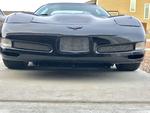
On that note, I went back to the drawing board on my car and I believe this iteration helped because the coolant temp drops (as it should) when I’m going 50+ and enough air is flowing (the fans will cool it at idle). I converted it from a bottom feeder to a front feeder by trimming a hole in the bumper, making a close off plate for the entire hole underneath, and cutting and boxing the crash bar. I know there will be a crowd that is 100% against doing those things, but I am not in that group. The pictures below show where I cut the crash bar and what the finish product looks like. Once I know it all works, it will all come off for the “beauty work” to finish it up. I was in the air between a TS bumper or adding a splitter and doing this mod, but I’m happy with how this came out.
I see what you are saying but I have to disagree in some ways. To make your example closer to what’s going on, we need to upgrade the burners to some that put out more heat (such as an upgraded engine with a supercharger, cam, etc.), next, we need to raise the scale of the heat from the **** (rpm range for racing/hard driving) to a more “usable range”, and last, we need to move “low” up to a higher point (having a Powerglide with no lockup or overdrive).
The issue here is that you just need to separate the systems in your head.
For example, oil coolers help with cooling the coolant. With a large enough oil cooler, you could almost eliminate the radiator completely.
The coolant temp is related to the cylinder wall temp, it is a set feature of efficiency, while cruising only.
In other words, you want the cylinder wall temp and coolant temp higher for cruising, than any other time, for the sake of efficiency.
Once you decide to make a WOT pass, the coolant temp should come way down first. Before making that pass. So if you are cruising on the highway at 225*F and decide to make a mile pass from a 60mph roll at WOT with 1000rwhp, you would want to bring that coolant temp down to say 175*F first, then make your pass, by which time it will wind up something like 200*F or 210*F temp rise during the run when you are finished.
The key is to recognize the difference between power situation (rising temp rate of change) and cruising conditions (losing energy as heat and trying to trap and contain as much as possible)
From the transmission point of view, the trans doesn't gain efficiency when it heats up. So this is a totally separate issue. The transmission should NEVER get hot. It should always stay around 160*F or so (4l80e for example). I don't know about newer transmission so well, but our old units do NOT like higher temperatures. This is completely separate from coolant and oil temp theory, you ALWAYS want the lowest coolest trans temp you can get (within reason) to preserve the life of the trans.
The transmission temp should NOT impact the coolant temp. Where you are trying to conserve coolant heat for cruising efficiently and keeping down the engine bay heat, the trans should not interfere with that and just stay low temp all the time.
In other words, back to the grill example, if you open the lid/hood and let out all the energy, and turn the flame wayyy up to compensate, now you are also heating everything around the grill with that energy. That causes a waste of fuel, a waste of propane if you will, heating up the surroundings. Under the hood, this heats up the entire engine bay, turning fuel into heat and spreading it all around is not good.
The transmission on the other hand should never be insulated or allowed to creep up in temperature, like the coolant can. The trans should stay cold and you must use as large as a cooler as necessary, mount that **** in the rear of the car IMO, with a little aluminum air duct (like a brake duct) to keep the air going into it, and a fan mounted on top as well, so that it not only stays wayyy away from the engine bay and engine heat and coolant heat, the system can operate independently and never interacts with the engine fluids.
Glides always slip. and that slip is based on torque and gear ratio, vehicle weight, converter design, mostly
big stall with numerically low gearing is for very very fast cars, say 155+ mph in the 1/4. And generates a LOT of heat when racing, so they require 'head room' for temp rise, which will always occur when racing that sort of trans. You cannot stop the temp from rising in a very powerful vehicle with limited fluid capacity, it will usually never reach a steady state.
So when we examine the cruise situation, now you have to focus instead on the steady state. There is no temp rise; there is only a steady temp set point, whatever that point happens to be for that exact situation.
The get a steady state, it means balance. All of the heat inputs have to balance with the outputs and nothing will change, temp will be steady.
To figure out how much energy everything is converting to heat, we must consider every part of the vehicle. tires generate heat when they roll for example. But that is negligible; so we dismiss a wide range of temperatures throughout the vehicle depending on how they affect our steady state temps.
Transmission temperature should be like tire heat; it should be negligible. This is because all of the heat generated by the engine should have nothing to do with the transmission. If you keep the cooler and lines away from the engine, this will be true. Then the only heat input to the trans comes from any transfer between the block->trans, nearby exhaust, and from the pumps/frictions involved with transmission use, rotating parts that 'grab' other parts create heat. Most heat of course comes from the converter as you would imagine. So the converter is converting mechanical energy to heat and our trans is trying to get rid of that heat, as quickly as possible, to achieve a healthy steady state temp. which has nothing to do with the engine if done properly. Hot engines don't make torque converters produce more heat energy; hot engines have nothing to do with a high cruising trans temp. The only thing there is the size of the cooler and the efficiency of the cooler on the trans. If its too small, its just too small.
So back to the engine and operating temps for a minute. If you cruise at say 60mph and the engine is 3000rpm and the coolant temp is rising quickly, to say 230*F and settles there for random example.
We have to look at the torque output of the engine for a moment and make an observation. The amount of power (not torque) required to push the vehicle along at a steady pace is unchanging if everything remains identical for the duration. In reality the vehicle is going up hills and stuff so this is never true, but for us its fine we can make the assumption for now.
Even though the amount of power requirement is staying the same, the torque output can dramatically shift while maintaining the same power, depending on the tune of the engine, and how temp affects it's efficiency.
For example if the temp goes from 170*F to 220*F, now gasoline will explode more violently, pressure will be higher when the plug fires with the same timing. therefore more energy will be released, faster. If the timing is correct, and compression isn't too high as to create a head-gasket tear, this results with more torque throughout a useful range of connecting arm angle; which means now you can apply more force the ground with less fuel input, because the increase in temp is helping the combustion process create more pressure. This added efficiency is derived from the cylinder wall temp, and nearby associated parts like the head and piston surface temps as well. The coolant is a source of high heat capacity to help keep the temp from changing suddenly, but it cannot directly control or keep piston/wall/head/valve temps from rising rapidly well beyond coolant ranges. for example most engines keep 1000*F or 1500*F combustion temps despite the 200*F coolant temp, especially at WOT with 3x the naturally aspirated output or more. This is why turbo engines from japan always have piston oil squirts but I digress.
So back to the cruising car. If we let the coolant temp scale up for a cruise, then we can inject less fuel, which means less energy will be wasted. Engine efficiency will increase, fuel economy will increase, and coolant temp will be higher now. This is good for a cruise, but not WIDE open throttle of course. They are completely separate and I think that trips alot of people up because everyone assumes that the temp the engine runs "all the time" is going to be the same regardless of what they do with the car, when you can't be farther from the truth.
I made a couple dopey paint drawings to illustrate because pictures > words.
This is the wrong way to cruise with a car:
And, this is roughly how engineers design modern fuel efficient vehicles to use high coolant temps with small shitty plastic radiators that work well together.