

Do deer repellants work?

Thread Starter
Burning Brakes


Joined: Aug 2003
Posts: 1,164
Likes: 1
 Do deer repellants work?
Does anyone on this forum have a deer repellant installed on their car and does it work? What brand name is the best for mounting on a Vette? If there is a link, please include...I tried the search, but no luck
Last edited by mark b; Sep 2, 2005 at 02:59 PM. Reason: spelling
Drifting

Joined: Nov 1999
Posts: 1,764
Likes: 0
From: Lancaster OH
Cruise-In I Veteran
Cruise-In II Veteran
Have them on my DD, most auto parts stores, Meijer's and al seel them. Do they work...have ahd deer stop and look in the direction of the car, seems the Ohio State Police have them on all their cars....

Drifting
Joined: Jul 2001
Posts: 1,896
Likes: 3
From: New Bern NC
In my opinion and based on experience - do not work in most cases. A large company nearby stopped using them on company vehicles as they did not reduce the deer hits. However, your car, use your own judgement.

Team Owner


Joined: Sep 2001
Posts: 23,283
Likes: 906
From: Lake Elsinore, CA
I understand GM will be offering the RPO Z87 "Cow Catcher" option on the new Z06 to combat the growing "deer-caught-in-the-headlights" syndrome, especially exacerbated by the powerful new C6 headlights.

For those of you wondering - no, it is not backward-compatible with the C5.


For those of you wondering - no, it is not backward-compatible with the C5.
Melting Slicks

Joined: May 2004
Posts: 3,139
Likes: 2
From: Whidbey Island WA
Originally Posted by Patches
I understand GM will be offering the RPO Z87 "Cow Catcher" option on the new Z06 to combat the growing "deer-caught-in-the-headlights" syndrome, especially exacerbated by the powerful new C6 headlights.
For those of you wondering - no, it is not backward-compatible with the C5.
For those of you wondering - no, it is not backward-compatible with the C5.

Ahhhh just read the last part of your post....


Drifting
Joined: May 2004
Posts: 1,941
Likes: 1
From: Central CA
Originally Posted by Patches
For those of you wondering - no, it is not backward-compatible with the C5.
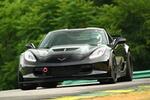
Defintately not... In the C5, there are no teeth to hold it in place, as seen here in the new c6:

Corvette Stories
The Best of Corvette for Corvette Enthusiasts

Top 10 Most Explosive Corvettes Ever Made: Power-to-Weight Ratio Ranked!
Joe Kucinski
150 hp to 1,250 hp: Every Corvette Generation Compared by the Specs That Matter
Joe Kucinski
8 Coolest Corvette Pace Cars (and Replicas) of All Time
Verdad Gallardo
Top 10 Corvette Engines RANKED by Peak Torque (70+ Years of Muscle!)
Joe Kucinski
Corvette ZR1X Will Be Pacing the Indy 500, And Could Probably Race, Too!
Verdad Gallardo
Top 10 Corvettes Coming to Mecum Indy 2026!
Brett Foote
Top 10 C9 Corvette MUST-HAVES to Fix These C8 Generation Flaws!
Michael S. Palmer
10 Revolutionary 'Corvette Firsts' Most People Don't Know
Joe Kucinski
5 Reasons to Upgrade to an LS6-Powered Corvette; 5 Reasons to Stay LT2
Michael S. Palmer


Advanced

Joined: Dec 2004
Posts: 56
Likes: 0
From: Olympia WA
You can get them cheap at truck stops - $5 or less a set. I've had them on my vehicles for years including my MC. Haven't hit any deer but have seen them looking at me and not moving - which is what they are supposed to do. I live in a heavily deer populated area - three to four go through my yard each morning.
Have to assume those who say they don't work have hit deer while having them installed or know of others who have.
Have to assume those who say they don't work have hit deer while having them installed or know of others who have.

Supporting Tuner
Joined: Sep 2004
Posts: 51,896
Likes: 39
From: ================== Houston, Texas www.englandgreen.com ================== Necessary Evil™ __________
CI 6-7-8-9-10 Veteran
St. Jude Donor '05-'06-'07-'08-'09-'10-'11-'12-'13-'14
Originally Posted by JWB ZO6
total crap!
 I've had them and still hit deer twice on different cars and different brands.


Safety Car


Joined: Dec 2003
Posts: 4,073
Likes: 1
From: Sarver Pennsylvania
I believe that this is one of those "how do you prove it?" things. Yes, you may have hit one while having them on - but how many did stop and NOT go in front of you?
I am in a "heavy" roadkill area and I consider them cheap insurance.
I am in a "heavy" roadkill area and I consider them cheap insurance.

Le Mans Master


Joined: Mar 2005
Posts: 7,876
Likes: 0
From: Ghent
St. Jude Donor '05-'06-'07-'08-'09-'10-'11-'12-'13-'14
Originally Posted by EnglandGreen
I've had them and still hit deer twice on different cars and different brands. The deer I hit did take them off of the car though=added bonus. 


Tech Contributor


Joined: Oct 1999
Posts: 41,037
Likes: 9,801
From: Charlotte, NC (formerly Endicott, NY)
Originally Posted by MyOwn69
I believe that this is one of those "how do you prove it?" things. Yes, you may have hit one while having them on - but how many did stop and NOT go in front of you?
Bill
Racer
Joined: Nov 2002
Posts: 337
Likes: 0
From: Baytown tx
A pair of eyes caught in the headlights. A stab at the brakes. A sickening thud. A deer careens off your car and lies twitching on the side of the road.
Avoidable? Yes and no. Yes, if you slow down and drive cautiously where deer crossing signs are posted or you suspect the animals may be feeding. No, if you rely on animal warning devices called "deer whistles," according to researchers and state police.
Deer whistles, mounted on the fronts of cars, trucks, and motorcycles, allegedly produce ultrasonic frequencies and/or audible sounds from the wind rushing through them. These sounds are supposed to repel or warn animals, particularly deer, elk, moose and dogs, of oncoming vehicles.
The manufacturers claim that two European studies proved that the whistles work. Not so. They were initially tried in Europe about 25 years ago but research did not prove them to be successful. Now they are being sold in the United States with European claims. The study from Finland, which the advertisers refer to, states that from all of the experiments conducted "it was unsure that the animals were not disturbed by the approach itself, so that the whistle sound was the only disturbing factor." The second study from Switzerland concludes that the whistling sound, which is well within the human hearing range, is so weak that it is overlaid by the noise of the moving vehicle. A scientific advisory panel from the World Society for the Protection of Animals states, after extensive review, that there is no known data "that shows that such devices can actually stop an animal crossing the road, which is the main purpose of the device."
Even if the devices were effective, they would soon become clogged with insects and dirt (since they are mounted on the front of the vehicle) and would stop working.
The state police in Ohio, after months of testing, found no significant decrease in patrol car/deer accidents after the warning devices were installed. In fact, more accidents were reported by the officers after the whistles were installed than before for the same period of time and stretches of highway. Tests conducted in Utah, Georgia and Wisconsin also concluded that deer whistles don't work.
The odds are you won't hit a deer. Your best protection is to drive defensively, particularly as the sun sets. This is when most vehicle/deer accidents occur. Slow down when you see one deer. More often another is right behind it.
Until there is some solid evidence, other than personal testimonials, that deer whistles are effective, keep your money in your pocket.
--------------------------------------------------------------------------------
Leonard R. Askham former WSU Associate Professor and Associate Research Scientist, Vertebrate Pest Management, Department of Horticulture and Landscape Architecture.
Issued by Washington State University Cooperative Extension and the U.S. Department of Agriculture in furtherance of the Acts of May 8 and June 30, 1914. Cooperative Extension programs and policies are consistent with federal and state laws and regulations on nondiscrimination regarding race, color, gender, national origin, religion, age, disability, and sexual orientation. Evidence of noncompliance may be reported through your local Cooperative Extension office. Trade names have been used to simplify information; no endorsement is intended. Published February 1992. Subject code 440. A
Avoidable? Yes and no. Yes, if you slow down and drive cautiously where deer crossing signs are posted or you suspect the animals may be feeding. No, if you rely on animal warning devices called "deer whistles," according to researchers and state police.
Deer whistles, mounted on the fronts of cars, trucks, and motorcycles, allegedly produce ultrasonic frequencies and/or audible sounds from the wind rushing through them. These sounds are supposed to repel or warn animals, particularly deer, elk, moose and dogs, of oncoming vehicles.
The manufacturers claim that two European studies proved that the whistles work. Not so. They were initially tried in Europe about 25 years ago but research did not prove them to be successful. Now they are being sold in the United States with European claims. The study from Finland, which the advertisers refer to, states that from all of the experiments conducted "it was unsure that the animals were not disturbed by the approach itself, so that the whistle sound was the only disturbing factor." The second study from Switzerland concludes that the whistling sound, which is well within the human hearing range, is so weak that it is overlaid by the noise of the moving vehicle. A scientific advisory panel from the World Society for the Protection of Animals states, after extensive review, that there is no known data "that shows that such devices can actually stop an animal crossing the road, which is the main purpose of the device."
Even if the devices were effective, they would soon become clogged with insects and dirt (since they are mounted on the front of the vehicle) and would stop working.
The state police in Ohio, after months of testing, found no significant decrease in patrol car/deer accidents after the warning devices were installed. In fact, more accidents were reported by the officers after the whistles were installed than before for the same period of time and stretches of highway. Tests conducted in Utah, Georgia and Wisconsin also concluded that deer whistles don't work.
The odds are you won't hit a deer. Your best protection is to drive defensively, particularly as the sun sets. This is when most vehicle/deer accidents occur. Slow down when you see one deer. More often another is right behind it.
Until there is some solid evidence, other than personal testimonials, that deer whistles are effective, keep your money in your pocket.
--------------------------------------------------------------------------------
Leonard R. Askham former WSU Associate Professor and Associate Research Scientist, Vertebrate Pest Management, Department of Horticulture and Landscape Architecture.
Issued by Washington State University Cooperative Extension and the U.S. Department of Agriculture in furtherance of the Acts of May 8 and June 30, 1914. Cooperative Extension programs and policies are consistent with federal and state laws and regulations on nondiscrimination regarding race, color, gender, national origin, religion, age, disability, and sexual orientation. Evidence of noncompliance may be reported through your local Cooperative Extension office. Trade names have been used to simplify information; no endorsement is intended. Published February 1992. Subject code 440. A