





 A very solid unit


 )
)
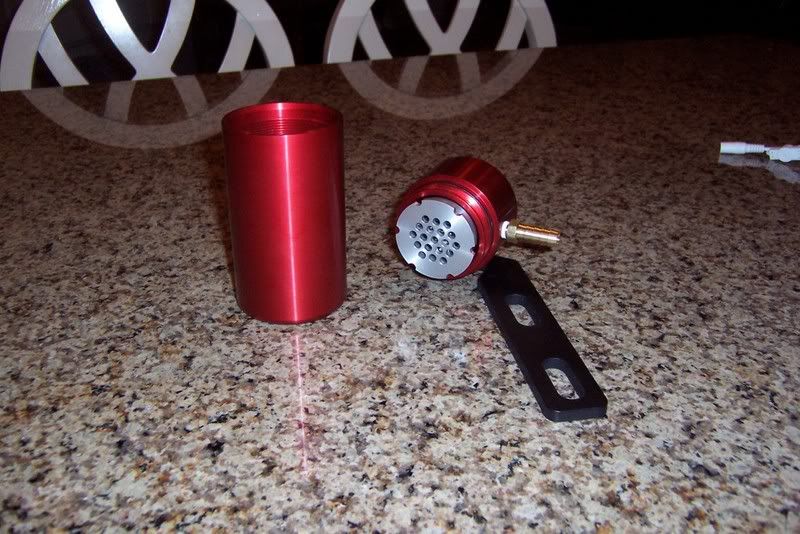

Elite Engineering Catch Can - A Macro View [Pictures]

Thread Starter
Supporting Tuner
Joined: Sep 2004
Posts: 51,896
Likes: 39
From: ================== Houston, Texas www.englandgreen.com ================== Necessary Evil™ __________
CI 6-7-8-9-10 Veteran
St. Jude Donor '05-'06-'07-'08-'09-'10-'11-'12-'13-'14
 Elite Engineering Catch Can - A Macro View [Pictures]
UPDATE
Jeff of Elite Engineering sent me one of his awesome catch cans. These units are superbly designed and manufactured, as the macro pictures will show. An excellent addition to any C5
Thanks Jeff !!!
http://eliteengineeringusa.com/Catch_Can.html


Jeff of Elite Engineering sent me one of his awesome catch cans. These units are superbly designed and manufactured, as the macro pictures will show. An excellent addition to any C5
Thanks Jeff !!!
http://eliteengineeringusa.com/Catch_Can.html
Last edited by EG@EnglandGreen; Dec 22, 2006 at 09:44 PM.
Thread Starter
Supporting Tuner
Joined: Sep 2004
Posts: 51,896
Likes: 39
From: ================== Houston, Texas www.englandgreen.com ================== Necessary Evil™ __________
CI 6-7-8-9-10 Veteran
St. Jude Donor '05-'06-'07-'08-'09-'10-'11-'12-'13-'14

Pro


Joined: Oct 2005
Posts: 680
Likes: 17
From: Moulton Alabama
Cruise-In 8-9-10-12 Veteran
Are the metal shavings a better filter than the different types used in the others? I have an '01 Z06 and think I may need one of these. It appears to use maybe a quart, at most, between oil changes, according to how much I get into the higher RPM's.
Thread Starter
Supporting Tuner
Joined: Sep 2004
Posts: 51,896
Likes: 39
From: ================== Houston, Texas www.englandgreen.com ================== Necessary Evil™ __________
CI 6-7-8-9-10 Veteran
St. Jude Donor '05-'06-'07-'08-'09-'10-'11-'12-'13-'14

Administrator


Joined: Mar 2001
Posts: 368,522
Likes: 24,823
From: In a parallel universe. Currently own 2014 Stingray Coupe.
C7 of the Year - Modified Finalist 2021
MO Events Coordinator
St. Jude Co-Organizer
St. Jude Donor '03 thru '26
NCM Sinkhole Donor
CI 5, 8 & 11 Veteran
That's a very good looking product. After the first of the year, I'll be looking to get one. 
Corvette Stories
The Best of Corvette for Corvette Enthusiasts

Every 2027 Corvette Engine Explained
Joe Kucinski
Designer Imagines A Corvette That Looks More Like a Corvette Than the Corvette
Verdad Gallardo
10 Ugly Corvettes That We Still Kinda Love
Joe Kucinski
Top 10 Most Expensive Corvettes Ever Sold on Bring A Trailer
Brett Foote
10 Things Every Corvette Owner Needs (2026 Edition)
Michael S. Palmer
8 Most "Only Corvette Owners Understand" Quirks and Problems
Pouria Savadkouei
10 Reasons the C6 Z06 is Still A Performance Benchmark After 20 Years
Joe Kucinski
How Much Horsepower Every Corvette Engine "LOST" in 1972
Joe Kucinski
Top 10 DOs and DON'Ts for Protecting Your Convertible Top!
Michael S. Palmer








Thread Starter
Supporting Tuner
Joined: Sep 2004
Posts: 51,896
Likes: 39
From: ================== Houston, Texas www.englandgreen.com ================== Necessary Evil™ __________
CI 6-7-8-9-10 Veteran
St. Jude Donor '05-'06-'07-'08-'09-'10-'11-'12-'13-'14
No worries. Here's a great explanation from the Elite Engineering web site
http://eliteengineeringusa.com/Catch_Can.html
Here it is on Cobra4B's Z06

http://eliteengineeringusa.com/Catch_Can.html
Purpose of your Stock PCV System:
The PCV (Positive Crankcase Ventilation) system is designed to regulate and remove fumes from the engine crankcase, and to alleviate crankcase pressure which could cause oil leaks or seal damage.The PCV system routes crankcase fumes into the intake manifold where they can be burned to eliminate harmful emissions into the atmosphere. The PCV valve controls the amount of crankcase flow volume depending on the engine’s load. With large throttle openings (high engine loads),
the more blow-by gases are produced, and the more the PCV system flows oil vapor in to the intake manifold. The PCV valve also functions as a check valve to prevent intake manifold flow from reversing back into the crankcase when there is a backfire, or during periods of high manifold pressure (boost) during forced induction by turbocharger or supercharger.
Negative Effects of your Stock PCV System:
Many Corvette, Camaro, Firebird and GTO owners with LS1, LS6 or LS2 engines can testify to the amount of oil residue that can accumulate inside the intake manifold, throttle body, intake track and even the air filter during aggressive driving conditions.
There are various negative effects when excess oil vapor contaminates the intake system from the stock PCV system - such as:
* *Throttle body and/or MAFS (Mass Air Flow Sensor) malfunction or failure.
* *Air filter, intercooler (if equipped) and intake ducting contamination if oil pools and run back out the instake system after engine shutdown.
* *Reduced octane of the air/fuel mixture, which can cause detonation and the ECM (Engine Control Module) to retard timing, thereby reducing engine power.
*
*Excessive carbon build-up on valves, piston crowns, combustion chambers and spark plugs. This also increases the chance of detonation and power loss.
*Increased emissions & possible contamination of catalytic converters and oxygen sensors.
Bottom line – Excessive amounts of oil vapor in the intake manifold is detrimental to your engine!
Solution – Install the Elite Engineering PCV Oil Catch Can!
Ultimate Function:
The Elite Engineering PCV Oil Catch Can is designed to effectively separate oil from the crankcase vapors, thereby eliminating all negative effects of excessive intake system oil contamination. Our Catch Can has been engineered to remove the oil vapor before it has a chance to contaminate your intake system.
Not all Catch Cans are created equally! Most Catch Cans on the market are just comprised of an empty container with 2 ports. While that simple design may trap a few oil droplets, our Catch Can is designed to condense the oil vapor and trap the oil inside the container.
Our test proven design incorporates a stainless steel mesh and screening mechanism that acts like a maze to collect and condense the oil vapor. Once the oil vapors condense into liquid droplets, it falls to the bottom of the can. In addition, the top assembly is specially designed to keep any liquid from climbing out the exit hole during aggressive driving conditions. Stored oil volume is approximately 8 ounces. You will be amazed by how much oil our Catch Can will catch!
Premium Construction:
The Elite Engineering PCV Oil Catch Can is constructed of the finest materials inside and out. High performance car owners insist on the best products that offer unsurpassed function as well as impressive visual enhancement. Our Catch Can does both! Our exclusive design incorporates optimum function and the finest materials, construction and finish for maximum dependability.
The 2.6” diameter by 6.0” long body is machined from billet 6061-T6 aluminum alloy, and then anodized in a variety of colors for a striking look. The internal condensing screen is stainless steel encased inside an aluminum alloy housing designed for low flow restriction. The housing can be disassembled for screen inspection, cleaning or
replacement if needed. The inlet and outlet hose fittings are brass, and threaded into the body and sealed with Teflon tape. Supplied hoses are fuel and oil vapor compatible (SAE 30R7 rated). The bottom catch can reservoir screws onto the top of the unit, and is sealed with a built in O-ring. Inspection and cleaning is easy by simply removing the bottom of the unit without disturbing the mounting system or hoses.
In keeping with our high quality standards, all supplied mounting hardware and screws are stainless steel. The supplied custom machined mounting bracket is black anodized 6061-T6 aluminum, and is attached to the passenger side engine head on LS1/LS6/LS2 applications with (2) two 10 mm button head screws.
Each Catch Can kit includes everything you need to install the system. Basic mechanical skills and common hand tools are the only things required.
The PCV (Positive Crankcase Ventilation) system is designed to regulate and remove fumes from the engine crankcase, and to alleviate crankcase pressure which could cause oil leaks or seal damage.The PCV system routes crankcase fumes into the intake manifold where they can be burned to eliminate harmful emissions into the atmosphere. The PCV valve controls the amount of crankcase flow volume depending on the engine’s load. With large throttle openings (high engine loads),
the more blow-by gases are produced, and the more the PCV system flows oil vapor in to the intake manifold. The PCV valve also functions as a check valve to prevent intake manifold flow from reversing back into the crankcase when there is a backfire, or during periods of high manifold pressure (boost) during forced induction by turbocharger or supercharger.
Negative Effects of your Stock PCV System:
Many Corvette, Camaro, Firebird and GTO owners with LS1, LS6 or LS2 engines can testify to the amount of oil residue that can accumulate inside the intake manifold, throttle body, intake track and even the air filter during aggressive driving conditions.
There are various negative effects when excess oil vapor contaminates the intake system from the stock PCV system - such as:
* *Throttle body and/or MAFS (Mass Air Flow Sensor) malfunction or failure.
* *Air filter, intercooler (if equipped) and intake ducting contamination if oil pools and run back out the instake system after engine shutdown.
* *Reduced octane of the air/fuel mixture, which can cause detonation and the ECM (Engine Control Module) to retard timing, thereby reducing engine power.
*
*Excessive carbon build-up on valves, piston crowns, combustion chambers and spark plugs. This also increases the chance of detonation and power loss.
*Increased emissions & possible contamination of catalytic converters and oxygen sensors.
Bottom line – Excessive amounts of oil vapor in the intake manifold is detrimental to your engine!
Solution – Install the Elite Engineering PCV Oil Catch Can!
Ultimate Function:
The Elite Engineering PCV Oil Catch Can is designed to effectively separate oil from the crankcase vapors, thereby eliminating all negative effects of excessive intake system oil contamination. Our Catch Can has been engineered to remove the oil vapor before it has a chance to contaminate your intake system.
Not all Catch Cans are created equally! Most Catch Cans on the market are just comprised of an empty container with 2 ports. While that simple design may trap a few oil droplets, our Catch Can is designed to condense the oil vapor and trap the oil inside the container.
Our test proven design incorporates a stainless steel mesh and screening mechanism that acts like a maze to collect and condense the oil vapor. Once the oil vapors condense into liquid droplets, it falls to the bottom of the can. In addition, the top assembly is specially designed to keep any liquid from climbing out the exit hole during aggressive driving conditions. Stored oil volume is approximately 8 ounces. You will be amazed by how much oil our Catch Can will catch!
Premium Construction:
The Elite Engineering PCV Oil Catch Can is constructed of the finest materials inside and out. High performance car owners insist on the best products that offer unsurpassed function as well as impressive visual enhancement. Our Catch Can does both! Our exclusive design incorporates optimum function and the finest materials, construction and finish for maximum dependability.
The 2.6” diameter by 6.0” long body is machined from billet 6061-T6 aluminum alloy, and then anodized in a variety of colors for a striking look. The internal condensing screen is stainless steel encased inside an aluminum alloy housing designed for low flow restriction. The housing can be disassembled for screen inspection, cleaning or
replacement if needed. The inlet and outlet hose fittings are brass, and threaded into the body and sealed with Teflon tape. Supplied hoses are fuel and oil vapor compatible (SAE 30R7 rated). The bottom catch can reservoir screws onto the top of the unit, and is sealed with a built in O-ring. Inspection and cleaning is easy by simply removing the bottom of the unit without disturbing the mounting system or hoses.
In keeping with our high quality standards, all supplied mounting hardware and screws are stainless steel. The supplied custom machined mounting bracket is black anodized 6061-T6 aluminum, and is attached to the passenger side engine head on LS1/LS6/LS2 applications with (2) two 10 mm button head screws.
Each Catch Can kit includes everything you need to install the system. Basic mechanical skills and common hand tools are the only things required.

Supporting Tuner
Joined: Mar 2006
Posts: 1,311
Likes: 0
From: Houston TX
Cruise-In VIII Veteran
St. Jude Donor '06-'07
Thread Starter
Supporting Tuner
Joined: Sep 2004
Posts: 51,896
Likes: 39
From: ================== Houston, Texas www.englandgreen.com ================== Necessary Evil™ __________
CI 6-7-8-9-10 Veteran
St. Jude Donor '05-'06-'07-'08-'09-'10-'11-'12-'13-'14
Just got this comment from another section of the Forum (about the E2 Catch Can)
THAT is a nice piece of work.
At the top of the photos I first thought the container was a drawn, thin-wall item like a vacuum bottle. Then I realized
that it is a machined, thick wall objet d'art.
Look at the threads inside the cap (to hold the separator up in place). Next time you look at another threaded piece of
aluminum, ask yourself whether they are as well-formed as these, particularly for being at the bottom of a blind hole.
Thanks for sharing.
At the top of the photos I first thought the container was a drawn, thin-wall item like a vacuum bottle. Then I realized
that it is a machined, thick wall objet d'art.
Look at the threads inside the cap (to hold the separator up in place). Next time you look at another threaded piece of
aluminum, ask yourself whether they are as well-formed as these, particularly for being at the bottom of a blind hole.
Thanks for sharing.

Le Mans Master


Joined: Sep 2004
Posts: 6,019
Likes: 568
From: Conroe Texas
Look at the threads inside the cap (to hold the separator up in place). Next time you look at another threaded piece of
aluminum, ask yourself whether they are as well-formed as these, particularly for being at the bottom of a blind hole.
threads are put in with a thread mill, a more effecient and structuraly improved method over tapping. a thread mill will machine the threads where as a tap actually tears the material to be removed while creating the treads.
do they come in YELLOW ?
aluminum, ask yourself whether they are as well-formed as these, particularly for being at the bottom of a blind hole.
threads are put in with a thread mill, a more effecient and structuraly improved method over tapping. a thread mill will machine the threads where as a tap actually tears the material to be removed while creating the treads.
do they come in YELLOW ?
Thread Starter
Supporting Tuner
Joined: Sep 2004
Posts: 51,896
Likes: 39
From: ================== Houston, Texas www.englandgreen.com ================== Necessary Evil™ __________
CI 6-7-8-9-10 Veteran
St. Jude Donor '05-'06-'07-'08-'09-'10-'11-'12-'13-'14
Look at the threads inside the cap (to hold the separator up in place). Next time you look at another threaded piece of
aluminum, ask yourself whether they are as well-formed as these, particularly for being at the bottom of a blind hole.
threads are put in with a thread mill, a more effecient and structuraly improved method over tapping. a thread mill will machine the threads where as a tap actually tears the material to be removed while creating the treads.
do they come in YELLOW ?
aluminum, ask yourself whether they are as well-formed as these, particularly for being at the bottom of a blind hole.
threads are put in with a thread mill, a more effecient and structuraly improved method over tapping. a thread mill will machine the threads where as a tap actually tears the material to be removed while creating the treads.
do they come in YELLOW ?