






 .
.
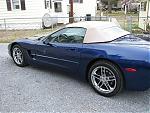
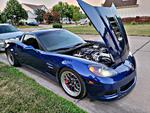
wheel size

Le Mans Master


Joined: Aug 2004
Posts: 9,420
Likes: 8
From: Southern New Jersey, The wet part at the bottom
St. Jude Donor '08-'09-'10

C5 General

Joined: Nov 2005
Posts: 3,391
Likes: 0
From: Boosted in Manhattan & Round Rock TX. President of the Non Club Club of Kansas and Round Rock , Not the flat part.
Corvette Stories
The Best of Corvette for Corvette Enthusiasts

Every 2027 Corvette Engine Explained
Joe Kucinski
Designer Imagines A Corvette That Looks More Like a Corvette Than the Corvette
Verdad Gallardo
10 Ugly Corvettes That We Still Kinda Love
Joe Kucinski
Top 10 Most Expensive Corvettes Ever Sold on Bring A Trailer
Brett Foote
10 Things Every Corvette Owner Needs (2026 Edition)
Michael S. Palmer
8 Most "Only Corvette Owners Understand" Quirks and Problems
Pouria Savadkouei
10 Reasons the C6 Z06 is Still A Performance Benchmark After 20 Years
Joe Kucinski
How Much Horsepower Every Corvette Engine "LOST" in 1972
Joe Kucinski
Top 10 DOs and DON'Ts for Protecting Your Convertible Top!
Michael S. Palmer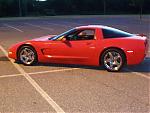


Drifting


Joined: Mar 2005
Posts: 1,726
Likes: 51
From: Paducah KY
2024 C5 of the Year Finalist - Modified
2023 C8 of the Year Finalist - Modified
2020 C7 of the Year Finalist -- Modified
2020 C2 of the Year Finalist - Unmodified
Cruise-In VIII Veteran

the 19/20 setup looks great on lowered vettes. If you plan to stay at stock ride height 18/19 will look fine.



Race Director

Joined: Dec 2000
Posts: 19,304
Likes: 85
From: San Diego CA
I see these postings quite often......
Disadvantages
of taller tires include a more or less significant loss of performance depending upon the increase in diameter and weight.
With every inch over stock diameter you'll lose 3.5% of torque.
Larger tires and wheels may have a negative influence on stopping power. Know thy weight! You can easily increase each tire/wheel weight by a significant amount. Lighter wheels usually cost more than equivelent-size heavier wheels.
Draw back of heavier tires is a possible decrease of comfort (harsher ride) Lower profile = less cushion.
More unsprung weight means a rougher ride. Your goal should be to keep unsprung weight down as low as possible.
Draw back of wider tires is a loss of steering accuracy, all other things (like sidewall stiffness and speed rating) being equal.
Wider tires have a higher rolling resistance resulting in higher gas consumption.
To gain back some of the lost performance, swapping in numerically higher gears may be a good idea. Still, keep the comments listed above in mind before simply "going larger" when it comes to wheel and tire size.
Disadvantages
of taller tires include a more or less significant loss of performance depending upon the increase in diameter and weight.
With every inch over stock diameter you'll lose 3.5% of torque.
Larger tires and wheels may have a negative influence on stopping power. Know thy weight! You can easily increase each tire/wheel weight by a significant amount. Lighter wheels usually cost more than equivelent-size heavier wheels.
Draw back of heavier tires is a possible decrease of comfort (harsher ride) Lower profile = less cushion.
More unsprung weight means a rougher ride. Your goal should be to keep unsprung weight down as low as possible.
Draw back of wider tires is a loss of steering accuracy, all other things (like sidewall stiffness and speed rating) being equal.
Wider tires have a higher rolling resistance resulting in higher gas consumption.
To gain back some of the lost performance, swapping in numerically higher gears may be a good idea. Still, keep the comments listed above in mind before simply "going larger" when it comes to wheel and tire size.


Administrator


Joined: Mar 2001
Posts: 368,536
Likes: 24,826
From: In a parallel universe. Currently own 2014 Stingray Coupe.
C7 of the Year - Modified Finalist 2021
MO Events Coordinator
St. Jude Co-Organizer
St. Jude Donor '03 thru '26
NCM Sinkhole Donor
CI 5, 8 & 11 Veteran
I've gone the bigger route (19/20) but for my next set I am thinking about going back to the 17/18. May get the wheels in the Z06 widths though.



Supporting Tuner
Joined: Mar 2006
Posts: 1,311
Likes: 0
From: Houston TX
Cruise-In VIII Veteran
St. Jude Donor '06-'07
I see these postings quite often......
Disadvantages
of taller tires include a more or less significant loss of performance depending upon the increase in diameter and weight.
With every inch over stock diameter you'll lose 3.5% of torque.
Larger tires and wheels may have a negative influence on stopping power. Know thy weight! You can easily increase each tire/wheel weight by a significant amount. Lighter wheels usually cost more than equivelent-size heavier wheels.
Draw back of heavier tires is a possible decrease of comfort (harsher ride) Lower profile = less cushion.
More unsprung weight means a rougher ride. Your goal should be to keep unsprung weight down as low as possible.
Draw back of wider tires is a loss of steering accuracy, all other things (like sidewall stiffness and speed rating) being equal.
Wider tires have a higher rolling resistance resulting in higher gas consumption.
To gain back some of the lost performance, swapping in numerically higher gears may be a good idea. Still, keep the comments listed above in mind before simply "going larger" when it comes to wheel and tire size.
Disadvantages
of taller tires include a more or less significant loss of performance depending upon the increase in diameter and weight.
With every inch over stock diameter you'll lose 3.5% of torque.
Larger tires and wheels may have a negative influence on stopping power. Know thy weight! You can easily increase each tire/wheel weight by a significant amount. Lighter wheels usually cost more than equivelent-size heavier wheels.
Draw back of heavier tires is a possible decrease of comfort (harsher ride) Lower profile = less cushion.
More unsprung weight means a rougher ride. Your goal should be to keep unsprung weight down as low as possible.
Draw back of wider tires is a loss of steering accuracy, all other things (like sidewall stiffness and speed rating) being equal.
Wider tires have a higher rolling resistance resulting in higher gas consumption.
To gain back some of the lost performance, swapping in numerically higher gears may be a good idea. Still, keep the comments listed above in mind before simply "going larger" when it comes to wheel and tire size.
Race Director
Joined: Dec 2000
Posts: 19,304
Likes: 85
From: San Diego CA
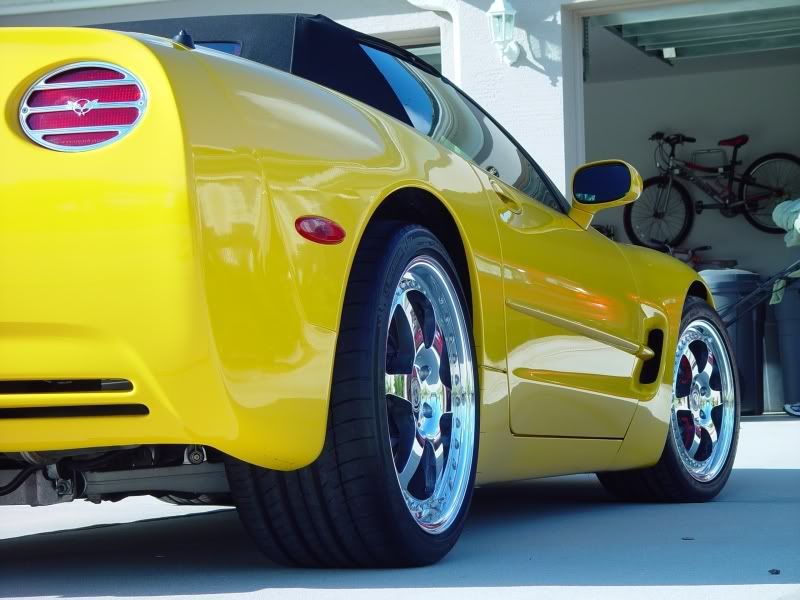
I've known quite a few people who have "gone big" and gone back". We've all seen little Hondas with 18-inch wheels - rediculous. My 68 C3 had 15-inch wheels! The Tirerack does list wheel weight for some of their wheels; the downside is that they do not know what OEM wheels weigh. Still, there are significant differences (sometimes double) in weight among various wheel types. I'm convinced that with careful shopping, you can go one size larger without adding more weight. "It's gonna cost yah", however!


Instructor

Joined: Aug 2006
Posts: 182
Likes: 0
From: Hartsville SC
Handling?
On the other side of the looks/bling factor.....how much increase in handling performance can be had. Obviously the wider set of tires (z06) will assist with at the limit handling. Where is the tradeoff for a C5? I always thought less sidewall meant less flex in the tire and more traction....
I would love to have a set of gunmetal C6 rims on my 03 msgm, but any mods, especially more $ tires, and wheels need to pay off in performance for me to justify it.
I would love to have a set of gunmetal C6 rims on my 03 msgm, but any mods, especially more $ tires, and wheels need to pay off in performance for me to justify it.