


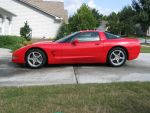

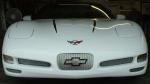
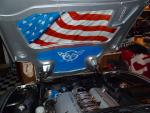



Painted Lower Bumper
Administrator


Joined: Mar 2001
Posts: 368,324
Likes: 24,777
From: In a parallel universe. Currently own 2014 Stingray Coupe.
C7 of the Year - Modified Finalist 2021
MO Events Coordinator
St. Jude Co-Organizer
St. Jude Donor '03 thru '26
NCM Sinkhole Donor
CI 5, 8 & 11 Veteran

Nicely done - the rear end sure looks good now.

Race Director

Joined: Jul 2007
Posts: 18,681
Likes: 47
From: Reno is so close to Hell you can see Sparks , State Of Confusion
St. Jude Donor '12-'13-'14
Corvette Stories
The Best of Corvette for Corvette Enthusiasts

Top 10 Most Expensive Corvettes Ever Sold on Bring A Trailer
Brett Foote
10 Things Every Corvette Owner Needs (2026 Edition)
Michael S. Palmer
8 Most "Only Corvette Owners Understand" Quirks and Problems
Pouria Savadkouei
10 Reasons the C6 Z06 is Still A Performance Benchmark After 20 Years
Joe Kucinski
How Much Horsepower Every Corvette Engine "LOST" in 1972
Joe Kucinski
Top 10 DOs and DON'Ts for Protecting Your Convertible Top!
Michael S. Palmer
Top 10 Most Explosive Corvettes Ever Made: Power-to-Weight Ratio Ranked!
Joe Kucinski
150 hp to 1,250 hp: Every Corvette Generation Compared by the Specs That Matter
Joe Kucinski
8 Coolest Corvette Pace Cars (and Replicas) of All Time
Verdad Gallardo



Burning Brakes


Joined: Sep 2009
Posts: 755
Likes: 3
From: Houston Texas

Thread Starter
Melting Slicks

Joined: Jul 2009
Posts: 2,487
Likes: 0
From: China Grove N.C.
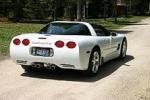
To get sharp clean edges use FINE LINE autobody tape from 3m it the best the roll i bought $7.00 bucks at O'reilly.An scuff with 400 grt sandpaper then wipe clean with alcohol an i wiped everything down with a microfiber cloth,then 5 coats later,DONE!!  I ALSO MEASURED FROM EACH TAIL LIGHT DOWN ON EACH SIDE TO MAKE SURE I WAS PERFECTLY EVEN ON EACH SIDE AN PUT A LEVEL ON TOP LINE TO BE EXACT AN I MEASURED THE LOWER SIDES SO THEY WERE EXACT ALSO !!!
I ALSO MEASURED FROM EACH TAIL LIGHT DOWN ON EACH SIDE TO MAKE SURE I WAS PERFECTLY EVEN ON EACH SIDE AN PUT A LEVEL ON TOP LINE TO BE EXACT AN I MEASURED THE LOWER SIDES SO THEY WERE EXACT ALSO !!!
Last edited by corvettedaddy11; May 2, 2010 at 02:48 AM.






Instructor

Joined: Apr 2010
Posts: 234
Likes: 0
From: Lynden Washington
SDZ06
I was a spraypainter for nearly 30 years. Commercial Jets/Corperate Excecutive Helicopters and Porsche's.
Very nice products to use for this are:
3M Vinyl 123 or
Sherwin Williams Polane (my favorite)
The nicest approach to a textured finish is as follows.
As you saw in this thread the OP used 3M's fineline/endlessline tape. It is VERY GOOD stuff to mask off his area to be painted.
Use a PPG grease and wax remover (or akin to) to remove the contaminates. Always wipe behind the wet cloth with a clean dry one. Repeat this 3-4 times.
Instead of using sand paper, you can achieve deglossing and promote adhesion by using a 3M RED Scotch Brite Pad. This will do the same as the sandpaper and shall conform to the rear vents contours MUCH easier than sand paper.
After scuff sanding wipe it again with the G&W remover, followed by a clean dry cloth.
Then use light pressure on a tack cloth to remove any excess contaminates.
Using gravity feed spray gun is very nice for this application because gravity feed guns produce less overspray, because they require less air. A cup gun for example requires more air to suck it out the cup through to the gun nozzle. Gravity feed, the material just falls into the path of the nozzel, and only subtle air pressure is required to atomize the material/paint.
Sherwin Williams makes a primer for it's Polane (urethane) but any other smaller quantity urethane primer (rattle can) can be used under the topcoat. Urethane primer is very light bodied and needs only a very fine coat. (don't try to bury it)
But once primed, and your color coat is applied using a gravity feed gun (mixed per mfg instructions) and 'hide' is achieved (color is good throughout/even covered)
You then let it try. Sherwin Williams dries to the touch in no time. But let it dry for a few hours to let it tighten up.
Once the color coat is on, you then use the same paint but reduce it only half as much. Hence the viscosity is thicker.
Now you have thicker paint in the gravity feed cup you open the fan pattern up on the spray gun making the pattern a bit wider. Varing the air pressure you can create texture to you liking. In my world professionaly is was textured to a 'grade'. A B C D -D being the most pronouced- A being the finest.
I like your thoughts and curiosity toward texture. It adds a pleasent astetic value, and helps the durability.
PM me if you really want to try this. It is easier than you think, and I don't want you to be intimidated by what I wrote.
Essentually the texture is created by the heavier viscosity material being subtley applied over the topcoat.
The nice thing about Sherwin Williams Polane is depending on the amount of catalyst used, it can render either a flat black finish, or semigloss. Technically you could have semi gloss texture over flat black of visa versa.
Many of the finest aircraft cockpits in the world are finished this way. Or a sprayable suede finish. Beautiful stuff. The suede finish is used to prevent glare off the instrument panel.
Cruise by and Sherwin William paint store and ask about Polane, and ask to see the texture graded sample chips. They may be termed BAC A through E BAC= Boeing Aircraft Commercial
William
I was a spraypainter for nearly 30 years. Commercial Jets/Corperate Excecutive Helicopters and Porsche's.
Very nice products to use for this are:
3M Vinyl 123 or
Sherwin Williams Polane (my favorite)
The nicest approach to a textured finish is as follows.
As you saw in this thread the OP used 3M's fineline/endlessline tape. It is VERY GOOD stuff to mask off his area to be painted.
Use a PPG grease and wax remover (or akin to) to remove the contaminates. Always wipe behind the wet cloth with a clean dry one. Repeat this 3-4 times.
Instead of using sand paper, you can achieve deglossing and promote adhesion by using a 3M RED Scotch Brite Pad. This will do the same as the sandpaper and shall conform to the rear vents contours MUCH easier than sand paper.
After scuff sanding wipe it again with the G&W remover, followed by a clean dry cloth.
Then use light pressure on a tack cloth to remove any excess contaminates.
Using gravity feed spray gun is very nice for this application because gravity feed guns produce less overspray, because they require less air. A cup gun for example requires more air to suck it out the cup through to the gun nozzle. Gravity feed, the material just falls into the path of the nozzel, and only subtle air pressure is required to atomize the material/paint.
Sherwin Williams makes a primer for it's Polane (urethane) but any other smaller quantity urethane primer (rattle can) can be used under the topcoat. Urethane primer is very light bodied and needs only a very fine coat. (don't try to bury it)
But once primed, and your color coat is applied using a gravity feed gun (mixed per mfg instructions) and 'hide' is achieved (color is good throughout/even covered)
You then let it try. Sherwin Williams dries to the touch in no time. But let it dry for a few hours to let it tighten up.
Once the color coat is on, you then use the same paint but reduce it only half as much. Hence the viscosity is thicker.
Now you have thicker paint in the gravity feed cup you open the fan pattern up on the spray gun making the pattern a bit wider. Varing the air pressure you can create texture to you liking. In my world professionaly is was textured to a 'grade'. A B C D -D being the most pronouced- A being the finest.
I like your thoughts and curiosity toward texture. It adds a pleasent astetic value, and helps the durability.
PM me if you really want to try this. It is easier than you think, and I don't want you to be intimidated by what I wrote.
Essentually the texture is created by the heavier viscosity material being subtley applied over the topcoat.
The nice thing about Sherwin Williams Polane is depending on the amount of catalyst used, it can render either a flat black finish, or semigloss. Technically you could have semi gloss texture over flat black of visa versa.
Many of the finest aircraft cockpits in the world are finished this way. Or a sprayable suede finish. Beautiful stuff. The suede finish is used to prevent glare off the instrument panel.
Cruise by and Sherwin William paint store and ask about Polane, and ask to see the texture graded sample chips. They may be termed BAC A through E BAC= Boeing Aircraft Commercial
William