



Tire report

Thread Starter
Racer

Joined: Aug 2014
Posts: 400
Likes: 28
From: St. Paul (smokey!) MN
 Tire report
I see lots of threads asking for advice about tires, then no feedback later about how they felt about their choice. I thought I would write a short report.
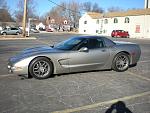
I bought 4 new Conti Extreme Contact Sport for my 98, stock size (245/45/r17 front and 275/40/r18 rear) in July. Since then I have probably put between 3000 and 4000 miles on them.
Bad news first: I ran over something on the highway, not sure what. It tore a chunk of tread out of a rear, buy I did not flat. I was able to drive home. Tire rack honored their hazard warranty, it was a fairly painless process. The tires were new enough that I did not need to get 2 rear tires.
Good news:
Ride, noise, and grip and fantastic, and much improved over the 19 year old GY runflats. Was it silly to get high performance summer tires on a car that I won't race? Maybe, but they are still fun and I don't regret it. At the number of miles/year that I drive it, age will get them long before mileage does.
Wet weather grip was good, although I didn't push it hard. The old GYs were terrible in the wet, I didn't want to find out the hard way where the limit was.
One of my concerns was how cold temperatures would affect them. I want to drive in the winter as long as the roads are dry. I read many posts that warned of all kinds of disasters at near freezing temperatures. Some even warned against below 60 (which is absurd).
I found that all of those warnings were much about nothing. I drove in northern Wisconsin, in rain and near freezing temperatures, even a few flurries. The tires were fine. I had no issues accelerating, cornering, or stopping. The tires didn't freeze, crack, or disintegrate.
My verdict: I'm happy with them, and would get them again.
I bought 4 new Conti Extreme Contact Sport for my 98, stock size (245/45/r17 front and 275/40/r18 rear) in July. Since then I have probably put between 3000 and 4000 miles on them.
Bad news first: I ran over something on the highway, not sure what. It tore a chunk of tread out of a rear, buy I did not flat. I was able to drive home. Tire rack honored their hazard warranty, it was a fairly painless process. The tires were new enough that I did not need to get 2 rear tires.
Good news:
Ride, noise, and grip and fantastic, and much improved over the 19 year old GY runflats. Was it silly to get high performance summer tires on a car that I won't race? Maybe, but they are still fun and I don't regret it. At the number of miles/year that I drive it, age will get them long before mileage does.
Wet weather grip was good, although I didn't push it hard. The old GYs were terrible in the wet, I didn't want to find out the hard way where the limit was.
One of my concerns was how cold temperatures would affect them. I want to drive in the winter as long as the roads are dry. I read many posts that warned of all kinds of disasters at near freezing temperatures. Some even warned against below 60 (which is absurd).
I found that all of those warnings were much about nothing. I drove in northern Wisconsin, in rain and near freezing temperatures, even a few flurries. The tires were fine. I had no issues accelerating, cornering, or stopping. The tires didn't freeze, crack, or disintegrate.
My verdict: I'm happy with them, and would get them again.

Le Mans Master

Joined: Sep 2016
Posts: 6,480
Likes: 556
Thanks for the post. I see a lot of threads started about which tires to get, but rarely does anyone post a report like this after they've had the tires for a while. This is good info to know and I'd like to see more of it...

Instructor

Joined: Jan 2016
Posts: 136
Likes: 10
From: Cincinnati, Ohio
I put a set on mine 18's and 19's on C6 wheels the ride and grip are great but the manufacture warns about temps below 45 degrees. I love them but I don't plan on using them in the winter. It's put away until March or April. Enjoy !!!!!!
Le Mans Master
Joined: Sep 2016
Posts: 6,480
Likes: 556
What supposedly happens, according the manufacturer, if you drive on these tires in temps below 45 degrees?
Thread Starter
Racer
Joined: Aug 2014
Posts: 400
Likes: 28
From: St. Paul (smokey!) MN
I don't know what Conti says, but in my short experience - nothing happens. There may be reduced grip, but it is still very good. It just might not be the maximum grip possible.

Melting Slicks


Joined: Sep 2006
Posts: 2,728
Likes: 142
From: Iowa
People freak out about performance tires and cold weather. It's mostly gross exaggeration from people with no actual experience or very bad drivers with no common sense.
I've been using R-Compounds (R888, 555R-II, etc) for years year round. I'll drive the car as long as there isn't salt on the ground or snow. Rain, downpours, cold, 30F...it's fine. I've even pushed it on on ramps in 34F weather and didn't spin off the road and die in a horrible, fiery crash. This is on a boosted ZO6 with 640rwhp and no nannies. I pulled the steering position sensor years ago when the lateral accelerometer failed. Just use common sense.
Good to hear the tires are working out for you!
I've been using R-Compounds (R888, 555R-II, etc) for years year round. I'll drive the car as long as there isn't salt on the ground or snow. Rain, downpours, cold, 30F...it's fine. I've even pushed it on on ramps in 34F weather and didn't spin off the road and die in a horrible, fiery crash. This is on a boosted ZO6 with 640rwhp and no nannies. I pulled the steering position sensor years ago when the lateral accelerometer failed. Just use common sense.
Good to hear the tires are working out for you!
Last edited by Quickshift_C5; Dec 6, 2017 at 05:39 PM.
Corvette Stories
The Best of Corvette for Corvette Enthusiasts

Every 2027 Corvette Engine Explained
Joe Kucinski
Designer Imagines A Corvette That Looks More Like a Corvette Than the Corvette
Verdad Gallardo
10 Ugly Corvettes That We Still Kinda Love
Joe Kucinski
Top 10 Most Expensive Corvettes Ever Sold on Bring A Trailer
Brett Foote
10 Things Every Corvette Owner Needs (2026 Edition)
Michael S. Palmer
8 Most "Only Corvette Owners Understand" Quirks and Problems
Pouria Savadkouei
10 Reasons the C6 Z06 is Still A Performance Benchmark After 20 Years
Joe Kucinski
How Much Horsepower Every Corvette Engine "LOST" in 1972
Joe Kucinski
Top 10 DOs and DON'Ts for Protecting Your Convertible Top!
Michael S. Palmer
Race Director


Joined: Apr 2017
Posts: 10,247
Likes: 888
From: Hickory NC
2025 C5 of the Year Finalist - Modified
2022 C5 of the Year Finalist - Modified
2020 C5 of the Year Finalist - Modified
St. Jude Donor '17 thru '26
Thanks for the feedback on your tires. Helpful to anyone considering replacements.

Drifting

Joined: Mar 2013
Posts: 1,496
Likes: 355
From: Little Rock Arkansas
Honestly I can't believe you even considered driving the car at all with original run-flats. Going to re-iterate what I say every time I see that; the original run-flats are worthless by this point regardless of how "good" they look. No tire is going to hold out for near 20 years regardless of how well you store the car.
Thanks for the tire feedback. I can understand why people may not often post their experiences. There are a tremendous amount of factors - mostly user - that negate a lot of what can be reviewed about tires. Of course initial ride quality and handling are one but the usable "life" and performance windows of a tire can shrink dramatically if the owner does not practice proper tire maintenance. It's especially difficult with a Corvette with rotation being difficult to virtually impossible in cases, worn suspension components, etc, etc.
I would say initial impressions say more than any sort of long-term review simply due to all of the aforementioned potential issues.
Thanks for the tire feedback. I can understand why people may not often post their experiences. There are a tremendous amount of factors - mostly user - that negate a lot of what can be reviewed about tires. Of course initial ride quality and handling are one but the usable "life" and performance windows of a tire can shrink dramatically if the owner does not practice proper tire maintenance. It's especially difficult with a Corvette with rotation being difficult to virtually impossible in cases, worn suspension components, etc, etc.
I would say initial impressions say more than any sort of long-term review simply due to all of the aforementioned potential issues.

Safety Car


Joined: Feb 2013
Posts: 4,346
Likes: 755
From: Greensboro Nc
I have around 30k on my DW's and drove on them rain,shine, and cold for quite a while. They did great even down into the teens a couple times. At around 30° you could start to tell the traction was reduced, but anything above that they were fine.

Administrator


Joined: Mar 2001
Posts: 368,536
Likes: 24,826
From: In a parallel universe. Currently own 2014 Stingray Coupe.
C7 of the Year - Modified Finalist 2021
MO Events Coordinator
St. Jude Co-Organizer
St. Jude Donor '03 thru '26
NCM Sinkhole Donor
CI 5, 8 & 11 Veteran
Good that you're happy with the Conti's. Hope the ride, handling and tire wear remain good for you as you put more miles on them.

Race Director
Joined: May 2003
Posts: 14,137
Likes: 2,985
From: Iowa
St. Jude Donor '03 thru '26
I have the Conti Extreme Contact Sport on my 99. I just read an article in Car & Driver that reviewed 5 sets of summer only tires. The Conti came in 2nd place, Michelin came in first. I have the Michelin tires on my 02 and I would have to agree that they are better but also cost about $40 more per tire.
As for the winter use, don't:
Beware that some performance summer tires can crack in winter
Summer tires not only lack grip in cold weather, but they can be damaged by low temperatures
Published: March 15, 2014 09:00 AM
Find Ratings
Tires
Anything made with rubber can become more rigid as temperatures get very low, as evidenced by some ultra-high-performance summer tires being used by General Motors and other manufacturers on some vehicles. These tires not only lose grip in cold weather, but they risk cracking, compromising longevity.
This is a significant concern for buyers in northern climes, with GM notably advising not to drive such vehicles during winter chills at the risk of developing damaging cracks. It is likewise important to owners looking forward to spring drives in their performance cars to inspect the tires thoroughly.
GM bulletin #13-03-10-001A: "Information on Tire Cold Weather Cracking" – (Jan 30, 2014) advises “avoid driving, moving, or test-driving vehicles equipped with high-performance summer-only tires below 20º F as operating at these temperatures can cause damage to the tires.” The car models affected include the 2012-2014 Buick Regal GS, 2014 Cadillac CTS Vsport, 2012-2014 Chevrolet Camaro ZL1 and Z/28, 2014-2014 Chevrolet Camaro SS 1LE, and the 2014 Chevrolet Corvette Stingray and Stingray Z51, and SS sedan.
In GM’s quest to deliver the ultimate handling in these cars, they built performance tires with essentially a racing compound to deliver the goods. These tires are great for driving in temperate areas and are ideally suited for track use, but the practicality of the tires stops there.
Reaching out to a GM tire supplier, Pirelli, a spokesman explained that the performance tread compound becomes so stiff on such tires that it can lead to cracking when deformed in cold weather. In measuring the hardness of numerous brands of summer tires at 0º F, we have found the tread becomes almost inflexible and the tires lose their bounce when dropped. The cracking is characterized as cosmetic, but in our experience any cracking shouldn’t be taken lightly as it can evolve over time. If there is crack, you should replace the tire. (GM’s service bulletin also recommends discarding a tire with cracking.)
Here is what you need to do if you own or are considering purchasing one of the GM cars mentioned in the bulletin or any car that comes with summer tires.
When looking at a new car with performance summer tires at a dealer’s lot, check the tires on the car for cracking in the tread area. The car may have only a few miles on the odometer, but if it was parked in the cold and moved around during transport or by the dealer, the tires could have cracked. This is the time to have the dealer change the effected tires, because once you make the deal and drive off, it’s your headache.
If you own a car with summer tires, refrain from using it at all in cold temperatures as the tires may crack. Leave it parked. Beyond cracking concerns, summer tires have diminished grip below 40º F on dry and wet roads and virtually little to no grip on snow and ice.
If you bought your dream car with summer tires on it and live in an area that does have winter, then consider using performance all-season tires or dedicated winter tires. These will provide better cold-weather grip and preserve the pricey summer times for the other seasons. Through our testing, we have found a number of ultra-high-performance all-season tires that provide handling and dry and wet grip on par to many summer tires we have tested. (See our full tire ratings.)
As for the winter use, don't:
Beware that some performance summer tires can crack in winter
Summer tires not only lack grip in cold weather, but they can be damaged by low temperatures
Published: March 15, 2014 09:00 AM
Find Ratings
Tires
Anything made with rubber can become more rigid as temperatures get very low, as evidenced by some ultra-high-performance summer tires being used by General Motors and other manufacturers on some vehicles. These tires not only lose grip in cold weather, but they risk cracking, compromising longevity.
This is a significant concern for buyers in northern climes, with GM notably advising not to drive such vehicles during winter chills at the risk of developing damaging cracks. It is likewise important to owners looking forward to spring drives in their performance cars to inspect the tires thoroughly.
GM bulletin #13-03-10-001A: "Information on Tire Cold Weather Cracking" – (Jan 30, 2014) advises “avoid driving, moving, or test-driving vehicles equipped with high-performance summer-only tires below 20º F as operating at these temperatures can cause damage to the tires.” The car models affected include the 2012-2014 Buick Regal GS, 2014 Cadillac CTS Vsport, 2012-2014 Chevrolet Camaro ZL1 and Z/28, 2014-2014 Chevrolet Camaro SS 1LE, and the 2014 Chevrolet Corvette Stingray and Stingray Z51, and SS sedan.
In GM’s quest to deliver the ultimate handling in these cars, they built performance tires with essentially a racing compound to deliver the goods. These tires are great for driving in temperate areas and are ideally suited for track use, but the practicality of the tires stops there.
Reaching out to a GM tire supplier, Pirelli, a spokesman explained that the performance tread compound becomes so stiff on such tires that it can lead to cracking when deformed in cold weather. In measuring the hardness of numerous brands of summer tires at 0º F, we have found the tread becomes almost inflexible and the tires lose their bounce when dropped. The cracking is characterized as cosmetic, but in our experience any cracking shouldn’t be taken lightly as it can evolve over time. If there is crack, you should replace the tire. (GM’s service bulletin also recommends discarding a tire with cracking.)
Here is what you need to do if you own or are considering purchasing one of the GM cars mentioned in the bulletin or any car that comes with summer tires.
When looking at a new car with performance summer tires at a dealer’s lot, check the tires on the car for cracking in the tread area. The car may have only a few miles on the odometer, but if it was parked in the cold and moved around during transport or by the dealer, the tires could have cracked. This is the time to have the dealer change the effected tires, because once you make the deal and drive off, it’s your headache.
If you own a car with summer tires, refrain from using it at all in cold temperatures as the tires may crack. Leave it parked. Beyond cracking concerns, summer tires have diminished grip below 40º F on dry and wet roads and virtually little to no grip on snow and ice.
If you bought your dream car with summer tires on it and live in an area that does have winter, then consider using performance all-season tires or dedicated winter tires. These will provide better cold-weather grip and preserve the pricey summer times for the other seasons. Through our testing, we have found a number of ultra-high-performance all-season tires that provide handling and dry and wet grip on par to many summer tires we have tested. (See our full tire ratings.)
