When you click on links to various merchants on this site and make a purchase, this can result in this site earning a commission. Affiliate programs and affiliations include, but are not limited to, the eBay Partner Network.
Thanks to all the tips and tricks I've learned here, I just completed my first spark plug /wire change on my 2000 Vette! The plugs and wires were original, meaning they were 19 years old; the car has 89K miles, so it seemed like the charitable thing to do for the green beauty!
(It wasn't misfiring, or throwing any codes, but the age and miles were evidence enough that it was in order.)
Now the last time I changed out plugs was 2015, on my '05 Mustang, which had the dreaded 2-piece break-apart plugs, and that was an actual nightmare! But, I successfully completed that job, so I knew I could tackle this one!
This project was back-straining and knuckle-scarring in its execution, but overall, it was a straightforward retraction-replacement process. Those bless-ed metal insulators were really the only mischief-makers in the job, and plug #4 hiding behind the oil dip stick sleeve was, to me, more challenging than the infamous "ole #7". Nonetheless, I replaced the original AC delco plugs with NGK TR55's and the OEM Packard black wires with GM performance red wires.
Three wires broke at the boot as I attempted to extract them (3, 5, and 7) so I was very glad I had the replacements ready to go!
I kicked the car over, and it started right up! I haven't taken it out for a drive yet; would any codes have presented themselves just idling, or is there still the hurdle of the "test drive"?
*I wanted to write this thread as a testament to the posts that, although they may be several years old, still contain methods and tips that remain so very useful today! Use the search option, it can be very useful! And, just as important. proof that a guy with limited mechanic's skills can tackle some of these projects, saving a trip to a mechanic (with all the expenses that holds), and gaining pride in having done the job himself!
Let the sparks fly!!
Hope you put anti-seize on the threads. Steel/aluminum interface can have the threads unscrew out with the plug depending on conditions.
If you didn’t, then I’d spin out the plugs and do the job over again sooner than later.
Indeed I did, thank you for your concern and the timely tip! There was some disagreement on past threads concerning the use anti-seize, but I have always had success using it for my other autos.
Timely post, as I'm going to attempt to do the same thing this weekend on my 2000 with 68k miles. I'm going with ACDelco plugs 41-162 and the red GMPP wires. ACDelco has a $3 rebate per plug, up to $24 right now. I've read every thread that I could find until my eyes were bleeding, trying to find a definitive answer as to whether or not to apply anti-seize to the plugs. All plug manufactures highly recommend not to apply anti-seize as well as half of the professional mechanics that had an opinion on the subject. GM recommends a small amount of synthetic oil, while it seems everyone else says to definitely add a small amount of anti-seize...so confused.
My mechanic wants $250 to change the plugs and wires, I'm almost inclined to just have him do it.
Last edited by Mr31FlavorsVette; Apr 27, 2019 at 09:54 AM.
Timely post, as I'm going to attempt to do the same thing this weekend on my 2000 with 68k miles. I'm going with ACDelco plugs 41-162 and the red GMPP wires. ACDelco has a $3 rebate per plug, up to $12 right now. I've read every thread that I could find until my eyes were bleeding, trying to find a definitive answer as to whether or not to apply anti-seize to the plugs. All plug manufactures highly recommend not to apply anti-seize as well as half of the professional mechanics that had an opinion on the subject. GM recommends a small amount of synthetic oil, while it seems everyone else says to definitely add a small amount of anti-seize...so confused.
My mechanic wants $250 to change the plugs and wires, I'm almost inclined to just have him do it.
$250 seems pretty steep, especially if you already bought the parts, but if you have the extra cash and don't like spending intimate time with the innards of your Vette, then I say leave it to your mechanic. It's a job that requires a certain amount of determination and a strong grip, but there is a certain satisfaction from doing this job that you can't buy! That is a decision only you can make, and no one should look unkindly on you whichever way you go.
So if you are still considering doing it yourself, read on! Here are some things that I did and tools that I bought--You may have already seen Froggy's Youtube videos on this subject and they were very helpful! The write up by iammoon.com showed how to remove the AIR tube from the block, and the use of a bent handle ratchet. I bought the Lisle multi-angle spark plug wire pulling pliers off Amazon for $23 and the bent handle ratchet at Pep Boys for $15, and had a set of long, angled needle nose pliers like Froggy used; I used them both to make the extraction of the metal shields and boots. *Twisting and pulling those shields are really the most aggravating and frustrating part of this whole job. The bent handle ratchet was a huge help, as well as the removal of the AIR tube that really opened up the driver's side for working in.
Anti-seize was applied sparingly, and I made sure to NOT over-tighten the plugs into the block, as the threads are lubed and want to go too far into the block; this seems to be the primary rationale and argument against using the stuff. Hand tight, then just a touch to make sure it wasn't the socket stuck on anything. Again, I'm coming from working on the Ford Triton V8's that, until 2008, had a two-piece spark plug that would often break in the cylinders! That was a hair-raising job that required patience and a Lisle plug extractor tool! The average cost for a shop to do that job was over $400! I HAD to do it myself, as I didn't have the cash for a $400 spark plug change.
Okay, enough blather; get on out there to that garage and get acquainted with your beautiful Corvette; or, call that mechanic and give that man a job!
Edmund, thanks for the words of encouragement. I've read and watched all the threads and videos on this subject for days. My son has half heartly agreed to help me tomorrow. I've also bought some of the recommended tools to help, so we'll see how it goes. Still not wholly convinced on wether or not to use the anti-seize...
I honestly can't see if it would "hurt" anything if you left out the anti-seize; pull the one or two of the plugs after a few months and see how it's going. Either way, let us know how it went!
I'm trying to work up enough lower back to do this job myself...
I'm with you on that! I have recurring strains to my sacroiliac muscles, and found that if I could do a "spread-eagle" type stance at the fender, the pressure goes to the calves and hamstrings more than the lower back. It is definitely a LOW car to work on!
Well, I got it done with the help of my son. We completed it in 3 hours, our hands looked like we were in a bare knuckles fist fight and my calves are feeling it today... Didn't use the anti-seize, even though I purchased a small package from Autozone, decided to follow GM's recommendation and used a small amount of synthetic oil on the threads. I did use boot grease on both ends of the wires. I didn't use any of the specialty tools I posted in this thread as it seemed harder to utilize them in the tight space vs removing all the wires by hand.
Getting the boot to seat securely on the coil with 2 obvious "clicks" was easy, however, getting them to give a firm confirmation on the plug side by hearing/feeling 1 "click" was not so obvious. We pulled the wires off and on a few times trying to get that nice click, but never did. Hopefully, they are on properly. Tried using my torque wrench set to 12ft lbs, but I did not feel comfortable with how tight it seemed to have to go before hitting the mark, so I hand tightened them and then used my ratchet to turn a hair more until snug. This was another thing I anguished about, because of all the talk about under and over torqueing the plug on aluminum heads. I've changed plugs before on older cars, including my 72 without so much consideration.
I have to say, after seeing and reading about the condition of wires in cars with similar miles as mine, 68k, I was a little disappointed after all this work, that my old wires looked brand new and the plugs looked like they easily had another 30k miles left to them.
Bottom line is the car started and runs smooth without any error codes, so far...I'm so ****, I did what another fellow suggested and started the car in the darkness of my garage to see if I could spot any arcing...nothing but darkness...







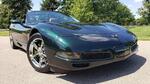

 Sparks A-Flyin"!




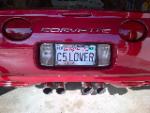














 and my calves are feeling it today... Didn't use the anti-seize, even though I purchased a small package from Autozone, decided to follow GM's recommendation and used a small amount of synthetic oil on the threads. I did use boot grease on both ends of the wires. I didn't use any of the specialty tools I posted in this thread as it seemed harder to utilize them in the tight space vs removing all the wires by hand.
