When you click on links to various merchants on this site and make a purchase, this can result in this site earning a commission. Affiliate programs and affiliations include, but are not limited to, the eBay Partner Network.
Finally, I picked up a correct (huge!) crankshaft bolt, and finished up installing the new Dayco harmonic balancer. I realize now, when I was able to compare both, that the original balancer has an aluminum hub while the new replacement is all iron. So, it's heavier. I had some folks ask about my crank seal -- the NAPA # assigned to it is 21605, and although they call it a timing cover gasket, it's just the round seal. I was not able to find out any info about the manufacturer or # of my plain looking dumbell shaped stabilizer bar end links, but they have been around for at least a few years, and mine came from a seller on ebay. Today, after I stuffed everything back in the car, I also replaced the steering rod ends, and on my test drive, I decided I will return the car to school and put it up on the alignment rack for work tomorrow. Then, I am going to scale back, and begin to enjoy my car for a while. All big projects finished up for now! Here's my NAPA # 21605 in position. Right front stabilizer bar end link -- the bar is dropped to access the bolts holding the front subframe, which needed to be dropped about 1" to buy more room to remove that steering rack. I think this is right rear. Here's the Dayco balancer. The center grey ring is the "crank snout", and the shadowing at 9 o'clock shows the area that's measured for depth.
Hmm, so in theory there would be horsepower loss due to the extra weight of the balancer. Who makes balancers that are the same or lighter than OEM?
I don't believe he'll lose any power, but it may ever so slightly slow the rate of acceleration of the rotating assembly. In the real world, sotp, I doubt anyone would notice......
From: Philadelphia PA (Birthplace of the USA, UNESCO World Heritage City)
Originally Posted by grinder11
but it may ever so slightly slow the rate of acceleration of the rotating assembly.
ie. lose some horsepower.
Maybe I'm being particular, but I'd rather not lose a few horsepower if there are alternative balancers out there that do just as good a job/last a long time and weight the same as OEM or less.
Increasing mass consumes torque to *accelerate* it. (aka "horsepower" for you knuckle draggers).
It will rob "power' during acceleration but once spun up it will also store energy better. So things like shifting and loading from AC kicking on ect.. won't reduce engine rpms as quickly.
In the grand scheme of things it might rob 1 or 2 ft lbs of TQ. On an LS I doubt you'll even notice it.



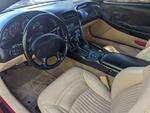

 Harmonics better now!