









Piston slap?

Drifting


Joined: Sep 2009
Posts: 1,862
Likes: 594
From: Prescott, Arizona

C5 LS 1's are well known for this. Most ignore it.
My theory is that the aluminum block transmits more piston noise than an iron block. The noise is especially noticeable when the engine is cold.
The injectors also make noise, sometimes mistaken for piston slap. Both are a sharp clicking sound.
Could also be valve train noise-
Get yourself an inexpensive ($12-$15) mechanic's stethoscope to isolate noise origin, especially helpful for accessory noise pinpointing.
My theory is that the aluminum block transmits more piston noise than an iron block. The noise is especially noticeable when the engine is cold.
The injectors also make noise, sometimes mistaken for piston slap. Both are a sharp clicking sound.
Could also be valve train noise-
Get yourself an inexpensive ($12-$15) mechanic's stethoscope to isolate noise origin, especially helpful for accessory noise pinpointing.

Race Director


Joined: Aug 1999
Posts: 11,119
Likes: 672
From: SE Pennsylvania
St. Jude Donor '03 thru '26
Oldtimer
Both my C5's have done it, but it doesn't last more than a few minutes, once the engine climbs past 100 degrees it's gone. FWIW : my 2007 LS2 had the same condition ? 

Administrator


Joined: Mar 2001
Posts: 368,324
Likes: 24,777
From: In a parallel universe. Currently own 2014 Stingray Coupe.
C7 of the Year - Modified Finalist 2021
MO Events Coordinator
St. Jude Co-Organizer
St. Jude Donor '03 thru '26
NCM Sinkhole Donor
CI 5, 8 & 11 Veteran
Yes, it is a very common occurrence with the LS1 motor.
Corvette Stories
The Best of Corvette for Corvette Enthusiasts

Top 10 Most Expensive Corvettes Ever Sold on Bring A Trailer
Brett Foote
10 Things Every Corvette Owner Needs (2026 Edition)
Michael S. Palmer
8 Most "Only Corvette Owners Understand" Quirks and Problems
Pouria Savadkouei
10 Reasons the C6 Z06 is Still A Performance Benchmark After 20 Years
Joe Kucinski
How Much Horsepower Every Corvette Engine "LOST" in 1972
Joe Kucinski
Top 10 DOs and DON'Ts for Protecting Your Convertible Top!
Michael S. Palmer
Top 10 Most Explosive Corvettes Ever Made: Power-to-Weight Ratio Ranked!
Joe Kucinski
150 hp to 1,250 hp: Every Corvette Generation Compared by the Specs That Matter
Joe Kucinski
8 Coolest Corvette Pace Cars (and Replicas) of All Time
Verdad Gallardo
Safety Car


Joined: Oct 2007
Posts: 4,222
Likes: 1,078
From: South Florida
Thats not piston slap its a lifter bleeding down and possibly getting old and collapsed or a pushrod is getting kinda chewed up on the end. My 5.3 Does the same thing for 240,000 miles.It gets worse with performance springs that bleed them down faster.
Count the ticks per second... tick tick tick tick tick = 5 ticks per second at roughly 600rpm idle is 1 tick every other revolution which indicates a specific valve event on a specific cylinder, probably the front most lifter with the least oil flow I would guess.
If you change thicker oil weight it will be quieter because the rate of oil leaving the lifter is slower when oil is thicker so it doesn't collapse as quickly.
Count the ticks per second... tick tick tick tick tick = 5 ticks per second at roughly 600rpm idle is 1 tick every other revolution which indicates a specific valve event on a specific cylinder, probably the front most lifter with the least oil flow I would guess.
If you change thicker oil weight it will be quieter because the rate of oil leaving the lifter is slower when oil is thicker so it doesn't collapse as quickly.


Safety Car
Joined: Oct 2007
Posts: 4,222
Likes: 1,078
From: South Florida
The engine sits low in this swap by design and I never use a stock oil pan anyways because oil leaves the pickup under hard acceleration. This pan trapdoors and relocates the filter for ground clearance, also providing a nice prio filter oil source for the turbo and easy to access the filter from the top.
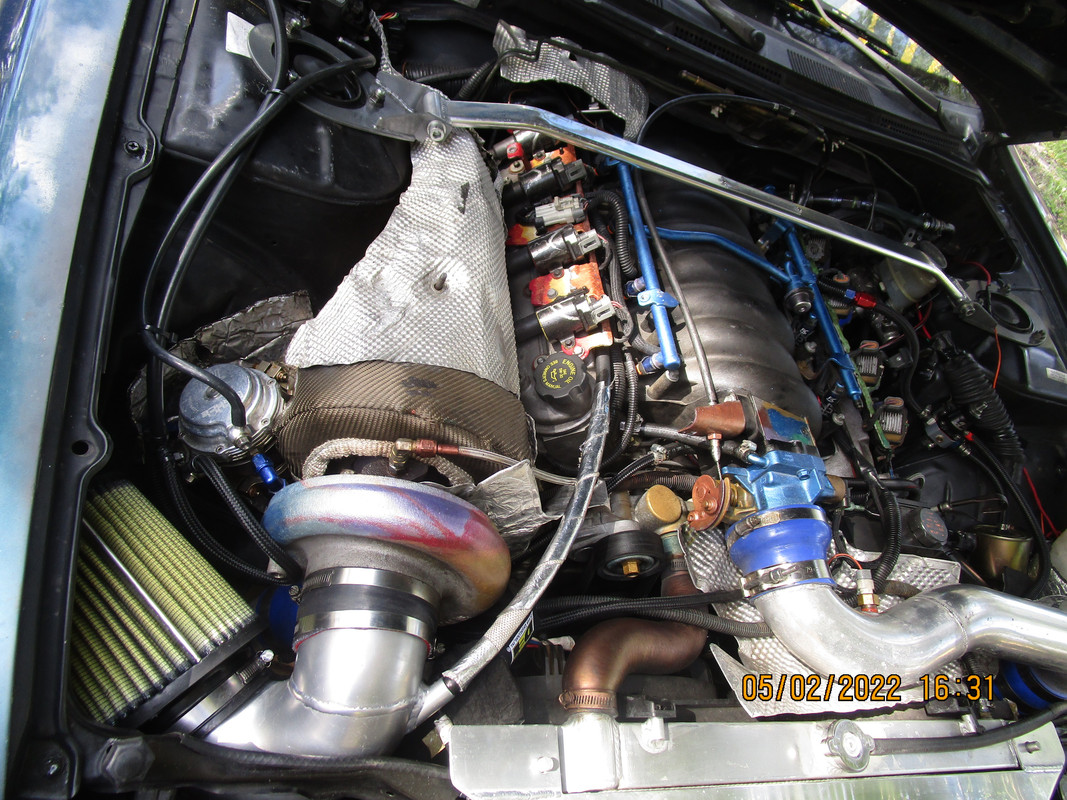
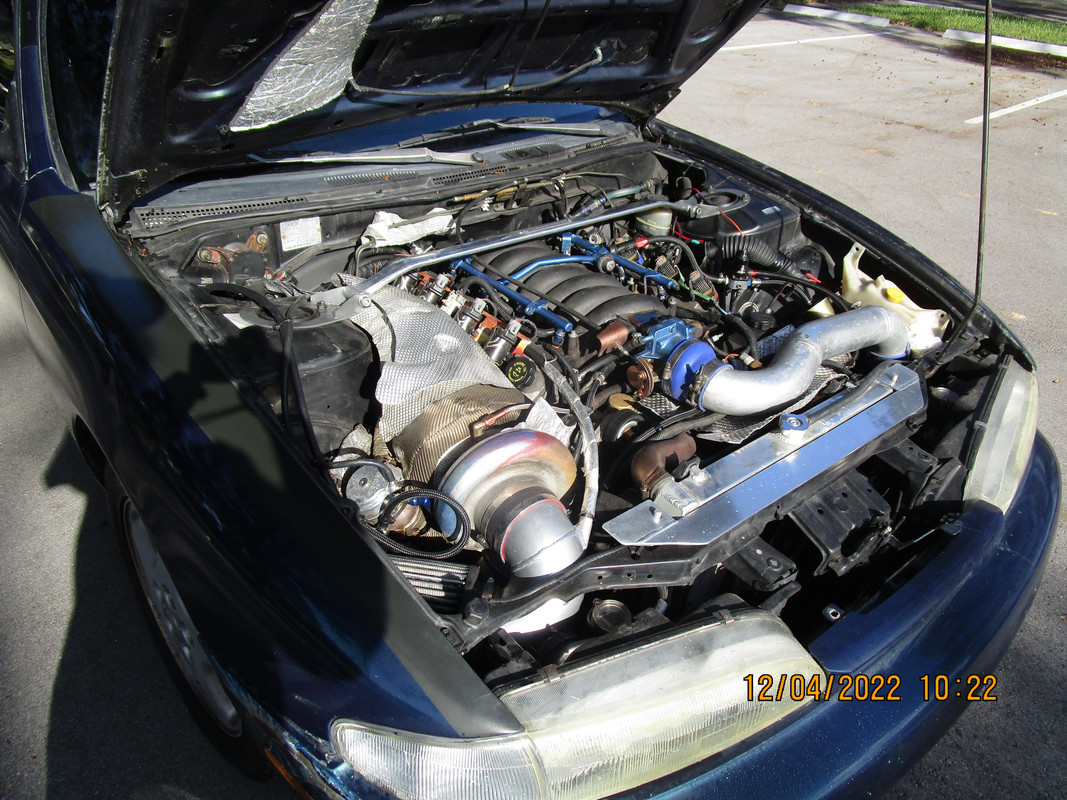
I don't generally recommend filter relocations due to increased complexity and potential for leaking but in my car it was necessary. If you do decide to relocate always use a anti-drainback oil filter.
I don't generally recommend filter relocations due to increased complexity and potential for leaking but in my car it was necessary. If you do decide to relocate always use a anti-drainback oil filter.
Last edited by Kingtal0n; Oct 26, 2023 at 01:17 PM. Reason: fixed image

Burning Brakes


Joined: Jun 2022
Posts: 758
Likes: 366
Thats not piston slap its a lifter bleeding down and possibly getting old and collapsed or a pushrod is getting kinda chewed up on the end. My 5.3 Does the same thing for 240,000 miles.It gets worse with performance springs that bleed them down faster.
Count the ticks per second... tick tick tick tick tick = 5 ticks per second at roughly 600rpm idle is 1 tick every other revolution which indicates a specific valve event on a specific cylinder, probably the front most lifter with the least oil flow I would guess.
If you change thicker oil weight it will be quieter because the rate of oil leaving the lifter is slower when oil is thicker so it doesn't collapse as quickly.
Count the ticks per second... tick tick tick tick tick = 5 ticks per second at roughly 600rpm idle is 1 tick every other revolution which indicates a specific valve event on a specific cylinder, probably the front most lifter with the least oil flow I would guess.
If you change thicker oil weight it will be quieter because the rate of oil leaving the lifter is slower when oil is thicker so it doesn't collapse as quickly.
Thank you for posting that info. That’s really a great tip for us diy guys who know enough to be dangerous


Instructor


Joined: May 2011
Posts: 122
Likes: 48
From: Maui
Thats not piston slap its a lifter bleeding down and possibly getting old and collapsed or a pushrod is getting kinda chewed up on the end. My 5.3 Does the same thing for 240,000 miles.It gets worse with performance springs that bleed them down faster.
Count the ticks per second... tick tick tick tick tick = 5 ticks per second at roughly 600rpm idle is 1 tick every other revolution which indicates a specific valve event on a specific cylinder, probably the front most lifter with the least oil flow I would guess.
If you change thicker oil weight it will be quieter because the rate of oil leaving the lifter is slower when oil is thicker so it doesn't collapse as quickly.
Count the ticks per second... tick tick tick tick tick = 5 ticks per second at roughly 600rpm idle is 1 tick every other revolution which indicates a specific valve event on a specific cylinder, probably the front most lifter with the least oil flow I would guess.
If you change thicker oil weight it will be quieter because the rate of oil leaving the lifter is slower when oil is thicker so it doesn't collapse as quickly.
Safety Car
Joined: Oct 2007
Posts: 4,222
Likes: 1,078
From: South Florida
If the lifter is simply bleeding down that is quite common and not an issue.
The problem is how do you tell which is which, or if it is getting worse. I would
1. Inspect pushrods ends for wear and straightness. A common weak point of OEM pushrods with performance engines seems to be the ends get worn or odd shaped. Check the pushrod lengths and for obvious slop on the base circle of cam.
2. Inspect rocker arms for wear, feel the bearings for smoothness, look and feel for differences
3. Make a video of the sound and compare with future videos to maybe tell if the noise is getting any louder over time
4. Consider running a bit of seafoam or ATF additive to the engine oil to remove some orifice clogging carbon buildup which may be contributing to reduced oil flow
5. On the running engine perhaps you can check (messy) whether oil is getting to the top of every rocker the same quantity
If the engine is mostly factory and the noise isn't getting louder and the pushrod and rockers and oiling all looks and feels the same and seems fine... I will generally leave it alone. 'Don't fix it is its not broken' is good, as you might 'fix' it and make it worse somehow just by opening the engine.
I also limit engine RPM below or near 6000rpm to avoid stressing out these parts.
If you decide to swap the lifters make sure to buy high quality from a reputable source and consider upgrading the pushrods at the same time. Rockers I am on the fence about 'upgrades' I tend to prefer the factory rockers and slow ramp / low lift cams which preserve and protect the valvetrain longevity and allow adequate use of factory rockers. Whatever you do keep in mind there are counterfeit products and bad products all over so the more factory and original parts you can use generally the better for the vehicle if it is a daily driver and reliable vehicle.

Race Director
Joined: Oct 2004
Posts: 12,864
Likes: 4,667
The early LS1s, say '97-'01, were known for piston slapping. GM even documented this, and actually replaced engines under warranty. So it isn't just lifter ticking. Most piston slap issues in this case occurred in ambient temperatures of under 55°F. I had one. If you heard no noises until the weather changed to cooler Fall temperatures, then stopped when warmer Spring temperatures returned, I can virtually guarantee it is piston slap. I bought my car in July. No noises at all. First colder Fall day, my God, it sounded like a diesel, and I'm not exaggerating, either. Took about 45 seconds to 1 minute go away......
Last edited by grinder11; Oct 29, 2023 at 03:52 PM.
Safety Car
Joined: Oct 2007
Posts: 4,222
Likes: 1,078
From: South Florida
The early LS1s, say '97-'01, were known for piston slapping. GM even documented this, and actually replaced engines under warranty. So it isn't just lifter ticking. Most piston slap issues in this case occurred in ambient temperatures of under 55°F. I had one. If you heard no noises until the weather changed to cooler Fall temperatures, then stopped when warmer Spring temperatures returned, I can virtually guarantee it is piston slap. I bought my car in July. No noises at all. First colder Fall day, my God, it sounded like a diesel, and I'm not exaggerating, either. Took about 45 seconds to go away......
1. It takes about 45 seconds for the lifters to receive oil after a cold start and cold oil flows more slowly than warm oil.
2. Valve Spring pressure forces oil out of a few lifters when the engine is off and they will tick for a minute strongly, all lifters can do this. Please perform this experiment: Turn the engine 45 degrees then wait 2 minutes, then another 45 degrees + 2 minutes, do this for 720 degrees of revolution and then start the engine, it will sound like a rod knock disaster for 45 seconds because all lifters have been emptied of oil.
3. Piston slap would go away after the piston expands in the bore fully which is unlikely to occur within 45 seconds. Forged pistons for example take about 20 minutes to fully warm because it takes oil temperature to follow suite, and it will never happen at idle speeds, it requires driving. Oil temps take 20-40minutes. A piston will not expand appreciably within 45 seconds. Also Factory brittle piston materials do not expand much even when heated.
4. The noise frequency of 5 ticks per second at 600rpm confirm it is not piston slap. If it was piston slap then 5 ticks per second is telling us only 1 piston is slapping every other revolution, or pistons only on half of the engine if you want to look at it that way. Ridiculous and easily to dismiss based on evidence and common sense.
5. The lifter tick for the worst/farthest lifter does not go away the engine will tick forever when cold or hot. That is the noise evident in the video both mine and the one presented.
6. The noise is quieter with thicker oil. A piston slap does not care about oil viscosity as it will not influence the rocking in the bore due to diameter of the piston.
I would say the easiest way to tell its the lifter is
A. noise does not go away
B. noise gets quieter with thicker oil
Safety Car
Joined: Oct 2007
Posts: 4,222
Likes: 1,078
From: South Florida
Lifter tick
Piston slap
et al;
If you start the engine and the noise gradually gets louder within 10-20 seconds then suddenly kind of quiets down after 45 seconds~... its lifters emptying then filling with oil.
If you start the engine and the noise is kind of the same the entire time for many minutes and louder under acceleration then once 5-15 minutes goes by of warming driving the piston expands the noise gets quiter then... piston slap
Piston slap
Piston slap is audible during acceleration from a cold start that lasts for about 5 to 8 minutes of driving.
on cold start and for about 5-10 minutes as the engine warms.
stops after around 10 minutes when the piston head swells
If you start the engine and the noise gradually gets louder within 10-20 seconds then suddenly kind of quiets down after 45 seconds~... its lifters emptying then filling with oil.
If you start the engine and the noise is kind of the same the entire time for many minutes and louder under acceleration then once 5-15 minutes goes by of warming driving the piston expands the noise gets quiter then... piston slap