







Dyno Tune vs Street Tune

Thread Starter
Le Mans Master


Joined: Dec 2005
Posts: 8,475
Likes: 332
From: Port Arthur, Texas 77642
 Dyno Tune vs Street Tune
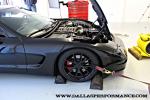
As far as I know many or most Tuners do their Tuning on Dynos with some of them never tuning the car on the street. With the cost of a tune around $400 give or take and a retune around $100-150, I would think the car should receive street tuning and use the dyno for mostly WOT maximum HP numbers. It seems to me to get the best all-around driveability, throttle response, and idle quality the car would require some data logging while street driving. I am obviously no expert, that is why I am asking this question. Am I wrong in my assumptions? Can a modified car be Dyno Tuned only and still achieve best results? Thanks in Advance for Your Opinions 
Scotty
Scotty
Burning Brakes

Joined: Nov 2006
Posts: 1,071
Likes: 0
From: Goose Creek SC
As far as I know many or most Tuners do their Tuning on Dynos with some of them never tuning the car on the street. With the cost of a tune around $400 give or take and a retune around $100-150, I would think the car should receive street tuning and use the dyno for mostly WOT maximum HP numbers. It seems to me to get the best all-around driveability, throttle response, and idle quality the car would require some data logging while street driving. I am obviously no expert, that is why I am asking this question. Am I wrong in my assumptions? Can a modified car be Dyno Tuned only and still achieve best results? Thanks in Advance for Your Opinions
Scotty
Scotty
I personally believe street tuning is the optimum tuning and dyno tuning should be used for maximizing horsepower which doesn't always lead to the best drivability. Plus, it's hard to do part throttle stuff on a dyno unless you have some form of load control dyno. Quite frankly, not many shops invest in a load control dyno.
Hammer
Former Vendor
Joined: Feb 2004
Posts: 10,876
Likes: 8
From: Las Vegas NV
St. Jude Donor '06 & '12
Its all dependant on the dyno. If the shop has the capabilities to load the car and perform partial throttle tuning, then in all actuality you can tune a car better on the dyno then on the street.
Why?? for the most part inconsistancies in traction.
On the other hand, if you dont have a controlable load dyno, then street tuning is the ONLY way to go.
Why?? for the most part inconsistancies in traction.
On the other hand, if you dont have a controlable load dyno, then street tuning is the ONLY way to go.

Melting Slicks

Joined: Apr 2001
Posts: 3,034
Likes: 125
From: NY-South Florida
Thats why we bought a load controlled dyno! We actually will do a combination depending on the setup and type of car. The only real area that benefits slighty is low speed transitions. Dyno tuning WOT on the street is one unsafe and will really yield no better results. If you look at timing and fuel tables they are relative to load and rpm. At any given load/rpm a specific value is commanded. The car doesn't know if its on the street or on a chassis dyno. For WOT we have found that leaner AFR's that make better dyno numbers, run better at the track running a bit richer.
With EFI Live's Road Runner PCM (real time tuning) and a load control dyno, you can really dial a car in under just about every possible load/rpm condition. Also, trying to tune a 600+ RWHP car on the street is a accident waiting to happen!
I always will test drive the car after dyno tuning for any final things that may need to be addressed with respect to drivability.
With EFI Live's Road Runner PCM (real time tuning) and a load control dyno, you can really dial a car in under just about every possible load/rpm condition. Also, trying to tune a 600+ RWHP car on the street is a accident waiting to happen!
I always will test drive the car after dyno tuning for any final things that may need to be addressed with respect to drivability.

Former Vendor
Joined: May 2005
Posts: 3,749
Likes: 4
From: Valencia Ca
Yes, you should expect that a tuner do both drivability and dyno tuning and that being stated, the term “street tuning” can, to a high degree accomplish both aspects.
However, bear in mind that WOT tuning requires that there is enough real estate to manage to navigate those high speed, final drive ratio data logging and calibration runs.
The better solution is to use a load control dyno to properly map the fuel and timing cells under every conceivable load condition, all the while measuring success of each change and thereby optimizing the calibration for both performance and the ultimate in drivability.
However, bear in mind that WOT tuning requires that there is enough real estate to manage to navigate those high speed, final drive ratio data logging and calibration runs.
The better solution is to use a load control dyno to properly map the fuel and timing cells under every conceivable load condition, all the while measuring success of each change and thereby optimizing the calibration for both performance and the ultimate in drivability.

Drifting


Joined: Dec 2005
Posts: 1,720
Likes: 3
From: East Hampton CT
As a side note from a "self tuner", I have logged and adjusted my part throttle drivability, and then dialed in my WOT using a wideband before heading to the dyno. As some of the tuners have noted above, it becomes quite difficult to tune high rpm in 4th gear or above because you're doing 130+mph with stock gearing! You end up grabbing a few data points from a lower gear(2nd) at high rpm and interpolating the results inbetween for tuning. I've used this method for all of my personal vehicles that I've tuned and it ended up being only a few points off on the dyno (12.3 vs 12.5 or whatever I was aiming for). Street tunes can be used to get you in the right direction, but dynos are the safest option for full WOT tuning.
Corvette Stories
The Best of Corvette for Corvette Enthusiasts

10 Things Every Corvette Owner Needs (2026 Edition)
Michael S. Palmer
8 Most "Only Corvette Owners Understand" Quirks and Problems
Pouria Savadkouei
10 Reasons the C6 Z06 is Still A Performance Benchmark After 20 Years
Joe Kucinski
How Much Horsepower Every Corvette Engine "LOST" in 1972
Joe Kucinski
Top 10 DOs and DON'Ts for Protecting Your Convertible Top!
Michael S. Palmer
Top 10 Most Explosive Corvettes Ever Made: Power-to-Weight Ratio Ranked!
Joe Kucinski
150 hp to 1,250 hp: Every Corvette Generation Compared by the Specs That Matter
Joe Kucinski
8 Coolest Corvette Pace Cars (and Replicas) of All Time
Verdad Gallardo
Top 10 Corvette Engines RANKED by Peak Torque (70+ Years of Muscle!)
Joe Kucinski
Le Mans Master

Joined: Feb 2001
Posts: 6,777
Likes: 358
From: West "By God" Virginia
CI 7-8-9-10 Veteran
What about dyno tunes for those of us that are using a Vararam intake?? This intake is designed to work most efficiently at higher speeds. That being said, is a dyno tune good for a vararam? I know the fans that are used are not nearly the same amount of air intake as going 70+ down the road!! Put your hand in front of one of those fans, then stick your hand out the window at 70, you all know there's a difference!! Should I have my dyno tuned H/C/nitroused Z06 retuned with a street tune??
Drifting
Joined: Dec 2005
Posts: 1,720
Likes: 3
From: East Hampton CT
I have a vararam and I checked my wideband "at speed" vs the dyno. There wasn't a huge difference between the two readings. Most LS1's I have seen don't make a big difference if you're a couple points off (12.5 vs 12.7) on the AFR anyway.
Melting Slicks
Joined: Apr 2001
Posts: 3,034
Likes: 125
From: NY-South Florida
What about dyno tunes for those of us that are using a Vararam intake?? This intake is designed to work most efficiently at higher speeds. That being said, is a dyno tune good for a vararam? I know the fans that are used are not nearly the same amount of air intake as going 70+ down the road!! Put your hand in front of one of those fans, then stick your hand out the window at 70, you all know there's a difference!! Should I have my dyno tuned H/C/nitroused Z06 retuned with a street tune??
The MAF can deal with some of those increases as the MAF is the dominate measure device over 4000 rpms. The other nice thing, as Charley noted, is that you can measure your gains on a chassis dyno!
Unfortunately we can't duplicate a 100 mph road test with respect to the overall airflow which is why I at times will tune a tad bit richer on the big end from the dyno results. Again this has proven itself at the track as a good dyno adjustment.

Melting Slicks

Joined: Jul 2006
Posts: 2,094
Likes: 5
From: The 7th layer of hell - Western Washington
We spent a couple hours road tuning mine, and will go to the final tune on a dyno in two weeks. $350 for the tuning plus dyno time, it'll run me approx $450 in the end.

Le Mans Master
Joined: Dec 2003
Posts: 5,561
Likes: 448
From: Atlanta metro Ga.
You can get a pretty dyno graph / tune in less than 20 mins., but using the shortcut method (ultimately "wrong") you have done nothing to correct the Volumetric Efficiency tables (they along with the MAF and other sensors affect part-throttle A/F mixture) that need adjustment due to the addition of a cam, heads, headers, etc.
The ultimate is to mount a W/B sensor, perform on the road real-time logging and tuning until the VE table is correct, then go back and adjust the PE table (WOT / what you see on a dyno sheet) for maximum power.
The ultimate is to mount a W/B sensor, perform on the road real-time logging and tuning until the VE table is correct, then go back and adjust the PE table (WOT / what you see on a dyno sheet) for maximum power.
Last edited by Dan_the_C5_Man; Jan 8, 2007 at 04:34 PM.
Thread Starter
Le Mans Master
Joined: Dec 2005
Posts: 8,475
Likes: 332
From: Port Arthur, Texas 77642
You can get a pretty dyno graph / tune in less than 20 mins., but using the shortcut method (ultimately "wrong") you have done nothing to correct the Volumetric Efficiency tables (they along with the MAF and other sensors affect part-throttle A/F mixture) that need adjustment due to the addition of a cam, heads, headers, etc.
The ultimate is to mount a W/B sensor, perform on the road real-time logging and tuning until the VE table is correct, then go back and adjust the PE table (WOT / what you see on a dyno sheet) for maximum power.
The ultimate is to mount a W/B sensor, perform on the road real-time logging and tuning until the VE table is correct, then go back and adjust the PE table (WOT / what you see on a dyno sheet) for maximum power.

I have seen some tuners take the shortcut method and do the "20 minute Dynojet tune" with the W/B sensor in the tailpipe. IMHO, I believe this approach gives the customer less than what is best for their car and takes away from the crisp feel of a sharp tune under part throttle driving conditions. The bitterness of poor quality lasts far longer than the sweet taste of a low price
Scotty
