



 especially ones with 500 horse
200 Mph

Melting Slicks

Joined: Apr 2007
Posts: 2,087
Likes: 17
From: Jupiter FL

I will say this... a z06 has different gearing than a stock c5. Mine was a z06, and was a 6 speed of course. Call lingenfelter and ask them about top speeds of their cars and if its possible to put in a gear that limits top speed in 6th to 165. Whatever that gear is is whatever i had. I thought it was a 4.10, but maybe im wrong, but most agree that a 4.10 is the lowest gearing you can put in a car.

Drifting


Joined: Oct 2000
Posts: 1,396
Likes: 0
From: Sacramento CA
Been there done that
I have been to 206 in the blue Open Road Race car(see sig) I have 598rwhp, 3:08 rear gears, and run a custom built ZF 6 speed tranny. For you who have hit 180-low 190's and say "oh I don't need that much more" those 10-15mph are very costly and hard to get.
I know most of you only want to go up and touch 200 and my car was built to run at 200 for distance. It is fully caged and has all the safty features of a NASCAR. 200 is not something you just go out and do. It takes lots of planning and preparation. On all these threads about people wanting to hit a deuce I always post a pic as a reminder of what car happen:
http://www.boomspeed.com/jeffyvette/Blowout.jpg
many of you have probably seen that before. This is what happens when you have blowout at 204. I never hit anything all the damage is from the tire explosion. The last thing I would tell anyone is don't attempt the deuce. Go for it it is a rush, just think about what you are doing first. In fact just last weekend at a Open Road race a guy was clocked at 200.6 in a 65 CORVAIR... yes CORVAIR. It is one very cool car, a vintage NASCAR was clocked at 211 one way and 218 the other, and there is a 99 Camaro that has been to 218. This Camaro in the Silver State Open Road race last fall had a 200+ average for the first 80 miles of a 90 mile course. Then he blew an oil line and had to slow and eventually turn off the motor, he almost coasted to the finish. Had the motor not gone away he would have average 200+ for the course. The course is a 2 lane desert highway.
Jeffy'
Jeffy'
I know most of you only want to go up and touch 200 and my car was built to run at 200 for distance. It is fully caged and has all the safty features of a NASCAR. 200 is not something you just go out and do. It takes lots of planning and preparation. On all these threads about people wanting to hit a deuce I always post a pic as a reminder of what car happen:
http://www.boomspeed.com/jeffyvette/Blowout.jpg
many of you have probably seen that before. This is what happens when you have blowout at 204. I never hit anything all the damage is from the tire explosion. The last thing I would tell anyone is don't attempt the deuce. Go for it it is a rush, just think about what you are doing first. In fact just last weekend at a Open Road race a guy was clocked at 200.6 in a 65 CORVAIR... yes CORVAIR. It is one very cool car, a vintage NASCAR was clocked at 211 one way and 218 the other, and there is a 99 Camaro that has been to 218. This Camaro in the Silver State Open Road race last fall had a 200+ average for the first 80 miles of a 90 mile course. Then he blew an oil line and had to slow and eventually turn off the motor, he almost coasted to the finish. Had the motor not gone away he would have average 200+ for the course. The course is a 2 lane desert highway.
Jeffy'
Jeffy'
Thread Starter
Le Mans Master

Joined: Nov 2005
Posts: 5,451
Likes: 2
From: East Peoria Illinois
I have been to 206 in the blue Open Road Race car(see sig) I have 598rwhp, 3:08 rear gears, and run a custom built ZF 6 speed tranny. For you who have hit 180-low 190's and say "oh I don't need that much more" those 10-15mph are very costly and hard to get.
I know most of you only want to go up and touch 200 and my car was built to run at 200 for distance. It is fully caged and has all the safty features of a NASCAR. 200 is not something you just go out and do. It takes lots of planning and preparation. On all these threads about people wanting to hit a deuce I always post a pic as a reminder of what car happen:
http://www.boomspeed.com/jeffyvette/Blowout.jpg
many of you have probably seen that before. This is what happens when you have blowout at 204. I never hit anything all the damage is from the tire explosion. The last thing I would tell anyone is don't attempt the deuce. Go for it it is a rush, just think about what you are doing first. In fact just last weekend at a Open Road race a guy was clocked at 200.6 in a 65 CORVAIR... yes CORVAIR. It is one very cool car, a vintage NASCAR was clocked at 211 one way and 218 the other, and there is a 99 Camaro that has been to 218. This Camaro in the Silver State Open Road race last fall had a 200+ average for the first 80 miles of a 90 mile course. Then he blew an oil line and had to slow and eventually turn off the motor, he almost coasted to the finish. Had the motor not gone away he would have average 200+ for the course. The course is a 2 lane desert highway.
Jeffy'
Jeffy'
I know most of you only want to go up and touch 200 and my car was built to run at 200 for distance. It is fully caged and has all the safty features of a NASCAR. 200 is not something you just go out and do. It takes lots of planning and preparation. On all these threads about people wanting to hit a deuce I always post a pic as a reminder of what car happen:
http://www.boomspeed.com/jeffyvette/Blowout.jpg
many of you have probably seen that before. This is what happens when you have blowout at 204. I never hit anything all the damage is from the tire explosion. The last thing I would tell anyone is don't attempt the deuce. Go for it it is a rush, just think about what you are doing first. In fact just last weekend at a Open Road race a guy was clocked at 200.6 in a 65 CORVAIR... yes CORVAIR. It is one very cool car, a vintage NASCAR was clocked at 211 one way and 218 the other, and there is a 99 Camaro that has been to 218. This Camaro in the Silver State Open Road race last fall had a 200+ average for the first 80 miles of a 90 mile course. Then he blew an oil line and had to slow and eventually turn off the motor, he almost coasted to the finish. Had the motor not gone away he would have average 200+ for the course. The course is a 2 lane desert highway.
Jeffy'
Jeffy'

Race Director


Joined: Mar 2007
Posts: 18,308
Likes: 21
From: Marlton. Increasing performance one speeding ticket at a time! NJ
Not really. Torque is what moves a car, it is the force applied at the wheels. Horsepower, is just torque x RPM, or how often that torque can be applied. So, in effect, keeping the RPM range the same, the only real variable is torque.
In calculating everything, you use the torque curve (the force applied at the contact patch of the wheel), x all the gearing and RPM. This force must be equal to or greater than the forces acting on the car (wind resistance, tire friction, rolling resistance, drivetrain losses, etc). If it's greater, the car accelerates, if not, then it doesn't. Top speed comes in when the drag, tire rolling resistance, and engine output all cancel out (net force = 0). This gets very complicated considering the torque is a curve, Cd (drag) is estimated, tire rolling resistance is very estimated (also depends on brand/type tire), drivetrain losses are not constant, etc, etc, etc, etc. That's why I wanted to look at the other spreadsheet to compare "estimated" values.
5th and 6th are both overdrives, you will not technically lose MPH with overdrives.
In calculating everything, you use the torque curve (the force applied at the contact patch of the wheel), x all the gearing and RPM. This force must be equal to or greater than the forces acting on the car (wind resistance, tire friction, rolling resistance, drivetrain losses, etc). If it's greater, the car accelerates, if not, then it doesn't. Top speed comes in when the drag, tire rolling resistance, and engine output all cancel out (net force = 0). This gets very complicated considering the torque is a curve, Cd (drag) is estimated, tire rolling resistance is very estimated (also depends on brand/type tire), drivetrain losses are not constant, etc, etc, etc, etc. That's why I wanted to look at the other spreadsheet to compare "estimated" values.
5th and 6th are both overdrives, you will not technically lose MPH with overdrives.
Race Director
Joined: Mar 2007
Posts: 18,308
Likes: 21
From: Marlton. Increasing performance one speeding ticket at a time! NJ
Splitting hairs, but HP is just torque multiplied by RPM. Indy cars have lower torque, but run at 12K+ RPMs. Since you really can't change the rev range of the LS1 that high, the only way to increase power is to increase torque. BTW, dynos measure torque and calculate power. So, in effect, it is a better metric to use.
Which brings up a good question, which provides more rear wheel torque, sticking close(er) to 1:1 ratio and a tall rear gear (ex, .74:1 5th gear in MN6 and a 3.15 or 2.73 rear) or running way OD (6th, .50:1 and 3.73, etc)?
I would think one would want to stick closer to 1:1 (say the M12 .84:1 ratio in 5th) and a 3.15 rear gear, as opposed to running a shorter rear gear (3.42, etc) and a really tall OD. I'd be leary of dumping a ton of torque on 6th gear under sustained load.
FWIW the .74:1 MM6 5th gear and a 3.15 rear gear and stock height rear tires (~26.1) is good for 217 mph @ 6500 rpm, 233 mph if you can make enough power to rev to 7000.
I would think one would want to stick closer to 1:1 (say the M12 .84:1 ratio in 5th) and a 3.15 rear gear, as opposed to running a shorter rear gear (3.42, etc) and a really tall OD. I'd be leary of dumping a ton of torque on 6th gear under sustained load.
FWIW the .74:1 MM6 5th gear and a 3.15 rear gear and stock height rear tires (~26.1) is good for 217 mph @ 6500 rpm, 233 mph if you can make enough power to rev to 7000.


Couldn't have said it better. Drag increases exponentially with speed, as does rolling resistance. Amazing how much power these cars have, and yet how much more is required to get to "the next level".
Pro

Joined: Jan 2005
Posts: 559
Likes: 1
From: Lenexa Kansas
Melting Slicks
Joined: Apr 2007
Posts: 2,087
Likes: 17
From: Jupiter FL
Im very confused how someone who knows so much can see thigns so backwards....
Correct, HP is derived from torque, but why even have the HP unit of measure if its derived from torque? Why not just get rid of Hp all together? Think about that for a sec while i move on...
INDY CARS DO NOT HAVE LOW END TORQUE... they stall in the pits if they let out the clutch at low revs, ive driven one, you have to rev them way up and spin the tires or they stall. The easiest way to define low end torque is think of it how much load can a vehicle pull when you let off the clutch. What has tons of torque but doesnt go very fast? thats right, a semi truck. At what rpm range can a semi truck peel out? Low rpm's.. Only when it is first taking off pulling a large load will you see their back wheels spin... the opposite of an indy car. A semi you never dump the clutch at high rpms, they would break, they are designed with enough torque to let off the clutch at low rpms and never stall. Same with a diesel jetta. Moving on....
Since most people dont have access to indy cars and semi's, lets make this even simpler. A v8 vs a rice burner... little 4 cylinder... no torque... with big giant turbos... when does it spin its wheels? Way up at the top of its rpm range when the hp curve shoots up at the last second? Were solving the hardest mysteries of life so fast its exciting!
Hp comes on later, and torque always falls past the hp line at a certain rpm. On a vette its around 5200 rpm, they will always cross, hp goes up, torque goes down. A vette is a v8 with big displacement, the number on the engine that says 5.7, thats measured in liters...
I suppose next you are going to argue that the torque line and the HP line dont cross having hp on top of every dyno at max rpm?
So lets think really hard about this..... rice burners with very low torque and big HP have the ability to peel out (tires unhook) at high rpm's... so am I to understand that HP means nothing, and torque means everything? I cant believe im even having to argue this point... call all the dyno's across america and tell them to stop measuring hp and give people torque only sheets... that way they dont knwo what their car is making the most power and at what rpm. Power measured in horses... how primitive... this unit of measure means nothing, idiots derived it for no reason, lets just stop talking and go drive 200.
HP IS TOP SPEED ON A 5.7 V8. PERIOD. Our engines are well rounded, and create power all across the rpm chart, but i gurantee you wont find anyone making MORE POWER TO SPIN THE WHEELS lower than 5200rpms compared to ABOVE 5200 rpms... car makes more power, and the hp line just HAPPENS to be above the torque line... hmmmm. Big v8s have power down low where as small 2 liter motors do not. You have more cylinders, more explosions, more gas, bigger explosions, more surface area, and more thrust at idle, and all the way up until the curves cross. Little displacement motors... rice burners, indy cars, etc... have small explosions, and therefore can be stalled easier... low torque. But they make up for it when they produce their power (easily observed by the engines sudden ability to spin the tires and push you back into your seat) at higher rpms bc they use explosions in higher quantity per second, and turbos kick in, forcing more air in, matched with more fuel, making bigger explosions that make the engine move and make the tires spin.
Are all the geniuses who have driven 200 keeping up?
HP is top speed, semis dont have it (200-400hp), indy cars do, dragsters do. Torque is low end (rpm) power. Semis have it, indy cars dont. Engines that make big torque have bigger initial displacement, and are therefore limited in their max rpm due to simple physics that big huge heavy pistons (semi) cant go up and down as often without stress and engine failure as often as (indy car/rice burner) tiny pistons that can go up and down bc these small moving parts weigh less, and have less momentum, put less stress on engine trying to stay sealed shut, therefore they dont make the engine come apart at high rpms.
Higher rpms= more explosions per second= more power to the wheels.
Torque... hmmm
horse POWER... hmmm
Since hp is derived from torque and rpms, i think we should just throw it out the window, and just use torque from now on, i doubt it has anything to do with power. I bet power has nothing to do with moving an object faster than another. I bet i can just come on corvette forum and say whatever I want so long as i know technical math equations, and people will believe me!
Scary to think a person whos brain doesnt know these things has access to a 3000 lb object capable of 200 mph.
Correct, HP is derived from torque, but why even have the HP unit of measure if its derived from torque? Why not just get rid of Hp all together? Think about that for a sec while i move on...
INDY CARS DO NOT HAVE LOW END TORQUE... they stall in the pits if they let out the clutch at low revs, ive driven one, you have to rev them way up and spin the tires or they stall. The easiest way to define low end torque is think of it how much load can a vehicle pull when you let off the clutch. What has tons of torque but doesnt go very fast? thats right, a semi truck. At what rpm range can a semi truck peel out? Low rpm's.. Only when it is first taking off pulling a large load will you see their back wheels spin... the opposite of an indy car. A semi you never dump the clutch at high rpms, they would break, they are designed with enough torque to let off the clutch at low rpms and never stall. Same with a diesel jetta. Moving on....
Since most people dont have access to indy cars and semi's, lets make this even simpler. A v8 vs a rice burner... little 4 cylinder... no torque... with big giant turbos... when does it spin its wheels? Way up at the top of its rpm range when the hp curve shoots up at the last second? Were solving the hardest mysteries of life so fast its exciting!
Hp comes on later, and torque always falls past the hp line at a certain rpm. On a vette its around 5200 rpm, they will always cross, hp goes up, torque goes down. A vette is a v8 with big displacement, the number on the engine that says 5.7, thats measured in liters...
I suppose next you are going to argue that the torque line and the HP line dont cross having hp on top of every dyno at max rpm?
So lets think really hard about this..... rice burners with very low torque and big HP have the ability to peel out (tires unhook) at high rpm's... so am I to understand that HP means nothing, and torque means everything? I cant believe im even having to argue this point... call all the dyno's across america and tell them to stop measuring hp and give people torque only sheets... that way they dont knwo what their car is making the most power and at what rpm. Power measured in horses... how primitive... this unit of measure means nothing, idiots derived it for no reason, lets just stop talking and go drive 200.
HP IS TOP SPEED ON A 5.7 V8. PERIOD. Our engines are well rounded, and create power all across the rpm chart, but i gurantee you wont find anyone making MORE POWER TO SPIN THE WHEELS lower than 5200rpms compared to ABOVE 5200 rpms... car makes more power, and the hp line just HAPPENS to be above the torque line... hmmmm. Big v8s have power down low where as small 2 liter motors do not. You have more cylinders, more explosions, more gas, bigger explosions, more surface area, and more thrust at idle, and all the way up until the curves cross. Little displacement motors... rice burners, indy cars, etc... have small explosions, and therefore can be stalled easier... low torque. But they make up for it when they produce their power (easily observed by the engines sudden ability to spin the tires and push you back into your seat) at higher rpms bc they use explosions in higher quantity per second, and turbos kick in, forcing more air in, matched with more fuel, making bigger explosions that make the engine move and make the tires spin.
Are all the geniuses who have driven 200 keeping up?
HP is top speed, semis dont have it (200-400hp), indy cars do, dragsters do. Torque is low end (rpm) power. Semis have it, indy cars dont. Engines that make big torque have bigger initial displacement, and are therefore limited in their max rpm due to simple physics that big huge heavy pistons (semi) cant go up and down as often without stress and engine failure as often as (indy car/rice burner) tiny pistons that can go up and down bc these small moving parts weigh less, and have less momentum, put less stress on engine trying to stay sealed shut, therefore they dont make the engine come apart at high rpms.
Higher rpms= more explosions per second= more power to the wheels.
Torque... hmmm
horse POWER... hmmm
Since hp is derived from torque and rpms, i think we should just throw it out the window, and just use torque from now on, i doubt it has anything to do with power. I bet power has nothing to do with moving an object faster than another. I bet i can just come on corvette forum and say whatever I want so long as i know technical math equations, and people will believe me!
Scary to think a person whos brain doesnt know these things has access to a 3000 lb object capable of 200 mph.
Corvette Stories
The Best of Corvette for Corvette Enthusiasts

Top 10 Most Expensive Corvettes Ever Sold on Bring A Trailer
Brett Foote
10 Things Every Corvette Owner Needs (2026 Edition)
Michael S. Palmer
8 Most "Only Corvette Owners Understand" Quirks and Problems
Pouria Savadkouei
10 Reasons the C6 Z06 is Still A Performance Benchmark After 20 Years
Joe Kucinski
How Much Horsepower Every Corvette Engine "LOST" in 1972
Joe Kucinski
Top 10 DOs and DON'Ts for Protecting Your Convertible Top!
Michael S. Palmer
Top 10 Most Explosive Corvettes Ever Made: Power-to-Weight Ratio Ranked!
Joe Kucinski
150 hp to 1,250 hp: Every Corvette Generation Compared by the Specs That Matter
Joe Kucinski
8 Coolest Corvette Pace Cars (and Replicas) of All Time
Verdad Gallardo
Melting Slicks
Joined: Apr 2007
Posts: 2,087
Likes: 17
From: Jupiter FL
Above post's sarcasm DERIVED from the following statements:
[QUOTE=nj02vette;1560667900]Correct. But I'm going to have to say here, that is in theory. 200mph is still probably OK to stick with theory, but going too much past that, than other weird things start to happen. Like lift force reducing power transmission to the ground, tire effects, etc. Lowering the car might be a must.
Splitting hairs, but HP is just torque multiplied by RPM. Indy cars have lower torque, but run at 12K+ RPMs. Since you really can't change the rev range of the LS1 that high, the only way to increase power is to increase torque. BTW, dynos measure torque and calculate power. So, in effect, it is a better metric to use.
[QUOTE=nj02vette;1560667900]Correct. But I'm going to have to say here, that is in theory. 200mph is still probably OK to stick with theory, but going too much past that, than other weird things start to happen. Like lift force reducing power transmission to the ground, tire effects, etc. Lowering the car might be a must.
Splitting hairs, but HP is just torque multiplied by RPM. Indy cars have lower torque, but run at 12K+ RPMs. Since you really can't change the rev range of the LS1 that high, the only way to increase power is to increase torque. BTW, dynos measure torque and calculate power. So, in effect, it is a better metric to use.
Pro
Joined: Jan 2005
Posts: 559
Likes: 1
From: Lenexa Kansas
Im very confused how someone who knows so much can see thigns so backwards....
Hp comes on later, and torque always falls past the hp line at a certain rpm. On a vette its around 5200 rpm, they will always cross, hp goes up, torque goes down.
Scary to think a person whos brain doesnt know these things has access to a 3000 lb object capable of 200 mph.
Hp comes on later, and torque always falls past the hp line at a certain rpm. On a vette its around 5200 rpm, they will always cross, hp goes up, torque goes down.
Scary to think a person whos brain doesnt know these things has access to a 3000 lb object capable of 200 mph.
Is it scary to think that you have a 3,000lb object capable of 200mph???



Pro
Joined: Jan 2005
Posts: 559
Likes: 1
From: Lenexa Kansas
Just for fun, I input a C6 Z06's gearing, weight, and stock torque curve into my spreadsheet. I don't know how to change the coefficient of drag (my engineer buddy did the design of the sheet), so I left it the same as my car. This yielded a top speed of right at 195mph for the C6 Z06. I don't know if the aerodynamics are any different or not, but needless to say, I think the spreadsheet I'm using is giving pretty accurate results... Accurate enough for what we're doing, anyway.
I can e-mail this spreadsheet to anyone who wants to see it. Just PM me.
I can e-mail this spreadsheet to anyone who wants to see it. Just PM me.
Thread Starter
Le Mans Master
Joined: Nov 2005
Posts: 5,451
Likes: 2
From: East Peoria Illinois
Just for fun, I input a C6 Z06's gearing, weight, and stock torque curve into my spreadsheet. I don't know how to change the coefficient of drag (my engineer buddy did the design of the sheet), so I left it the same as my car. This yielded a top speed of right at 195mph for the C6 Z06. I don't know if the aerodynamics are any different or not, but needless to say, I think the spreadsheet I'm using is giving pretty accurate results... Accurate enough for what we're doing, anyway.
I can e-mail this spreadsheet to anyone who wants to see it. Just PM me.
I can e-mail this spreadsheet to anyone who wants to see it. Just PM me.
Pro
Joined: Jan 2005
Posts: 559
Likes: 1
From: Lenexa Kansas
C6 Z06 specs
Type 6-speed Manual
First gear 2.66
Second gear 1.78
Third gear 1.30
Fourth gear 1.00
Fifth gear 0.74
Sixth gear 0.50
Reverse 2.90
Final drive ratio 3.42
Source: http://www.z06zone.com/c6z06-techspecs.php
Type 6-speed Manual
First gear 2.66
Second gear 1.78
Third gear 1.30
Fourth gear 1.00
Fifth gear 0.74
Sixth gear 0.50
Reverse 2.90
Final drive ratio 3.42
Source: http://www.z06zone.com/c6z06-techspecs.php
Melting Slicks
Joined: Apr 2007
Posts: 2,087
Likes: 17
From: Jupiter FL
Someone reads this post, and sees that the last person to speak quoted and "corrected" other members who said HP is what matters. The last person to speak said it was actually about torque, and not HP, so they get excited and go to an engine shop. Walk in and say "I want my car to make more torque", guy says okay. Engine shop bores out the motor. Car owner comes back and says, "cool, its a 383 now huh, can you bore it out even bigger?" Shop says, sure, and they keep boring. Now the car owner comes back and its bored out beyond belief, takes his car out and lines up next to a guy with a twin turbo 350 vette. "Ill race you to top speed!" twin turbo guy says ok, and they take off, of course the bored out motor loses bc he has no turbos. So he goes and gets the turbos, and pushes the same boost as the guy with the 350, and goes to the same rpms... and next thing you know, the bored out engine blows up. Guy goes back to the engine shop furious and says "YOU BUILT A CRUMMY ENGINE, I WANT MY MONEY BACK!" Shop says, why what happened? Guy says "I was racing this other vette with only a 350 with the same boost and rpms, and my engine blew up!" Shop says, "whats youre point, you over revved the engine" Guy says, "I told you I wanted more power" Shop says, no, you said you wanted more torque" Guy says "but this guy on corvette forum corrected everyone by saying torque is that gets you highst top speed" Shop says "Torque is one of 3 parts. The other is RPM, and the other is the size of the explosion. Obviously the explosion in your car was bigger since it has been bored and has bigger injectors, but here on planet earth there are laws of physics, and by us boring your engine out there are trade offs. One trade off is as you bore an engine out the engine becomes weaker, and cant go as many rpm's without failing. The other is by increasing the size of your pistons and thinning your engine walls, you make it easier for bigger explosions to break your engine also" Guy says " well why didnt you tell me that in the first place!" Shop says "you should have asked for more power, and we would have gotten you there" Guy says, "whats power measured in!?" Shop says, "here in america we measure it in HORSES"
TOP SPEED is.... REAR WHEEL HORSE POWER, AERODYNAMIC DRAG + FRONT TIRE ROAD FRICTION + FRONT WHEEL BEARING FRICTION, AND GEARING
Most friction of moving parts (includiong rear wheel road friction) is already taken into effect bc we are talking rwhp on a barrel dyno, not engine hp. Front wheel bearings arent spinning on a dyno, so thats extra friction, as well as front tire friction.
GO TO THE DYNO, FIGURE OUT WHERE YOUR PEAK HP IS, AND GEAR YOUR CAR SO THAT 5th or 6th GEAR END JUST AFTER YOUR DESIRED TOP SPEED.
no morons correct this post please.
TOP SPEED is.... REAR WHEEL HORSE POWER, AERODYNAMIC DRAG + FRONT TIRE ROAD FRICTION + FRONT WHEEL BEARING FRICTION, AND GEARING
Most friction of moving parts (includiong rear wheel road friction) is already taken into effect bc we are talking rwhp on a barrel dyno, not engine hp. Front wheel bearings arent spinning on a dyno, so thats extra friction, as well as front tire friction.
GO TO THE DYNO, FIGURE OUT WHERE YOUR PEAK HP IS, AND GEAR YOUR CAR SO THAT 5th or 6th GEAR END JUST AFTER YOUR DESIRED TOP SPEED.
no morons correct this post please.
Thread Starter
Le Mans Master
Joined: Nov 2005
Posts: 5,451
Likes: 2
From: East Peoria Illinois
Someone reads this post, and sees that the last person to speak quoted and "corrected" other members who said HP is what matters. The last person to speak said it was actually about torque, and not HP, so they get excited and go to an engine shop. Walk in and say "I want my car to make more torque", guy says okay. Engine shop bores out the motor. Car owner comes back and says, "cool, its a 383 now huh, can you bore it out even bigger?" Shop says, sure, and they keep boring. Now the car owner comes back and its bored out beyond belief, takes his car out and lines up next to a guy with a twin turbo 350 vette. "Ill race you to top speed!" twin turbo guy says ok, and they take off, of course the bored out motor loses bc he has no turbos. So he goes and gets the turbos, and pushes the same boost as the guy with the 350, and goes to the same rpms... and next thing you know, the bored out engine blows up. Guy goes back to the engine shop furious and says "YOU BUILT A CRUMMY ENGINE, I WANT MY MONEY BACK!" Shop says, why what happened? Guy says "I was racing this other vette with only a 350 with the same boost and rpms, and my engine blew up!" Shop says, "whats youre point, you over revved the engine" Guy says, "I told you I wanted more power" Shop says, no, you said you wanted more torque" Guy says "but this guy on corvette forum corrected everyone by saying torque is that gets you highst top speed" Shop says "Torque is one of 3 parts. The other is RPM, and the other is the size of the explosion. Obviously the explosion in your car was bigger since it has been bored and has bigger injectors, but here on planet earth there are laws of physics, and by us boring your engine out there are trade offs. One trade off is as you bore an engine out the engine becomes weaker, and cant go as many rpm's without failing. The other is by increasing the size of your pistons and thinning your engine walls, you make it easier for bigger explosions to break your engine also" Guy says " well why didnt you tell me that in the first place!" Shop says "you should have asked for more power, and we would have gotten you there" Guy says, "whats power measured in!?" Shop says, "here in america we measure it in HORSES"
TOP SPEED is.... REAR WHEEL HORSE POWER, AERODYNAMIC DRAG + FRONT TIRE ROAD FRICTION + FRONT WHEEL BEARING FRICTION, AND GEARING
Most friction of moving parts (includiong rear wheel road friction) is already taken into effect bc we are talking rwhp on a barrel dyno, not engine hp. Front wheel bearings arent spinning on a dyno, so thats extra friction, as well as front tire friction.
GO TO THE DYNO, FIGURE OUT WHERE YOUR PEAK HP IS, AND GEAR YOUR CAR SO THAT 5th or 6th GEAR END JUST AFTER YOUR DESIRED TOP SPEED.
no morons correct this post please.
TOP SPEED is.... REAR WHEEL HORSE POWER, AERODYNAMIC DRAG + FRONT TIRE ROAD FRICTION + FRONT WHEEL BEARING FRICTION, AND GEARING
Most friction of moving parts (includiong rear wheel road friction) is already taken into effect bc we are talking rwhp on a barrel dyno, not engine hp. Front wheel bearings arent spinning on a dyno, so thats extra friction, as well as front tire friction.
GO TO THE DYNO, FIGURE OUT WHERE YOUR PEAK HP IS, AND GEAR YOUR CAR SO THAT 5th or 6th GEAR END JUST AFTER YOUR DESIRED TOP SPEED.
no morons correct this post please.
Did someone say tq is for top speed? I agree its HP, but lighten up man
Pro
Joined: Jan 2005
Posts: 559
Likes: 1
From: Lenexa Kansas
Dude, you are still the one who implied that torque drops below hp at different rpm's in different engines. Does this mean you aren't allowed to correct anyone else's posts? Something keeps popping up in my mind about a pot and a kettle, and the color black...
Instructor

Joined: Oct 2006
Posts: 224
Likes: 0
http://www.f-body.org/gears/
Heres a calculator. 194mph with 3.42s in 5th. 4.10s knock it down to 162 in 5th. 225 with 2.73s. All assuming stock tire size and 6200 redline and the coupe trans. 6th gear is not big enough to support the load of a top speed run. At least not in a c5.
Heres a calculator. 194mph with 3.42s in 5th. 4.10s knock it down to 162 in 5th. 225 with 2.73s. All assuming stock tire size and 6200 redline and the coupe trans. 6th gear is not big enough to support the load of a top speed run. At least not in a c5.
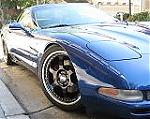
i have 450rwhp, 4.10 rear, 19inch rear wheels and i can hit 145 at the top of 4th (6800rpm). i have no doubt that i can bury the speedometer, but i don't know what that means in real mph.
Pro

Joined: Jan 2006
Posts: 716
Likes: 1
From: Bay Area CA
Correct, HP is derived from torque, but why even have the HP unit of measure if its derived from torque? Why not just get rid of Hp all together? Think about that for a sec while i move on...
Since most people dont have access to indy cars and semi's, lets make this even simpler.
Are all the geniuses who have driven 200 keeping up?
Higher rpms= more explosions per second= more power to the wheels.
Since hp is derived from torque and rpms, i think we should just throw it out the window, and just use torque from now on, i doubt it has anything to do with power.
Since most people dont have access to indy cars and semi's, lets make this even simpler.
Are all the geniuses who have driven 200 keeping up?
Higher rpms= more explosions per second= more power to the wheels.
Since hp is derived from torque and rpms, i think we should just throw it out the window, and just use torque from now on, i doubt it has anything to do with power.
 I love the sarcasm haha.