



Restrictive Push Rods.....Still Too Much Oil !!!!!

Le Mans Master


Joined: Mar 2002
Posts: 5,955
Likes: 161
From: PNW

2) IF you are getting oil due to excessive blowby/cc pressure, the increased vacuum in the cc with pull the rings tighter against the cylinder walls and decrease/eliminate the blowby. Hence reducing the oil. This is EXACTLY why vacuum pumps work. Because they are seperate of the motor, and can be adjusted to your liking. In your case, something is better than nothing.
This is the exact reason why most race cars (lots of WOT use) use an independent evacuation pump and a relief valve that regulates the maximum vacuum level on the crankcase. The vacuum pump tries to suck the guts out of the engine at all times, but the adjustable relief valve doesn't allow it to cause too strong of a vacuum on the crankcase during idle (when low volumes of dirty vapors are generated) that might harm seals, etc.
Last edited by ZeeOSix; Dec 26, 2007 at 02:08 PM.

Le Mans Master
Joined: Aug 2001
Posts: 8,145
Likes: 1
From: Bradenton FLORIDA
The only way to get a significant vacuum level in the crankcase with the stock PCV system would be to close off or restrict flow to near zero on the fresh air line ... and that's something you really don't want to do. If that was done, it would really only cause the crankcase to evacuate during long periods of idle, but at WOT the crankcase would probably go above ATM pressure as the level of vapors increased and the level of manifold vacuum decreased significantly at WOT. Things are going in the opposite and wrong directions on these two things to make it work correctly in unison.
This is the exact reason why most race cars (lots of WOT use) use an independent evacuation pump and a relief valve that regulates the maximum vacuum level on the crankcase. The vacuum pump tries to suck the guts out of the engine at all times, but the adjustable relief valve doesn't allow it to cause too strong of a vacuum on the crankcase during idle (when low volumes of dirty vapors are generated) that might harm seals, etc.
This is the exact reason why most race cars (lots of WOT use) use an independent evacuation pump and a relief valve that regulates the maximum vacuum level on the crankcase. The vacuum pump tries to suck the guts out of the engine at all times, but the adjustable relief valve doesn't allow it to cause too strong of a vacuum on the crankcase during idle (when low volumes of dirty vapors are generated) that might harm seals, etc.


Thread Starter
Team Owner


Joined: May 2004
Posts: 26,345
Likes: 231
From: SoCal
Thread Starter
Team Owner
Joined: May 2004
Posts: 26,345
Likes: 231
From: SoCal
This just means that the PCV system is successfully sucking vapors out of the crankcase at idle -- and you feel the slight vacuum that is created by the high vacuum on the engine's guts at idle. To get a better indication of blow-by, temporarily block or pinch the dirty line to remove the intake manifold vacuum from the PCV system and try it again. Also have someone rev the engine a few times while you monitor the blow-by.
At idle with oil fill cap removed I have vacuum.
But if PCV line is pinched (removing vacuum) I then have positive pressure at the fill cap. And if revved to 2K rpm I can SEE fumes.
Is this ring blowby or can it be something else ????????????????
DH
Le Mans Master
Joined: Mar 2002
Posts: 5,955
Likes: 161
From: PNW
Well I am not too happy....
At idle with oil fill cap removed I have vacuum.
But if PCV line is pinched (removing vacuum) I then have positive pressure at the fill cap. And if revved to 2K rpm I can SEE fumes.
Is this ring blowby or can it be something else ????????????????
DH
At idle with oil fill cap removed I have vacuum.
But if PCV line is pinched (removing vacuum) I then have positive pressure at the fill cap. And if revved to 2K rpm I can SEE fumes.
Is this ring blowby or can it be something else ????????????????
DH
At idle, I wouldn't think there should be much positive pressure with the PCV vacuum removed, but more of a "pulsation" at the filler cap due to the internal crankcase "pumping pulses" of the pistons. Of course, as the cylinder pressure increases with increased throttle opening and engine load, the more blow-by would be expected. You would have to compare to a few other engines tested the same way to see how they stack up.
If you are really worried about ring blow-by, then the ultimate test would be a leak down test on all cylinders. That will tell the real story on sealing health of the rings and valves - of course the valves have no factor in the crankcase vapors, but the leak down test will show their health too. I recall you saying you get tons of oil in your catch can when at the track, so it could be the rings are blowing by pretty good at WOT and causing the large oil volumes out the PCV system.
Last edited by ZeeOSix; Dec 29, 2007 at 11:38 PM.
Thread Starter
Team Owner
Joined: May 2004
Posts: 26,345
Likes: 231
From: SoCal
Every engine will have some level of ring blow-by. Also, some of that may be contaminates vaporizing due to the hot oil.
At idle, I wouldn't think there should be much positive pressure with the PCV vacuum removed, but more of a "pulsation" at the filler cap due to the internal crankcase "pumping pulses" of the pistons. Of course, as the cylinder pressure increases with increased throttle opening and engine load, the more blow-by would be expected. You would have to compare to a few other engines tested the same way to see how they stack up.
If you are really worried about ring blow-by, then the ultimate test would be a leak down test on all cylinders. That will tell the real story on sealing health of the rings and valves - of course the valves have no factor in the crankcase vapors, but the leak down test will show their health too. I recall you saying you get tons of oil in your catch can when at the track, so it could be the rings are blowing by pretty good at WOT and causing the large oil volumes out the PCV system.
At idle, I wouldn't think there should be much positive pressure with the PCV vacuum removed, but more of a "pulsation" at the filler cap due to the internal crankcase "pumping pulses" of the pistons. Of course, as the cylinder pressure increases with increased throttle opening and engine load, the more blow-by would be expected. You would have to compare to a few other engines tested the same way to see how they stack up.
If you are really worried about ring blow-by, then the ultimate test would be a leak down test on all cylinders. That will tell the real story on sealing health of the rings and valves - of course the valves have no factor in the crankcase vapors, but the leak down test will show their health too. I recall you saying you get tons of oil in your catch can when at the track, so it could be the rings are blowing by pretty good at WOT and causing the large oil volumes out the PCV system.
It definatley goes from vacuum to positive with the PCV line pinced.

DH
Le Mans Master
Joined: Mar 2002
Posts: 5,955
Likes: 161
From: PNW
It's hard to say what level of visible vapors would be normal ... but since you said you could see them, does that mean there was a big amount really blowing out the filler cap tube, or was it just visible and barely flowing out?
If you know anyone with a C5 it would be helpful to do the same test and get a comparison. Or maybe a few members here have done this test, or could also do this test to get a feel for normal level of blow-by.
It would be interesting to get someone who doesn't blow much oil back through the PVC system to do this test to see what level of vapors they see. It's not an absolute measurement, but a test to give an idea if there is massive ring blow-by or not. The cylinder leak down test would be a measurable test.
Thread Starter
Team Owner
Joined: May 2004
Posts: 26,345
Likes: 231
From: SoCal
Was the engine at full operating temperature when you did the blow-by test? If not, some of the vapors you saw could be water vapors still burning off due to warm-up.
It's hard to say what level of visible vapors would be normal ... but since you said you could see them, does that mean there was a big amount really blowing out the filler cap tube, or was it just visible and barely flowing out?
If you know anyone with a C5 it would be helpful to do the same test and get a comparison. Or maybe a few members here have done this test, or could also do this test to get a feel for normal level of blow-by.
It would be interesting to get someone who doesn't blow much oil back through the PVC system to do this test to see what level of vapors they see. It's not an absolute measurement, but a test to give an idea if there is massive ring blow-by or not. The cylinder leak down test would be a measurable test.
It's hard to say what level of visible vapors would be normal ... but since you said you could see them, does that mean there was a big amount really blowing out the filler cap tube, or was it just visible and barely flowing out?
If you know anyone with a C5 it would be helpful to do the same test and get a comparison. Or maybe a few members here have done this test, or could also do this test to get a feel for normal level of blow-by.
It would be interesting to get someone who doesn't blow much oil back through the PVC system to do this test to see what level of vapors they see. It's not an absolute measurement, but a test to give an idea if there is massive ring blow-by or not. The cylinder leak down test would be a measurable test.
Why don't you try it ???????????
DH
Corvette Stories
The Best of Corvette for Corvette Enthusiasts

Corvette ZR1X Will Be Pacing the Indy 500, And Could Probably Race, Too!
Verdad Gallardo
Top 10 Corvettes Coming to Mecum Indy 2026!
Brett Foote
Top 10 C9 Corvette MUST-HAVES to Fix These C8 Generation Flaws!
Michael S. Palmer
10 Revolutionary 'Corvette Firsts' Most People Don't Know
Joe Kucinski
5 Reasons to Upgrade to an LS6-Powered Corvette; 5 Reasons to Stay LT2
Michael S. Palmer
2027 Corvette vs The World: Every C8 vs Its Closest Competitor
Joe Kucinski
10 Most Common Corvette Problems of the Last 20 Years!
Joe Kucinski
5 MOST and 5 LEAST Popular Corvette Model Years in History!
Joe Kucinski
2027 Corvette Buyer's Guide: Everything You Need to Know!
Joe Kucinski
Le Mans Master
Joined: Mar 2002
Posts: 5,955
Likes: 161
From: PNW
My Zee is in hibernation these days, but next time I fire it up for a spin I'll see if I can also do this test. I did the "dipstick removal at idle test" a while ago and didn't see any vapors, but the manifold vacuum was still on the PCV system. I however do not have the fixed orifice setup, as my Zee is a 2002 and still has the spring loaded PCV valve. It could be that the original PCV valve nearly shuts off the vacuum at idle ... so I don't know really know if the dipstick test really told me much without knowing if there was still vacuum on the system.
Thread Starter
Team Owner
Joined: May 2004
Posts: 26,345
Likes: 231
From: SoCal
My Zee is in hibernation these days, but next time I fire it up for a spin I'll see if I can also do this test. I did the "dipstick removal at idle test" a while ago and didn't see any vapors, but the manifold vacuum was still on the PCV system. I however do not have the fixed orifice setup, as my Zee is a 2002 and still has the spring loaded PCV valve. It could be that the original PCV valve nearly shuts off the vacuum at idle ... so I don't know really know if the dipstick test really told me much without knowing if there was still vacuum on the system.
DH





Le Mans Master
Joined: Mar 2002
Posts: 5,955
Likes: 161
From: PNW
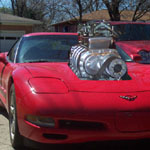
 ... I was just talking the other day about supercharging my Zee. I have owned turboed vehicles before, and got deep into the tech side of turbos pretty good at one time. It's all interesting stuff IMO.
