




P1515 code woes...

Thread Starter
Instructor


Joined: Oct 2007
Posts: 214
Likes: 0
 P1515 code woes...
Saturday I pulled the Vortec Rammer and replaced the cut shroud with a new one (from Gene @GMPartsHouse - great guy!). I wasn't able to remove the harness from the MAF, couldn't figure out the clip so I left it attached. Set the CF air bridge and MAF aside as an assy. I reinstalled the assy and found that the air bridge to silicon coupler fit was really loose, imho, unacceptably loose. But I had to move the car so I put the Vortec filter back on. Started the car, drove it about 2 miles and went around a corner at a normal speed and immediately the car went into "Engine power reduced" mode. Limped home pulled codes and had a P1515 and a C1278. I reset the codes and the car seems to be running fine. But I haven't driven it again.
So... I'm baffled, why would removing and reinstalling the airbridge/MAF create a problem like this? Is the MAF motion sensitive? The carbon fiber air bridge is definately a loose fit and allows the intake system to move around quite a bit. For all I know air can also get in through the junction (downstream of the MAF). The air filter is FILTHY, which is why I removed the Rammer set up. The P1515 code indicates that the Throttle position is out of sync with the accel pedal control. But I didn't touch either of these components during this change over.
Any ideas or suggestions?
thanks!
bob
So... I'm baffled, why would removing and reinstalling the airbridge/MAF create a problem like this? Is the MAF motion sensitive? The carbon fiber air bridge is definately a loose fit and allows the intake system to move around quite a bit. For all I know air can also get in through the junction (downstream of the MAF). The air filter is FILTHY, which is why I removed the Rammer set up. The P1515 code indicates that the Throttle position is out of sync with the accel pedal control. But I didn't touch either of these components during this change over.
Any ideas or suggestions?
thanks!
bob
Thread Starter
Instructor
Joined: Oct 2007
Posts: 214
Likes: 0
ttt and a little update
Did some searching last night and found a couple posts that seem to indicate that an air leak downstream of the MAF and upstream of the TPS could generate a P1515 code. This doesnt' seem to make a lot of sense.
Hoping for any info or suggestions. I've got the coupler as tight as I dare worried about cracking the carbon fiber bridge. I've got a reducer on the way that should fit better, but in the meantime I'm pretty hesitant to drive the car.
Thanks, Bob
Did some searching last night and found a couple posts that seem to indicate that an air leak downstream of the MAF and upstream of the TPS could generate a P1515 code. This doesnt' seem to make a lot of sense.
Hoping for any info or suggestions. I've got the coupler as tight as I dare worried about cracking the carbon fiber bridge. I've got a reducer on the way that should fit better, but in the meantime I'm pretty hesitant to drive the car.
Thanks, Bob
Safety Car


Joined: Jan 2001
Posts: 4,387
Likes: 691
From: Boise ID
I would be pretty hesitant also. 
Any time you have air getting into the TB with out the MAF knowing it can cause problems. Off hand, I'm not sure if the 1515 would be one of the regulars which would show up or not. I would not want unfiltered and un-metered air getting into the TB.
Any time you have air getting into the TB with out the MAF knowing it can cause problems. Off hand, I'm not sure if the 1515 would be one of the regulars which would show up or not. I would not want unfiltered and un-metered air getting into the TB.
Thread Starter
Instructor
Joined: Oct 2007
Posts: 214
Likes: 0
Definately in agreement about the unfiltered air. I'm mostly surprised that the code was thrown (or appears to have been thrown) by the loose fit at the bridge. To be honest the stock bridge I have on hand is much looser fit with the stock crimp clamp. To be fair I've never driven this car with that stock set up. Only a Rammer where the assy was done such that the bridge was a pressure fit between the Rammer box and the coupler. Actually the bridge was under enough compression that it and would rub on the hood liner... bob
Thread Starter
Instructor
Joined: Oct 2007
Posts: 214
Likes: 0
Please help!
So far haven't really had any hits on this thread.
Things have gone from bad to worse. I drove the car this morning and 2 blocks away all hell broke loose. I didn't think I was going to get the car back home. Everything in the intake assy is tight and all connections look to be ok. Yet bad things are happening.
Pulled codes today and I've got many more than I had previously.
PCM
P0106 C (I think I wrote this one down wrong becuase I don't see it in the list. Maybe P0601 C?)
P1120 HC
P1220 HC
P1514 HC
P1515 H
P1516 HC
P1518 HC
and the TCS - C1278 H
I looked over the MAF wiring and it all looks ok, also a quick eyeball of the TPS wiring looks ok also. As I mentioned previously, have not disconnected either of these connections at all. Never even touched the TPS connection. The ONLY thing I did that I have remembered in retrospect is, push on the connectors at the actual PCM when I had the wheel well cover off. (installed vent screens). The connector I pushed on did slide on further, but I did not pull on it, or disconnect it. Just did a quick, check to make sure it was on tight. Thats it!
This kind of electrical stuff really frustrates me, I'm a carb guy at heart... Heck I can't even figure how to get the MAF connector disconnected!!
Really need some help here... I don't get it.
thanks in advance... bob
Things have gone from bad to worse. I drove the car this morning and 2 blocks away all hell broke loose. I didn't think I was going to get the car back home. Everything in the intake assy is tight and all connections look to be ok. Yet bad things are happening.
Pulled codes today and I've got many more than I had previously.
PCM
P0106 C (I think I wrote this one down wrong becuase I don't see it in the list. Maybe P0601 C?)
P1120 HC
P1220 HC
P1514 HC
P1515 H
P1516 HC
P1518 HC
and the TCS - C1278 H
I looked over the MAF wiring and it all looks ok, also a quick eyeball of the TPS wiring looks ok also. As I mentioned previously, have not disconnected either of these connections at all. Never even touched the TPS connection. The ONLY thing I did that I have remembered in retrospect is, push on the connectors at the actual PCM when I had the wheel well cover off. (installed vent screens). The connector I pushed on did slide on further, but I did not pull on it, or disconnect it. Just did a quick, check to make sure it was on tight. Thats it!
This kind of electrical stuff really frustrates me, I'm a carb guy at heart... Heck I can't even figure how to get the MAF connector disconnected!!
Really need some help here... I don't get it.
thanks in advance... bob
Safety Car
Joined: Jan 2001
Posts: 4,387
Likes: 691
From: Boise ID
DTC P0601 Control Module Read Only Memory (ROM)
DTC P1120 Throttle Position (TP) Sensor 1 Circuit
Circuit Description
The throttle position (TP) sensor is mounted on the throttle body assembly. The sensor is actually 2 individual TP sensors within one housing. Two separate signal, ground and 5 volt reference circuits are used in order to connect the TP sensor assembly and the throttle actuator control (TAC) module. The 2 sensors have opposite functionality. The TP sensor 1 signal voltage increases as the throttle opens, from below 1.0 volt at 0 percent throttle to above 3.5 volts at 100 percent throttle. The TP sensor 2 signal voltage decreases from around 3.8 volts at 0 percent throttle to below 1.0 volt at 100 percent throttle. Also observe that the signal circuit for TP Sensor 1 is pulled up to 5 volts and that the signal circuit for TP Sensor 2 is referenced to ground within the TAC module.
DTC P1220 Throttle Position (TP) Sensor 2 Circuit
Circuit Description
The throttle position (TP) sensor is mounted on the throttle body assembly. The sensor is actually two individual TP sensors within one housing. Two separate signal, ground and 5 volt reference circuits are used to connect the TP sensor assembly and the throttle actuator control (TAC) Module. The 2 sensors have opposite functionality. The TP sensor 1 signal voltage increases as the throttle opens, from below 1.0 volt at 0 percent throttle to above 3.5 volts at 100 percent throttle. The TP sensor 2 signal voltage decreases from around 3.8 volt at 0 percent throttle to below 1.0 volt at 100 percent throttle. Observe also that the signal circuit for TP Sensor 1 is pulled up to 5 volts and that the signal circuit for TP Sensor 2 is referenced to ground within the TAC Module.
DTC P1514 Throttle Body Performance
Circuit Description
The PCM uses the TP, the BARO, the IAT and the engine RPM in order to calculate an expected Mass Airflow rate. The PCM compares this value to the Mass Airflow value and the speed density calculation in order to verify the proper throttle operation.
DTC P1515 Control Module Throttle Actuator Position Performance
Circuit Description
The commanded throttle position (based on accelerator pedal position and possibly other limiting factors) is compared to the Actual throttle position. The 2 values should be within a calibrated range of each other. Both the PCM and the TAC module redundantly monitor the Commanded and Actual throttle position. This DTC sets if the PCM detects the problem.
DTC P1516 Throttle Actuator Control (TAC) Module Throttle Actuator Position Performance
Circuit Description
The commanded throttle position, based on accelerator pedal position and possibly other limiting factors, is compared to the Actual throttle position. The 2 values should be within a calibrated range of each other. Both the PCM and the TAC module
DTC P1518 Throttle Actuator Control (TAC) Module Serial Data Circuit
Circuit Description
The TAC Module and the PCM communicate via a dedicated serial data circuit. This serial data circuit is separate from any other serial data circuit on the vehicle. Accurate transmitting and receiving of serial data requires not only good circuit integrity but also adequate system voltage. This diagnostic monitors the accuracy of the serial data transmitted between the TAC Module and the PCM. If the PCM detects a loss of data or invalid data, this DTC sets.
Is it possible that this may be the beginning signs of a battery going down or poor connections. The P1514 still sonds like unmetered air getting in the TB.
Hopefully someone with more real world experience in this area will chime in for you!
DTC P1120 Throttle Position (TP) Sensor 1 Circuit
Circuit Description
The throttle position (TP) sensor is mounted on the throttle body assembly. The sensor is actually 2 individual TP sensors within one housing. Two separate signal, ground and 5 volt reference circuits are used in order to connect the TP sensor assembly and the throttle actuator control (TAC) module. The 2 sensors have opposite functionality. The TP sensor 1 signal voltage increases as the throttle opens, from below 1.0 volt at 0 percent throttle to above 3.5 volts at 100 percent throttle. The TP sensor 2 signal voltage decreases from around 3.8 volts at 0 percent throttle to below 1.0 volt at 100 percent throttle. Also observe that the signal circuit for TP Sensor 1 is pulled up to 5 volts and that the signal circuit for TP Sensor 2 is referenced to ground within the TAC module.
DTC P1220 Throttle Position (TP) Sensor 2 Circuit
Circuit Description
The throttle position (TP) sensor is mounted on the throttle body assembly. The sensor is actually two individual TP sensors within one housing. Two separate signal, ground and 5 volt reference circuits are used to connect the TP sensor assembly and the throttle actuator control (TAC) Module. The 2 sensors have opposite functionality. The TP sensor 1 signal voltage increases as the throttle opens, from below 1.0 volt at 0 percent throttle to above 3.5 volts at 100 percent throttle. The TP sensor 2 signal voltage decreases from around 3.8 volt at 0 percent throttle to below 1.0 volt at 100 percent throttle. Observe also that the signal circuit for TP Sensor 1 is pulled up to 5 volts and that the signal circuit for TP Sensor 2 is referenced to ground within the TAC Module.
DTC P1514 Throttle Body Performance
Circuit Description
The PCM uses the TP, the BARO, the IAT and the engine RPM in order to calculate an expected Mass Airflow rate. The PCM compares this value to the Mass Airflow value and the speed density calculation in order to verify the proper throttle operation.
DTC P1515 Control Module Throttle Actuator Position Performance
Circuit Description
The commanded throttle position (based on accelerator pedal position and possibly other limiting factors) is compared to the Actual throttle position. The 2 values should be within a calibrated range of each other. Both the PCM and the TAC module redundantly monitor the Commanded and Actual throttle position. This DTC sets if the PCM detects the problem.
DTC P1516 Throttle Actuator Control (TAC) Module Throttle Actuator Position Performance
Circuit Description
The commanded throttle position, based on accelerator pedal position and possibly other limiting factors, is compared to the Actual throttle position. The 2 values should be within a calibrated range of each other. Both the PCM and the TAC module
DTC P1518 Throttle Actuator Control (TAC) Module Serial Data Circuit
Circuit Description
The TAC Module and the PCM communicate via a dedicated serial data circuit. This serial data circuit is separate from any other serial data circuit on the vehicle. Accurate transmitting and receiving of serial data requires not only good circuit integrity but also adequate system voltage. This diagnostic monitors the accuracy of the serial data transmitted between the TAC Module and the PCM. If the PCM detects a loss of data or invalid data, this DTC sets.
Is it possible that this may be the beginning signs of a battery going down or poor connections. The P1514 still sonds like unmetered air getting in the TB.
Hopefully someone with more real world experience in this area will chime in for you!
Thread Starter
Instructor
Joined: Oct 2007
Posts: 214
Likes: 0
Thanks 87SAM. I actually replaced the battery a month ago and it appears to be OK. I'm currently trying to get away from work long enough to do another check on the air bridge connection. The codes, at least the P1514/1515, keep pointing at the TP and MAF not jiving. The bridge is solid as a rock now and I accomplished this by pushing the bridge into the TP connector further. I'm wondering if the stiff carbon fiber eliptical shape is creating a leak along the bottom, even though the connection appears to be very tight.
I may actually remove the intake and swap the stock set up back in. It also gets me thinking that running without a supported air filter may be asking for problems down the road. The Blackwing design is nice in that it uses the stock studs to locate the filter. I'll probably fabricate a bracket to support the K&N filter (when I get that installed).
This is really crazy... all I did (effectively) was remove the box that the Vortex Rammer filter sat in. It's just now sitting on top of the radiator support....
thanks in advance for any other insights/assistance!
bob
I may actually remove the intake and swap the stock set up back in. It also gets me thinking that running without a supported air filter may be asking for problems down the road. The Blackwing design is nice in that it uses the stock studs to locate the filter. I'll probably fabricate a bracket to support the K&N filter (when I get that installed).
This is really crazy... all I did (effectively) was remove the box that the Vortex Rammer filter sat in. It's just now sitting on top of the radiator support....
thanks in advance for any other insights/assistance!
bob
Thread Starter
Instructor
Joined: Oct 2007
Posts: 214
Likes: 0
Fixed!
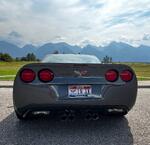
I wanted to post a pic of this beauty, but don't know how.
Anyway, Pulled the air bridge off <again> and this time I pulled the coupler off of the Throttle Body. I did this so I could inspect the throttle plate.... as soon as I looked at the opening I saw the prob. Apparently there was a large rubber band like reducer that was used to make the 4" coupler fit tight on the carbon fiber air bridge. I never saw it when I removed the air bridge the first time. The rubber band deal was stuck ON the throttle blade with half inside the bore. Holding the throttle open.
I can only surmise that the first time I drove the car on Sat night it was partially captured by the air bridge, yet represented a huge air leak. When I reassembled everything later that night I must have pushed the rubber band into the open space in the coupler before the throttle plate... then this morning when I goosed it a little it got hooked on the throttle plate. No wonder the rpm was sitting at 3k... Thankfully it didn't get past the throttle plate!!!
Back to good times!!
bob
Anyway, Pulled the air bridge off <again> and this time I pulled the coupler off of the Throttle Body. I did this so I could inspect the throttle plate.... as soon as I looked at the opening I saw the prob. Apparently there was a large rubber band like reducer that was used to make the 4" coupler fit tight on the carbon fiber air bridge. I never saw it when I removed the air bridge the first time. The rubber band deal was stuck ON the throttle blade with half inside the bore. Holding the throttle open.
I can only surmise that the first time I drove the car on Sat night it was partially captured by the air bridge, yet represented a huge air leak. When I reassembled everything later that night I must have pushed the rubber band into the open space in the coupler before the throttle plate... then this morning when I goosed it a little it got hooked on the throttle plate. No wonder the rpm was sitting at 3k... Thankfully it didn't get past the throttle plate!!!
Back to good times!!
bob
Corvette Stories
The Best of Corvette for Corvette Enthusiasts

Top 10 Most Expensive Corvettes Ever Sold on Bring A Trailer
Brett Foote
10 Things Every Corvette Owner Needs (2026 Edition)
Michael S. Palmer
8 Most "Only Corvette Owners Understand" Quirks and Problems
Pouria Savadkouei
10 Reasons the C6 Z06 is Still A Performance Benchmark After 20 Years
Joe Kucinski
How Much Horsepower Every Corvette Engine "LOST" in 1972
Joe Kucinski
Top 10 DOs and DON'Ts for Protecting Your Convertible Top!
Michael S. Palmer
Top 10 Most Explosive Corvettes Ever Made: Power-to-Weight Ratio Ranked!
Joe Kucinski
150 hp to 1,250 hp: Every Corvette Generation Compared by the Specs That Matter
Joe Kucinski
8 Coolest Corvette Pace Cars (and Replicas) of All Time
Verdad Gallardo
Pro

Joined: Apr 2007
Posts: 504
Likes: 0
Your concern about an unsecured air bridge/filter assembly are valid. I did not secure mine and had a catastrophic separation with an 18 wheeler right behind me and almost got crushed because the car shuts down. Secure that sucker in place as any movement side to side will cause separation
Thread Starter
Instructor
Joined: Oct 2007
Posts: 214
Likes: 0
Have to say I've never experienced the behavior that my Z displayed when it went into reduced power mode... I can see how you could get creamed by a semi in that case. Engine braking like I've never experienced... maybe it was a little AH braking action at the same time, who knows. Not sure. Did not like it .
But you can bet I'm going to secure the air cleaner. Thinking a simple piece of ABS plastic heated and folded with holes in the right places.
bob
But you can bet I'm going to secure the air cleaner. Thinking a simple piece of ABS plastic heated and folded with holes in the right places.
bob
