



Hood Seal

Melting Slicks


Joined: Oct 2007
Posts: 2,798
Likes: 8
From: It's true money can't buy happiness, but it is more comfortable crying in a Corvette than on a bicyc
St. Jude Donor '13

Since the topic of heat was brought up.....the seller I bought my gasket from sent along a "free tip", his advice is/was to remove the gasket up by the windshield to allow air to flow out, thereby reducing underhood temp, and also to hold the front of the car down at high speed. Which I never saw a need for. His claim is air trapped under the car creates lift and removing the gasket allows the pressure a place to escape. It makes sense but again at 130 I never thought the front was floating like some other cars I've driven that fast. However I figured that this summer I will try the gasket removal and see if it does lower the temps under the hood.

Melting Slicks
Joined: Aug 2005
Posts: 3,398
Likes: 2

Race Director

Joined: Sep 2004
Posts: 17,786
Likes: 4
From: Redsox, Pats, Celts & Bruins !!! Redsox Nation !!!
St. Jude Donor '06-'07-'08-'09-'10-'11-'12

Melting Slicks

Joined: Aug 2006
Posts: 2,123
Likes: 0
From: Issaquah WA
St. Jude Donor '08-'09-'10
Since the topic of heat was brought up.....the seller I bought my gasket from sent along a "free tip", his advice is/was to remove the gasket up by the windshield to allow air to flow out, thereby reducing underhood temp, and also to hold the front of the car down at high speed. Which I never saw a need for. His claim is air trapped under the car creates lift and removing the gasket allows the pressure a place to escape. It makes sense but again at 130 I never thought the front was floating like some other cars I've driven that fast. However I figured that this summer I will try the gasket removal and see if it does lower the temps under the hood.


Drifting

Joined: Jun 2007
Posts: 1,425
Likes: 0
From: OKC OK
Since the topic of heat was brought up.....the seller I bought my gasket from sent along a "free tip", his advice is/was to remove the gasket up by the windshield to allow air to flow out, thereby reducing underhood temp, and also to hold the front of the car down at high speed. Which I never saw a need for. His claim is air trapped under the car creates lift and removing the gasket allows the pressure a place to escape. It makes sense but again at 130 I never thought the front was floating like some other cars I've driven that fast. However I figured that this summer I will try the gasket removal and see if it does lower the temps under the hood.
No prob. The Corvette as we all know pulls down at higher speed.
Also no over heating at all.
Suggest keep your engine clean and install.
Melting Slicks


Joined: Jun 2004
Posts: 2,453
Likes: 81
From: Fishin' Pole FL
Actually on a stock setup the car does get some air into the breather from the crack in front of the hood. That's why I imagine they put the small hole in the top of the breather, the Z06 has a larger hole because the foglight shrouds are opened up. The majority of air entering a stock breather comes from inside the engine bay through channels underneath the breather. The air coming in from the bottom is primarily for cooling.

Safety Car


Joined: Oct 2000
Posts: 4,949
Likes: 10
From: Monticello MN
Actually on a stock setup the car does get some air into the breather from the crack in front of the hood. That's why I imagine they put the small hole in the top of the breather, the Z06 has a larger hole because the foglight shrouds are opened up. The majority of air entering a stock breather comes from inside the engine bay through channels underneath the breather. The air coming in from the bottom is primarily for cooling.
Ed
Corvette Stories
The Best of Corvette for Corvette Enthusiasts

5 Best & 5 Worst Corvette Daily Drivers
Joe Kucinski
The Headlights of Every Corvette Generation Explained
Joe Kucinski
5 Best & 5 Most Overrated Corvette Track Packages of All Time!
Joe Kucinski
Every 2027 Corvette Engine Explained
Joe Kucinski
Designer Imagines A Corvette That Looks More Like a Corvette Than the Corvette
Verdad Gallardo
10 Ugly Corvettes That We Still Kinda Love
Joe Kucinski
Top 10 Most Expensive Corvettes Ever Sold on Bring A Trailer
Brett Foote
10 Things Every Corvette Owner Needs (2026 Edition)
Michael S. Palmer
8 Most "Only Corvette Owners Understand" Quirks and Problems
Pouria Savadkouei
Race Director
Joined: Sep 2004
Posts: 17,786
Likes: 4
From: Redsox, Pats, Celts & Bruins !!! Redsox Nation !!!
St. Jude Donor '06-'07-'08-'09-'10-'11-'12
Actually on a stock setup the car does get some air into the breather from the crack in front of the hood. That's why I imagine they put the small hole in the top of the breather, the Z06 has a larger hole because the foglight shrouds are opened up. The majority of air entering a stock breather comes from inside the engine bay through channels underneath the breather. The air coming in from the bottom is primarily for cooling.
Making it a bottom feeder.
 The cooling for the radiator comes from the bottom. That is why you have the movable air dam under the car.
 The hole that you talk about was not on a stock C5. The stock filter cover had a solid top and slits around the edge for air to enter.
The Z06 had 2 different sizes of hole. I upgraded to the larger one. The way the "breather" as you call it, gets are is from the bottom. That is why some people that do the zip tie and such also cut out a square under the stock tray. The hole is mounted up under the front bumper, not behind the "crack" The only thing coming in the crack is water and a bit of air.
That is why the hood seal is recommended for people with open air filters, or the zip tie mod or similar (swiss cheese etc).
Just go to www.corvetteactioncenter.com and read the tech articles on how the car gets air.
Melting Slicks
Joined: Jun 2004
Posts: 2,453
Likes: 81
From: Fishin' Pole FL
Making it a bottom feeder. The cooling for the radiator comes from the bottom. That is why you have the movable air dam under the car.
The hole that you talk about was not on a stock C5. The stock filter cover had a solid top and slits around the edge for air to enter.
The Z06 had 2 different sizes of hole. I upgraded to the larger one. The way the "breather" as you call it, gets are is from the bottom. That is why some people that do the zip tie and such also cut out a square under the stock tray. The hole is mounted up under the front bumper, not behind the "crack" The only thing coming in the crack is water and a bit of air.
That is why the hood seal is recommended for people with open air filters, or the zip tie mod or similar (swiss cheese etc).
Just go to www.corvetteactioncenter.com and read the tech articles on how the car gets air.
The cooling for the radiator comes from the bottom. That is why you have the movable air dam under the car. The hole that you talk about was not on a stock C5. The stock filter cover had a solid top and slits around the edge for air to enter.
The Z06 had 2 different sizes of hole. I upgraded to the larger one. The way the "breather" as you call it, gets are is from the bottom. That is why some people that do the zip tie and such also cut out a square under the stock tray. The hole is mounted up under the front bumper, not behind the "crack" The only thing coming in the crack is water and a bit of air.
That is why the hood seal is recommended for people with open air filters, or the zip tie mod or similar (swiss cheese etc).
Just go to www.corvetteactioncenter.com and read the tech articles on how the car gets air.
I know how the car gets air. I have had the stock set-up (2002 vert) which does have the small hole in the top. I then tried the zip-tie mod. I then went to the Vararam and I finally settled on "this" which has worked well for me so far.
Last edited by dndrsn; Apr 9, 2008 at 08:35 AM.
Advanced

Joined: Jan 2007
Posts: 97
Likes: 0
From: Germany, Europe

Highly recommended with the Vortex Rammer. Keeps engine bay clean and the filter dry.
No overheating no matter if driving in the city or autobahn.
Last edited by MadTom; Apr 9, 2008 at 08:34 AM.
Melting Slicks
Joined: Jun 2004
Posts: 2,453
Likes: 81
From: Fishin' Pole FL
I don't understand this one either. The Vortex Rammer requires a hole to be made in the radiator shroud exposing the filter to the elements under the car. The Rammer has a cover over the filter in the engine bay. A hood seal may keep the cover clean and dry but not the filter.


Intermediate
Joined: Jan 2008
Posts: 36
Likes: 0
From: Fredericksburg VA
I don't understand this one either. The Vortex Rammer requires a hole to be made in the radiator shroud exposing the filter to the elements under the car. The Rammer has a cover over the filter in the engine bay. A hood seal may keep the cover clean and dry but not the filter.
Advanced
Joined: Jan 2007
Posts: 97
Likes: 0
From: Germany, Europe
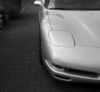
Maybe your are right and I make an error in reasoning but I noticed that the marked area after driving in heavy rain without the seal was badly wet.

Then the water was running down until the blue marked edge and the drops were sucked in.


Then the water was running down until the blue marked edge and the drops were sucked in.

Race Director
Joined: Sep 2004
Posts: 17,786
Likes: 4
From: Redsox, Pats, Celts & Bruins !!! Redsox Nation !!!
St. Jude Donor '06-'07-'08-'09-'10-'11-'12
When you say "bottom feeder" it suggests the engine gets air to the intake from the bottom of the car. On a stock set-up that is just not the case directly but indirectly being the air has already passed thru the cooling system. Any opening, including the crack between the nose and hood, that introduces ambient temperature atmosphere (cooler air) into the engine bay is a plus for a stock set-up.
I know how the car gets air. I have had the stock set-up (2002 vert) which does have the small hole in the top. I then tried the zip-tie mod. I then went to the Vararam and I finally settled on "this" which has worked well for me so far.
I know how the car gets air. I have had the stock set-up (2002 vert) which does have the small hole in the top. I then tried the zip-tie mod. I then went to the Vararam and I finally settled on "this" which has worked well for me so far.
Again, Water is the main concern here, that it what the seal is for.
Gm most likely did not add a seal in this area because you would need to remove and replace it every time you need access to the bumper.
The seal is just a protection mod, it keeps the engine bay cleaner and the aftermarket filters from getting wet and damaged.
Melting Slicks
Joined: Oct 2007
Posts: 2,798
Likes: 8
From: It's true money can't buy happiness, but it is more comfortable crying in a Corvette than on a bicyc
St. Jude Donor '13
I also wondered about the claims of the Vortex rammer and others that tapped into the shroud. They claim cold air intake yet I can't help but think you'd still suck some heated air from the condenser and radiator. The cold air enters from the bottom, heat rises, and then your intake sucks from higher up which is also narrower and closer to the heat sources. That's my opinion on these type of cold air ram air systems. Long live my Vararam.
And of course I also run a performance hood seal too. On topic comment.
And of course I also run a performance hood seal too. On topic comment.

Melting Slicks


Joined: Feb 2006
Posts: 2,172
Likes: 104
From: Des Moines Iowa