



Sevice Traction SYS & Active Handling

Thread Starter
Racer


Joined: Mar 2006
Posts: 444
Likes: 9
From: IL
 Sevice Traction SYS & Active Handling
Took to Chevrolet dealer with the following codes.
1. 10 PCM P1571 Service Traction SYS displayed 2. 28 TCS C1277 Service Active Hdling displayed
Chevrolet dealer did the following.
Run various checks, but ended up only cleaning the ground wires # G-102 near the battery and #G-101 near the LH frame rail close to the radiator
After Repair
1. Picked up car
2. Car computer has no codes displayed
3. Start Car and Drive car normally accelerating slowly through the gears
a. OR can run the car hard and the same results
b. Cruise Control is not functional
4. 10 PCM P1571 Service Traction SYS displayed almost instantly
5. 28 TCS C1277 Service Active Hdling displayed almost instantly
a. Engine stumbles in the 1,200 to 3,000 RPM range
b. Cruise Control will now work properly now
6. Reset either #3 or 4 and cruise control will disengage
7. Finish the drive, reset all codes and let the car set for ½ hr or more
8. Car computer has no codes displayed
Start @ #3 and everything happens again
7/25/08
I took all the grounds that the dealer had cleaned and sand papered them and re-tightened.
1. Car computer has no codes displayed
2. Start Car and Drive car normally accelerating slowly through the gears
a. Can run the car hard and the same results
b. Cruise Control is not functional
3. 10 PCM P1571 Service Traction SYS displayed almost instantly
4. 28 TCS C1277 Service Active Hdling displayed almost instantly
a. Engine stumbles in the 1,200 to 3,000 RPM range
b. Cruise Control will now work properly now
5. Reset either #3 or 4 and cruise control will disengaged
6. Finish the drive, reset all codes and let the car set for ½ hr or more
7. Car computer has no codes displayed
Start @ #3 and everything happens again
1. 10 PCM P1571 Service Traction SYS displayed 2. 28 TCS C1277 Service Active Hdling displayed
Chevrolet dealer did the following.
Run various checks, but ended up only cleaning the ground wires # G-102 near the battery and #G-101 near the LH frame rail close to the radiator
After Repair
1. Picked up car
2. Car computer has no codes displayed
3. Start Car and Drive car normally accelerating slowly through the gears
a. OR can run the car hard and the same results
b. Cruise Control is not functional
4. 10 PCM P1571 Service Traction SYS displayed almost instantly
5. 28 TCS C1277 Service Active Hdling displayed almost instantly
a. Engine stumbles in the 1,200 to 3,000 RPM range
b. Cruise Control will now work properly now
6. Reset either #3 or 4 and cruise control will disengage
7. Finish the drive, reset all codes and let the car set for ½ hr or more
8. Car computer has no codes displayed
Start @ #3 and everything happens again
7/25/08
I took all the grounds that the dealer had cleaned and sand papered them and re-tightened.
1. Car computer has no codes displayed
2. Start Car and Drive car normally accelerating slowly through the gears
a. Can run the car hard and the same results
b. Cruise Control is not functional
3. 10 PCM P1571 Service Traction SYS displayed almost instantly
4. 28 TCS C1277 Service Active Hdling displayed almost instantly
a. Engine stumbles in the 1,200 to 3,000 RPM range
b. Cruise Control will now work properly now
5. Reset either #3 or 4 and cruise control will disengaged
6. Finish the drive, reset all codes and let the car set for ½ hr or more
7. Car computer has no codes displayed
Start @ #3 and everything happens again

Safety Car


Joined: Aug 2000
Posts: 4,933
Likes: 30
From: San Rafael CA
Very interesting ... kinda weird that cleaning G101 and G102 didn't change anything ..... considering the EBCM is grounded at G103 and G108 ..... and the PCM is grounded at G106 ..... 

Stupid stealership ........
Do you have a Digital Multi-Meter ??? Wanna buy one ????
Your problem is that the EBCM is supposed to send a "requested torque" signal to the PCM. The PCM is not getting a signal, or the signal is "out of range". The PCM sets the P1571 and reports the problem to the EBCM, which sets C1277 and disables functions such as Traction Control that use the "requested torque" as part of their function.
If cleaning the grounds doesn't clear the problem, there are some wiring test that can be done with a DMM. If the problem is not in the wiring, the car needs to go to a dealer because either the EBCM or PCM needs replacement and that requires a Tech2 programmer ... which basically only dealers have.

Stupid stealership ........
Do you have a Digital Multi-Meter ??? Wanna buy one ????
Your problem is that the EBCM is supposed to send a "requested torque" signal to the PCM. The PCM is not getting a signal, or the signal is "out of range". The PCM sets the P1571 and reports the problem to the EBCM, which sets C1277 and disables functions such as Traction Control that use the "requested torque" as part of their function.
If cleaning the grounds doesn't clear the problem, there are some wiring test that can be done with a DMM. If the problem is not in the wiring, the car needs to go to a dealer because either the EBCM or PCM needs replacement and that requires a Tech2 programmer ... which basically only dealers have.
Thread Starter
Racer
Joined: Mar 2006
Posts: 444
Likes: 9
From: IL
Very interesting ... kinda weird that cleaning G101 and G102 didn't change anything ..... considering the EBCM is grounded at G103 and G108 ..... and the PCM is grounded at G106 .....
Stupid stealership ........
Do you have a Digital Multi-Meter ??? Wanna buy one ????
Your problem is that the EBCM is supposed to send a "requested torque" signal to the PCM. The PCM is not getting a signal, or the signal is "out of range". The PCM sets the P1571 and reports the problem to the EBCM, which sets C1277 and disables functions such as Traction Control that use the "requested torque" as part of their function.
If cleaning the grounds doesn't clear the problem, there are some wiring test that can be done with a DMM. If the problem is not in the wiring, the car needs to go to a dealer because either the EBCM or PCM needs replacement and that requires a Tech2 programmer ... which basically only dealers have.
Stupid stealership ........
Do you have a Digital Multi-Meter ??? Wanna buy one ????
Your problem is that the EBCM is supposed to send a "requested torque" signal to the PCM. The PCM is not getting a signal, or the signal is "out of range". The PCM sets the P1571 and reports the problem to the EBCM, which sets C1277 and disables functions such as Traction Control that use the "requested torque" as part of their function.
If cleaning the grounds doesn't clear the problem, there are some wiring test that can be done with a DMM. If the problem is not in the wiring, the car needs to go to a dealer because either the EBCM or PCM needs replacement and that requires a Tech2 programmer ... which basically only dealers have.
Thread Starter
Racer
Joined: Mar 2006
Posts: 444
Likes: 9
From: IL
Grd locations / Correction
Basically, I cleaned the Grd @ near the battery (G108) on RH side & Grd (G103) on LH front frame rail near ECM. Also, G106 is properly installed..
Safety Car
Joined: Aug 2000
Posts: 4,933
Likes: 30
From: San Rafael CA
OK, if the grounds are clean and you're still getting the DTC ....
1) You need to check the output of pin 12 on the EBCM ... it should be between 4 and 6 volts ... and the signal should be between 121-134 Hz. If those are good you need to get to the PCM and test for the same signal at Connector 1, Pin 13 going into the PCM.
If the signal is not present leaving the EBCM then that needs to be replaced .... if the signal is arriving at the PCM then that needs to be replaced. Either way the dealer will have to do this, as I mentioned above.
NOTE: Testing the exposed pins needs to be done EXTREMELY carefully ..... if you bend a pin it will be almost impossible to get the connector back on the PCM/EBCM .... dealers have special connectors for this kind of testing ......
Also, if I were you, and you payed the dealer to diagnose the problem .... I'd either take it back and ask the Service Manager why they didn't find and fix this the first time ..... or .... I'd find another dealer.
1) You need to check the output of pin 12 on the EBCM ... it should be between 4 and 6 volts ... and the signal should be between 121-134 Hz. If those are good you need to get to the PCM and test for the same signal at Connector 1, Pin 13 going into the PCM.
If the signal is not present leaving the EBCM then that needs to be replaced .... if the signal is arriving at the PCM then that needs to be replaced. Either way the dealer will have to do this, as I mentioned above.
NOTE: Testing the exposed pins needs to be done EXTREMELY carefully ..... if you bend a pin it will be almost impossible to get the connector back on the PCM/EBCM .... dealers have special connectors for this kind of testing ......
Also, if I were you, and you payed the dealer to diagnose the problem .... I'd either take it back and ask the Service Manager why they didn't find and fix this the first time ..... or .... I'd find another dealer.
Thread Starter
Racer
Joined: Mar 2006
Posts: 444
Likes: 9
From: IL
OK, if the grounds are clean and you're still getting the DTC ....
1) You need to check the output of pin 12 on the EBCM ... it should be between 4 and 6 volts ... and the signal should be between 121-134 Hz. If those are good you need to get to the PCM and test for the same signal at Connector 1, Pin 13 going into the PCM.
If the signal is not present leaving the EBCM then that needs to be replaced .... if the signal is arriving at the PCM then that needs to be replaced. Either way the dealer will have to do this, as I mentioned above.
NOTE: Testing the exposed pins needs to be done EXTREMELY carefully ..... if you bend a pin it will be almost impossible to get the connector back on the PCM/EBCM .... dealers have special connectors for this kind of testing ......
Also, if I were you, and you payed the dealer to diagnose the problem .... I'd either take it back and ask the Service Manager why they didn't find and fix this the first time ..... or .... I'd find another dealer.
1) You need to check the output of pin 12 on the EBCM ... it should be between 4 and 6 volts ... and the signal should be between 121-134 Hz. If those are good you need to get to the PCM and test for the same signal at Connector 1, Pin 13 going into the PCM.
If the signal is not present leaving the EBCM then that needs to be replaced .... if the signal is arriving at the PCM then that needs to be replaced. Either way the dealer will have to do this, as I mentioned above.
NOTE: Testing the exposed pins needs to be done EXTREMELY carefully ..... if you bend a pin it will be almost impossible to get the connector back on the PCM/EBCM .... dealers have special connectors for this kind of testing ......
Also, if I were you, and you payed the dealer to diagnose the problem .... I'd either take it back and ask the Service Manager why they didn't find and fix this the first time ..... or .... I'd find another dealer.
Thanks

Tech Contributor


Joined: Oct 1999
Posts: 41,066
Likes: 9,835
From: Charlotte, NC (formerly Endicott, NY)
Very interesting ... kinda weird that cleaning G101 and G102 didn't change anything ..... considering the EBCM is grounded at G103 and G108 ..... and the PCM is grounded at G106 .....
Stupid stealership ........
Do you have a Digital Multi-Meter ??? Wanna buy one ????
Your problem is that the EBCM is supposed to send a "requested torque" signal to the PCM. The PCM is not getting a signal, or the signal is "out of range". The PCM sets the P1571 and reports the problem to the EBCM, which sets C1277 and disables functions such as Traction Control that use the "requested torque" as part of their function.
If cleaning the grounds doesn't clear the problem, there are some wiring test that can be done with a DMM. If the problem is not in the wiring, the car needs to go to a dealer because either the EBCM or PCM needs replacement and that requires a Tech2 programmer ... which basically only dealers have.
Stupid stealership ........
Do you have a Digital Multi-Meter ??? Wanna buy one ????
Your problem is that the EBCM is supposed to send a "requested torque" signal to the PCM. The PCM is not getting a signal, or the signal is "out of range". The PCM sets the P1571 and reports the problem to the EBCM, which sets C1277 and disables functions such as Traction Control that use the "requested torque" as part of their function.
If cleaning the grounds doesn't clear the problem, there are some wiring test that can be done with a DMM. If the problem is not in the wiring, the car needs to go to a dealer because either the EBCM or PCM needs replacement and that requires a Tech2 programmer ... which basically only dealers have.
G106
Engine harness, RH side of the engine, above the starter (CKT 451)
G108 next to G104 under the battery.
Once it is verified those two spots are clean then I agree he needs to go to the dealer and see what they can find with the Tech 2. I suspect they may need a different tech to work on the car or at least have somebody with a little better skills help the original tech.
Bill
Thread Starter
Racer
Joined: Mar 2006
Posts: 444
Likes: 9
From: IL
Traction SYS
Not sure that cleaning G102 would do much. As you posted the EBCM ground is at G108 and the PCM ground is at G106. Both of those should have been cleaned and from the OP's post it doesn't appear they were (although he did say under the battery and didn't really mean G102).
G106
Engine harness, RH side of the engine, above the starter (CKT 451)
G108 next to G104 under the battery.
Once it is verified those two spots are clean then I agree he needs to go to the dealer and see what they can find with the Tech 2. I suspect they may need a different tech to work on the car or at least have somebody with a little better skills help the original tech.
Bill
G106
Engine harness, RH side of the engine, above the starter (CKT 451)
G108 next to G104 under the battery.
Once it is verified those two spots are clean then I agree he needs to go to the dealer and see what they can find with the Tech 2. I suspect they may need a different tech to work on the car or at least have somebody with a little better skills help the original tech.
Bill
All codes are cleared. Start engine, stay parked and turn the wheel L&R and the codes pop right up. As far as I know there is a sensor in the steering rack and the steering column. Have you ever here of this problem?
Tom
Corvette Stories
The Best of Corvette for Corvette Enthusiasts

Corvette & Porsche 911: How Two Icons Conquered the Last 25 Years
Joe Kucinski
2027 Chevrolet Silverado 1500 First Look: Everything You NEED to Know!
Michael S. Palmer
5 Best & 5 Worst Corvette Daily Drivers
Joe Kucinski
The Headlights of Every Corvette Generation Explained
Joe Kucinski
5 Best & 5 Most Overrated Corvette Track Packages of All Time!
Joe Kucinski
Every 2027 Corvette Engine Explained
Joe Kucinski
Designer Imagines A Corvette That Looks More Like a Corvette Than the Corvette
Verdad Gallardo
10 Ugly Corvettes That We Still Kinda Love
Joe Kucinski
Top 10 Most Expensive Corvettes Ever Sold on Bring A Trailer
Brett Foote
Tech Contributor
Joined: Oct 1999
Posts: 41,066
Likes: 9,835
From: Charlotte, NC (formerly Endicott, NY)
Here is what those two codes mean:
C1277
The PCM diagnoses the requested torque signal circuit and sends a serial data message to the EBCM indicating a fault is present.
P1571
One of the following conditions exists:
The PCM detects that requested torque signal is out of the valid range.
The PCM does not receive the requested torque signal.
The cause of this problem is either a poor connection, the EBCM or the PCM. With electronic systems most problems are wiring related and that is why Black Z06, the dealer and I focused on checking the wiring.
If a wiring problem is ruled out that leaves the expensive parts and you need the tools the dealer has.
Bill
Thread Starter
Racer
Joined: Mar 2006
Posts: 444
Likes: 9
From: IL
Codes
Are there any more codes besides the two you first mentioned? It is unlikely the steering sensor would cause those two codes since they have to do with the requested torque signal from the EBCM.
Here is what those two codes mean:
C1277
The PCM diagnoses the requested torque signal circuit and sends a serial data message to the EBCM indicating a fault is present.
P1571
One of the following conditions exists:
The PCM detects that requested torque signal is out of the valid range.
The PCM does not receive the requested torque signal.
The cause of this problem is either a poor connection, the EBCM or the PCM. With electronic systems most problems are wiring related and that is why Black Z06, the dealer and I focused on checking the wiring.
If a wiring problem is ruled out that leaves the expensive parts and you need the tools the dealer has.
Bill
Here is what those two codes mean:
C1277
The PCM diagnoses the requested torque signal circuit and sends a serial data message to the EBCM indicating a fault is present.
P1571
One of the following conditions exists:
The PCM detects that requested torque signal is out of the valid range.
The PCM does not receive the requested torque signal.
The cause of this problem is either a poor connection, the EBCM or the PCM. With electronic systems most problems are wiring related and that is why Black Z06, the dealer and I focused on checking the wiring.
If a wiring problem is ruled out that leaves the expensive parts and you need the tools the dealer has.
Bill
No other codes. I was told that the steering sensors are connected to the ABS SYS, which I understand is part of the overall Traction Control SYS. In any event the dealer has the car now and is completeing all the tests that Chevrolet specifies for the two codes, wiring, etc. Basically, I want to know from the dealer what parts are good! The bad parts would then be easy to figure out.
Tom
Safety Car
Joined: Aug 2000
Posts: 4,933
Likes: 30
From: San Rafael CA
Bill,
No other codes. I was told that the steering sensors are connected to the ABS SYS, which I understand is part of the overall Traction Control SYS. In any event the dealer has the car now and is completeing all the tests that Chevrolet specifies for the two codes, wiring, etc. Basically, I want to know from the dealer what parts are good! The bad parts would then be easy to figure out.
Tom
No other codes. I was told that the steering sensors are connected to the ABS SYS, which I understand is part of the overall Traction Control SYS. In any event the dealer has the car now and is completeing all the tests that Chevrolet specifies for the two codes, wiring, etc. Basically, I want to know from the dealer what parts are good! The bad parts would then be easy to figure out.
Tom
"the steering sensors are connected to the ABS SYS" .... nope ....
The Steering Wheel Position Sensor (SWPS) is connected to the EBCM (Electronic Brake Control Module) which is a computer. There are several other sensors also connected to this computer, such as the 4 wheel speed sensors.
There are various programs that can run on the EBCM ... there is software for anti-lock braking (ABS), there is software for Traction Control (TC), there is software for Magnasteer, and depending on year and options there may be programs for Active Handling (AH), Dynamic Rear Proprtioning, etc. ... (think of these programs like running MS Word and MS Excel on your PC ..... they are independent pieces of software ... you can start or stop one without affecting the other).
Not all the programs use all the sensors connected to the EBCM. For example, the ABS software only uses the 4 wheel speed sensors for calculating if a wheel is locking. The ABS software doesn't know or care about the SWPS. The Magnasteer software uses the SWPS and vehicle speed to determine the amount of steering "assist" to deliver. On cars that have AH the data from the SWPS is used by both the AH program and the Magnasteer program.
The codes you are listing are related to the TC software. TC works by reading the 4 wheel speed sensors, it doesn't know or care about the SWPS data. When it sees the rear wheels "spinning" (because the rear wheels are turning at a certain rate faster than the front wheels) the software asks the PCM (the computer that manages the engine via spark control, throttle control, etc) to deliver less engine torque. If that doesn't resolve the spinning rears, then the TC software can command application of the rear brakes to further assist in slowing the rear tires.
The EBCM and the PCM have two dedicated wires running between them for the TC software. One wire is the "requested torque" wire, the other is the "supplied torque" wire. Basically when things are "normal" the TC software is sending a "requested torque" signal that is "unlimited" (not quite this simple but for our purposes it works) and when the TC wants the PCM to reduce torque, it may send a signal something like "60 percent". The PCM uses the "supplied torque" signal on the other wire to provide "feedback" that it is responding to the TC request for reduced torque.
The PCM expects, when the engine is running, to always receive a "requested torque" signal from the TC software. If the signal stops, or is "invalid", the PCM sets a P1571 indicating the failure of the signal. When the DTC sets, the PCM sends a message on the Class2 serial data network (the LAN in the car that connects all the car's computers) to the EBCM that the torque signal has failed. This message causes the EBCM to set the C1277 and to disable (shutdown) the TC software as that software can't function properly because it can't "command" torque. The EBCM also commands the IPC to display the DIC warning message SERVICE TRACTION CONTROL and to illuminate the TC warning lamp by sending the IPC a message on the LAN.
So .... whew ...
This is why your SWPS has nothing to do with the codes you are getting, and why Bill and I are saying you need to look into wiring issues ..... if the problem isn't in the wiring, then either the EBCM or the PCM has a fault and needs to be replaced.
Hope this helps,
Last edited by BlackZ06; Jul 30, 2008 at 03:27 PM.
Thread Starter
Racer
Joined: Mar 2006
Posts: 444
Likes: 9
From: IL
Clarifications
Let me clear up a few points for you ....
"the steering sensors are connected to the ABS SYS" .... nope ....
The Steering Wheel Position Sensor (SWPS) is connected to the EBCM (Electronic Brake Control Module) which is a computer. There are several other sensors also connected to this computer, such as the 4 wheel speed sensors.
There are various programs that can run on the EBCM ... there is software for anti-lock braking (ABS), there is software for Traction Control (TC), there is software for Magnasteer, and depending on year and options there may be programs for Active Handling (AH), Dynamic Rear Proprtioning, etc. ... (think of these programs like running MS Word and MS Excel on your PC they are independent pieces of software ... you can start or stop one without affecting the other).
Not all the programs use all the sensors connected to the EBCM. For example, the ABS software only uses the 4 wheel speed sensors for calculating if a wheel is locking. The ABS software doesn't know or care about the SWPS. The Magnasteer software uses the SWPS and vehicle speed to determine the amount of steering "assist" to deliver. On cars that have AH the data from the SWPS is used by both the AH program and the Magnasteer program.
The codes you are listing are being posted by the TC software. TC works by reading the 4 wheel speed sensors, it doesn't know or care about the SWPS data. When it sees the rear wheels "spinning" (because the rear wheels are turning at a certain rate faster than the front wheels) the software asks the PCM to deliver less torque. If that doesn't resolve the spinning rears, then the TC software can command application of the rear brakes to further assist in slowing the rear tires.
The EBCM and the PCM (the computer that manages the engine via spark control, throttle control, etc.) have two dedicated wires running between them for the TC software. One wire is the "requested torque" wire, the other is the "supplied torque" wire. Basically when things are "normal" the TC software is sending a "requested torque" signal that is "unlimited" (not quite this simple but for our purposes it works) and when the TC wants the PCM to reduce torque, it may send a signal something like "60 percent". The PCM uses the "supplied torque" signal on the other wire to provide "feedback" that it is responding to the TC request for reduced torque.
The PCM expects, when the engine is running, to always receive a "requested torque" signal from the TC software. If the signal stops, or is "invalid", the PCM sets a P1571 indicating the failure of the signal. When the DTC sets the PCM sends a message on the Class2 serial data network (the LAN in the car that connects all the car's computers) to the EBCM that the torque signal has failed. This message causes the EBCM to set the C1277 and to disable the TC software as that software can't function properly as it can't "command" torque.
So .... whew ...
This is why your SWPS has nothing to do with the codes you are getting, and why Bill and I are saying you need to look into wiring issues ..... if the problem isn't in the wiring, then either the EBCM or the PCM has a fault and needs to be replaced.
Hope this helps,
"the steering sensors are connected to the ABS SYS" .... nope ....
The Steering Wheel Position Sensor (SWPS) is connected to the EBCM (Electronic Brake Control Module) which is a computer. There are several other sensors also connected to this computer, such as the 4 wheel speed sensors.
There are various programs that can run on the EBCM ... there is software for anti-lock braking (ABS), there is software for Traction Control (TC), there is software for Magnasteer, and depending on year and options there may be programs for Active Handling (AH), Dynamic Rear Proprtioning, etc. ... (think of these programs like running MS Word and MS Excel on your PC they are independent pieces of software ... you can start or stop one without affecting the other).
Not all the programs use all the sensors connected to the EBCM. For example, the ABS software only uses the 4 wheel speed sensors for calculating if a wheel is locking. The ABS software doesn't know or care about the SWPS. The Magnasteer software uses the SWPS and vehicle speed to determine the amount of steering "assist" to deliver. On cars that have AH the data from the SWPS is used by both the AH program and the Magnasteer program.
The codes you are listing are being posted by the TC software. TC works by reading the 4 wheel speed sensors, it doesn't know or care about the SWPS data. When it sees the rear wheels "spinning" (because the rear wheels are turning at a certain rate faster than the front wheels) the software asks the PCM to deliver less torque. If that doesn't resolve the spinning rears, then the TC software can command application of the rear brakes to further assist in slowing the rear tires.
The EBCM and the PCM (the computer that manages the engine via spark control, throttle control, etc.) have two dedicated wires running between them for the TC software. One wire is the "requested torque" wire, the other is the "supplied torque" wire. Basically when things are "normal" the TC software is sending a "requested torque" signal that is "unlimited" (not quite this simple but for our purposes it works) and when the TC wants the PCM to reduce torque, it may send a signal something like "60 percent". The PCM uses the "supplied torque" signal on the other wire to provide "feedback" that it is responding to the TC request for reduced torque.
The PCM expects, when the engine is running, to always receive a "requested torque" signal from the TC software. If the signal stops, or is "invalid", the PCM sets a P1571 indicating the failure of the signal. When the DTC sets the PCM sends a message on the Class2 serial data network (the LAN in the car that connects all the car's computers) to the EBCM that the torque signal has failed. This message causes the EBCM to set the C1277 and to disable the TC software as that software can't function properly as it can't "command" torque.
So .... whew ...
This is why your SWPS has nothing to do with the codes you are getting, and why Bill and I are saying you need to look into wiring issues ..... if the problem isn't in the wiring, then either the EBCM or the PCM has a fault and needs to be replaced.
Hope this helps,
Tom
Thread Starter
Racer
Joined: Mar 2006
Posts: 444
Likes: 9
From: IL
Codes
Bill,
No other codes. I was told that the steering sensors are connected to the ABS SYS, which I understand is part of the overall Traction Control SYS. In any event the dealer has the car now and is completeing all the tests that Chevrolet specifies for the two codes, wiring, etc. Basically, I want to know from the dealer what parts are good! The bad parts would then be easy to figure out.
Tom
No other codes. I was told that the steering sensors are connected to the ABS SYS, which I understand is part of the overall Traction Control SYS. In any event the dealer has the car now and is completeing all the tests that Chevrolet specifies for the two codes, wiring, etc. Basically, I want to know from the dealer what parts are good! The bad parts would then be easy to figure out.
Tom
Tom
Thread Starter
Racer
Joined: Mar 2006
Posts: 444
Likes: 9
From: IL
Codes
Bill,
No other codes. I was told that the steering sensors are connected to the ABS SYS, which I understand is part of the overall Traction Control SYS. In any event the dealer has the car now and is completeing all the tests that Chevrolet specifies for the two codes, wiring, etc. Basically, I want to know from the dealer what parts are good! The bad parts would then be easy to figure out.
Tom
No other codes. I was told that the steering sensors are connected to the ABS SYS, which I understand is part of the overall Traction Control SYS. In any event the dealer has the car now and is completeing all the tests that Chevrolet specifies for the two codes, wiring, etc. Basically, I want to know from the dealer what parts are good! The bad parts would then be easy to figure out.
Tom
Tech connected his computer and sat in pass. seat. I drove the car for approx. 10 miles/10 minutes. No codes. I thrashed the car and still no codes. Cruise will not work. As we were driving back to the shop the cruise finally engaged & held @ 45 mph. Immediately the car throws the codes 1277 & 1571.
Tom
Last edited by tkcustom; May 12, 2010 at 01:00 PM.
Safety Car
Joined: Aug 2000
Posts: 4,933
Likes: 30
From: San Rafael CA
@ dealership yesterday. Tech had checked wiring as before, no problem.
http://www.tkcustom.com/Vette-Proble...080001 (2).pdf
Tech connected his computer and sat in pass. seat. I drove the car for approx. 10 miles/10 minutes. No codes. I thrashed the car and still no codes. Cruise will not work. As we were driving back to the shop the cruise finally engaged & held @ 45 mph. Immediately the car throws the codes 1277 & 1571.
Tom
http://www.tkcustom.com/Vette-Proble...080001 (2).pdf
Tech connected his computer and sat in pass. seat. I drove the car for approx. 10 miles/10 minutes. No codes. I thrashed the car and still no codes. Cruise will not work. As we were driving back to the shop the cruise finally engaged & held @ 45 mph. Immediately the car throws the codes 1277 & 1571.
Tom
Did the tech get a J39700 (and adapter -300) and start testing the signals (step 4 in the diagnostic tree????) .... It's obvious you have a problem .... so what did he do after the code came up ???????
Thread Starter
Racer
Joined: Mar 2006
Posts: 444
Likes: 9
From: IL
Thanks for your input/interest.
Tom

Tech Contributor


Joined: Dec 1999
Posts: 32,910
Likes: 2,402
From: Anthony TX
CI 6,7,8,9,11 Vet
St. Jude Donor '08
Holy CRAP! Cant believe the dealer with the infamous TECH II cant figure it out!  Here are a couple of things that I have observed:
I had this issue on my 98 Coupe and found G-106 to be slightly corroded and loose (not as tight as it should have been) After cleaning G-106, the issue did not return. The three most important grounds with respect to the EBTCM are G-101/103,,,G-104/108 and G-106
G-101 0n late 98-04 C5's have TWO ground wires on that G-101 stud. The ground plug connector and the EBTCM ground wire which is an eyelet type ground. Here is a PIC of the ground plug connector & the EBTCM ground wire eyelet. Both need to be clean and make proper contact with the chaise:
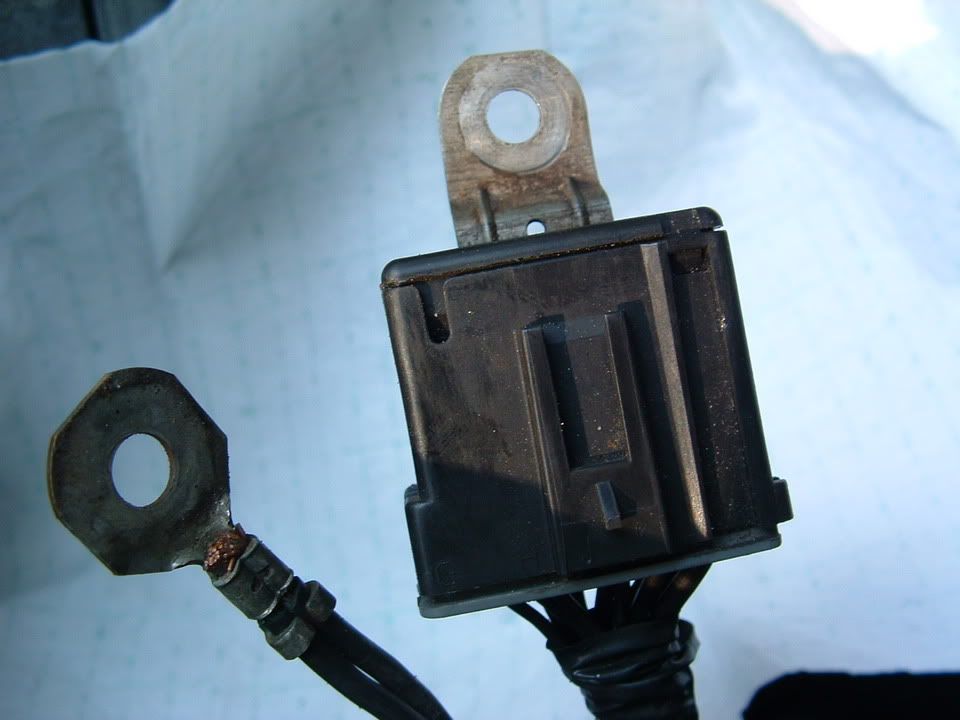
The DTCs in the TC system "RESET" each time you secure and turn on the ignition. When you turn the ignition on, it goes through a test routine and then goes operational. Once it detects a DTC, it suspends the TC AH if you have it and ABS functions and reports the DTC. Just as Bill and Steve explained.
That requested TQ signal that BLACKZO6 and Bill were talking about is very important for this issue.
IF,,,,,,,the dealer determines that the EBTCM is bad, you can replace it your self. The EBTCM or EBCM as some call it (it's listed both ways in the service manual depending on what year C5 you have) is a plug and play module. It is secured to the BPMV with "SIX" torx screws. You can order one through Gene Culley much less than your dealer will charge you for it.
Let the tech "SLEEP" on the issue and once he wakes up,,,let us know what he says!
 Before you agree to being relieved of all you cash, let us know what they say AND,,,,,,,,,,,,,,,,,,,,,,,,always get your old parts! Ya NEVER know when they may really be good!
Bill
Cant believe the dealer with the infamous TECH II cant figure it out! Here are a couple of things that I have observed:I had this issue on my 98 Coupe and found G-106 to be slightly corroded and loose (not as tight as it should have been) After cleaning G-106, the issue did not return. The three most important grounds with respect to the EBTCM are G-101/103,,,G-104/108 and G-106
G-101 0n late 98-04 C5's have TWO ground wires on that G-101 stud. The ground plug connector and the EBTCM ground wire which is an eyelet type ground. Here is a PIC of the ground plug connector & the EBTCM ground wire eyelet. Both need to be clean and make proper contact with the chaise:
The DTCs in the TC system "RESET" each time you secure and turn on the ignition. When you turn the ignition on, it goes through a test routine and then goes operational. Once it detects a DTC, it suspends the TC AH if you have it and ABS functions and reports the DTC. Just as Bill and Steve explained.
That requested TQ signal that BLACKZO6 and Bill were talking about is very important for this issue.
IF,,,,,,,the dealer determines that the EBTCM is bad, you can replace it your self. The EBTCM or EBCM as some call it (it's listed both ways in the service manual depending on what year C5 you have) is a plug and play module. It is secured to the BPMV with "SIX" torx screws. You can order one through Gene Culley much less than your dealer will charge you for it.
Let the tech "SLEEP" on the issue and once he wakes up,,,let us know what he says!
Before you agree to being relieved of all you cash, let us know what they say AND,,,,,,,,,,,,,,,,,,,,,,,,always get your old parts! Ya NEVER know when they may really be good! Bill
Last edited by Bill Curlee; Aug 7, 2008 at 10:26 PM.
Thread Starter
Racer
Joined: Mar 2006
Posts: 444
Likes: 9
From: IL
OK, if the grounds are clean and you're still getting the DTC ....
1) You need to check the output of pin 12 on the EBCM ... it should be between 4 and 6 volts ... and the signal should be between 121-134 Hz. If those are good you need to get to the PCM and test for the same signal at Connector 1, Pin 13 going into the PCM.
If the signal is not present leaving the EBCM then that needs to be replaced .... if the signal is arriving at the PCM then that needs to be replaced. Either way the dealer will have to do this, as I mentioned above.
NOTE: Testing the exposed pins needs to be done EXTREMELY carefully ..... if you bend a pin it will be almost impossible to get the connector back on the PCM/EBCM .... dealers have special connectors for this kind of testing ......
Also, if I were you, and you payed the dealer to diagnose the problem .... I'd either take it back and ask the Service Manager why they didn't find and fix this the first time ..... or .... I'd find another dealer.
1) You need to check the output of pin 12 on the EBCM ... it should be between 4 and 6 volts ... and the signal should be between 121-134 Hz. If those are good you need to get to the PCM and test for the same signal at Connector 1, Pin 13 going into the PCM.
If the signal is not present leaving the EBCM then that needs to be replaced .... if the signal is arriving at the PCM then that needs to be replaced. Either way the dealer will have to do this, as I mentioned above.
NOTE: Testing the exposed pins needs to be done EXTREMELY carefully ..... if you bend a pin it will be almost impossible to get the connector back on the PCM/EBCM .... dealers have special connectors for this kind of testing ......
Also, if I were you, and you payed the dealer to diagnose the problem .... I'd either take it back and ask the Service Manager why they didn't find and fix this the first time ..... or .... I'd find another dealer.
Thanks,
Tom
