







Fuel Tank Leak - Need Help

Thread Starter
Pro

Joined: Dec 2005
Posts: 619
Likes: 2
From: Destin FL
 Fuel Tank Leak - Need Help
A couple of weeks ago, I posted a thread asking about the possible cause for heavy fuel odor right after I fill up. Very few replies - no suggestions.
A couple of months ago, I replaced my fuel pump with a Lingenfelter high capacity pump and was thinking that maybe I didn't get the pump/sending unit sealed back properly on the left tank. So, yesterday I filled up (even fuller than usual) and then went home and took my left wheel and wheelhouse closeout panel off, but found no leaks. And there was no odor.
This morning the garage was heavy fuel smell again. After investigating, there was a fuel puddle underneath the RIGHT fuel tank. I took the right wheel, wheelhouse closeout panel, and evap canister access panel off. There was fuel covering EVERYTHING. It appears to be coming from the top of the tank where there is a large (~ 3" diameter) fixture that the line from the evap canister goes to. I've wiped and wiped and wiped with a paper towel and I'm quite sure the fuel is NOT coming from the two lines that go into the blue fixture, but rather from the seal where the blue fixture is mounted into the top of the tank.
Does anyone know what this fixture is, how it is sealed into the top of the tank, and if it can be repaired if I remove the tank? Or is a whole new tank required? What does a new tank cost?
Also, to remove the tank, the service manual includes removing the right muffler, but the entire tank is forward of the flange. It looks to me like I'd have to drop the midsection, if anything. Also, without dropping the exhaust pipes, is it possible to get to the crossover lines between the tanks? I've got the car pretty high on jackstands right now and it does NOT look like an easy job.
Any advise would be appreciated.
A couple of months ago, I replaced my fuel pump with a Lingenfelter high capacity pump and was thinking that maybe I didn't get the pump/sending unit sealed back properly on the left tank. So, yesterday I filled up (even fuller than usual) and then went home and took my left wheel and wheelhouse closeout panel off, but found no leaks. And there was no odor.
This morning the garage was heavy fuel smell again. After investigating, there was a fuel puddle underneath the RIGHT fuel tank. I took the right wheel, wheelhouse closeout panel, and evap canister access panel off. There was fuel covering EVERYTHING. It appears to be coming from the top of the tank where there is a large (~ 3" diameter) fixture that the line from the evap canister goes to. I've wiped and wiped and wiped with a paper towel and I'm quite sure the fuel is NOT coming from the two lines that go into the blue fixture, but rather from the seal where the blue fixture is mounted into the top of the tank.
Does anyone know what this fixture is, how it is sealed into the top of the tank, and if it can be repaired if I remove the tank? Or is a whole new tank required? What does a new tank cost?
Also, to remove the tank, the service manual includes removing the right muffler, but the entire tank is forward of the flange. It looks to me like I'd have to drop the midsection, if anything. Also, without dropping the exhaust pipes, is it possible to get to the crossover lines between the tanks? I've got the car pretty high on jackstands right now and it does NOT look like an easy job.
Any advise would be appreciated.

Pro
Joined: Apr 2007
Posts: 504
Likes: 0
I dunno but here is a bump for ya. I have heard dropping the tank is a bad job. Best of luck. Have heard of a tube coming off the top toward the back that causes fumes otherwise no clue but I will subscribe to the thread.
Thread Starter
Pro
Joined: Dec 2005
Posts: 619
Likes: 2
From: Destin FL
After searching through my service manual, the fuel pressure sensore is also mounted in the top of the right tank. I went back out to look at the car again and it looks like the sensor is mounted through the blue fixture I described earlier. If I wiggle the connector wiring, the sensor moves quite easily in the hole. The service manual says to change the sensor, you just pry up on it with a screwdriver and it will pop right out. Then when replacing it, there is apparently a rubber grommet or oring or something that needs to have some engine oil applied to ease installation. I tried pressing a paper towel up against the bottom of the sensor and then wiping the fuel around the front side of the blue fixture to see if I could tell if fuel was coming from the sensor port or not. It's hard to tell for sure with so much fuel on everything, but it still looks like the fuel is coming from underneath the blue fixture.
There are two lines connected to the blue fixture; one from the evap canister and another that goes up out of sight. The fuel system description shows a diagram which indicates that this line runs clear over to the other tank and then can't tell from there. But I triple checked the fuel tank removal instructions and they never tell you to remove this line. But obviously it must be removed to get the tank out.
AAAARRRRRGGGGHHHH. Hasn't anyone done this before? Surely I can't be the first.
There are two lines connected to the blue fixture; one from the evap canister and another that goes up out of sight. The fuel system description shows a diagram which indicates that this line runs clear over to the other tank and then can't tell from there. But I triple checked the fuel tank removal instructions and they never tell you to remove this line. But obviously it must be removed to get the tank out.
AAAARRRRRGGGGHHHH. Hasn't anyone done this before? Surely I can't be the first.
Thread Starter
Pro
Joined: Dec 2005
Posts: 619
Likes: 2
From: Destin FL
After more digging through my service manual, I believe the blue fixture I keep referring to is the top of the Fill Limit Vent Valve (FLVV), also commonly known as the 'rollover valve' which is part of the On-Board Refueling Vapor Recover (ORVR) System, see page 6-1057. The FLVV is a check valve that is supposed to close when the fuel gets to the top of the tank so you don't flood the EVAP canister with liquid fuel and it's also supposed to close in the event of a vehicle rollover. The ORVR system description says "The FLVV is located on the top of the right fuel tank. This valve is not serviced separately."
Uh-oh. It sounds like the whole right fuel tank has to be replaced to me.
Also, the system description for the Fuel Tank Pressure (FTP) Sensor says its mounted in top of the fuel tank-sending unit on page 6-1063. However, there is a service instruction for replacing the right sending unit and it is located at the bottom of the tank. It has the siphon jet pump and the right tank fuel level sensor mounted to the circular plate with 6 screws that's pointed aft and easy to get to. I believe the manual is wrong in stating that the FTP sensor is mounted to the sending unit. I believe it's mounted to the FLVV valve assembly.
Also, the Fuel System Description (System Overview) has a diagram on page 6-1054 showing the second pipe connected to the FLVV valve, but it is not labeled in the caption. It shows it going from the FLVV valve on the right tank to the fill neck. It shows a restraint clip on the top of both tanks as it crosses, but I can't tell if that is just a mounting clip or if it taps in to the tanks at those locations. This pipe is also NOT described in the instructions for removing the tank on page 6-956. AND it is not specifically called out in the description for the ORVR, although the diagram there shows that the pipe goes from the FLVV (right tank) to the fuel pump/sending unit (left tank), but not to the fill neck as the other diagram shows (i.e. the two diagrams don't agree). BTW, the ORVR diagram is very misleading because it is conceptual in nature and makes it appear as if there is only one fuel tank which has all the components in it.
I just realized while looking at the diagrams and writing this post, that the reason they don't tell you to remove that pipe from the FLVV is because they have you disconnect it about a foot farther downstream at the quick disconnect which is right at the crossover tube, and it must stay on the tank when you pull the tank down. At least I'm hoping that's right.
I think I need to see if the rubber grommet which is what's supposed to seal the FTP sensor is ok. Although I can't tell for sure if that's where the fuel is coming out, it sure does wiggle alot for something that's supposed to be sealed.
I'll keep you guys posted.
Uh-oh. It sounds like the whole right fuel tank has to be replaced to me.
Also, the system description for the Fuel Tank Pressure (FTP) Sensor says its mounted in top of the fuel tank-sending unit on page 6-1063. However, there is a service instruction for replacing the right sending unit and it is located at the bottom of the tank. It has the siphon jet pump and the right tank fuel level sensor mounted to the circular plate with 6 screws that's pointed aft and easy to get to. I believe the manual is wrong in stating that the FTP sensor is mounted to the sending unit. I believe it's mounted to the FLVV valve assembly.
Also, the Fuel System Description (System Overview) has a diagram on page 6-1054 showing the second pipe connected to the FLVV valve, but it is not labeled in the caption. It shows it going from the FLVV valve on the right tank to the fill neck. It shows a restraint clip on the top of both tanks as it crosses, but I can't tell if that is just a mounting clip or if it taps in to the tanks at those locations. This pipe is also NOT described in the instructions for removing the tank on page 6-956. AND it is not specifically called out in the description for the ORVR, although the diagram there shows that the pipe goes from the FLVV (right tank) to the fuel pump/sending unit (left tank), but not to the fill neck as the other diagram shows (i.e. the two diagrams don't agree). BTW, the ORVR diagram is very misleading because it is conceptual in nature and makes it appear as if there is only one fuel tank which has all the components in it.
I just realized while looking at the diagrams and writing this post, that the reason they don't tell you to remove that pipe from the FLVV is because they have you disconnect it about a foot farther downstream at the quick disconnect which is right at the crossover tube, and it must stay on the tank when you pull the tank down. At least I'm hoping that's right.
I think I need to see if the rubber grommet which is what's supposed to seal the FTP sensor is ok. Although I can't tell for sure if that's where the fuel is coming out, it sure does wiggle alot for something that's supposed to be sealed.
I'll keep you guys posted.
Last edited by Bell; Jan 2, 2009 at 01:23 AM.

Tech Contributor


Joined: Jan 2007
Posts: 19,471
Likes: 1,171
From: Dyer, IN
After more digging through my service manual, I believe the blue fixture I keep referring to is the top of the Fill Limit Vent Valve (FLVV), also commonly known as the 'rollover valve' which is part of the On-Board Refueling Vapor Recover (ORVR) System, see page 6-1057. The FLVV is a check valve that is supposed to close when the fuel gets to the top of the tank so you don't flood the EVAP canister with liquid fuel and it's also supposed to close in the event of a vehicle rollover. The ORVR system description says "The FLVV is located on the top of the right fuel tank. This valve is not serviced separately."
Uh-oh. It sounds like the whole right fuel tank has to be replaced to me.
Also, the system description for the Fuel Tank Pressure (FTP) Sensor says its mounted in top of the fuel tank-sending unit on page 6-1063. However, there is a service instruction for replacing the right sending unit and it is located at the bottom of the tank. It has the siphon jet pump and the right tank fuel level sensor mounted to the circular plate with 6 screws that's pointed aft and easy to get to. I believe the manual is wrong in stating that the FTP sensor is mounted to the sending unit. I believe it's mounted to the FLVV valve assembly.
Also, the Fuel System Description (System Overview) has a diagram on page 6-1054 showing the second pipe connected to the FLVV valve, but it is not labeled in the caption. It shows it going from the FLVV valve on the right tank to the fill neck. It shows a restraint clip on the top of both tanks as it crosses, but I can't tell if that is just a mounting clip or if it taps in to the tanks at those locations. This pipe is also NOT described in the instructions for removing the tank on page 6-956. AND it is not specifically called out in the description for the ORVR, although the diagram there shows that the pipe goes from the FLVV (right tank) to the fuel pump/sending unit (left tank), but not to the fill neck as the other diagram shows (i.e. the two diagrams don't agree). BTW, the ORVR diagram is very misleading because it is conceptual in nature and makes it appear as if there is only one fuel tank which has all the components in it.
I just realized while looking at the diagrams and writing this post, that the reason they don't tell you to remove that pipe from the FLVV is because they have you disconnect it about a foot farther downstream at the quick disconnect which is right at the crossover tube, and it must stay on the tank when you pull the tank down. At least I'm hoping that's right.
I think I need to see if the rubber grommet which is what's supposed to seal the FTP sensor is ok. Although I can't tell for sure if that's where the fuel is coming out, it sure does wiggle alot for something that's supposed to be sealed.
I'll keep you guys posted.
Uh-oh. It sounds like the whole right fuel tank has to be replaced to me.
Also, the system description for the Fuel Tank Pressure (FTP) Sensor says its mounted in top of the fuel tank-sending unit on page 6-1063. However, there is a service instruction for replacing the right sending unit and it is located at the bottom of the tank. It has the siphon jet pump and the right tank fuel level sensor mounted to the circular plate with 6 screws that's pointed aft and easy to get to. I believe the manual is wrong in stating that the FTP sensor is mounted to the sending unit. I believe it's mounted to the FLVV valve assembly.
Also, the Fuel System Description (System Overview) has a diagram on page 6-1054 showing the second pipe connected to the FLVV valve, but it is not labeled in the caption. It shows it going from the FLVV valve on the right tank to the fill neck. It shows a restraint clip on the top of both tanks as it crosses, but I can't tell if that is just a mounting clip or if it taps in to the tanks at those locations. This pipe is also NOT described in the instructions for removing the tank on page 6-956. AND it is not specifically called out in the description for the ORVR, although the diagram there shows that the pipe goes from the FLVV (right tank) to the fuel pump/sending unit (left tank), but not to the fill neck as the other diagram shows (i.e. the two diagrams don't agree). BTW, the ORVR diagram is very misleading because it is conceptual in nature and makes it appear as if there is only one fuel tank which has all the components in it.
I just realized while looking at the diagrams and writing this post, that the reason they don't tell you to remove that pipe from the FLVV is because they have you disconnect it about a foot farther downstream at the quick disconnect which is right at the crossover tube, and it must stay on the tank when you pull the tank down. At least I'm hoping that's right.
I think I need to see if the rubber grommet which is what's supposed to seal the FTP sensor is ok. Although I can't tell for sure if that's where the fuel is coming out, it sure does wiggle alot for something that's supposed to be sealed.
I'll keep you guys posted.

Corvette Stories
The Best of Corvette for Corvette Enthusiasts

Top 10 Most Expensive Corvettes Ever Sold on Bring A Trailer
Brett Foote
10 Things Every Corvette Owner Needs (2026 Edition)
Michael S. Palmer
8 Most "Only Corvette Owners Understand" Quirks and Problems
Pouria Savadkouei
10 Reasons the C6 Z06 is Still A Performance Benchmark After 20 Years
Joe Kucinski
How Much Horsepower Every Corvette Engine "LOST" in 1972
Joe Kucinski
Top 10 DOs and DON'Ts for Protecting Your Convertible Top!
Michael S. Palmer
Top 10 Most Explosive Corvettes Ever Made: Power-to-Weight Ratio Ranked!
Joe Kucinski
150 hp to 1,250 hp: Every Corvette Generation Compared by the Specs That Matter
Joe Kucinski
8 Coolest Corvette Pace Cars (and Replicas) of All Time
Verdad Gallardo
Team Owner


Joined: Sep 2001
Posts: 23,283
Likes: 906
From: Lake Elsinore, CA
Dwayne, Sounds like you have a good grasp of where your problem is but have you read the fuel tank leak test diagnostic in the manual? It does require some specialized service equipment but would very likely isolate the leak. Specifically, test #5 below addresses the area you suspect to be the location of the leak.
With the EVAP pressure/purge diagnostic station, maintain pressure in the fuel tank.
Important
You may need to partially lower the fuel tank. Refer to Fuel Tank Replacement .
With the ultrasonic leak detector, test for leaks above the fuel level in the following locations:
You are making some headway but you might not be able to isolate the exact source of the leak without the necessary equipment. Of course, if you don't, you might need to take the approach of replacing the least expensive components first (like the pressure sensor) to try the process of elimination.
With the EVAP pressure/purge diagnostic station, maintain pressure in the fuel tank.
Important
You may need to partially lower the fuel tank. Refer to Fuel Tank Replacement .
With the ultrasonic leak detector, test for leaks above the fuel level in the following locations:
- The fuel tank, fill limiter vent valve, pressure relief valve, and rollover valves. Refer to Fuel Tank Replacement .
- The fuel sender housing and fuel sender seal. Refer to Fuel Sender Assembly Replacement .
- The fuel tank pressure (FTP) sensor seal. Refer to Fuel Tank Pressure Sensor Replacement .
- The EVAP vapor pipes. Refer to Evaporative Emission (EVAP) Hoses/Pipes Replacement - Engine .
- The fuel fill pipe and hose. Refer to Fuel Hose/Pipes Assembly Replacement .
You are making some headway but you might not be able to isolate the exact source of the leak without the necessary equipment. Of course, if you don't, you might need to take the approach of replacing the least expensive components first (like the pressure sensor) to try the process of elimination.
Thread Starter
Pro
Joined: Dec 2005
Posts: 619
Likes: 2
From: Destin FL
Ed,
Thanks for the help. I'm getting pretty desperate with this one.
I did see some procedures regarding troubleshooting the EVAP system and I skipped them because I think those procedures are designed to help find a fuel VAPOR leak when you can't see any visible liquid coming out anywhere. But I have liquid fuel all over everything. I intentionally filled the tank to the brim so that it would leak to help me find the leak more easily. I believe the ultrasonic leak detector they are referring to is a "sniffer" type similar to the ones commonly used in the refrigeration industry. We use these where I work. Also, apparently the dealership has something called a EVAP pressure/purge diagnostic station but it's not clear how that would help even if I could get my hands on one. I think it's designed to gently put some pressure into the tank to help force vapor out of a leaky area to make it more easily detectable by the "sniffer".
Maybe I'll try to partially lower the tank today to see if I can get a little more clearance around the top of the tank to see if I can figure out exactly where the leak is. I'm a little nervous about doing this because the tank is slam full and the only thing that would keep it from falling is the panel below it (which supports it) and all the fuel lines and electrical connectors - take the bolts out too far and all H*LL could break loose. I'll definitely disconnect the battery before doing this. I'm trying to do this troubleshooting through the EVAP access panel which is pretty small. I'm pretty sure the leak is either the FTP sensor or the seal between the FLVV valve and the tank. If it's the former, a new sensor can't be too expensive and would easy to replace. If it's the latter, a whole new tank will be needed and total removal/replacement is in order - Argh. I sent an email to Gene Culley asking for a price on each of these, but I'm dreading the answer.
I'll search the manual again check out the fuel tank leak diagnostic instructions you referred to. What page did you find them on?
Thanks for the help. I'm getting pretty desperate with this one.
I did see some procedures regarding troubleshooting the EVAP system and I skipped them because I think those procedures are designed to help find a fuel VAPOR leak when you can't see any visible liquid coming out anywhere. But I have liquid fuel all over everything. I intentionally filled the tank to the brim so that it would leak to help me find the leak more easily. I believe the ultrasonic leak detector they are referring to is a "sniffer" type similar to the ones commonly used in the refrigeration industry. We use these where I work. Also, apparently the dealership has something called a EVAP pressure/purge diagnostic station but it's not clear how that would help even if I could get my hands on one. I think it's designed to gently put some pressure into the tank to help force vapor out of a leaky area to make it more easily detectable by the "sniffer".
Maybe I'll try to partially lower the tank today to see if I can get a little more clearance around the top of the tank to see if I can figure out exactly where the leak is. I'm a little nervous about doing this because the tank is slam full and the only thing that would keep it from falling is the panel below it (which supports it) and all the fuel lines and electrical connectors - take the bolts out too far and all H*LL could break loose. I'll definitely disconnect the battery before doing this. I'm trying to do this troubleshooting through the EVAP access panel which is pretty small. I'm pretty sure the leak is either the FTP sensor or the seal between the FLVV valve and the tank. If it's the former, a new sensor can't be too expensive and would easy to replace. If it's the latter, a whole new tank will be needed and total removal/replacement is in order - Argh. I sent an email to Gene Culley asking for a price on each of these, but I'm dreading the answer.
I'll search the manual again check out the fuel tank leak diagnostic instructions you referred to. What page did you find them on?
Thread Starter
Pro
Joined: Dec 2005
Posts: 619
Likes: 2
From: Destin FL
Found it - page 6-898.
It has 3 or 4 tests, all of which result in either replacing the fuel tank or the pipes. AAARRRGGGHHH.
I'm going to try and partially lower the tank and see if I can make more room at the top to see better.
I'll let you know...
It has 3 or 4 tests, all of which result in either replacing the fuel tank or the pipes. AAARRRGGGHHH.
I'm going to try and partially lower the tank and see if I can make more room at the top to see better.
I'll let you know...
Thread Starter
Pro
Joined: Dec 2005
Posts: 619
Likes: 2
From: Destin FL
Just called the local Chevrolet dealership to get pricing on the tank and the FTP sensor (just in case).
The right fuel tank, part # 12459857 is $804.24 !! Yikes, that's one expensive plastic canister.
The FTP fuel tank pressure sensor, part # 9377680 is $84.11. I sure hope that's the problem.
More to come...
The right fuel tank, part # 12459857 is $804.24 !! Yikes, that's one expensive plastic canister.
The FTP fuel tank pressure sensor, part # 9377680 is $84.11. I sure hope that's the problem.
More to come...
Thread Starter
Pro
Joined: Dec 2005
Posts: 619
Likes: 2
From: Destin FL
According to Gene Culley, the part #s I just had quoted are wrong and the correct ones are;
FTP sensor is part # 16238399
Right fuel tank is part # 12459858
Genes' prices are WAAAY less. Way to go Gene.
FTP sensor is part # 16238399
Right fuel tank is part # 12459858
Genes' prices are WAAAY less. Way to go Gene.
Team Owner
Joined: Sep 2001
Posts: 23,283
Likes: 906
From: Lake Elsinore, CA
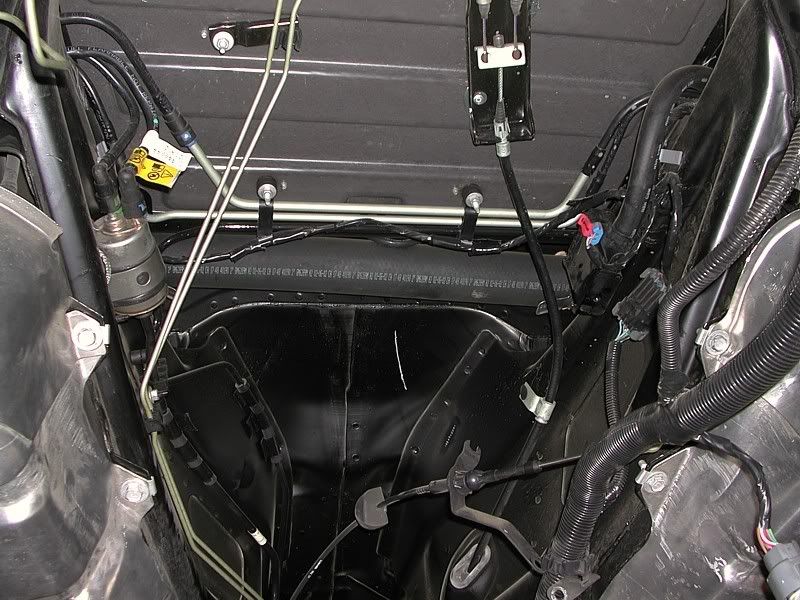
I think the sm leak test, although designed to detect vapor leaks, also points to liquid leaks. Perhaps the rationale is that, if a vapor can be forced out of a seal or interface, liquid fuel can as well since the tank is pressurized with fuel in it due to the constantly evaporating fuel. Also, you leak occured with a full tank which leads me to suspect the same area you are looking at. Since the right tank is constantly filling the left via the siphon pump until the right tank is empty, you should only see the liquid leak when the right tank has fuel in it. Have you checked the crosstube between the tanks. Mine are only held in place with strap clamps and I've alsways been amazed there are not more report of leaks there.
Thread Starter
Pro
Joined: Dec 2005
Posts: 619
Likes: 2
From: Destin FL
Ed,
You're correct on all points. As I mentioned earlier, I only get the fuel smell when the tank is absolutely full and that's why I filled it to the brim - to help find the leak. I saved your pic above and lightened it up in MS Photo Editor. I can barely see the large crossover tube when I look under my car. Naturally, the diff and exhaust are right smack in the way. If the leak were at the crossover tube, I'd expect to see wet areas on the inner wall of the frame structure (directly under the crossover tube connection) but it's dry. The only place that is soaked in fuel is the top of the tank (well actually I should say it's all over the tank and is coming from the top of the tank) which you can only see when looking through the EVAP canister access panel. I disconnected the battery and dropped the lower pan as far as I dare (about 1/2") but there is still not enough room to see where the leak actually is coming from even with lights and a mirror (the mirror won't get to most areas either). The tank holds about 9 gallons, so must weight nearly 60 to 70 pounds and I dont want to take the bolts past the last thread for fear of ripping fuel lines apart and making things worse. Not to mention not being able to hold it back up in place while trying to get bolts started.
I'm afraid to pop the FTP sensor out because I'm sure if I did, there would be a cascade of fuel at least until the level got down below the top of the tank and I think there could be a gallon or two up to the fill neck from there.
I'm going to call the local Chevy service techs and see if they have any other solutions. I'm afraid this is going to end in a new fuel tank. The local Chevy dealer wants over $800 for it and Gene will sell it to me for about $600, but man, that's alot more than a plastic can ought to be worth.
You're correct on all points. As I mentioned earlier, I only get the fuel smell when the tank is absolutely full and that's why I filled it to the brim - to help find the leak. I saved your pic above and lightened it up in MS Photo Editor. I can barely see the large crossover tube when I look under my car. Naturally, the diff and exhaust are right smack in the way. If the leak were at the crossover tube, I'd expect to see wet areas on the inner wall of the frame structure (directly under the crossover tube connection) but it's dry. The only place that is soaked in fuel is the top of the tank (well actually I should say it's all over the tank and is coming from the top of the tank) which you can only see when looking through the EVAP canister access panel. I disconnected the battery and dropped the lower pan as far as I dare (about 1/2") but there is still not enough room to see where the leak actually is coming from even with lights and a mirror (the mirror won't get to most areas either). The tank holds about 9 gallons, so must weight nearly 60 to 70 pounds and I dont want to take the bolts past the last thread for fear of ripping fuel lines apart and making things worse. Not to mention not being able to hold it back up in place while trying to get bolts started.
I'm afraid to pop the FTP sensor out because I'm sure if I did, there would be a cascade of fuel at least until the level got down below the top of the tank and I think there could be a gallon or two up to the fill neck from there.
I'm going to call the local Chevy service techs and see if they have any other solutions. I'm afraid this is going to end in a new fuel tank. The local Chevy dealer wants over $800 for it and Gene will sell it to me for about $600, but man, that's alot more than a plastic can ought to be worth.
Team Owner
Joined: Sep 2001
Posts: 23,283
Likes: 906
From: Lake Elsinore, CA
Would hate to buy a new tank and it ends up being the fuel pressure sensor. A used tank is a possible option from Gene's Karshop, the used vtte parts vendor on this forum or someone parting out a C5 in the parts section here. Definitely less expensive.
Sounds like you need a flexible boroscope to snake in there and take a peek.
Sounds like you need a flexible boroscope to snake in there and take a peek.
Thread Starter
Pro
Joined: Dec 2005
Posts: 619
Likes: 2
From: Destin FL
The dealership says they've replaced several tanks, but never with a leak from this area before. One tech suggested getting the tank out and trying to RTV the FLVV joint again. I would bet GMs installation of the this valve into the tank (since it's never supposed to come out) is more involved than just some RTV; most likely a sonic weld of the plastic like most of their "permanent" joints.
They want $275 labor but will only use parts they sell in their parts dept. So either $1100+tax or $600 and do it myself. Hmmmm. Never did a s/c install before 5 months ago, never did a header/cat install before last week. Looks like a brand new learning curve in my near future. Crap.
I think I'm going to just button the car back up, drive it this week, and get the tank down to empty. Then remove the right tank next weekend. That way hopefully I can do a thorough inspection and see if I can find any cracks or whatever. If I get lucky, maybe there'll be something obvious and simple to fix (wishful thinking). Worst case, I'll have to put it back together again, order a new tank from Gene, drive with the leaky tank until the new one comes in, and then replace it.
Crap, crap, crap, crap, crap.
They want $275 labor but will only use parts they sell in their parts dept. So either $1100+tax or $600 and do it myself. Hmmmm. Never did a s/c install before 5 months ago, never did a header/cat install before last week. Looks like a brand new learning curve in my near future. Crap.
I think I'm going to just button the car back up, drive it this week, and get the tank down to empty. Then remove the right tank next weekend. That way hopefully I can do a thorough inspection and see if I can find any cracks or whatever. If I get lucky, maybe there'll be something obvious and simple to fix (wishful thinking). Worst case, I'll have to put it back together again, order a new tank from Gene, drive with the leaky tank until the new one comes in, and then replace it.
Crap, crap, crap, crap, crap.
Thread Starter
Pro
Joined: Dec 2005
Posts: 619
Likes: 2
From: Destin FL
Yes, a borescope would be perfect. Unfortuately I don't have access to one.
I'll check with GeneKarShop, but the last half dozen things I've inquired about, he didn't have...
I'll also check the C5 Parts section. I just bought a used RDCM from one guy. Maybe he still has the right tank.
If you see one for sale, please let me know.
Thanks for all your help, Ed.
I'll check with GeneKarShop, but the last half dozen things I've inquired about, he didn't have...
I'll also check the C5 Parts section. I just bought a used RDCM from one guy. Maybe he still has the right tank.
If you see one for sale, please let me know.
Thanks for all your help, Ed.

Drifting


Joined: Jan 2008
Posts: 1,722
Likes: 138
From: Florida
St. Jude Donor '09
I recently dropped the left tank for a leak at the crown of the tank (cracked sonic weld at the cross-over hose fitting), I fixed my leak with a 2 part epoxy.
I have a few suggestions that will make the job easier, remove the exhaust system mid section, & completely empty the tank before you attempt to drop it. I found the removal procedure in the factory shop manual clear and easy to follow. It looks harder than it is, good luck.
I have a few suggestions that will make the job easier, remove the exhaust system mid section, & completely empty the tank before you attempt to drop it. I found the removal procedure in the factory shop manual clear and easy to follow. It looks harder than it is, good luck.