



performance whith check engine code

Thread Starter
Burning Brakes


Joined: Apr 2009
Posts: 762
Likes: 2
From: Kopavogur in Iceland
 performance whith check engine code
If the check engine light is on, and it´s a code, for example misfire, but the code is not steady on, but the light still gloes, can the vette go on save mode, and will it not perfromance like it should, not pull as much unless the check engine is erased out?
Or can you race it and it will performance 100%....
just wondering because i ran slower this evening on the track whent 2 rounds whith light on... , wasn´t pulling like it should at the highest rev, and it whent 4mph slower at 1/4mile end then it has done.
can this be or is it something else?
it´s z06 2004 whith H/C that i got
Or can you race it and it will performance 100%....
just wondering because i ran slower this evening on the track whent 2 rounds whith light on... , wasn´t pulling like it should at the highest rev, and it whent 4mph slower at 1/4mile end then it has done.
can this be or is it something else?
it´s z06 2004 whith H/C that i got

Drifting


Joined: Jan 2008
Posts: 1,722
Likes: 138
From: Florida
St. Jude Donor '09
If the check engine light is on, and it´s a code, for example misfire, but the code is not steady on, but the light still gloes, can the vette go on save mode, and will it not perfromance like it should, not pull as much unless the check engine is erased out?
Or can you race it and it will performance 100%....
just wondering because i ran slower this evening on the track whent 2 rounds whith light on... , wasn´t pulling like it should at the highest rev, and it whent 4mph slower at 1/4mile end then it has done.
can this be or is it something else?
it´s z06 2004 whith H/C that i got
Or can you race it and it will performance 100%....
just wondering because i ran slower this evening on the track whent 2 rounds whith light on... , wasn´t pulling like it should at the highest rev, and it whent 4mph slower at 1/4mile end then it has done.
can this be or is it something else?
it´s z06 2004 whith H/C that i got
Thread Starter
Burning Brakes
Joined: Apr 2009
Posts: 762
Likes: 2
From: Kopavogur in Iceland
Don´t know how to fix that problem, we are working on it now.
Any suggestion? what it can be , maby MAF, or tuning software? what do you think?
But is the car on safemode whith check engine on? is it normal that it´s not pulling as it should.

Tech Contributor


Joined: Dec 1999
Posts: 32,910
Likes: 2,402
From: Anthony TX
CI 6,7,8,9,11 Vet
St. Jude Donor '08
Holy Crap! Read and post your DTCs. If you have a P-0300 misfire DTC, it will most likely reset its self when you turn the ignition on and off. (That doesnt mean that the went away) Figure out what is causing the misfire.
Why do you beat your engine up by running it when you know its having a problem?
Why do you beat your engine up by running it when you know its having a problem?
Thread Starter
Burning Brakes
Joined: Apr 2009
Posts: 762
Likes: 2
From: Kopavogur in Iceland
Holy Crap! Read and post your DTCs. If you have a P-0300 misfire DTC, it will most likely reset its self when you turn the ignition on and off. (That doesnt mean that the went away) Figure out what is causing the misfire.
Why do you beat your engine up by running it when you know its having a problem?
Why do you beat your engine up by running it when you know its having a problem?
we are trying to working on the problem i´m not sure the code´s nr. but the GM guys says he´s too rich of fuel on one bank both sides, te light is coming and coming again and again, always the same code, they always told me at first it was because it´s tuned whith hot cam, at it´s rich of fuel sometimes, but i´m not ok whith that, this is a problem and i´m trying to find out of that look here http://forums.corvetteforum.com/c5-t...d-new-map.html
so if you have any suggestion , then i would like to here from you?
Tech Contributor
Joined: Dec 1999
Posts: 32,910
Likes: 2,402
From: Anthony TX
CI 6,7,8,9,11 Vet
St. Jude Donor '08
Where are you located?
Has your car ever been tuned?
Where did you purchase the car from?
How are you reading your DTCs???
READING YOUR Engine Diagnostic Codes (DTCs)
The Diagnostic Display Mode is entered with the following procedure:
1) Turn on the ignition but don't start the engine.
2) Press the RESET button to turn off any warning messages. (i.e. door open, trunk open etc…)
3) Press and hold OPTIONS
4) While holding OPTIONS, press FUEL four times within a 10-second period.
Initially, on-board diagnostics go into an Automatic Mode which shows diagnostic codes in a pre-set sequence: PCM - TCS - RTD - BCM - IPC - RADIO - HVAC - LDCM - RDCM - SCM - RFA. All codes will be displayed for each. ( i.e. PCM = 4 codes)
If none are present in a given module, you will see No More Codes on the display.
There are two kinds of diagnostic codes, Current and History designated with a letter suffix, C or ;H. A current code indicates a malfunction is present in the module displaying data. A history code indicates a problem existed sometime in the last 40 or 50 ignition cycles. When not accompanied by a current code of the same number, it's potential evidence of a previous problem, now resolved, that was not removed by clearing the codes.
More likely it's an indication of an intermittent malfunction.
Intermittent codes are the most challenging of the diagnostics. An intermittent code may have happened once, may have happened more than once but is inconsistent or may be happening on a regular basis but not at the time the codes are displayed. History codes can also be caused by a current malfunction in a system that is not operating at the time codes are displayed. An example is the rear window defogger which doesn't operate until the Body Control Module detects engine rpm. For history codes set by a module that does not operate with the key on and engine off, a special diagnostic tool called a Scan Tester is necessary to properly diagnose the malfunction.
Once the system has displayed all modules, it goes into the manual mode which allows selection of each module using combinations of Driver Information Center buttons. Manual mode can also be entered during the automatic sequence by pressing any button except E/M. Once the display shows Manual Diagnostics, select a module by pressing the OPTIONS button to go forward or the TRIP button to go back. Once a module is selected, a code is displayed, and if more than one are present;
press GAGES to go forward or FUEL to go back.
To exit the diagnostic mode at any time, press E/M. If you want to erase codes in a given module, press RESET
To reset the codes once in manual mode, press and hold RESET until it displays NO CODES Press OPTIONS to go to the next module. Repeat the steps until you have reset the codes in all the computer modules.
NOTE!! Only reset the codes IF you want to - it is NOT necessary to do this. Clearing a code does not repair a problem. You are simply erasing the evidence of it in the module's memory. If you clear the code/s, and extinguish the Check Engine Light, your emissions status ready will NOT allow you to pass an emissions test until you have completed the required driving cycles.
Once you have the codes, the next question is: What to do with the information?
First, consult the factory service manual. Any serious C5 Do-It-Yourself owner should invest in the Corvette Service Manual of the appropriate model year. The Service Manual is really a requirement if you want to understand and work on your C5.
Here is very good site of DTC definitions:
http://www.gearchatter.com
Make sure to include the H or C suffix!!
Has your car ever been tuned?
Where did you purchase the car from?
How are you reading your DTCs???
READING YOUR Engine Diagnostic Codes (DTCs)
The Diagnostic Display Mode is entered with the following procedure:
1) Turn on the ignition but don't start the engine.
2) Press the RESET button to turn off any warning messages. (i.e. door open, trunk open etc…)
3) Press and hold OPTIONS
4) While holding OPTIONS, press FUEL four times within a 10-second period.
Initially, on-board diagnostics go into an Automatic Mode which shows diagnostic codes in a pre-set sequence: PCM - TCS - RTD - BCM - IPC - RADIO - HVAC - LDCM - RDCM - SCM - RFA. All codes will be displayed for each. ( i.e. PCM = 4 codes)
If none are present in a given module, you will see No More Codes on the display.
There are two kinds of diagnostic codes, Current and History designated with a letter suffix, C or ;H. A current code indicates a malfunction is present in the module displaying data. A history code indicates a problem existed sometime in the last 40 or 50 ignition cycles. When not accompanied by a current code of the same number, it's potential evidence of a previous problem, now resolved, that was not removed by clearing the codes.
More likely it's an indication of an intermittent malfunction.
Intermittent codes are the most challenging of the diagnostics. An intermittent code may have happened once, may have happened more than once but is inconsistent or may be happening on a regular basis but not at the time the codes are displayed. History codes can also be caused by a current malfunction in a system that is not operating at the time codes are displayed. An example is the rear window defogger which doesn't operate until the Body Control Module detects engine rpm. For history codes set by a module that does not operate with the key on and engine off, a special diagnostic tool called a Scan Tester is necessary to properly diagnose the malfunction.
Once the system has displayed all modules, it goes into the manual mode which allows selection of each module using combinations of Driver Information Center buttons. Manual mode can also be entered during the automatic sequence by pressing any button except E/M. Once the display shows Manual Diagnostics, select a module by pressing the OPTIONS button to go forward or the TRIP button to go back. Once a module is selected, a code is displayed, and if more than one are present;
press GAGES to go forward or FUEL to go back.
To exit the diagnostic mode at any time, press E/M. If you want to erase codes in a given module, press RESET
To reset the codes once in manual mode, press and hold RESET until it displays NO CODES Press OPTIONS to go to the next module. Repeat the steps until you have reset the codes in all the computer modules.
NOTE!! Only reset the codes IF you want to - it is NOT necessary to do this. Clearing a code does not repair a problem. You are simply erasing the evidence of it in the module's memory. If you clear the code/s, and extinguish the Check Engine Light, your emissions status ready will NOT allow you to pass an emissions test until you have completed the required driving cycles.
Once you have the codes, the next question is: What to do with the information?
First, consult the factory service manual. Any serious C5 Do-It-Yourself owner should invest in the Corvette Service Manual of the appropriate model year. The Service Manual is really a requirement if you want to understand and work on your C5.
Here is very good site of DTC definitions:
http://www.gearchatter.com
Make sure to include the H or C suffix!!
Thread Starter
Burning Brakes
Joined: Apr 2009
Posts: 762
Likes: 2
From: Kopavogur in Iceland
[QUOTE=Bill Curlee;1569760594]Where are you located?
Has your car ever been tuned?
Where did you purchase the car from?
How are you reading your DTCs???
hi and thanks
i´m located in Iceland Europe
All work has been completed by a reputable shop (Fastlane) in Houston TX dyno-tune
was bought from usa april 2007
i´m getting a local workshop whith GM computer to read my codes...
there is no dyno-tune shop here in iceland.
i´ll try to follow you instuctions. and read the DTC my self.
Has your car ever been tuned?
Where did you purchase the car from?
How are you reading your DTCs???
hi and thanks
i´m located in Iceland Europe
All work has been completed by a reputable shop (Fastlane) in Houston TX dyno-tune
was bought from usa april 2007
i´m getting a local workshop whith GM computer to read my codes...
there is no dyno-tune shop here in iceland.
i´ll try to follow you instuctions. and read the DTC my self.
Corvette Stories
The Best of Corvette for Corvette Enthusiasts

5 Best & 5 Worst Corvette Daily Drivers
Joe Kucinski
The Headlights of Every Corvette Generation Explained
Joe Kucinski
5 Best & 5 Most Overrated Corvette Track Packages of All Time!
Joe Kucinski
Every 2027 Corvette Engine Explained
Joe Kucinski
Designer Imagines A Corvette That Looks More Like a Corvette Than the Corvette
Verdad Gallardo
10 Ugly Corvettes That We Still Kinda Love
Joe Kucinski
Top 10 Most Expensive Corvettes Ever Sold on Bring A Trailer
Brett Foote
10 Things Every Corvette Owner Needs (2026 Edition)
Michael S. Palmer
8 Most "Only Corvette Owners Understand" Quirks and Problems
Pouria Savadkouei
Tech Contributor
Joined: Dec 1999
Posts: 32,910
Likes: 2,402
From: Anthony TX
CI 6,7,8,9,11 Vet
St. Jude Donor '08
I found another one of your post and I provided you an answer to it. Here is what I wrote in that post:
I agree that its most likely a tuning issue. The ONLY way that you ever going to get the car properly tuned is to purchase your OWN tuning software. Find out what other people in your area are using. I purchased EFI Live and I get a lot of valuable tuning out of it. I found out that a couple of people in my area also have EFI Live and they help me get the tune just right.
You might find that there are HP Tuner owners in your area and it would make it worth you money to go with HP Tuners. Find out if anyone in your area owns tuning software. If they do, you could just purchase a software license and use there tuning software.
With EFI Live or HP Tuners, you can data log the engine and if you cant tune it your self, you can send that data log to a tuner for a more accurate tune.
To get the most power out of the engine and to make sure that your Wide Open Throttle Air/Fuel ratio is correct, you going to need to purchase a wide band O2 meter. That will allow you to correctly Tailor WOT Power Enrichment (PE) tables to get your 12.5 to 13.0:1 AFR.
"IF" your car was at one time properly tuned (and it sounds like it was with those track numbers) you may just have an O2 Sensor problem.
Its fairly inexpensive to change out both primary O2 sensors with new ones. You might just need to change those out.
Running that rich,,,,,,make sure that your CATS are not destroyed or clogged.
MISFIRING - Change ALL of your spark-plugs!!! Then check each spark plug wire and make sure that each one is in good shape. They should NOT be burnt or damaged and should all read the same resistance end to end.
Stock GM wires should read 275-750 ohms end to end. They normally read 300-350 ohms. If they do not, I strongly recommend ordering and installing new GM Performance Red wires.
With all that covered, see if you still have engine misfires. If you do,figure out what cylinder/s are having issues,,look at valve springs, fuel injectors, coils for issues. Check cylinder compression and make sure that you don't have a valve issue.
Hope this helps.
BC
I agree that its most likely a tuning issue. The ONLY way that you ever going to get the car properly tuned is to purchase your OWN tuning software. Find out what other people in your area are using. I purchased EFI Live and I get a lot of valuable tuning out of it. I found out that a couple of people in my area also have EFI Live and they help me get the tune just right.
You might find that there are HP Tuner owners in your area and it would make it worth you money to go with HP Tuners. Find out if anyone in your area owns tuning software. If they do, you could just purchase a software license and use there tuning software.
With EFI Live or HP Tuners, you can data log the engine and if you cant tune it your self, you can send that data log to a tuner for a more accurate tune.
To get the most power out of the engine and to make sure that your Wide Open Throttle Air/Fuel ratio is correct, you going to need to purchase a wide band O2 meter. That will allow you to correctly Tailor WOT Power Enrichment (PE) tables to get your 12.5 to 13.0:1 AFR.
"IF" your car was at one time properly tuned (and it sounds like it was with those track numbers) you may just have an O2 Sensor problem.
Its fairly inexpensive to change out both primary O2 sensors with new ones. You might just need to change those out.
Running that rich,,,,,,make sure that your CATS are not destroyed or clogged.
MISFIRING - Change ALL of your spark-plugs!!! Then check each spark plug wire and make sure that each one is in good shape. They should NOT be burnt or damaged and should all read the same resistance end to end.
Stock GM wires should read 275-750 ohms end to end. They normally read 300-350 ohms. If they do not, I strongly recommend ordering and installing new GM Performance Red wires.
With all that covered, see if you still have engine misfires. If you do,figure out what cylinder/s are having issues,,look at valve springs, fuel injectors, coils for issues. Check cylinder compression and make sure that you don't have a valve issue.
Hope this helps.
BC
Thread Starter
Burning Brakes
Joined: Apr 2009
Posts: 762
Likes: 2
From: Kopavogur in Iceland
I found another one of your post and I provided you an answer to it. Here is what I wrote in that post:
I agree that its most likely a tuning issue. The ONLY way that you ever going to get the car properly tuned is to purchase your OWN tuning software. Find out what other people in your area are using. I purchased EFI Live and I get a lot of valuable tuning out of it. I found out that a couple of people in my area also have EFI Live and they help me get the tune just right.
You might find that there are HP Tuner owners in your area and it would make it worth you money to go with HP Tuners. Find out if anyone in your area owns tuning software. If they do, you could just purchase a software license and use there tuning software.
With EFI Live or HP Tuners, you can data log the engine and if you cant tune it your self, you can send that data log to a tuner for a more accurate tune.
To get the most power out of the engine and to make sure that your Wide Open Throttle Air/Fuel ratio is correct, you going to need to purchase a wide band O2 meter. That will allow you to correctly Tailor WOT Power Enrichment (PE) tables to get your 12.5 to 13.0:1 AFR.
"IF" your car was at one time properly tuned (and it sounds like it was with those track numbers) you may just have an O2 Sensor problem.
Its fairly inexpensive to change out both primary O2 sensors with new ones. You might just need to change those out.
Running that rich,,,,,,make sure that your CATS are not destroyed or clogged.
MISFIRING - Change ALL of your spark-plugs!!! Then check each spark plug wire and make sure that each one is in good shape. They should NOT be burnt or damaged and should all read the same resistance end to end.
Stock GM wires should read 275-750 ohms end to end. They normally read 300-350 ohms. If they do not, I strongly recommend ordering and installing new GM Performance Red wires.
With all that covered, see if you still have engine misfires. If you do,figure out what cylinder/s are having issues,,look at valve springs, fuel injectors, coils for issues. Check cylinder compression and make sure that you don't have a valve issue.
Hope this helps.
BC
I agree that its most likely a tuning issue. The ONLY way that you ever going to get the car properly tuned is to purchase your OWN tuning software. Find out what other people in your area are using. I purchased EFI Live and I get a lot of valuable tuning out of it. I found out that a couple of people in my area also have EFI Live and they help me get the tune just right.
You might find that there are HP Tuner owners in your area and it would make it worth you money to go with HP Tuners. Find out if anyone in your area owns tuning software. If they do, you could just purchase a software license and use there tuning software.
With EFI Live or HP Tuners, you can data log the engine and if you cant tune it your self, you can send that data log to a tuner for a more accurate tune.
To get the most power out of the engine and to make sure that your Wide Open Throttle Air/Fuel ratio is correct, you going to need to purchase a wide band O2 meter. That will allow you to correctly Tailor WOT Power Enrichment (PE) tables to get your 12.5 to 13.0:1 AFR.
"IF" your car was at one time properly tuned (and it sounds like it was with those track numbers) you may just have an O2 Sensor problem.
Its fairly inexpensive to change out both primary O2 sensors with new ones. You might just need to change those out.
Running that rich,,,,,,make sure that your CATS are not destroyed or clogged.
MISFIRING - Change ALL of your spark-plugs!!! Then check each spark plug wire and make sure that each one is in good shape. They should NOT be burnt or damaged and should all read the same resistance end to end.
Stock GM wires should read 275-750 ohms end to end. They normally read 300-350 ohms. If they do not, I strongly recommend ordering and installing new GM Performance Red wires.
With all that covered, see if you still have engine misfires. If you do,figure out what cylinder/s are having issues,,look at valve springs, fuel injectors, coils for issues. Check cylinder compression and make sure that you don't have a valve issue.
Hope this helps.
BC
thank you, i´ll follow this instuctions...
Thread Starter
Burning Brakes
Joined: Apr 2009
Posts: 762
Likes: 2
From: Kopavogur in Iceland
Where are you located?
Has your car ever been tuned?
Where did you purchase the car from?
How are you reading your DTCs???
READING YOUR Engine Diagnostic Codes (DTCs)
The Diagnostic Display Mode is entered with the following procedure:
1) Turn on the ignition but don't start the engine.
2) Press the RESET button to turn off any warning messages. (i.e. door open, trunk open etc…)
3) Press and hold OPTIONS
4) While holding OPTIONS, press FUEL four times within a 10-second period.
Initially, on-board diagnostics go into an Automatic Mode which shows diagnostic codes in a pre-set sequence: PCM - TCS - RTD - BCM - IPC - RADIO - HVAC - LDCM - RDCM - SCM - RFA. All codes will be displayed for each. ( i.e. PCM = 4 codes)
If none are present in a given module, you will see No More Codes on the display.
There are two kinds of diagnostic codes, Current and History designated with a letter suffix, C or ;H. A current code indicates a malfunction is present in the module displaying data. A history code indicates a problem existed sometime in the last 40 or 50 ignition cycles. When not accompanied by a current code of the same number, it's potential evidence of a previous problem, now resolved, that was not removed by clearing the codes.
More likely it's an indication of an intermittent malfunction.
Intermittent codes are the most challenging of the diagnostics. An intermittent code may have happened once, may have happened more than once but is inconsistent or may be happening on a regular basis but not at the time the codes are displayed. History codes can also be caused by a current malfunction in a system that is not operating at the time codes are displayed. An example is the rear window defogger which doesn't operate until the Body Control Module detects engine rpm. For history codes set by a module that does not operate with the key on and engine off, a special diagnostic tool called a Scan Tester is necessary to properly diagnose the malfunction.
Once the system has displayed all modules, it goes into the manual mode which allows selection of each module using combinations of Driver Information Center buttons. Manual mode can also be entered during the automatic sequence by pressing any button except E/M. Once the display shows Manual Diagnostics, select a module by pressing the OPTIONS button to go forward or the TRIP button to go back. Once a module is selected, a code is displayed, and if more than one are present;
press GAGES to go forward or FUEL to go back.
To exit the diagnostic mode at any time, press E/M. If you want to erase codes in a given module, press RESET
To reset the codes once in manual mode, press and hold RESET until it displays NO CODES Press OPTIONS to go to the next module. Repeat the steps until you have reset the codes in all the computer modules.
NOTE!! Only reset the codes IF you want to - it is NOT necessary to do this. Clearing a code does not repair a problem. You are simply erasing the evidence of it in the module's memory. If you clear the code/s, and extinguish the Check Engine Light, your emissions status ready will NOT allow you to pass an emissions test until you have completed the required driving cycles.
Once you have the codes, the next question is: What to do with the information?
First, consult the factory service manual. Any serious C5 Do-It-Yourself owner should invest in the Corvette Service Manual of the appropriate model year. The Service Manual is really a requirement if you want to understand and work on your C5.
Here is very good site of DTC definitions:
http://www.gearchatter.com
Make sure to include the H or C suffix!!
Has your car ever been tuned?
Where did you purchase the car from?
How are you reading your DTCs???
READING YOUR Engine Diagnostic Codes (DTCs)
The Diagnostic Display Mode is entered with the following procedure:
1) Turn on the ignition but don't start the engine.
2) Press the RESET button to turn off any warning messages. (i.e. door open, trunk open etc…)
3) Press and hold OPTIONS
4) While holding OPTIONS, press FUEL four times within a 10-second period.
Initially, on-board diagnostics go into an Automatic Mode which shows diagnostic codes in a pre-set sequence: PCM - TCS - RTD - BCM - IPC - RADIO - HVAC - LDCM - RDCM - SCM - RFA. All codes will be displayed for each. ( i.e. PCM = 4 codes)
If none are present in a given module, you will see No More Codes on the display.
There are two kinds of diagnostic codes, Current and History designated with a letter suffix, C or ;H. A current code indicates a malfunction is present in the module displaying data. A history code indicates a problem existed sometime in the last 40 or 50 ignition cycles. When not accompanied by a current code of the same number, it's potential evidence of a previous problem, now resolved, that was not removed by clearing the codes.
More likely it's an indication of an intermittent malfunction.
Intermittent codes are the most challenging of the diagnostics. An intermittent code may have happened once, may have happened more than once but is inconsistent or may be happening on a regular basis but not at the time the codes are displayed. History codes can also be caused by a current malfunction in a system that is not operating at the time codes are displayed. An example is the rear window defogger which doesn't operate until the Body Control Module detects engine rpm. For history codes set by a module that does not operate with the key on and engine off, a special diagnostic tool called a Scan Tester is necessary to properly diagnose the malfunction.
Once the system has displayed all modules, it goes into the manual mode which allows selection of each module using combinations of Driver Information Center buttons. Manual mode can also be entered during the automatic sequence by pressing any button except E/M. Once the display shows Manual Diagnostics, select a module by pressing the OPTIONS button to go forward or the TRIP button to go back. Once a module is selected, a code is displayed, and if more than one are present;
press GAGES to go forward or FUEL to go back.
To exit the diagnostic mode at any time, press E/M. If you want to erase codes in a given module, press RESET
To reset the codes once in manual mode, press and hold RESET until it displays NO CODES Press OPTIONS to go to the next module. Repeat the steps until you have reset the codes in all the computer modules.
NOTE!! Only reset the codes IF you want to - it is NOT necessary to do this. Clearing a code does not repair a problem. You are simply erasing the evidence of it in the module's memory. If you clear the code/s, and extinguish the Check Engine Light, your emissions status ready will NOT allow you to pass an emissions test until you have completed the required driving cycles.
Once you have the codes, the next question is: What to do with the information?
First, consult the factory service manual. Any serious C5 Do-It-Yourself owner should invest in the Corvette Service Manual of the appropriate model year. The Service Manual is really a requirement if you want to understand and work on your C5.
Here is very good site of DTC definitions:
http://www.gearchatter.com
Make sure to include the H or C suffix!!
Tech Contributor
Joined: Dec 1999
Posts: 32,910
Likes: 2,402
From: Anthony TX
CI 6,7,8,9,11 Vet
St. Jude Donor '08
Tech Contributor
Joined: Dec 1999
Posts: 32,910
Likes: 2,402
From: Anthony TX
CI 6,7,8,9,11 Vet
St. Jude Donor '08
Ahhh,,,,see you mis lead me;
QUOTE " If the check engine light is on, and it´s a code, for example misfire, but the code is not steady on, but the light still gloes, can the vette go on save mode, and will it not perfromance like it should, not pull as much unless the check engine is erased out?
Lets go this route. Examine ALL the wires and connectors and circuits for the O2 sensors. Make SURE that all the connectors are in good shape and the wires are not burnt. Theres a Engine Ground on the drivers side of the engine block down near the oil filter area. MAKE SURE that that ground is clean and tight. The braded wire goes to the ground stud on the frame directly below the brake master cylinder. Its a stud with a 10mm nut. That must be clean tight and rust free.
Its imperative that you check Ground Splice Pack SP-122. Its on the main wiring harness near the fire wall on the passengers side below the battery tray. It looks something like this:
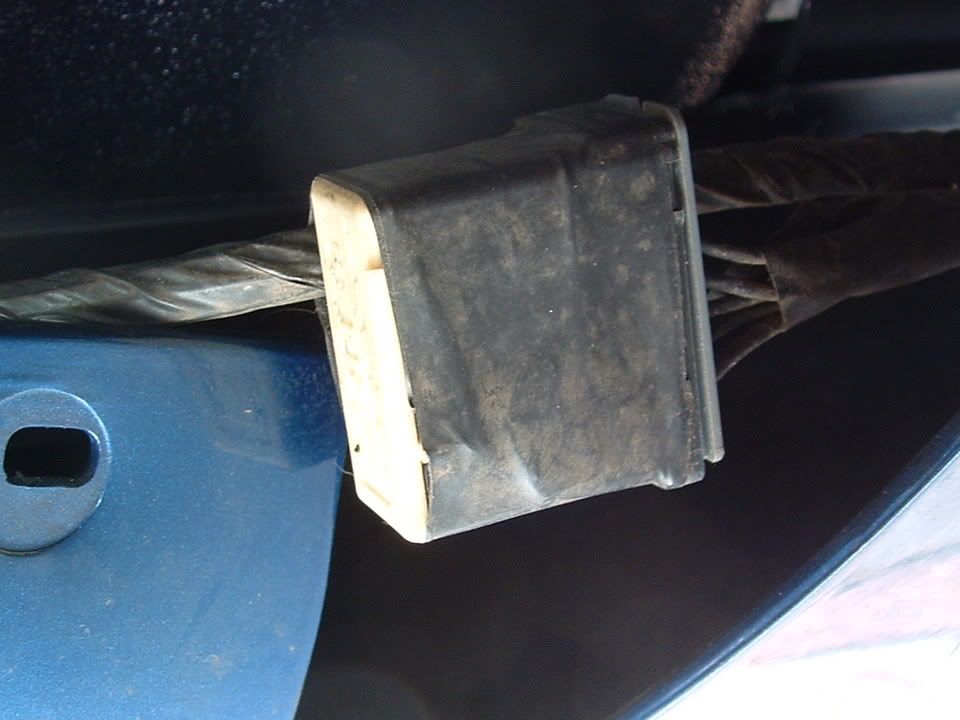
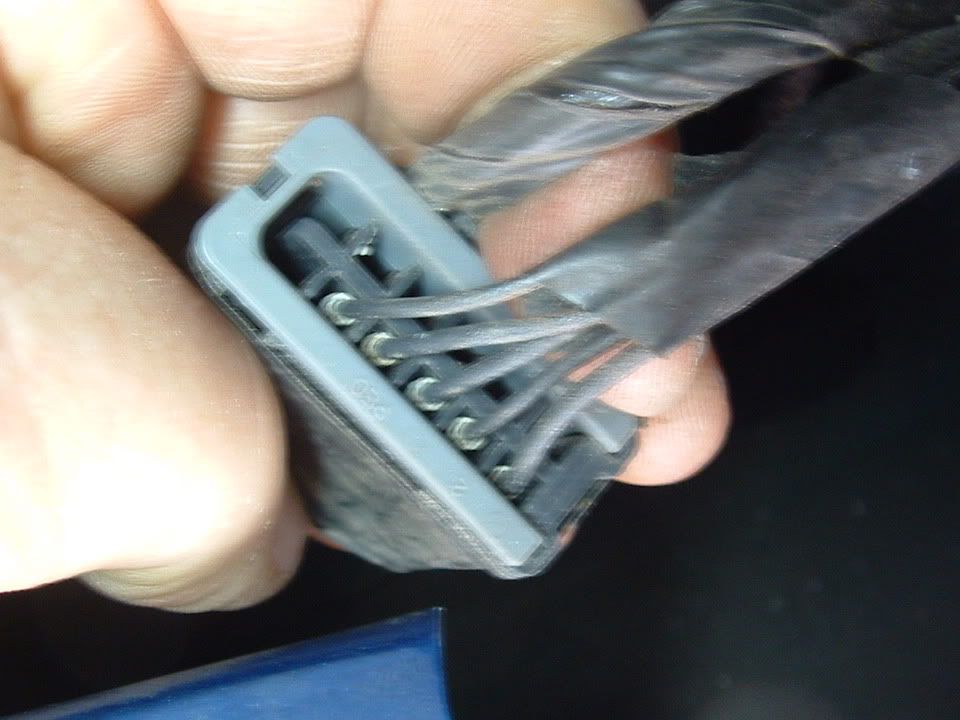
If you pop the white top off the connector you should see this:
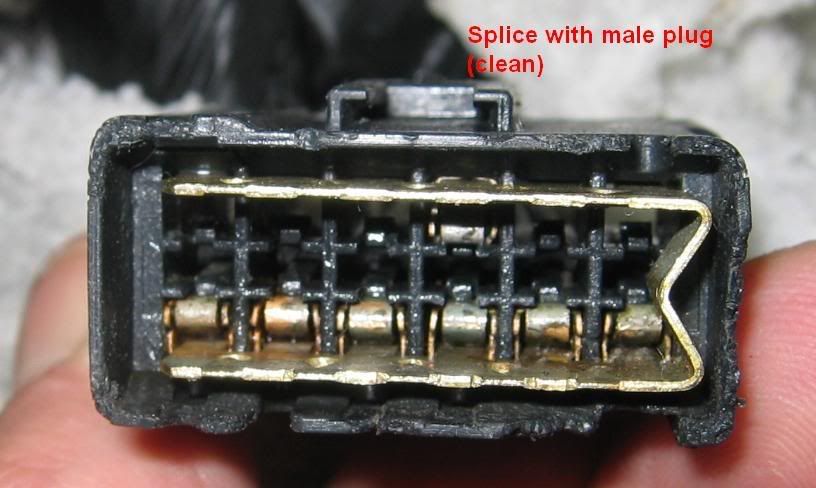
The metal clip inside the connector can be pulled out and the connector will look like this:
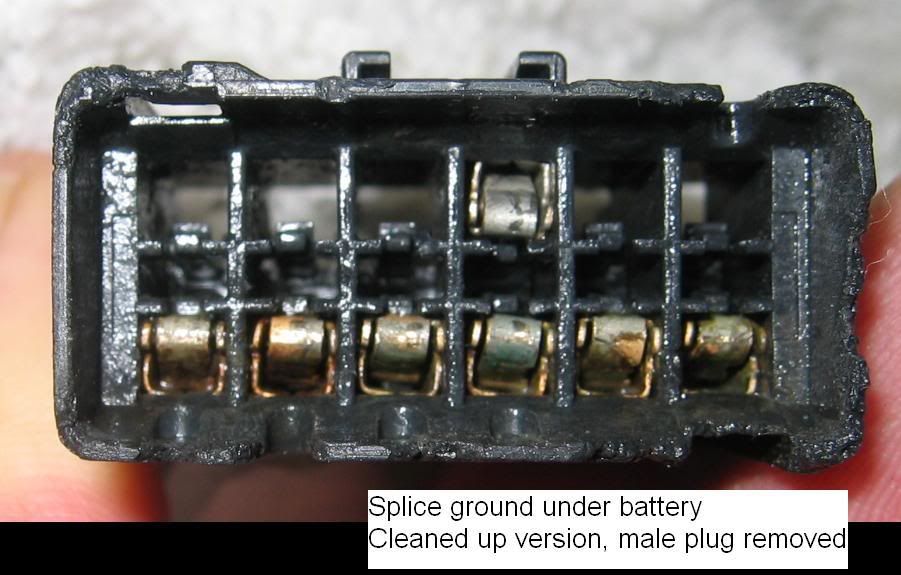
Sometimes battery acid can leak into the connector and it will look like this:
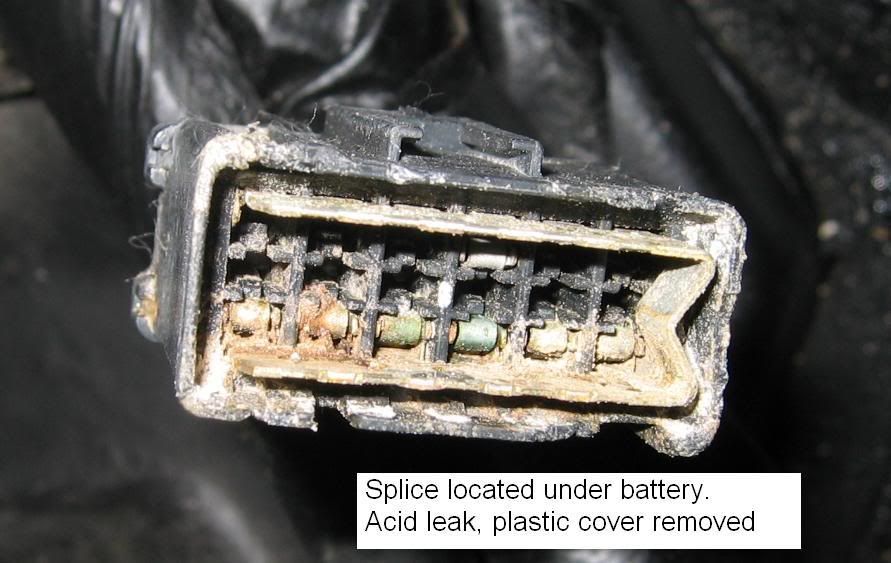
Let me know what you find.
BC
