







c5 that will not slow down

Thread Starter
Advanced

Joined: Dec 2006
Posts: 50
Likes: 0
 c5 that will not slow down
did idle relean monday/idle in park and newtral 800/when slowing down only goes to 1100/1200 noticed c4 has adjustable tps c5 does not/mine does now/lowed slow down idle to 900/any lower engine acts like cams out of phase runs like a thashing machine/had to clear like 6 codes when i went lower and go back and start over adjusting down tps/can a tuner lower in gear idle when slowing down/still feel like holding back a race horse but not as bad

Tech Contributor


Joined: Sep 2005
Posts: 1,731
Likes: 82
From: New Market AL
Your post is very difficult to understand, try using some more punctuation...
Yes, the idle can be adjusted using HPTuners or other software. Is your car modified or stock? If it is stock, then it sounds like something is wrong to have affected your idle quality. Check for vacuum leaks.
By the way, what exactly were the 6 codes that you cleared. Might be a clue there.
Yes, the idle can be adjusted using HPTuners or other software. Is your car modified or stock? If it is stock, then it sounds like something is wrong to have affected your idle quality. Check for vacuum leaks.
By the way, what exactly were the 6 codes that you cleared. Might be a clue there.

Instructor
Joined: Dec 2008
Posts: 189
Likes: 0
From: Jacksonville Florida
did idle relean monday/idle in park and newtral 800/when slowing down only goes to 1100/1200 noticed c4 has adjustable tps c5 does not/mine does now/lowed slow down idle to 900/any lower engine acts like cams out of phase runs like a thashing machine/had to clear like 6 codes when i went lower and go back and start over adjusting down tps/can a tuner lower in gear idle when slowing down/still feel like holding back a race horse but not as bad
 huh
huh 

Tech Contributor


Joined: Dec 1999
Posts: 32,910
Likes: 2,402
From: Anthony TX
CI 6,7,8,9,11 Vet
St. Jude Donor '08
How in the hell did you adjust the idle speed without tuning software!!!
 If you messed with the TPS Sensor or messed with the throttle blade,,,,,,put it back to normal and see if those problems that were introduced go away.
The C5 & C6 idle speeds are PCM controlled and set. You need tuning software like EFI Live or HP Tuners to adjust those tables.
What modifications have you done to effect the idle speed?? A stock C5 should NEVER have an idle issue unless theres a problem like:
- Air / vacuum leak
- Bad TB
- Bad TPS Sensor
- Stuck Throttle blade
Read and post all the DTCs. If there are a ton of DTCs,,clear them and then run the engine and check for DTCs again. Post what you find.
READING YOUR Engine Diagnostic Codes (DTCs)
The Diagnostic Display Mode is entered with the following procedure:
1) Turn on the ignition but don't start the engine.
2) Press the RESET button to turn off any warning messages. (i.e. door open, trunk open etc…)
3) Press and hold OPTIONS
4) While holding OPTIONS, press FUEL four times within a 10-second period.
Initially, on-board diagnostics go into an Automatic Mode which shows diagnostic codes in a pre-set sequence: PCM - TCS - RTD - BCM - IPC - RADIO - HVAC - LDCM - RDCM - SCM - RFA. All codes will be displayed for each. ( i.e. PCM = 4 codes)
If none are present in a given module, you will see No More Codes on the display.
There are two kinds of diagnostic codes, Current and History designated with a letter suffix, C or ;H. A current code indicates a malfunction is present in the module displaying data. A history code indicates a problem existed sometime in the last 40 or 50 ignition cycles. When not accompanied by a current code of the same number, it's potential evidence of a previous problem, now resolved, that was not removed by clearing the codes.
More likely it's an indication of an intermittent malfunction.
Intermittent codes are the most challenging of the diagnostics. An intermittent code may have happened once, may have happened more than once but is inconsistent or may be happening on a regular basis but not at the time the codes are displayed. History codes can also be caused by a current malfunction in a system that is not operating at the time codes are displayed. An example is the rear window defogger which doesn't operate until the Body Control Module detects engine rpm. For history codes set by a module that does not operate with the key on and engine off, a special diagnostic tool called a Scan Tester is necessary to properly diagnose the malfunction.
Once the system has displayed all modules, it goes into the manual mode which allows selection of each module using combinations of Driver Information Center buttons. Manual mode can also be entered during the automatic sequence by pressing any button except E/M. Once the display shows Manual Diagnostics, select a module by pressing the OPTIONS button to go forward or the TRIP button to go back. Once a module is selected, a code is displayed, and if more than one are present;
press GAGES to go forward or FUEL to go back.
To exit the diagnostic mode at any time, press E/M. If you want to erase codes in a given module, press RESET
To reset the codes once in manual mode, press and hold RESET until it displays NO CODES Press OPTIONS to go to the next module. Repeat the steps until you have reset the codes in all the computer modules.
NOTE!! Only reset the codes IF you want to - it is NOT necessary to do this. Clearing a code does not repair a problem. You are simply erasing the evidence of it in the module's memory. If you clear the code/s, and extinguish the Check Engine Light, your emissions status ready will NOT allow you to pass an emissions test until you have completed the required driving cycles.
Once you have the codes, the next question is: What to do with the information?
First, consult the factory service manual. Any serious C5 Do-It-Yourself owner should invest in the Corvette Service Manual of the appropriate model year. The Service Manual is really a requirement if you want to understand and work on your C5.
Here is very good site of DTC definitions:
http://www.gearchatter.com
Make sure to include the H or C suffix!!
BC
If you messed with the TPS Sensor or messed with the throttle blade,,,,,,put it back to normal and see if those problems that were introduced go away. The C5 & C6 idle speeds are PCM controlled and set. You need tuning software like EFI Live or HP Tuners to adjust those tables.
What modifications have you done to effect the idle speed?? A stock C5 should NEVER have an idle issue unless theres a problem like:
- Air / vacuum leak
- Bad TB
- Bad TPS Sensor
- Stuck Throttle blade
Read and post all the DTCs. If there are a ton of DTCs,,clear them and then run the engine and check for DTCs again. Post what you find.
READING YOUR Engine Diagnostic Codes (DTCs)
The Diagnostic Display Mode is entered with the following procedure:
1) Turn on the ignition but don't start the engine.
2) Press the RESET button to turn off any warning messages. (i.e. door open, trunk open etc…)
3) Press and hold OPTIONS
4) While holding OPTIONS, press FUEL four times within a 10-second period.
Initially, on-board diagnostics go into an Automatic Mode which shows diagnostic codes in a pre-set sequence: PCM - TCS - RTD - BCM - IPC - RADIO - HVAC - LDCM - RDCM - SCM - RFA. All codes will be displayed for each. ( i.e. PCM = 4 codes)
If none are present in a given module, you will see No More Codes on the display.
There are two kinds of diagnostic codes, Current and History designated with a letter suffix, C or ;H. A current code indicates a malfunction is present in the module displaying data. A history code indicates a problem existed sometime in the last 40 or 50 ignition cycles. When not accompanied by a current code of the same number, it's potential evidence of a previous problem, now resolved, that was not removed by clearing the codes.
More likely it's an indication of an intermittent malfunction.
Intermittent codes are the most challenging of the diagnostics. An intermittent code may have happened once, may have happened more than once but is inconsistent or may be happening on a regular basis but not at the time the codes are displayed. History codes can also be caused by a current malfunction in a system that is not operating at the time codes are displayed. An example is the rear window defogger which doesn't operate until the Body Control Module detects engine rpm. For history codes set by a module that does not operate with the key on and engine off, a special diagnostic tool called a Scan Tester is necessary to properly diagnose the malfunction.
Once the system has displayed all modules, it goes into the manual mode which allows selection of each module using combinations of Driver Information Center buttons. Manual mode can also be entered during the automatic sequence by pressing any button except E/M. Once the display shows Manual Diagnostics, select a module by pressing the OPTIONS button to go forward or the TRIP button to go back. Once a module is selected, a code is displayed, and if more than one are present;
press GAGES to go forward or FUEL to go back.
To exit the diagnostic mode at any time, press E/M. If you want to erase codes in a given module, press RESET
To reset the codes once in manual mode, press and hold RESET until it displays NO CODES Press OPTIONS to go to the next module. Repeat the steps until you have reset the codes in all the computer modules.
NOTE!! Only reset the codes IF you want to - it is NOT necessary to do this. Clearing a code does not repair a problem. You are simply erasing the evidence of it in the module's memory. If you clear the code/s, and extinguish the Check Engine Light, your emissions status ready will NOT allow you to pass an emissions test until you have completed the required driving cycles.
Once you have the codes, the next question is: What to do with the information?
First, consult the factory service manual. Any serious C5 Do-It-Yourself owner should invest in the Corvette Service Manual of the appropriate model year. The Service Manual is really a requirement if you want to understand and work on your C5.
Here is very good site of DTC definitions:
http://www.gearchatter.com
Make sure to include the H or C suffix!!
BC
Thread Starter
Advanced
Joined: Dec 2006
Posts: 50
Likes: 0
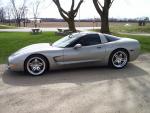
Thank you for the procedure using the cars own on board DTC. I printed it and saved it. The TPS adjustment was done by enlarging the screw holes. It took it down 100 RPM's. Anything lower than that the motor ran ruff. Cleared the codes and left it there. Current idle is at 1000 RPM's. The engine runs good with no codes for 70 miles. Today's phone call to the tunner in Tampa says he can get it lower. Car is OK but I have to wait until July for him to fix it. Tampa is 3 hours away and will take the entire day to have the procedure done and checked.
Race Director


Joined: Apr 2007
Posts: 11,152
Likes: 890
From: South Western Ontario
Ok, the throttle body on a C5 is drive by wire, meaning it is electric. The TPS as you call it is used to confirm the throttle blades are where the computer thinks they are (as it controls the throttle motor). If you mess with it and the computer thinks the throttle blades are off then it will retard timing and probably some other things to ensure the engine won't be "running wild" and causing a crash.
I don't know why you'd even think the TPS should be adjustable or that adjusting it would change the idle rpm. Every GM fuel injected car for the last probably 20 years has had an idle control motor and the computer sets the idle. So, you can never get a lower idle speed by adjusting the position of the throttle blades. The C5 computer controls the throttle blades so it moves them to get the idle speed, using the throttle directly like the different fuel injection uses an idle control motor.
Finally, your car should not be idling at 1200rpm so there must be a problem with the throttle body or the computer or the wiring. It's likely just a vacuum leak. I'm guessing it could also be that the throttle body has a sticky spot and is not able to close enough to get the low idle. It could also be something like the coolant temp sensor is buggered and telling the computer the engine is really cold so the computer cranks the idle so the engine won't stall as it "warms up". I'm just not sure. At any rate, I've very doubtful you need a tuner to fix this. You need someone who can fix the problem.
Peter
I don't know why you'd even think the TPS should be adjustable or that adjusting it would change the idle rpm. Every GM fuel injected car for the last probably 20 years has had an idle control motor and the computer sets the idle. So, you can never get a lower idle speed by adjusting the position of the throttle blades. The C5 computer controls the throttle blades so it moves them to get the idle speed, using the throttle directly like the different fuel injection uses an idle control motor.
Finally, your car should not be idling at 1200rpm so there must be a problem with the throttle body or the computer or the wiring. It's likely just a vacuum leak. I'm guessing it could also be that the throttle body has a sticky spot and is not able to close enough to get the low idle. It could also be something like the coolant temp sensor is buggered and telling the computer the engine is really cold so the computer cranks the idle so the engine won't stall as it "warms up". I'm just not sure. At any rate, I've very doubtful you need a tuner to fix this. You need someone who can fix the problem.
Peter
Last edited by lionelhutz; Jun 4, 2009 at 10:39 PM.
Tech Contributor
Joined: Dec 1999
Posts: 32,910
Likes: 2,402
From: Anthony TX
CI 6,7,8,9,11 Vet
St. Jude Donor '08
Ok, the throttle body on a C5 is drive by wire, meaning it is electric. The TPS as you call it is used to confirm the throttle blades are where the computer thinks they are (as it controls the throttle motor). If you mess with it and the computer thinks the throttle blades are off then it will retard timing and probably some other things to ensure the engine won't be "running wild" and causing a crash.
I don't know why you'd even think the TPS should be adjustable or that adjusting it would change the idle rpm. Every GM fuel injected car for the last probably 20 years has had an idle control motor and the computer sets the idle. So, you can never get a lower idle speed by adjusting the position of the throttle blades. The C5 computer controls the throttle blades so it moves them to get the idle speed, using the throttle directly like the different fuel injection uses an idle control motor.
Finally, your car should not be idling at 1200rpm so there must be a problem with the throttle body or the computer or the wiring. It's likely just a vacuum leak. I'm guessing it could also be that the throttle body has a sticky spot and is not able to close enough to get the low idle. It could also be something like the coolant temp sensor is buggered and telling the computer the engine is really cold so the computer cranks the idle so the engine won't stall as it "warms up". I'm just not sure. At any rate, I've very doubtful you need a tuner to fix this. You need someone who can fix the problem.
Peter
I don't know why you'd even think the TPS should be adjustable or that adjusting it would change the idle rpm. Every GM fuel injected car for the last probably 20 years has had an idle control motor and the computer sets the idle. So, you can never get a lower idle speed by adjusting the position of the throttle blades. The C5 computer controls the throttle blades so it moves them to get the idle speed, using the throttle directly like the different fuel injection uses an idle control motor.
Finally, your car should not be idling at 1200rpm so there must be a problem with the throttle body or the computer or the wiring. It's likely just a vacuum leak. I'm guessing it could also be that the throttle body has a sticky spot and is not able to close enough to get the low idle. It could also be something like the coolant temp sensor is buggered and telling the computer the engine is really cold so the computer cranks the idle so the engine won't stall as it "warms up". I'm just not sure. At any rate, I've very doubtful you need a tuner to fix this. You need someone who can fix the problem.
Peter
C4's all had adjustable TPS and were cable driven TB. Alot of the current C5 owners are former older Camero and C4 owners where adjusting the BASE throttle blade position via a set screw and adjusting the TPS to .045 mv was everyday common.
SO,,,,,given that knowledge, I try to cut most people a break and try to correct them as best as best as I can.

I agree,,,C5's are a STEEP learning curve for some.
BC
Corvette Stories
The Best of Corvette for Corvette Enthusiasts

Top 10 Most Expensive Corvettes Ever Sold on Bring A Trailer
Brett Foote
10 Things Every Corvette Owner Needs (2026 Edition)
Michael S. Palmer
8 Most "Only Corvette Owners Understand" Quirks and Problems
Pouria Savadkouei
10 Reasons the C6 Z06 is Still A Performance Benchmark After 20 Years
Joe Kucinski
How Much Horsepower Every Corvette Engine "LOST" in 1972
Joe Kucinski
Top 10 DOs and DON'Ts for Protecting Your Convertible Top!
Michael S. Palmer
Top 10 Most Explosive Corvettes Ever Made: Power-to-Weight Ratio Ranked!
Joe Kucinski
150 hp to 1,250 hp: Every Corvette Generation Compared by the Specs That Matter
Joe Kucinski
8 Coolest Corvette Pace Cars (and Replicas) of All Time
Verdad Gallardo
Race Director
Joined: Apr 2007
Posts: 11,152
Likes: 890
From: South Western Ontario
I know you could adjust the cable throttle bodies. But I don't believe the LT1's or even some/all of the TPI cars had adjustable TPS sensors.
Changing the TPS would not change the idle speed on any injected car.
Changing the throttle blade position would not change the idle either unless you opened the blades enough the idle was increased.
Peter
Changing the TPS would not change the idle speed on any injected car.
Changing the throttle blade position would not change the idle either unless you opened the blades enough the idle was increased.
Peter
Tech Contributor
Joined: Dec 1999
Posts: 32,910
Likes: 2,402
From: Anthony TX
CI 6,7,8,9,11 Vet
St. Jude Donor '08
Peter.
Theres a TPS adjustment procedure on chapter/page 6E3-40 of the 1985 C4 Corvette Service Manual. (just looked it up)
Adjust the TPS sensor between terminals A&B to 0.54 VDC +- .075 VDC.
It is held in place with two TORX screws and has an adjustment slot. You should do a MINIMUM idle adjustment and then set the TPS voltage to the specified voltage.
Theres a tuner trick to use to help Tailor the throttle response by varying the TPS voltage up or down slightly around the .54 VDC set point.
I agree, that the TPS adjustment is not to adjust the idle speed! Nor is the Throttle blade position adjustment.
A mis-adjusted TPS will set a OBD I, DTC code 22 for LOW voltage or CODE 21 for a high voltage.
Ive owned C4's sense 87 and been there and done that. C5s all the way baby! Taste the new blood!
Bill
Theres a TPS adjustment procedure on chapter/page 6E3-40 of the 1985 C4 Corvette Service Manual. (just looked it up)
Adjust the TPS sensor between terminals A&B to 0.54 VDC +- .075 VDC.
It is held in place with two TORX screws and has an adjustment slot. You should do a MINIMUM idle adjustment and then set the TPS voltage to the specified voltage.
Theres a tuner trick to use to help Tailor the throttle response by varying the TPS voltage up or down slightly around the .54 VDC set point.
I agree, that the TPS adjustment is not to adjust the idle speed! Nor is the Throttle blade position adjustment.
A mis-adjusted TPS will set a OBD I, DTC code 22 for LOW voltage or CODE 21 for a high voltage.
Ive owned C4's sense 87 and been there and done that. C5s all the way baby! Taste the new blood!
Bill
Last edited by Bill Curlee; Jun 4, 2009 at 11:47 PM.
Thread Starter
Advanced
Joined: Dec 2006
Posts: 50
Likes: 0
this is friday night I drove the car out to dinner and in gear idle is slower but not right.Until I learned how to adjust the c4 it was this fast.I can drive car this way if this is the best it will be.Saturday afternoon my shop should be slow enough to use the smoke machine to look for vacuum leaks.I know that would be the problem on my c3.If the throttle plate is sticking would it set a code?coolant temp sensor should set code.
Race Director
Joined: Apr 2007
Posts: 11,152
Likes: 890
From: South Western Ontario
I honestly don't know what the idle rpm of an auto C5 is but likely around 600rpm in gear. It should be lower than 1100rpm anyways so your car does have a problem.
I would think a sticking throttle body would set a code. The computer does know where it should be so if it tries to close it up and and it sticks that should be caught.
The CTS might not. it it provides a valid cold reading (as opposed to open or shorted) then the computer would think it is just cold, not broken.
Still, most likely, this is a vacuum leak problem.
Peter
I would think a sticking throttle body would set a code. The computer does know where it should be so if it tries to close it up and and it sticks that should be caught.
The CTS might not. it it provides a valid cold reading (as opposed to open or shorted) then the computer would think it is just cold, not broken.
Still, most likely, this is a vacuum leak problem.
Peter
Thread Starter
Advanced
Joined: Dec 2006
Posts: 50
Likes: 0
Found a vacuum leak at the pcv the reducer that holds the pcv was leakiing and rotten inside would never have found it without a smoke machine.It is not a real costly machine but it works great.It uses shop air for presure makes smoke with baby oil we put it in thru vacuum booster line blocked off air filter at throttle body and out smoke came in 10 seconds at pcv.Only 15 mile ride home but things are better,plan to wait see if driving car will help been wrong for months.
