




Brake problem persists -- HELP!!!
Thread Starter
Burning Brakes


Joined: Feb 2006
Posts: 1,205
Likes: 5
From: Jupiter FL
 Brake problem persists -- HELP!!!
I'm ready to shoot this car!!! It has a continuing brake problem that no one seems to be able to solve. So HELP!!!!! Someone out there must have dealt with this before and found an answer.
Basically, the front brakes are dragging, a lot. The rears are completely fine. Here is what we have done in an effort to fix this.
1. Front brake calipers rebuilt. They are the Wilwood SL6 kit from Wilwood, not LG Motorsports kit. I even removed them, sent them out to California to Wilwood, and they refurbished them and say that everything is within spec. They replaced the seals as well.
2. Replaced the stainless braided brake lines. Made no difference.
3. Replaced the master brake cylinder. Made no difference.
4. We even swapped one of the front calipers and rotors for the stock brakes and rotors, and even they were dragging. So we know it's not the Wilwoods causing the problem, since the stock brakes are doing it too.
5. The brakes have been bled multiple times with fresh fluid. Made no difference.
Bottom line is after all this work, time, effort and changing virtually everything in the system, the front brakes are still dragging.
So, what are we missing??? What could be causing the front brakes to drag. We know it's something in the line, because if you push the pads back a little, the wheel/rotor turns freely. Step on the brake a couple of time, and it seizes back up and drags.
Please, someone solve this mystery!!!!!
Basically, the front brakes are dragging, a lot. The rears are completely fine. Here is what we have done in an effort to fix this.
1. Front brake calipers rebuilt. They are the Wilwood SL6 kit from Wilwood, not LG Motorsports kit. I even removed them, sent them out to California to Wilwood, and they refurbished them and say that everything is within spec. They replaced the seals as well.
2. Replaced the stainless braided brake lines. Made no difference.
3. Replaced the master brake cylinder. Made no difference.
4. We even swapped one of the front calipers and rotors for the stock brakes and rotors, and even they were dragging. So we know it's not the Wilwoods causing the problem, since the stock brakes are doing it too.
5. The brakes have been bled multiple times with fresh fluid. Made no difference.
Bottom line is after all this work, time, effort and changing virtually everything in the system, the front brakes are still dragging.
So, what are we missing??? What could be causing the front brakes to drag. We know it's something in the line, because if you push the pads back a little, the wheel/rotor turns freely. Step on the brake a couple of time, and it seizes back up and drags.
Please, someone solve this mystery!!!!!

Tech Contributor


Joined: Dec 1999
Posts: 32,910
Likes: 2,402
From: Anthony TX
CI 6,7,8,9,11 Vet
St. Jude Donor '08
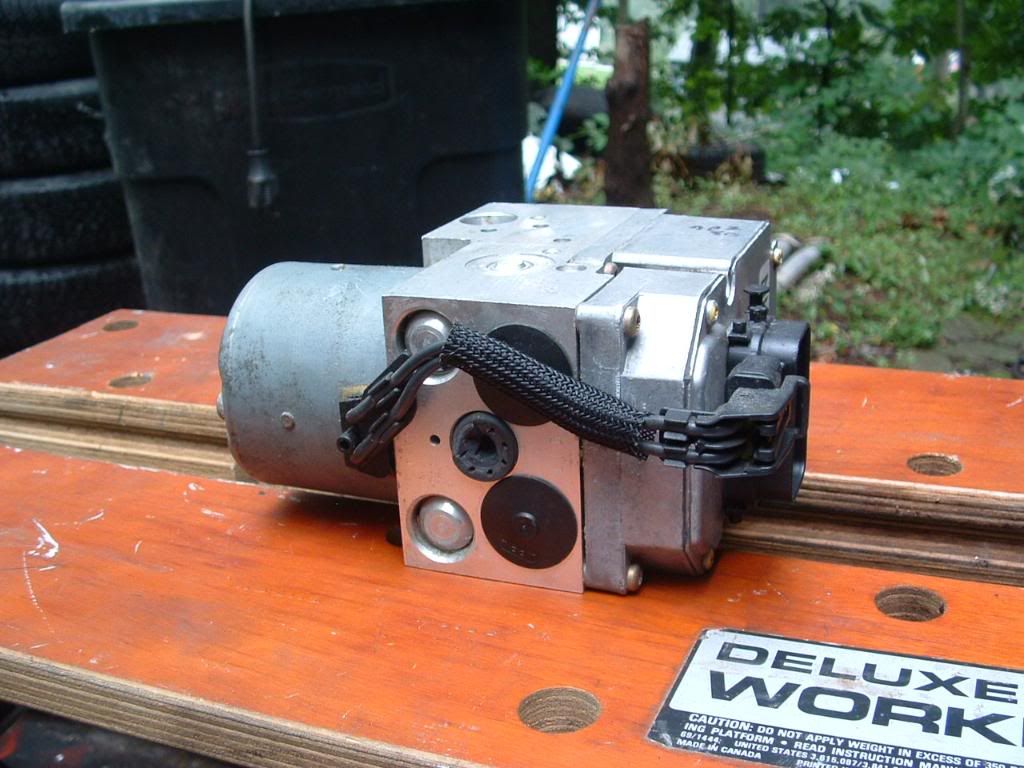
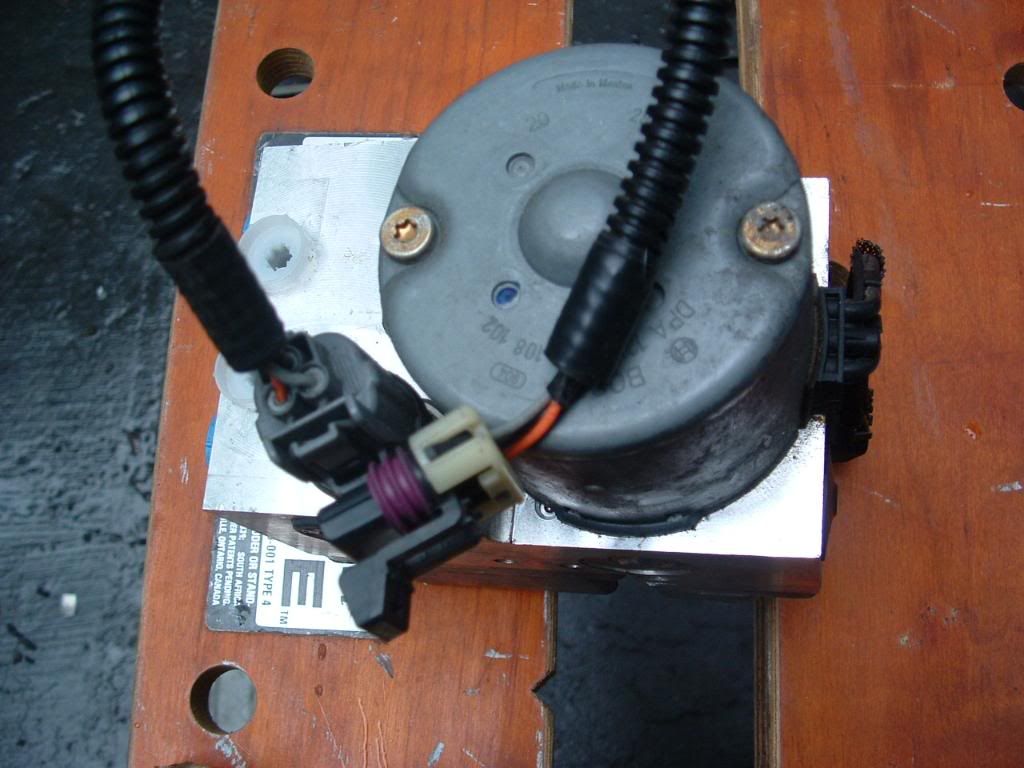
The ONLY thing that i can think of that could be causing your issue is the BPMV. I have a spare one sitting around if you want to try that. Let me know what you want to do. What year C5 do you have????? The one I have is for a 2001+
BC
BC

Race Director

Joined: May 2005
Posts: 15,960
Likes: 21
From: West Norriton PA
St. Jude Donor '08
Have you checked to make sure the brake pedal stop is at the correct height ?
Also you could swap out the front and rear master cylinder lines to see if it's the ABS unit.
Also when you do this do you have your active handling off ? I've heard of a few cases where it can engage and wear out brake pads eratically.
Also you could swap out the front and rear master cylinder lines to see if it's the ABS unit.
Also when you do this do you have your active handling off ? I've heard of a few cases where it can engage and wear out brake pads eratically.
I'm ready to shoot this car!!! It has a continuing brake problem that no one seems to be able to solve. So HELP!!!!! Someone out there must have dealt with this before and found an answer.
Basically, the front brakes are dragging, a lot. The rears are completely fine. Here is what we have done in an effort to fix this.
1. Front brake calipers rebuilt. They are the Wilwood SL6 kit from Wilwood, not LG Motorsports kit. I even removed them, sent them out to California to Wilwood, and they refurbished them and say that everything is within spec. They replaced the seals as well.
2. Replaced the stainless braided brake lines. Made no difference.
3. Replaced the master brake cylinder. Made no difference.
4. We even swapped one of the front calipers and rotors for the stock brakes and rotors, and even they were dragging. So we know it's not the Wilwoods causing the problem, since the stock brakes are doing it too.
5. The brakes have been bled multiple times with fresh fluid. Made no difference.
Bottom line is after all this work, time, effort and changing virtually everything in the system, the front brakes are still dragging.
So, what are we missing??? What could be causing the front brakes to drag. We know it's something in the line, because if you push the pads back a little, the wheel/rotor turns freely. Step on the brake a couple of time, and it seizes back up and drags.
Please, someone solve this mystery!!!!!
Basically, the front brakes are dragging, a lot. The rears are completely fine. Here is what we have done in an effort to fix this.
1. Front brake calipers rebuilt. They are the Wilwood SL6 kit from Wilwood, not LG Motorsports kit. I even removed them, sent them out to California to Wilwood, and they refurbished them and say that everything is within spec. They replaced the seals as well.
2. Replaced the stainless braided brake lines. Made no difference.
3. Replaced the master brake cylinder. Made no difference.
4. We even swapped one of the front calipers and rotors for the stock brakes and rotors, and even they were dragging. So we know it's not the Wilwoods causing the problem, since the stock brakes are doing it too.
5. The brakes have been bled multiple times with fresh fluid. Made no difference.
Bottom line is after all this work, time, effort and changing virtually everything in the system, the front brakes are still dragging.
So, what are we missing??? What could be causing the front brakes to drag. We know it's something in the line, because if you push the pads back a little, the wheel/rotor turns freely. Step on the brake a couple of time, and it seizes back up and drags.
Please, someone solve this mystery!!!!!

Drifting

Joined: Oct 2005
Posts: 1,487
Likes: 4
From: WA
i bet the calipers are not centered over rotors.
edit: oh the stockers are doing it too. deformed rotor? play in the hub?
edit2: actually, ABS theory is interesting. you can pull the ABS fuse and disable TC/AH and see if you can reproduce the issue.
edit: oh the stockers are doing it too. deformed rotor? play in the hub?
edit2: actually, ABS theory is interesting. you can pull the ABS fuse and disable TC/AH and see if you can reproduce the issue.
Last edited by longdaddy; Sep 3, 2009 at 04:27 AM.
Thread Starter
Burning Brakes
Joined: Feb 2006
Posts: 1,205
Likes: 5
From: Jupiter FL
I am going to check the pedal stop height, but I don't think that is it.
We were thinking ABS also. The rotors are new, not deformed. I replaced the hubs last fall with the SKF bearings from Pfadt, so they are new as well. This one is a real head-scratcher.
Burning Brakes
Joined: Aug 2006
Posts: 1,217
Likes: 5
From: Stark County Ohio

Since you replaced the rubber lines and the stock calipers are also not fully releasing, it must be that hydraulic pressure is not being “released”.
-
Drifting
Joined: Oct 2005
Posts: 1,487
Likes: 4
From: WA
I'm not familiar with the BPMV. Proportioning valve? Mine is a 2004. But I'm heading up to Watkins Glen today, not much time to experiment.
I am going to check the pedal stop height, but I don't think that is it.
We were thinking ABS also. The rotors are new, not deformed. I replaced the hubs last fall with the SKF bearings from Pfadt, so they are new as well. This one is a real head-scratcher.
I am going to check the pedal stop height, but I don't think that is it.
We were thinking ABS also. The rotors are new, not deformed. I replaced the hubs last fall with the SKF bearings from Pfadt, so they are new as well. This one is a real head-scratcher.
Tech Contributor
Joined: Dec 1999
Posts: 32,910
Likes: 2,402
From: Anthony TX
CI 6,7,8,9,11 Vet
St. Jude Donor '08
I'm not familiar with the BPMV. Proportioning valve? Mine is a 2004. But I'm heading up to Watkins Glen today, not much time to experiment.
I am going to check the pedal stop height, but I don't think that is it.
We were thinking ABS also. The rotors are new, not deformed. I replaced the hubs last fall with the SKF bearings from Pfadt, so they are new as well. This one is a real head-scratcher.
I am going to check the pedal stop height, but I don't think that is it.
We were thinking ABS also. The rotors are new, not deformed. I replaced the hubs last fall with the SKF bearings from Pfadt, so they are new as well. This one is a real head-scratcher.

Corvette Stories
The Best of Corvette for Corvette Enthusiasts

2027 Corvette vs The World: Every Model vs Closest Competitor
Joe Kucinski
10 Most Common Corvette Problems of the Last 20 Years!
Joe Kucinski
5 MOST and 5 LEAST Popular Corvette Model Years in History!
Joe Kucinski
2027 Corvette Buyer's Guide: Everything You Need to Know!
Joe Kucinski
10 Things C8 Corvette Owners Hate (But Won't Tell You)
Joe Kucinski
10 Best Corvettes Coming to Barrett-Jackson Palm Beach 2026!
Brett Foote
Every Corvette Grand Sport Explained! (C2, C4, C6, C7, & C8)
Joe Kucinski
Grand Sport & Grand Sport X Launch Alongside All-New 535hp LS6 V8!
Michael S. Palmer
5 Reasons Bad Drivers Crash & 5 Ways to Avoid a Costly Mistake!
Joe Kucinski

Burning Brakes

Joined: Sep 2005
Posts: 1,208
Likes: 2
From: Long Beach CA
when the brakes are dragging...remove the vacuum line going to the booster, if the drag goes away the booster is defective.
Another test -- when the brakes are dragging remove the 2 nuts that mount the master cyl. to the booster and move the master away from booster. does the brakes free up? this ensures that the pushrod is not staying applied.
another test-- when the brakes are dragging open the bleeder screw, if it frees up then its a hyd. problem and not the caliper.
its gonna be a process of elimination
keep us inform...i may have afew other suggestions
Another test -- when the brakes are dragging remove the 2 nuts that mount the master cyl. to the booster and move the master away from booster. does the brakes free up? this ensures that the pushrod is not staying applied.
another test-- when the brakes are dragging open the bleeder screw, if it frees up then its a hyd. problem and not the caliper.
its gonna be a process of elimination
keep us inform...i may have afew other suggestions
Last edited by 99FewteRC5; Sep 4, 2009 at 01:45 AM.
Race Director
Joined: May 2005
Posts: 15,960
Likes: 21
From: West Norriton PA
St. Jude Donor '08
when the brakes are dragging...remove the vacuum line going to the booster, if the drag goes away the booster is defective.
Another test -- when the brakes are dragging remove the 2 nuts that mount the master cyl. to the booster and move the master away from booster. does the brakes free up? this ensures that the pushrod is not staying applied.
another test-- when the brakes are dragging open the bleeder screw, if it frees up then its a hyd. problem and not the caliper.
its gonna be a process of elimination
keep us inform...i may have afew other suggestions
Another test -- when the brakes are dragging remove the 2 nuts that mount the master cyl. to the booster and move the master away from booster. does the brakes free up? this ensures that the pushrod is not staying applied.
another test-- when the brakes are dragging open the bleeder screw, if it frees up then its a hyd. problem and not the caliper.
its gonna be a process of elimination
keep us inform...i may have afew other suggestions

Thread Starter
Burning Brakes
Joined: Feb 2006
Posts: 1,205
Likes: 5
From: Jupiter FL
when the brakes are dragging...remove the vacuum line going to the booster, if the drag goes away the booster is defective.
Another test -- when the brakes are dragging remove the 2 nuts that mount the master cyl. to the booster and move the master away from booster. does the brakes free up? this ensures that the pushrod is not staying applied.
another test-- when the brakes are dragging open the bleeder screw, if it frees up then its a hyd. problem and not the caliper.
its gonna be a process of elimination
keep us inform...i may have afew other suggestions
Another test -- when the brakes are dragging remove the 2 nuts that mount the master cyl. to the booster and move the master away from booster. does the brakes free up? this ensures that the pushrod is not staying applied.
another test-- when the brakes are dragging open the bleeder screw, if it frees up then its a hyd. problem and not the caliper.
its gonna be a process of elimination
keep us inform...i may have afew other suggestions
When the brakes were dragging badly, we did open the bleed screw and relieve the pressure, and the brakes eased up. Also, we were able to push back the pads just a bit and that relieved the drag as well. So it is clearly something in the brake lines, not bad hub bearings or scraping rotors on calipers or the like.
I'll try the test for brake booster and the master push rod, but kind of doubt that's it. The dealership changed the master for me, and they said the pedal was properly adjusted, not maintaining any pressure, but worth checking. The feeling with the brake booster was that if it was defective, all 4 brakes would be binding, not just the fronts.
Now, I noticed that there is a flex line in the connection between the master cylinder and the BPMV. Could it be as simple as that line being bad??
Thanks everyone for your thoughts and ideas. I hope I can finally resolve this issue.

Tech Contributor


Joined: Jan 2007
Posts: 19,245
Likes: 1,091
From: Dyer, IN
Well, I was able to run on the track this past weekend, but the brake drag issue continues. No doubt about it. Fortunately, the weather was cool and the DRM brake ducts and Quantum spindle ducts kept the rotor temperatures within reason, so no seizing and no cracked rotors. But I still need to solve this.
When the brakes were dragging badly, we did open the bleed screw and relieve the pressure, and the brakes eased up. Also, we were able to push back the pads just a bit and that relieved the drag as well. So it is clearly something in the brake lines, not bad hub bearings or scraping rotors on calipers or the like.
I'll try the test for brake booster and the master push rod, but kind of doubt that's it. The dealership changed the master for me, and they said the pedal was properly adjusted, not maintaining any pressure, but worth checking. The feeling with the brake booster was that if it was defective, all 4 brakes would be binding, not just the fronts.
Now, I noticed that there is a flex line in the connection between the master cylinder and the BPMV. Could it be as simple as that line being bad??
Thanks everyone for your thoughts and ideas. I hope I can finally resolve this issue.
When the brakes were dragging badly, we did open the bleed screw and relieve the pressure, and the brakes eased up. Also, we were able to push back the pads just a bit and that relieved the drag as well. So it is clearly something in the brake lines, not bad hub bearings or scraping rotors on calipers or the like.
I'll try the test for brake booster and the master push rod, but kind of doubt that's it. The dealership changed the master for me, and they said the pedal was properly adjusted, not maintaining any pressure, but worth checking. The feeling with the brake booster was that if it was defective, all 4 brakes would be binding, not just the fronts.
Now, I noticed that there is a flex line in the connection between the master cylinder and the BPMV. Could it be as simple as that line being bad??
Thanks everyone for your thoughts and ideas. I hope I can finally resolve this issue.


Safety Car


Joined: Jan 2001
Posts: 4,969
Likes: 496
From: Hilton NY
Sometimes a flex line will fail internally and acts like a check valve where the fluid can't return to the master cylinder, it can be so bad that the car acts as if an emergengy brake is on. Since you changed the stainless lines the flex line you described could be bad.

Le Mans Master

Joined: Sep 2003
Posts: 8,847
Likes: 794
From: Longview Texas
I am curious if one line controls both front brakes, or if one line would affect a front and rear pair.
Melting Slicks

Joined: Oct 2007
Posts: 2,383
Likes: 13
From: Kinston North Carolina
Two flex lines from master, to BPMV. If one of those were bad it would affect one front and one rear. Correct me if I'm wrong.
-------------------------------------------------------------------------------------------------------
Hydraulic Brake System Description and Operation
System Component Description
The hydraulic brake system consists of the following:
Hydraulic Brake Master Cylinder Fluid Reservoir
Contains supply of brake fluid for the hydraulic brake system.
Hydraulic Brake Master Cylinder
Converts mechanical input force into hydraulic output pressure.
Hydraulic output pressure is distributed from the master cylinder through two hydraulic circuits, supplying diagonally-opposed wheel apply circuits.
-------------------------------------------------------------------------------------------------------
Hydraulic Brake System Description and Operation
System Component Description
The hydraulic brake system consists of the following:
Hydraulic Brake Master Cylinder Fluid Reservoir
Contains supply of brake fluid for the hydraulic brake system.
Hydraulic Brake Master Cylinder
Converts mechanical input force into hydraulic output pressure.
Hydraulic output pressure is distributed from the master cylinder through two hydraulic circuits, supplying diagonally-opposed wheel apply circuits.
Last edited by byronhunter; Sep 8, 2009 at 05:50 PM.

Race Director
Joined: May 2005
Posts: 15,960
Likes: 21
From: West Norriton PA
St. Jude Donor '08
I don't think this is right or elsewise you would not be able to install a line lock and have it work correctly.
Two flex lines from master, to BPMV. If one of those were bad it would affect one front and one rear. Correct me if I'm wrong.
-------------------------------------------------------------------------------------------------------
Hydraulic Brake System Description and Operation
System Component Description
The hydraulic brake system consists of the following:
Hydraulic Brake Master Cylinder Fluid Reservoir
Contains supply of brake fluid for the hydraulic brake system.
Hydraulic Brake Master Cylinder
Converts mechanical input force into hydraulic output pressure.
Hydraulic output pressure is distributed from the master cylinder through two hydraulic circuits, supplying diagonally-opposed wheel apply circuits.
-------------------------------------------------------------------------------------------------------
Hydraulic Brake System Description and Operation
System Component Description
The hydraulic brake system consists of the following:
Hydraulic Brake Master Cylinder Fluid Reservoir
Contains supply of brake fluid for the hydraulic brake system.
Hydraulic Brake Master Cylinder
Converts mechanical input force into hydraulic output pressure.
Hydraulic output pressure is distributed from the master cylinder through two hydraulic circuits, supplying diagonally-opposed wheel apply circuits.
Thread Starter
Burning Brakes
Joined: Feb 2006
Posts: 1,205
Likes: 5
From: Jupiter FL
As for the diagonal brake systems, I thought that also. But as noted, a line lock only needs to be on one circuit and locks both fronts.
My game plan now is to swap the lines from the master to the BPMV and see if that makes a difference. If it does, than I will suspect the flex line is bad. If it doesn't, then that points to the BPMV, I would think, as everything else that could be a problem beyond the BPMV has been replaced or refurbished.
Any other possible ideas???