




Fix -a-flat SAFE for pressure sensors?

Thread Starter
Racer


Joined: Mar 2005
Posts: 286
Likes: 36
From: Scituate, MA
 Fix -a-flat SAFE for pressure sensors?
Both of my front Perelli P Zero/Neros have slow unfindable leaks. They loose about 5 psi per week. First I unbolted both and looked very carefully at each tire for the telltale nail or screw and found nothing. Then I took the LF to the biggest and maybe best tire store chain in the Boston metro area to break it down, and find the leak. They said it was becase of pound on weights, and that was what causing the pressure loss. Then they charged for glue-on balance weights.
It wasn't the case because the tire is acting just the same, about a 5 psi loss per week.
Would Slime or Fix-A- Flat be OK for the pressure sensors, or would that ruin them?
Thanks for your consideration,
Bluemill
It wasn't the case because the tire is acting just the same, about a 5 psi loss per week.
Would Slime or Fix-A- Flat be OK for the pressure sensors, or would that ruin them?
Thanks for your consideration,
Bluemill

Tech Contributor


Joined: Jan 2007
Posts: 19,473
Likes: 1,171
From: Dyer, IN
Both of my front Perelli P Zero/Neros have slow unfindable leaks. They loose about 5 psi per week. First I unbolted both and looked very carefully at each tire for the telltale nail or screw and found nothing. Then I took the LF to the biggest and maybe best tire store chain in the Boston metro area to break it down, and find the leak. They said it was becase of pound on weights, and that was what causing the pressure loss. Then they charged for glue-on balance weights.
It wasn't the case because the tire is acting just the same, about a 5 psi loss per week.
Would Slime or Fix-A- Flat be OK for the pressure sensors, or would that ruin them?
Thanks for your consideration,
Bluemill
It wasn't the case because the tire is acting just the same, about a 5 psi loss per week.
Would Slime or Fix-A- Flat be OK for the pressure sensors, or would that ruin them?
Thanks for your consideration,
Bluemill
Fix a flat is a temp solution until the tire can be repaired.

Drifting


Joined: Feb 2005
Posts: 1,643
Likes: 167
What methods have you used? Have you tried inflating the tire to max pressure(molded on the sidewall on the sidewall) for the purposes of soaping it down. More pressure may accelerate the leak so it is detectable.
Fix a flat is a temp solution until the tire can be repaired.
Fix a flat is a temp solution until the tire can be repaired.

Burning Brakes

Joined: Jan 2008
Posts: 986
Likes: 4
From: Galaxy Traveler
Another simple thing to check for is the shrader valve in the stem. Take the cap off, spit on your finger, and rub it in the valve stem opening. If the shrader valve is leaking it will bubble. If that doesn't appeal to you any liquid soap will make a good leak tester too.
Tech Contributor
Joined: Jan 2007
Posts: 19,473
Likes: 1,171
From: Dyer, IN
Another simple thing to check for is the shrader valve in the stem. Take the cap off, spit on your finger, and rub it in the valve stem opening. If the shrader valve is leaking it will bubble. If that doesn't appeal to you any liquid soap will make a good leak tester too.
 I keep a bottle of my saliva in the garage just for this purpose.

Burning Brakes
Joined: Feb 2009
Posts: 1,192
Likes: 7
From: Charlotte N.C
slow leak fix
The first thing I would not do is using any slime fix in my tire because yes it will not only clog hole or leak it will damage tpms. The best thing to do is like what most have posted, add some extra air in the tire and submerge the tire in a small kiddie pool or get an old spray bottle and empty it, add water and some dish detergent. Spray the entire wheel , tire slowly and look for air bubbles to find your leak. If you find no leak on tire surface lay the rim flat down and spray side wall, and beading area and rim and valve stem area , removing valve stem cap, Rust or dirt around the rim will cause a slow leak too and if tire bead was not cleaned it may be leaking too. Next flip rim completely over to other side and do same spray technique. If your rim is leaking around the rim due to dirt or rust clean the rim with a plastic stiff brush , you can also get a better seal if you put a small amount of grease or vaseleine around the bead. Good Luck Richard

Pro

Joined: Mar 2008
Posts: 640
Likes: 0
From: Wappingers Falls New York
Don't use fix a flat. It may damage the TPMS but if you do use it and find a nail or screw in your tire the chances of having a solid plug/patch put in are slim. The fix-a-flat binds to the inner tire and causes havoc when trying to get a good seal using a plug or patch.
Best bet to find a slow leak is to put some water and dish soap into a large tub and the spin the tire through the tube very slowly checking the tire for any bubbles. You want to check the part of the tire that is not submerged for any bubbles on the surface of the tire. Take extra time to look at the bead as I'd put good money it was either at the bead or the valve/valve stem. It may take some time but you'll find it.
I worked in a tire shop for 5 years and saw one or two cases that using the above method didn't work for finding a leak.
Best bet to find a slow leak is to put some water and dish soap into a large tub and the spin the tire through the tube very slowly checking the tire for any bubbles. You want to check the part of the tire that is not submerged for any bubbles on the surface of the tire. Take extra time to look at the bead as I'd put good money it was either at the bead or the valve/valve stem. It may take some time but you'll find it.
I worked in a tire shop for 5 years and saw one or two cases that using the above method didn't work for finding a leak.
Corvette Stories
The Best of Corvette for Corvette Enthusiasts

Top 10 Most Expensive Corvettes Ever Sold on Bring A Trailer
Brett Foote
10 Things Every Corvette Owner Needs (2026 Edition)
Michael S. Palmer
8 Most "Only Corvette Owners Understand" Quirks and Problems
Pouria Savadkouei
10 Reasons the C6 Z06 is Still A Performance Benchmark After 20 Years
Joe Kucinski
How Much Horsepower Every Corvette Engine "LOST" in 1972
Joe Kucinski
Top 10 DOs and DON'Ts for Protecting Your Convertible Top!
Michael S. Palmer
Top 10 Most Explosive Corvettes Ever Made: Power-to-Weight Ratio Ranked!
Joe Kucinski
150 hp to 1,250 hp: Every Corvette Generation Compared by the Specs That Matter
Joe Kucinski
8 Coolest Corvette Pace Cars (and Replicas) of All Time
Verdad Gallardo
Le Mans Master


Joined: Mar 1999
Posts: 6,029
Likes: 85
From: Palm Coast, FL
Also, try inflating the tire to a higher pressure but, keep it on the car and let the weight of the vehicle help you. If you spray the tire with a soapy water solution and find no leak . . . move the car a little bit so the weight is on another portion of the tire and spray again (if needed).
I had a slow leak for the longest time and found that it only leaked when the car was on a certain part of the tire.
I had a slow leak for the longest time and found that it only leaked when the car was on a certain part of the tire.

Tech Contributor

Joined: Dec 1999
Posts: 32,910
Likes: 2,402
From: Anthony TX
CI 6,7,8,9,11 Vet
St. Jude Donor '08
SUBMERGE The tire under water. If the air is leaving, it has to make bubbles.
Places that I have seen very slow leaks are;
- Valve stem/TPS to rim seals defective. NOTE! The retainer nut that secures the TPS to the wheel has a specific TQ. ( I believe its in inch pounds) DO NOT OVER Torque that nut to try to stop it from leaking!!
- Shrader valve not tight inside the valve stem
- shrader valve damaged or dirty (there replaceable)
- Tire rim to tire bead seating surface dirty or pitted
- Crack in rim!!
- Pin hole leak in the tire
Check for all that stuff.
BC
Places that I have seen very slow leaks are;
- Valve stem/TPS to rim seals defective. NOTE! The retainer nut that secures the TPS to the wheel has a specific TQ. ( I believe its in inch pounds) DO NOT OVER Torque that nut to try to stop it from leaking!!
- Shrader valve not tight inside the valve stem
- shrader valve damaged or dirty (there replaceable)
- Tire rim to tire bead seating surface dirty or pitted
- Crack in rim!!
- Pin hole leak in the tire
Check for all that stuff.
BC
Last edited by Bill Curlee; Sep 25, 2009 at 07:21 PM.

Drifting
Joined: Oct 2003
Posts: 1,932
Likes: 4
From: Warrenville Il
Try replacing the o-ring on the TPMS sensor or slightly tightening the sensor nut a bit. See if this helps. On my 99 one of my tires loses air during the winter months because of the cold. It seems that the o-ring contracts a bit and allows air to escape. I tightened up the sensor nut and it slowed the leak down considerably, from 5lbs a week to 5lbs a month. the permanent fix would be to replace the o-ring in my case.
If you do use slime, I believe there are types that are water soluable and can be cleaned which would be a better option. Read the labels and see if it is safe to use with TPMS systems.
Also what year is your car? Early models came with o-rings on the sensors, and later models came with a grommet style on the sensor. The grommet style seemed to be a better design than the o-ring style, better sealing surface.
If you do use slime, I believe there are types that are water soluable and can be cleaned which would be a better option. Read the labels and see if it is safe to use with TPMS systems.
Also what year is your car? Early models came with o-rings on the sensors, and later models came with a grommet style on the sensor. The grommet style seemed to be a better design than the o-ring style, better sealing surface.
Last edited by MG RED 99; Sep 25, 2009 at 02:21 PM.
Drifting
Joined: Feb 2005
Posts: 1,643
Likes: 167


Team Owner

Joined: May 2005
Posts: 23,682
Likes: 9
From: Flagstaff Az.
Could be you have the same problem I had. Tire would lose pressure slowly and could never get it to show a leak. I finally tightened the vale stem nut(part of the tire sensor on my 04) and sure enough the leak stopped. The sensor has some weight to it and at rest the o-ring will seal around the valve stem. At speed however, the centrifugal force causes the valve stem to offset just enough to let air out. Try tightening the nut around the valve stem a little. 
Tech Contributor
Joined: Dec 1999
Posts: 32,910
Likes: 2,402
From: Anthony TX
CI 6,7,8,9,11 Vet
St. Jude Donor '08
The retainer nut is tightened to 106 INCH POUNDS **NOT ft/lbs**
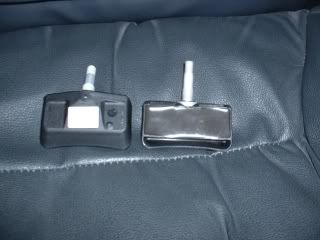
Heres some pictures of an early style and a late style sensor:
EARLY C5 SENSOR:
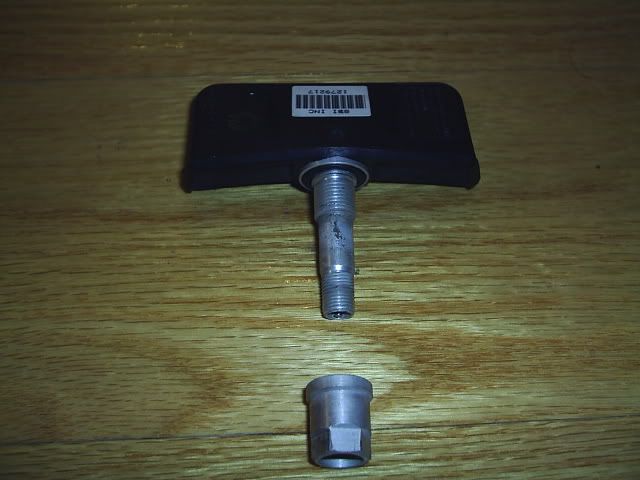
Late model C5 sensor:

Both together:
BC
Heres some pictures of an early style and a late style sensor:
EARLY C5 SENSOR:
Late model C5 sensor:
Both together:
BC

Instructor
Joined: Jul 2001
Posts: 133
Likes: 2
From: Winsdor ON
In the old days, I found that tire sealant was a good way of fixing slow leaks. But when I tried that on my vette with TPMS, I ruined the sensors. I don't recall what brand I used, but I would advise against it.
My root problem was the chrome plating was flaking off my aftermarket rims. I finally gave up and put the old wagon wheels back on.
My root problem was the chrome plating was flaking off my aftermarket rims. I finally gave up and put the old wagon wheels back on.
